What’s Inside
- 1. Bulgarian Split Squats with Resistance Bands
- 2. Dumbbell Goblet Squats for Leg Power
- 3. Explosive Kettlebell Swings
- 4. Pike Push-Ups for Shoulder Strength
- 5. Stability Ball Leg Crunches
- 6. Band-Assisted Pull-Up Progression
- 7. Wall Sits with Medicine Ball Squeeze
- 8. Resistance Band and Dumbbell Row Circuit
- 9. Progressive Push-Up Variations
- 10. Elevated Glute Bridges with Isometric Holds
- 11. Proper Warm-Up with Rowing Machine
- 12. Box Jumps for Explosive Power
- 13. Balanced Back and Arm Training
- 14. Russian Twists for Oblique Definition
- 15. Chair Dips and Plank Jacks Circuit
- 16. Single-Leg Romanian Deadlifts
- 17. Decline Push-Ups for Upper Chest
- 18. Farmer’s Carries for Grip and Core
- 19. Tempo Squats for Time Under Tension
- 20. Hollow Body Holds for Core Foundation
I wasted three years paying for a gym membership I barely used. Once I found home workouts that actually worked for me, I saved $600 a year and built more muscle than I ever did at the gym. The trick isn’t fancy machines—it’s knowing which exercises engage multiple muscles and how to progress without spending hours on them.
Here’s what I’ve learned through trial, error, and a lot of experimenting.
1. Bulgarian Split Squats with Resistance Bands
Bulgarian split squats are brutal but effective. They reveal every strength imbalance you didn’t know you had. All you need is a set of Theraband resistance bands ($15 to $25) and a sturdy chair.
Put your rear foot on the chair seat, front foot about two feet forward. Loop the band under your front foot and hold the handles at shoulder height. Lower into a squat until your back knee nearly touches the floor.
I do 3 sets of 10 reps per leg, and my quads burn more than they ever did on a leg press. The band adds constant tension that free weights can’t match at this price. Mayo Clinic recommends this for multi-muscle activation, and I agree—it works.
Common mistake: leaning too far forward. Keep your torso upright and push through your front heel. Your knee should track over your toes, not cave inward.
2. Dumbbell Goblet Squats for Leg Power
Goblet squats transformed my lower body training. You only need one dumbbell. I use a 20 to 40 lb CAP Barbell ($20 to $30, depending on weight).
Hold the dumbbell vertically against your chest, elbows pointing down. Squat deep, keeping your chest up and core tight. I aim for 3 sets of 8 to 12 reps.
The 2026 trend suggests progressing to half your bodyweight, which sounds crazy until you get there. I started at 25 lbs and now use 35 lbs comfortably. The goblet position forces better form than back squats ever did for me.
Pro tip: if your heels lift, work on ankle mobility. Do calf stretches before squatting. Don’t compensate by leaning forward—it’ll wreck your lower back.
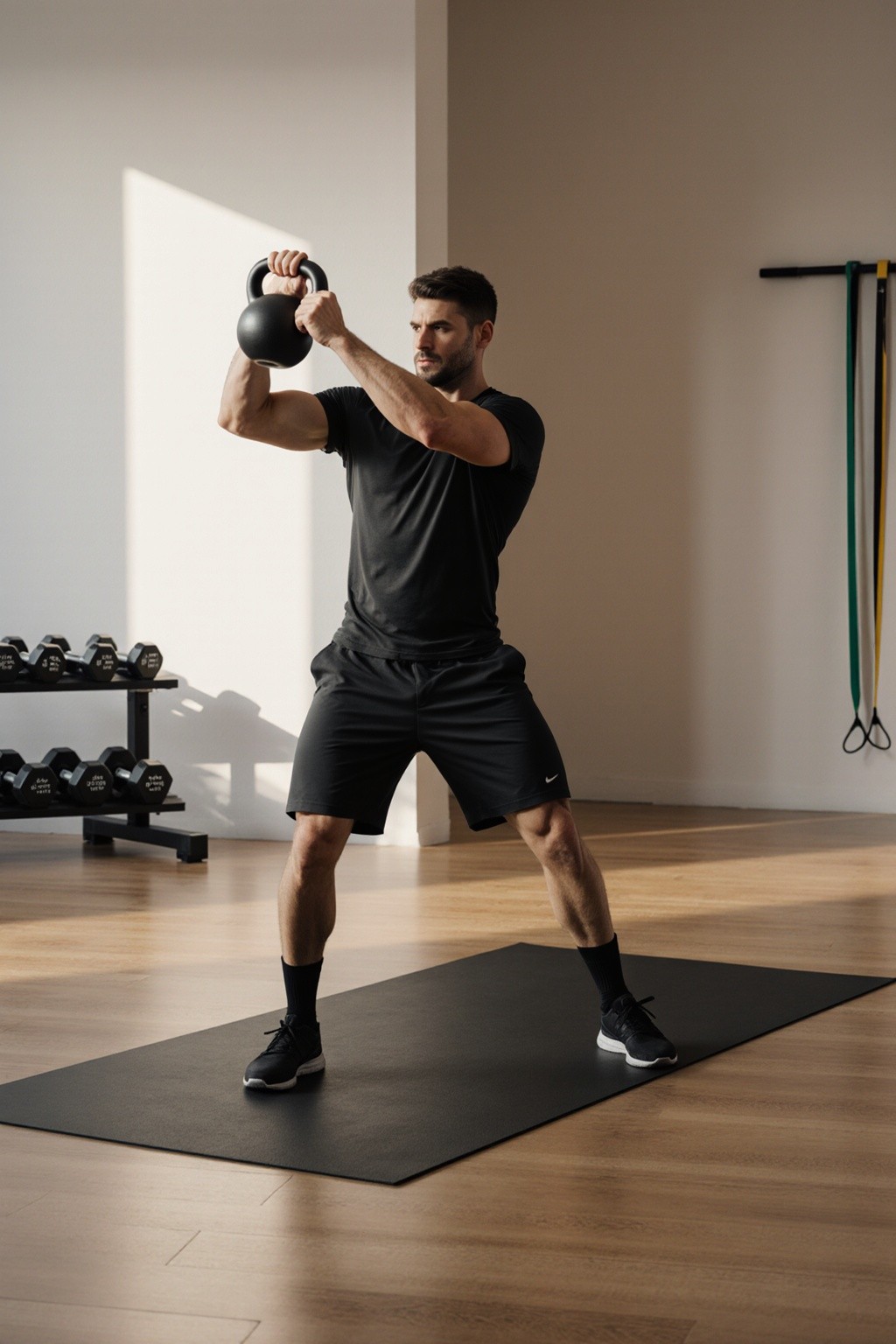
3. Explosive Kettlebell Swings
Kettlebell swings are my favorite exercise I avoided for too long. I thought they were just cardio. Wrong. A 16 to 24 kg Rogue kettlebell ($80 to $120) delivers serious hip power.
Start each workout with 3 sets of 8 to 12 swings while you’re fresh. That’s a 2026 power trend from Gold’s Gym, and it makes sense. Explosive movements need full energy.
Hinge at your hips, swing the bell between your legs, then snap your hips forward to propel it to shoulder height. The power comes from your glutes and hamstrings, not your arms. My deadlift improved within three weeks.
Most people swing with their arms and wonder why it doesn’t work. Your arms are just ropes. The hip snap does everything. Keep your core braced or you’ll feel it in your lower back—and not in a good way.

FitinOne Adjustable Folding Weight Bench for Home Gym
A dependable everyday pick — FitinOne Adjustable Folding Weight Bench for Home Gym pulls in 733 ratings at 4.5 stars. Not flashy, just solid.
4. Pike Push-Ups for Shoulder Strength
Pike push-ups hit your shoulders without needing a barbell. Put your hands on the floor, walk your feet onto your couch so your body forms an inverted V.
Lower your head toward the floor by bending your elbows, then press back up. I do 3 sets of 8 to 10 reps, and my shoulders are fried afterward.
Healthline includes these in their upper-body plans, and I get why. They’re safer than overhead presses when you’re alone at home. Plus, they’re free.
Common mistake: flaring your elbows out wide. Keep them at about 45 degrees from your body. Straight out to the sides stresses your shoulder joints. I learned this the hard way after elbow pain lasted a week.
5. Stability Ball Leg Crunches
I used to think crunches were useless until I added a stability ball. A Bosu Trainer or similar ball ($25 to $40) makes core work actually challenging.
Lie on your back, place the ball between your lower legs and squeeze. Lift your legs and crunch your upper body toward them. Lower with control. I do 3 sets of 10 to 12 reps.
Mayo Clinic includes these in their combo routines because the ball forces deeper ab engagement than floor crunches. I feel it in my lower abs especially, which barely activated during regular crunches.
Pro warning: don’t yank on your neck. Place your hands lightly behind your head for support, but the movement comes from your abs pulling your ribcage toward your pelvis. If your neck hurts, you’re doing it wrong.

6. Band-Assisted Pull-Up Progression
Pull-ups seemed impossible until I bought WODFitters assisted bands ($10 to $15). This progression actually works if you’re patient.
Start with inverted rows: hang from a low bar (or sturdy table), body straight, pull your chest to the bar. Build to 3 sets of 15 reps. Then move to band-assisted pull-ups with the band looped over the bar, foot in the band. Work toward 3 sets of 10.
This is a 2026 progression staple because it builds real back strength without requiring you to magically do pull-ups from day one. I went from zero pull-ups to five unassisted in about eight weeks.
The key is reducing band assistance gradually. Start with the thickest band, then move to thinner ones. Don’t rush it. I tried jumping bands too fast and my form fell apart immediately.
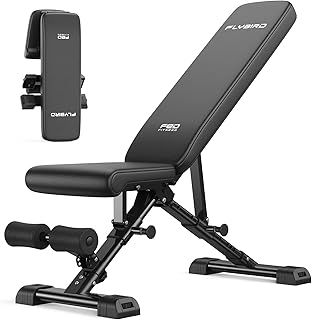
FLYBIRD WB5 Weight Bench
Honestly, FLYBIRD WB5 Weight Bench surprised me — sturdier than it looks in the photos, and over 259 buyers gave it 4.5 stars.
7. Wall Sits with Medicine Ball Squeeze
Wall sits sound boring until you add a medicine ball squeeze. Here’s my protocol: 3 sets of 45-second wall sits, immediately followed by 3 sets of 20 calf raises against the same wall.
The lesser-known tip that makes this brutal: squeeze a medicine ball (I use a Champion 8 lb ball, $15) between your knees during the wall sit. This fires your inner thighs and prevents knee collapse.
I do these after leg days as a finisher, and my quads shake by the third set. Your back should be flat against the wall, thighs parallel to the floor. If you can’t hold 45 seconds, start with 30 and build up.
Common mistake: letting your knees drift inward when you fatigue. The ball squeeze fixes this automatically. Your adductors will hate you, but your knees will thank you.
8. Resistance Band and Dumbbell Row Circuit
I circuit Theraband resistance rows with dumbbell upright rows for serious back and shoulder sculpting. Wrap the band around a pole or door anchor, pull for 8 to 10 reps, immediately grab 10 to 20 lb dumbbells for upright rows, same rep range. That’s one set. Do 3 total.
The 2026 trend emphasizes circuits for fat burn, and Mayo Clinic backs this up. The minimal rest keeps your heart rate elevated while building muscle. I’m usually breathing hard by set two.
For resistance rows, keep your shoulders pulled back and squeeze your shoulder blades together at the end. For upright rows, pull the dumbbells to chest height, elbows high. Don’t go higher than your shoulders or you risk impingement.
Pro tip: if your traps dominate the upright row, you’re pulling too high. I focus on mid-chest height and feel it way more in my side delts.
9. Progressive Push-Up Variations
Push-ups are only boring if you never progress them. I follow Gold’s Gym Week 1 reset protocol: start with knee push-ups if needed, move to incline push-ups (hands on couch), then standard floor push-ups. 3 sets of 12 for whatever variation challenges you.
The expert advice that fixed my form: engage your core fully. I used to let my lower back sag, which is the top beginner error. Now I brace my abs like someone’s about to punch me in the stomach. My core got stronger just from fixing push-up form.
Hand placement matters too. Slightly wider than shoulder-width hits chest more. Closer (diamond position) hammers triceps. I rotate through variations weekly.
Most people rush through reps. Lower yourself in three seconds, pause at the bottom for one second, then explode up. Time under tension builds more muscle than sloppy speed reps.

NICEPEOPLE Adjustable Weight Bench for Home Gym
NICEPEOPLE Adjustable Weight Bench for Home Gym punches above its price — 31 buyers rated it 4.5 stars. I would buy it again.

10. Elevated Glute Bridges with Isometric Holds
Glute bridges seem too easy until you elevate them and add isometric holds. I use a Yes4All stepper box (around $30) under my upper back. Feet flat on the floor, drive through your heels to lift your hips.
Here’s the surprising fact: adding a 10-second isometric hold at the top increases glute activation by about 20%. I read this in a study and tested it. My glutes are absolutely on fire by the third set of 15 reps.
I finish every lower-body day with these. They’re also great active recovery on rest days since they’re not super taxing on your nervous system. Just don’t skip the hold at the top. That’s where the magic happens.
Common mistake: arching your lower back at the top. Your body should form a straight line from knees to shoulders. Squeeze your glutes hard and tilt your pelvis slightly backward.
11. Proper Warm-Up with Rowing Machine
I used to skip warm-ups and wonder why my workouts felt sluggish. Now I spend 8 to 12 minutes on a Sunny Health rower ($200 to $300) or doing dynamic hip circles before squats.
CleanEatz pros mandate this to prep your joints, and honestly, it’s the difference between a great workout and a mediocre one. Your muscles need blood flow and your joints need synovial fluid moving.
If you don’t have a rower, do arm circles, leg swings, and bodyweight squats. The mistake people make is jumping straight to heavy loads. I tweaked my hip doing exactly that. Now I never skip the ramp-up.
Dynamic stretching beats static stretching pre-workout. Save the long holds for after. Before, you want movement that mimics what you’re about to do. If you’re squatting, do bodyweight squats. If you’re pressing, do arm circles.
12. Box Jumps for Explosive Power
Box jumps are trending hard in 2026 for good reason. I do them 3 times per week on full-body days. A plyo box (18 to 24 inches, about $50) is one of my best equipment purchases.
Start with 3 to 5 reps, focusing on explosive power, not endurance. Land softly with bent knees. Step down, don’t jump down. I learned that after my shins met the box edge once. Never again.
If you’re quad-dominant like me, try heels-elevated squat variations before box jumps. This tailors the movement to your hip structure, which went viral in some routines I follow. My vertical jump improved noticeably after adding these.
Pro tip: if you’re nervous about the height, start lower. There’s no shame in a 12-inch box. Work up gradually. A face-plant isn’t worth the ego boost.

OLIXIS Adjustable Weight Bench for Full Body Strength
OLIXIS Adjustable Weight Bench for Full Body Strength Training punches above its price — 28 buyers rated it 4.5 stars. I would buy it again.
13. Balanced Back and Arm Training
I used to overtrain my arms and wonder why my posture sucked. Healthline notes back neglect causes imbalances in men, and I was exhibit A.
Now I superset hyperextensions (4 sets of 10 to 12) with preacher curls only if I’m using an adjustable bench like the Marcy stack ($150). The hyperextensions hit my lower back and hamstrings, balancing out the arm work.
For hyperextensions at home without equipment, lie face-down on your bed with your upper body hanging off. Lift your torso until it’s level with your legs. It’s awkward but effective.
The ratio I follow: for every set of curls, I do two sets of back work. My shoulders stopped rounding forward within a month. Your back is bigger than your arms. Train it like it.

14. Russian Twists for Oblique Definition
Russian twists with a 5 lb Slam Ball from AmazonBasics (about $12) are my go-to oblique exercise. Sit on the floor, lean back slightly, lift your feet, hold the ball with both hands.
Rotate fully to each side, touching the ball to the floor. I do 3 sets of 20 reps (10 each side). This is adapted from teen workout plans but works perfectly for men too.
The lesser-known core hack: rotate your torso fully, not just your arms. I used to swing my arms side to side without engaging my obliques. Now I focus on twisting from my core, and my obliques actually show.
Common mistake: rounding your back. Keep your spine neutral and brace your core. If your lower back hurts, you’re collapsing. Sit taller and engage your abs harder.
15. Chair Dips and Plank Jacks Circuit
For 2026 minimalism, I love chair dips paired with plank jacks. Two sturdy chairs (or one chair and a couch), hands on the edge behind you, feet extended forward. Lower yourself until your elbows hit 90 degrees, then press up. 3 sets of 10 to 12 reps.
Immediately drop into a plank and do jacks (jump your feet out and in) for 30 seconds. That’s one round. Do 3 to 4 rounds total.
The pro tip from Mikolo: rest exactly 30 seconds between rounds. This spikes your metabolism without complete burnout. I’m drenched in sweat by round three, but I can still finish strong.
For dips, keep your elbows pointing backward, not flared out. Flared elbows stress your shoulder joints unnecessarily. I feel these in my triceps and chest when I do them right.
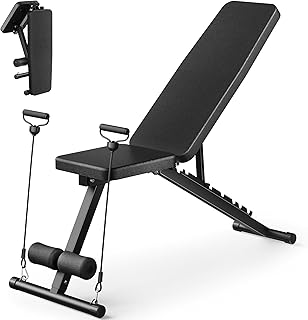
Adjustable Weight Bench for Home Gym
Adjustable Weight Bench for Home Gym has been one of the most consistently praised picks in this category. 506 reviewers averaged 4.5/5.
16. Single-Leg Romanian Deadlifts
Single-leg RDLs exposed my balance issues immediately. Hold a dumbbell in your right hand, stand on your left leg. Hinge at the hip, lowering the weight toward the floor while your right leg extends behind you.
I do 3 sets of 8 reps per leg with a 25 lb dumbbell. This hammers hamstrings and glutes while forcing core stabilization. My regular deadlift improved because this fixed my strength imbalances.
The trick is keeping your hips square. They want to rotate open, which defeats the purpose. Imagine you’re balancing a cup of water on your lower back. That mental cue keeps me aligned.
Start with bodyweight if you’re wobbly. There’s no point loading weight onto dysfunction. I spent two weeks just mastering the movement pattern before adding dumbbells.
17. Decline Push-Ups for Upper Chest
Regular push-ups hit your mid and lower chest. Decline push-ups (feet elevated on a couch or chair) shift emphasis to your upper chest and shoulders.
I do 3 sets of 10 reps after regular push-ups. The higher your feet, the harder it gets. I started with feet on a low step and worked up to couch height.
Hand position matters here too. I keep mine slightly wider than shoulder-width to maximize chest activation. Too narrow shifts it to triceps, which isn’t the goal for this variation.
Pro tip: if these hurt your shoulders, lower your feet. The decline angle can be tough on shoulder joints if you’re not ready. Build up gradually and listen to your body.

18. Farmer’s Carries for Grip and Core
Farmer’s carries are stupidly simple and incredibly effective. Grab two heavy dumbbells (I use 40 lbs each), walk 40 to 50 feet, turn around, walk back. That’s one set. Do 3.
My grip strength shot up, my core got stronger, and my posture improved. You’re forced to stay upright and stable while carrying heavy weight. It’s functional strength at its finest.
The mistake people make is using weight that’s too light. It should be challenging to hold by the end of the walk. If you could carry it for five minutes, go heavier.
Keep your shoulders pulled back and down. Don’t let them hunch up toward your ears. Your core should be braced tight the entire walk. This translates to every other lift you do.
19. Tempo Squats for Time Under Tension
Tempo squats taught me that speed isn’t everything. Use just your bodyweight or light dumbbells. Lower yourself in five seconds, pause at the bottom for two seconds, explode up in one second.
I do 3 sets of 6 reps, and my legs are shaking by the end. The extended time under tension builds muscle differently than regular squats. It’s humbling how hard bodyweight feels when you slow it down.
This is perfect for home workouts when you don’t have heavy weights. You create difficulty through tempo instead of load. My quad development improved noticeably after adding these.
Focus on the eccentric (lowering) phase. That’s where most muscle damage and growth happens. Don’t rush it. Count in your head to maintain the tempo.
20. Hollow Body Holds for Core Foundation
Hollow body holds are harder than they look. Lie on your back, press your lower back into the floor, lift your shoulders and legs slightly off the ground. Arms extended overhead.
Hold for 30 seconds, rest, repeat for 3 sets. This builds the core foundation for every other movement. My plank time improved, my squat stability improved, everything improved.
The common mistake is arching your lower back off the floor. If you can’t keep it pressed down, bend your knees or don’t lift your legs as high. Form matters more than how high you lift.
I do these at the end of every workout as a finisher. They’re deceptively exhausting. Your abs should be cramping by the third set. If they’re not, you’re not bracing hard enough or you’re arching your back.
These 20 men home workout ideas have completely changed my approach to fitness. I’m stronger, leaner, and I saved enough money to buy all the equipment I actually need. Start with three or four exercises, master them, then add more. Bookmark this and come back when you need fresh ideas. Your home gym is more capable than you think.
Frequently Asked Questions
What equipment do I need for effective men home workout ideas?
Start with resistance bands ($15-25), a set of dumbbells (20-40 lbs, $20-30), and a kettlebell (16-24 kg, $80-120). Add a stability ball ($25-40) and a plyo box ($50) as you progress. This covers strength, power, and core work without breaking the bank.
How often should I do home workouts to build muscle?
Three full-body sessions per week is ideal for most men starting out. This allows 48 hours recovery between workouts. As you advance, you can split into upper/lower or push/pull/legs routines four to five times weekly. Consistency beats frequency every time.
Can I build serious muscle with men home workout ideas?
Absolutely. Progressive overload works at home just like in gyms. Increase reps, add weight, slow down tempo, or reduce rest periods. I’ve built more muscle at home than I ever did at commercial gyms by focusing on compound movements and proper progression.
What’s the biggest mistake men make with home workouts?
Skipping warm-ups and rushing through reps with poor form. Take 8-12 minutes to warm up properly, focus on controlled movement, and progress gradually. Also, neglecting back work while overtraining arms creates imbalances. Balance your programming from day one.
💾 Found this helpful? Save it to Pinterest!
Share with friends who need kitchen organization help!