What’s Inside
- Prioritize Core Stability With Planks For A Better Lower Back Workout
- Master The Bird-Dog To Fix Lower Back Workout Balance
- Unlock Spinal Mobility With The Cat-Cow Stretch
- Strengthen Your Posterior Chain With 45-Degree Back Extensions
- Invest In A Glute Ham Developer For Home Gyms
- Don’t Neglect Your QL With Specific QL Raises
- Combat Rotational Forces With The Pallof Press
- Perfect Your Deadlift Form To Prevent Severe Injury
- Modify Deadlifts With Blocks For Back Safety
- Embrace Movement And Avoid Prolonged Bed Rest
- A Dynamic Warm-Up Is Non-Negotiable For Heavy Lifting
- Cool Down With Targeted Lumbar Stretches
I was sprawled out on the cold, dusty concrete at Costco last Tuesday, staring up at the harsh fluorescent lights. I tried to yank a massive $19.99 40-pound bag of Kirkland dog food from the bottom rack with zero core engagement. My spine made a sound like a dry, brittle twig snapping. That embarrassing moment taught me a lesson. A proper lower back workout isn’t just for bodybuilders covered in baby oil. It’s basic survival. If you’re tired of feeling fragile every time you tie your shoes, you’re in the right place. I’m Ryan Brooks, and I’ve wrecked my back more times than I can count. I’ve spent thousands on physical therapy. Now, I’m sharing the exact movements that bulletproofed my spine. Let’s fix your weak links before you end up flat on your back in aisle four.
1. Prioritize Core Stability With Planks For A Better Lower Back Workout

I used to think planks were just a torture device. I did them wrong for months. I’d sag my hips and wonder why my lumbar spine screamed the next day. A physical therapist buddy finally corrected me over coffee. The secret to an effective lower back workout starts on the front side. You need to hold a strict plank for 30 to 60 seconds across 3 to 5 sets. I do these on my Lululemon The Reversible Mat 5mm. It costs $98. The grippy polyurethane top stops my sweaty forearms from sliding. When you lock in your core, you build an invisible weight belt. This is vital for supporting your lower back. Squeeze your glutes. Brace your stomach like someone’s about to punch you. I skip the cheap $10 foam mats from Target. They slide around on hardwood and smell like tires left in the sun. Your foundational core strength dictates how much power you can generate later. Start here before touching heavy iron.
2. Master The Bird-Dog To Fix Lower Back Workout Balance

The Bird-Dog looks ridiculous. I felt like an idiot doing this at my crowded local LA Fitness last month. But it works. You need to perform 10 repetitions on each side. Hold the extended position with your opposite arm and leg straight for 5 seconds. This move strengthens your core and back extensors while improving balance. I learned the hard way that skipping this leads to instability. I used to just grab my $429 Bowflex SelectTech 552 dumbbells and start swinging. Huge mistake. My right side was weaker than my left. The Bird-Dog exposes these imbalances. If you wobble like a drunk toddler, you have work to do. I recommend putting a 16 oz plastic water bottle on your lower back. I buy the $5.99 24-packs of Good & Gather water at Target. If the bottle falls, your hips are rotating too much. Keep your spine neutral. This coordination is a key factor in preventing strain when you move to heavier lifts. Focus on the hard squeeze at the top.
3. Unlock Spinal Mobility With The Cat-Cow Stretch

Spinal stiffness is the enemy. I wake up most mornings feeling like the Tin Man before he gets the oil can. That’s why I do the Cat-Cow stretch daily. Move slowly between the arched and rounded positions for 10 repetitions. This dynamic stretch improves mobility and reduces stiffness. I do this right after I wake up. I roll out my $140 Liforme Yoga Mat in my living room. The alignment lines help me keep my knees stacked under my hips. A common mistake is rushing. People flop their bellies up and down like a fish. Don’t do that. Push the floor away. Tuck your chin. Feel the stretch between your shoulder blades. During the cow phase, drop your belly and lift your chest. I do this religiously before heading to Whole Foods on Sunday for my $8.99 organic rotisserie chicken. If I skip the Cat-Cow, walking around the store holding a basket kills my lumbar spine. Trust me. You might also like: 20 Brilliant Commercial Home Gym Setup Ideas Worth Trying This Year
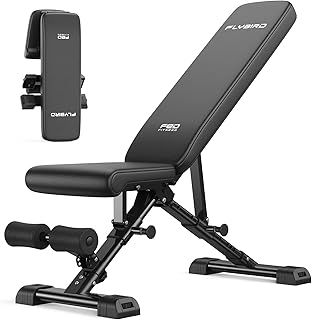
FLYBIRD WB5 Weight Bench
FLYBIRD WB5 Weight Bench has been one of the most consistently praised picks in this category. 259 reviewers averaged 4.5/5.
4. Strengthen Your Posterior Chain With 45-Degree Back Extensions
The 45-degree back extension machine is usually hidden in a dusty corner near broken treadmills. I ignored it for years. Now it’s my favorite piece of equipment. Shoot for 3 to 4 sets of 10 to 15 repetitions. Start with bodyweight. Add resistance as you get stronger. I hold a 25-pound cast iron plate against my chest. This targets your lower back, hamstrings, and glutes. Crucial muscles for spinal support. When I first tried these, I made a mistake. I hyperextended at the top. I bent my spine backward like a gymnast. That triggered nerve pain down my left leg. The trick is to stop when your body forms a straight line. Squeeze your glutes to initiate the pull. I use liquid chalk to grip the heavy plate. I grab the $9.99 Spider Chalk from Walmart. It dries fast. You won’t need a $65 Rogue Echo 10mm Lifting Belt. Just use your raw core strength. You might also like: 15 Clever Garage Home Workout Ideas That Are Totally Worth It
5. Invest In A Glute Ham Developer For Home Gyms

Building a home gym requires smart investments. For glute, hamstring, and lower back development, you need a Glute Ham Developer. I agonized over this purchase last winter. I initially bought a $150 knockoff on Amazon. It wobbled so badly I thought I’d break my neck. I returned it. I ended up testing the Titan Fitness Adjustable Floor GHD. It runs about $575. It’s solid for tight garages. But if you have the budget, the Rogue Abram GHD 2.0 is the gold standard. It costs around $775. The heavy-duty steel on the Rogue model means it won’t budge during aggressive reps. These machines build bulletproof hamstrings. When your hamstrings are strong, they absorb the shock that wrecks your back during heavy lifts. After a session on the GHD, my posterior chain is fried. I stop by Sprouts on the way home for a $6.49 bag of Dr. Teal’s Epsom Salt for a hot bath. The GHD is brutal but worth it. You might also like: 20 Lovely Aesthetic Home Morning Workout Routine to Inspire Your Next Project
6. Don’t Neglect Your QL With Specific QL Raises

Here is a tip most gym trainers ignore. You can’t neglect your QL. The Quadratus Lumborum sits deep in your lower back. I had no idea what a QL was until I tweaked it picking up a box of books. A physical therapist told me to perform QL raises for 2 to 3 sets of 20 repetitions. This deep muscle is crucial for stability and posture. I do these holding a 35-pound Rogue Kettlebell. It cost $45. I stand on a small step. I let the kettlebell pull one side of my torso down. Then I contract my obliques and QL to pull myself upright. It’s a tiny range of motion. It feels awkward. You might get intense cramping. I eat a $0.25 banana from Kroger before doing these to keep the cramps away. Skip the fat-free stuff and eat real food. A weak QL is the real reason your back locks up when you bend sideways.

NICEPEOPLE Adjustable Weight Bench for Home Gym
NICEPEOPLE Adjustable Weight Bench for Home Gym has been one of the most consistently praised picks in this category. 32 reviewers averaged 4.5/5.
7. Combat Rotational Forces With The Pallof Press

A trending approach for core strength is the Pallof Press. I started doing these six months ago. My core has never felt tighter. Use a resistance band attached to an anchor at chest height. Perform 3 sets of 10 repetitions per side. I use the heavy green SPRI band. I grabbed it for $14.98 on Amazon. This anti-rotational exercise strengthens deep core muscles. These protect your spine from twisting forces. Think about when you swing a golf club or yank a heavy glass door. That’s rotation. The Pallof Press teaches your body to resist that. I loop the band around a squat rack pole. I step out until there’s tension. I hold the handle at my chest and press straight out. The band tries to snap me toward the rack. I have to squeeze my glutes and brace my stomach to stay straight. I do these before my post-workout snack. I buy the $1.99 Barebells protein bars from Trader Joe’s. They taste like chocolate, not cardboard.
8. Perfect Your Deadlift Form To Prevent Severe Injury
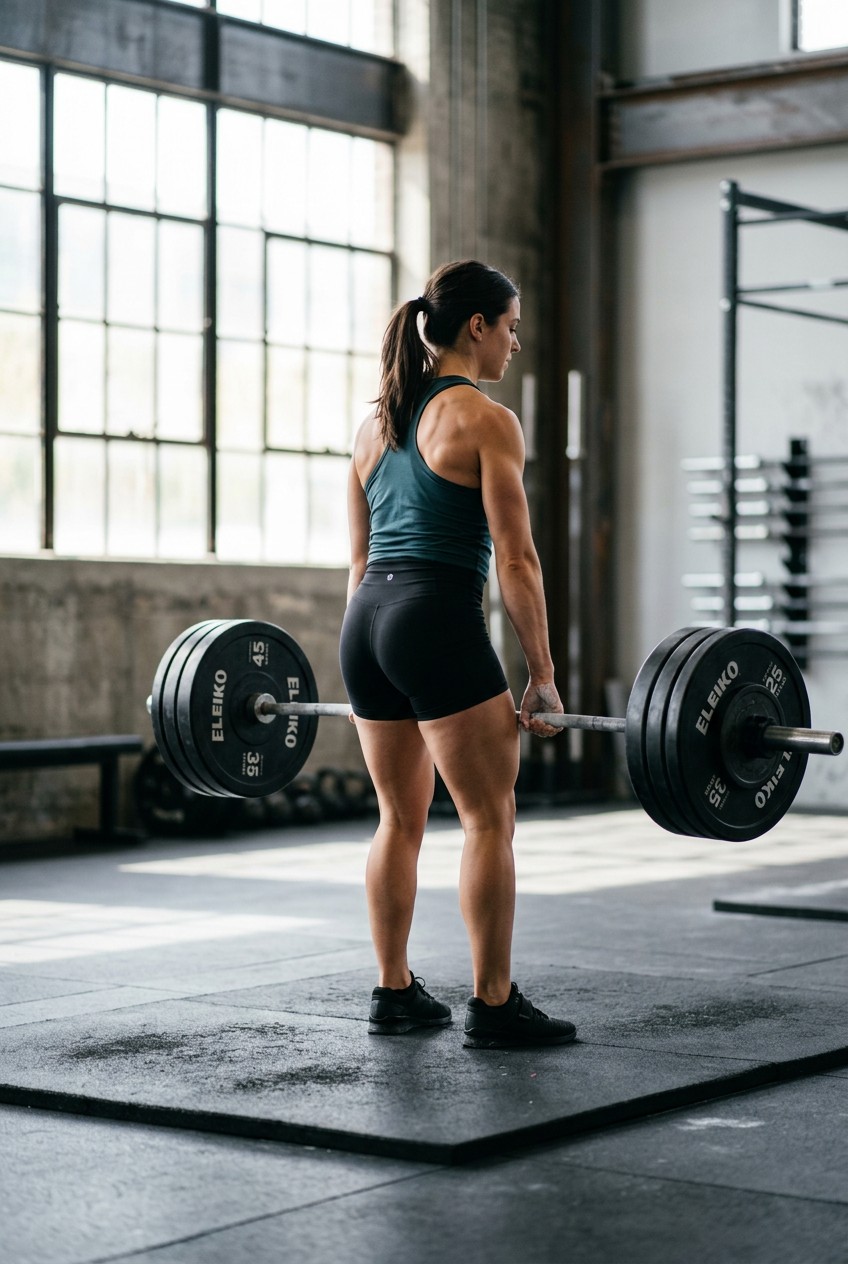
The deadlift is the king of posterior chain exercises. But a common mistake leading to pain is poor form. I blew my back out in 2018 because my ego was writing checks my spine couldn’t cash. I tried to pull 405 pounds with a rounded back. I heard a loud pop. I spent three miserable days eating ibuprofen on my couch. You must prioritize technique over weight. Ensure your mid-foot is under the bar. Brace your core. Keep your hips lower than your shoulders. Drive through your heels and keep the bar close. I use a $295 Texas Power Bar because the knurling locks into my sweaty hands. Avoid spinal rounding. Don’t lift too heavy too soon. I also ditched my squishy running shoes. I wear flat $50 Vans slip-on canvas shoes. Squishy soles make you unstable. They pitch you onto your toes, which strains your back. If your shins aren’t bleeding a little from the bar, the bar is too far forward.
9. Modify Deadlifts With Blocks For Back Safety

If you experience lower back pain during deadlifts, you aren’t doomed. An expert tip is to elevate the barbell using blocks. This shortens the range of motion. I swear by block pulls. I have tight hamstrings. Pulling from the floor forces my back to round. By elevating the bar three inches, I keep my spine neutral. I use the Titan Fitness Silencer Drop Pads. They cost $149. They are dense foam blocks that raise the bar. They absorb the sound when I drop the weight. This allows you to build strength safely. I tried this wrong for months. I used to stack cheap plastic step platforms under the weights. One cracked under a 315-pound load. The bar crashed down and nearly broke my ankle. Don’t do that. Invest in proper pulling blocks. You still get all the glute development, but your lumbar spine takes less shear force.

Adjustable Weight Bench for Home Gym
Adjustable Weight Bench for Home Gym punches above its price — 100 buyers rated it 4.5 stars. I would buy it again.
10. Embrace Movement And Avoid Prolonged Bed Rest
When my back hurts, my instinct is to lay in bed and watch Netflix for 48 hours. That is the worst thing you can do. Physical therapists emphasize that movement is medicine. Contrary to outdated advice, bed rest can worsen pain. It weakens your spinal discs and muscles. I learned this the hard way. I tweaked a muscle and stayed in bed for two days. When I finally got up, I was stiffer than a frozen corpse. You need to incorporate gentle, targeted movements daily. I go for slow, 20-minute walks. I also use my $199 Theragun Mini massage gun on my glutes. I never use the massage gun on my spine. That hurts. I stick to the muscle bellies around the hips. The vibration loosens tight tissues pulling on my back. Get off the couch. Even bodyweight squats are better than lying flat all day.
11. A Dynamic Warm-Up Is Non-Negotiable For Heavy Lifting

I can’t stress this enough. Start your session with a dynamic warm-up. I used to just walk into the cold gym, load a barbell, and lift. I was an idiot. Now, a dynamic warm-up is non-negotiable. Include exercises like the Cat-Cow for 10 reps and the Bird-Dog for 8 reps per side. This activates muscles and improves spinal mobility. It reduces injury risk. Before I stretch, I sit on the Concept2 RowErg. It costs $990, but every good gym has one. I row at a slow pace for five minutes. The motion forces my hips and knees to hinge while warming up my lats and spinal erectors. I get a sweat going before I do static holding. If you stretch cold muscles, they tear. Think of muscles like cold taffy. If you pull it fast, it snaps. Warm it up first. Don’t skip the cardio.
12. Cool Down With Targeted Lumbar Stretches

Conclude your workout with a cool-down. I used to finish my last set, grab my keys, and drive home. My back would seize up in the driver’s seat. Now, I do the Knees-to-Chest stretch. I lie on the mat. I pull my knees to my chest for 30 seconds. I do 3 reps. Then I do the Lumbar Rotational Stretch. I drop my knees to one side and hold for 10 seconds. I do 3 reps on each side. These stretches help relieve spinal compression from squats and deadlifts. After I stretch, I apply a thick layer of Biofreeze Roll-On to my back. I buy the 2.5 oz green bottle for $11.98 at CVS. The cold sensation numbs nerve irritation. I love the roll-on because I don’t get the messy gel on my hands. Cooling down isn’t optional. It signals to your nervous system that the workout is over. It allows your muscles to repair.
Fixing your back takes time. I’ve been doing this routine for years, and it’s the only reason I can still lift heavy without pain. Don’t rush. Start with bodyweight planks and Bird-Dogs before you touch a barbell. If you found this helpful, save this page so you have it ready for your next gym session. Let’s build a back that won’t quit on you.

Adjustable Weight Bench
Honestly, Adjustable Weight Bench – 1000LBS Capacity Heavy Duty Foldable Workout surprised me — sturdier than it looks in the photos, and over 168 buyers gave it 4.5 stars.
Frequently Asked Questions
How often should I do a lower back workout?
You should aim for two to three times per week. Your lower back muscles need time to recover just like any other muscle group. Don’t train them heavily on consecutive days.
Can a lower back workout help with my posture?
Absolutely. Strengthening your posterior chain, especially deep muscles like the QL and spinal erectors, pulls your shoulders back and keeps your spine neutral. It’s the best fix for slouching.
Should I use a lifting belt for my lower back workout?
I don’t recommend relying on a belt for basic core and mobility work. Use a belt only when you’re pulling heavy deadlifts or squats near your maximum weight limit.
What’s the best equipment for a home lower back workout?
Start with a high-quality 5mm yoga mat and a set of resistance bands. If you have the budget, a Glute Ham Developer (GHD) machine is the ultimate investment for posterior chain strength.