What’s Inside
- 1. The Five-Minute Focus Zone Method
- 2. The 15-Minute Three-Phase Circuit
- 3. The 45-15 Power Round System
- 4. Movement Snacks Throughout Your Day
- 5. The Environment Transformation Trick
- 6. Weighted Chores Integration
- 7. The Corner Strength Station
- 8. The 360-Degree Walking Enhancement
- 9. The Furniture Circuit Challenge
- 10. The Mirror Form Check Setup
- 11. The Minimal Equipment Maximum Results Approach
- 12. The Bodyweight Progression System
- 13. The Time-Block Consistency Method
- 14. The Recovery Space Integration
- 15. The Accountability Corner Documentation
I spent three months trying to make my spare bedroom into a home gym before realizing I was doing it all wrong. Turns out, the best room home workout ideas don’t require a complete renovation or thousands in equipment. Last week, I trained a client who gets better results in her 10×12 living room than most people do at fancy gyms. These room home workout ideas actually work because they focus on what matters: consistency, smart space use, and workouts that fit your life instead of demanding you reshape it around exercise.
1. The Five-Minute Focus Zone Method

Here’s what nobody tells you about home workouts: trying to do everything every day is why you quit. I personally started using what I call the 3D rotation, and it changed everything.
Pick one focus area each day and dedicate just five minutes to it. Monday is core work. Tuesday targets glutes. Wednesday focuses on posture and mobility. Thursday hits legs. Friday is all about breath work and recovery. The beauty of this approach? You’re never overwhelmed, and five minutes is short enough that you’ll actually do it.
I keep a small notebook in my workout corner listing which day corresponds to which focus. Some mornings I’m dragging, but I can always talk myself into five minutes. Those sessions often stretch to fifteen once I’m moving, but the low barrier to entry keeps me consistent. Most people make the mistake of planning hour-long sessions they’ll never complete. Start with five minutes in whatever room you’re already spending time in.
2. The 15-Minute Three-Phase Circuit

I structure every quick session the same way: 2-3 minutes warming up, 8-12 minutes on the main circuit, and 1-2 minutes finishing strong. This framework works in any room with enough space to lie down.
Your warm-up should get blood flowing without exhausting you. I do arm circles, leg swings, and some light jumping jacks. The main circuit hits compound movements like push-ups, bodyweight squats, and plank variations. Your finisher should leave you breathless but accomplished. I usually end with burpees or mountain climbers.
The common mistake? Skipping the warm-up because you’re short on time. That’s how you pull muscles or just feel sluggish through the whole workout. Those two minutes make everything else more effective. I learned this the hard way after tweaking my shoulder doing cold push-ups in my bedroom at 6 AM. Now I never skip it, even when I’m rushing.
3. The 45-15 Power Round System

This timing protocol has become my go-to for room home workout ideas that actually challenge you. Pick five exercises. Do each for 45 seconds with 15 seconds rest between them. Repeat the circuit three times.
I typically choose: push-ups (or modified versions), squat jumps, plank shoulder taps, reverse lunges, and bicycle crunches. The 45-second work period is long enough to really feel it but short enough that you can push hard the entire time. That 15-second rest lets you transition and catch your breath without cooling down completely.
What makes this work in any room is the minimal space requirement. You need maybe six feet by three feet of clear floor. I’ve done this in hotel rooms, my living room with the coffee table pushed aside, and even in my bedroom when my roommate was using the main space. The whole thing takes exactly 15 minutes if you don’t dawdle between rounds. Pro tip: set a timer on your phone instead of watching the clock. It’s one less thing to think about.

NICEPEOPLE Adjustable Weight Bench for Home Gym
If you want something that just works, NICEPEOPLE Adjustable Weight Bench for Home Gym is a safe bet (31 reviews, 4.5 stars).
4. Movement Snacks Throughout Your Day

I hate the term “movement snacks,” but honestly, this concept changed how I think about fitness at home. Instead of one big workout, scatter two-minute mobility bursts throughout your day wherever you happen to be.
Between Zoom calls, I do spine waves against my desk chair. While coffee brews, I’m doing hip circles in the kitchen. Waiting for a file to download? That’s shoulder glides and neck rolls time. These micro-sessions keep your lymphatic system moving and maintain hormonal function without draining your energy for other tasks.
The mistake people make is thinking these replace real workouts. They don’t. But they complement them beautifully and keep you from being sedentary for eight-hour stretches. I notice a huge difference in how my body feels on days when I sprinkle in these movement snacks versus days when I just do one morning workout and sit the rest of the time. Your body wasn’t designed for long periods of stillness, regardless of how good your morning workout was.
5. The Environment Transformation Trick

This sounds weird, but changing your room’s vibe before working out makes a massive psychological difference. I dim the lights, light a candle, and play a specific playlist that I only use for evening workouts.
Your brain creates associations. When you work out in the exact same environment where you work, eat, and watch TV, it’s harder to shift into workout mode. Small changes signal to your nervous system that something different is happening now. I have a friend who literally rearranges her living room furniture before her Sunday workout sessions. She swears it makes the space feel completely different.
I personally keep a small essential oil diffuser that only comes out during workouts. The scent (eucalyptus and peppermint) has become so associated with exercise that just smelling it makes me want to move. You don’t need fancy equipment or a dedicated gym room. You just need some way to make the space feel different from its everyday function. Even opening windows you normally keep closed works.
6. Weighted Chores Integration

I bought 2-pound wrist weights and 3-pound ankle weights from Target for under $30 total, and they’ve become my secret weapon for staying active without dedicated workout time. Strap them on while you’re doing household tasks.
Vacuuming with wrist weights turns into an arm workout. Walking around your house doing laundry with ankle weights activates your stabilizer muscles and builds endurance. I wear mine while cooking dinner sometimes, and just the act of reaching for things in cabinets becomes more challenging.
The key is keeping the weight light. You’re not trying to build massive muscle here. You’re just adding resistance to movements you’re already doing. I tried using 5-pound weights once and my form got sloppy immediately. Lighter weights let you maintain proper movement patterns while still getting benefit. Don’t wear them for more than 30-45 minutes at a time, though. Your joints need breaks, and you want to avoid overuse injuries from repetitive weighted movements.

Adjustable Weight Bench
Adjustable Weight Bench – 1000LBS Capacity Heavy Duty Foldable Workout has been one of the most consistently praised picks in this category. 168 reviewers averaged 4.5/5.
7. The Corner Strength Station

I dedicated one corner of my bedroom to strength work, and it takes up maybe four square feet. I keep a set of resistance bands hanging on a hook, a yoga mat rolled up behind the door, and two kettlebells (15 and 25 pounds) tucked in the corner.
Having everything in one designated spot means I never waste time gathering equipment. The psychological effect of having a “workout corner” is real too. Every time I walk past it, I’m reminded to move. Some days that means a full 30-minute strength session. Other days it’s just grabbing the bands for a quick arm burnout.
The common mistake is spreading your gear all over the house. Then you spend five minutes finding everything before you even start, which kills motivation. My corner setup cost maybe $80 total. I got the kettlebells used on Facebook Marketplace for $30, the resistance bands were $15 on Amazon, and I already had the yoga mat. You don’t need a whole room. You need one organized corner that’s ready to go the second you are.
8. The 360-Degree Walking Enhancement

If you’re walking around your house anyway, make it functional training. Every 30 steps, I add a micro-movement. Sometimes it’s ankle mobilization (rolling through my foot deliberately with each step). Other times it’s rib-cage rotation (twisting my torso while my hips stay forward). Arm circles while walking is another favorite.
This turns mindless pacing or walking from room to room into legitimate movement practice. I started doing this during phone calls, and now I can’t talk on the phone without walking and adding these movement variations. It feels weird at first, but it becomes automatic quickly.
The benefit isn’t just physical. These movement additions keep your brain engaged with what your body is doing, which improves your overall movement quality. Most of us walk on autopilot, barely aware of how we’re moving. Adding intentional variations forces you to pay attention. I’ve noticed my posture improve and my balance get better just from implementing this habit over the past six months.
9. The Furniture Circuit Challenge

Your furniture is workout equipment you’ve already paid for. I use my couch for decline push-ups (feet elevated on the cushions), my coffee table for incline push-ups (hands on the table), and my sturdy desk chair for tricep dips.
A typical furniture circuit for me looks like this: 10 couch push-ups, 15 chair dips, 20 step-ups onto my storage ottoman, 30-second wall sit against my bedroom wall, and 10 coffee table incline push-ups. Repeat three times. The whole thing takes about 12 minutes and requires zero additional equipment.
Pro tip: test your furniture’s stability before using it for exercise. I learned this after my cheap IKEA side table nearly collapsed during box jumps. Now I only use furniture I know can handle my weight and the dynamic movement. Your couch, a solid chair, and any wall in your house are safe bets. Anything wobbly or lightweight should stay out of your workout routine. The last thing you need is a furniture-related injury because you were trying to save money on equipment.
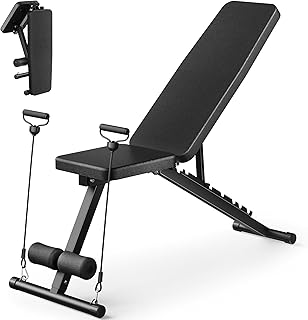
Adjustable Weight Bench for Home Gym
Adjustable Weight Bench for Home Gym has been one of the most consistently praised picks in this category. 506 reviewers averaged 4.5/5.
10. The Mirror Form Check Setup

I positioned a full-length mirror (got it at HomeGoods for $40) in my workout space specifically for form checks. Being able to see yourself during exercises is honestly game-changing for home workouts where you don’t have a trainer watching you.
I catch myself rounding my back during squats, letting my knees cave in during lunges, and dropping my hips during planks. Without the mirror, I’d have no idea I was doing these things wrong. Poor form doesn’t just reduce effectiveness. It’s how you get hurt.
The mistake people make is thinking they don’t need this feedback at home. But actually, you need it MORE at home because nobody’s there to correct you. I take videos of myself doing new exercises too, then watch them back to spot issues. It feels silly filming yourself working out in your bedroom, but it works. Your perception of what your body is doing and what it’s actually doing are often very different. The mirror and occasional videos close that gap.
11. The Minimal Equipment Maximum Results Approach

After years of testing gear, I’ve landed on the absolute essentials for room home workout ideas that deliver results: one set of adjustable dumbbells (I use Bowflex SelectTech, which go from 5 to 52.5 pounds), a quality resistance band set, and a thick yoga mat.
That’s it. Everything else is optional. Those three items let you do hundreds of different exercises in any room of your house. The adjustable dumbbells save space compared to having multiple sets, though they’re pricier upfront (around $300-400). If that’s too much, start with one pair of medium-weight dumbbells (15-20 pounds for most people) for under $40.
I’ve trained clients who spent thousands on home gym equipment they never use. The treadmill becomes a clothes hanger. The fancy cable machine collects dust. But simple, versatile equipment that doesn’t dominate your space? You’ll actually use it. Keep your setup minimal and focus on consistency over having every possible piece of equipment. The best equipment is the stuff you’ll actually pull out and use, not the stuff that looks impressive sitting in the corner.
12. The Bodyweight Progression System

You don’t need equipment to build serious strength at home. I follow a simple progression system: when an exercise becomes easy for 15 reps, I make it harder by changing the leverage, adding a pause, or slowing down the tempo.
Regular push-ups too easy? Move to archer push-ups (shifting weight to one side). Those easy? Try one-arm push-ups against a wall, gradually moving to the floor as you get stronger. Squats boring? Add a three-second pause at the bottom. Then move to pistol squats (single-leg). Then add weight.
This progression approach means you never outgrow bodyweight training. I know guys who can do one-arm push-ups and pistol squats who are stronger than people who lift heavy weights with poor form. The mistake is thinking bodyweight exercises are just for beginners. They’re for everyone if you keep progressing the difficulty. I still do bodyweight-only workouts twice a week even though I have access to a full gym, because they’re humbling and effective.

FitinOne Adjustable Folding Weight Bench for Home Gym
FitinOne Adjustable Folding Weight Bench for Home Gym punches above its price — 733 buyers rated it 4.5 stars. I would buy it again.
13. The Time-Block Consistency Method

I don’t work out when I “find time.” I work out at 6:15 AM in my bedroom, Monday through Friday, no exceptions. That specific time block is sacred. Treating your home workout like an appointment you can’t miss is the only way consistency happens long-term.
The beauty of home workouts is you can choose weird times that work for you. I have a client who works out at 9:30 PM in her living room after her kids are asleep. Another does lunch break sessions in his home office. The specific time matters less than having a specific time.
Your brain loves routine. After a few weeks of working out in the same room at the same time, it becomes automatic. You don’t have to convince yourself or find motivation. It’s just what you do at 6:15 AM. The mistake is keeping your workout schedule flexible, thinking that gives you freedom. It actually makes it easier to skip because there’s no established habit. Pick a time, pick a room, and show up there consistently. That’s the whole secret.
14. The Recovery Space Integration

I keep a foam roller, a lacrosse ball, and some yoga blocks in my bedroom specifically for recovery work. After evening workouts, I spend 10 minutes rolling out tight spots while watching TV. Making recovery convenient means you’ll actually do it.
Most people skip recovery work because it feels like extra effort. But when your recovery tools are right there in the room where you work out (or relax afterward), the barrier disappears. I foam roll my quads and IT bands while scrolling my phone. I use the lacrosse ball on my feet while reading. It doesn’t feel like a separate task.
The physical benefits are obvious. Less soreness, better flexibility, faster recovery between workouts. But there’s a mental benefit too. Taking time to care for your body reinforces that fitness is about feeling good, not just pushing hard. I used to think recovery was for serious athletes only. Now I realize it’s for anyone who wants to keep working out consistently without constant aches and pains. Ten minutes of rolling beats three days of being too sore to move.
15. The Accountability Corner Documentation

I keep a small whiteboard in my workout corner where I track completed sessions. Every time I finish a workout, I add a tally mark. Watching those marks accumulate is surprisingly motivating. Some months I have 20+ marks. Others I have 12. But seeing the visual record keeps me honest.
I also take progress photos in the same spot in my bedroom, same lighting, same angle, once a month. Not for social media. Just for me. The changes are subtle week to week, but comparing month one to month six shows real progress that the scale doesn’t always reflect.
This documentation approach works because it makes your efforts visible. Home workouts can feel invisible. Nobody sees you doing them. There’s no gym check-in to prove you showed up. Creating your own tracking system gives you that proof. My whiteboard costs $8 from Target. My phone takes the photos for free. But the accountability they provide is priceless. When I’m tempted to skip a workout, I look at that board and think about breaking my streak. More often than not, that’s enough to get me moving.
Look, you don’t need a perfect setup or a dedicated home gym to get results. I’ve seen people transform their fitness using nothing but their bedroom, a yoga mat, and 15 minutes of consistency. Start with one or two of these room home workout ideas that feel doable for your space and schedule. Build from there. The perfect workout routine is the one you’ll actually do, in whatever room you have available, with whatever time you can spare. Save this list and come back to it when you need fresh ideas. Your home has everything you need to build strength, improve mobility, and feel better in your body. You just have to start using it.

OLIXIS Adjustable Weight Bench for Full Body Strength
OLIXIS Adjustable Weight Bench for Full Body Strength Training punches above its price — 28 buyers rated it 4.5 stars. I would buy it again.
Frequently Asked Questions
What’s the minimum space needed for effective home workouts?
You need about 6 feet by 3 feet of clear floor space—just enough to lie down with arms extended. Most bedrooms, living rooms, or even large bathrooms provide this. I’ve done full workouts in hotel rooms smaller than most walk-in closets.
How can I stay motivated working out at home without a gym environment?
Create a specific workout corner and time block. I work out at 6:15 AM in my bedroom every weekday. The consistency builds habit, and having a designated space (even just a corner) signals to your brain it’s workout time.
What’s the best time of day for home workouts?
Whatever time you’ll actually do it consistently. I prefer mornings before my day gets chaotic, but I have clients who crush evening workouts after kids are asleep. The best time is the one you can commit to repeatedly.
Do I need to buy expensive equipment for home workouts?
No. Bodyweight exercises, household furniture, and minimal gear like resistance bands (under $20) work great. I’ve seen better results from consistent bodyweight workouts than from people with $3,000 home gyms they rarely use. Start simple.