What’s Inside
- 1. Start With Industrial-Grade Black Rubber Flooring as Your Foundation
- 2. Anchor Your Space With a HOIST Mi5 Functional Trainer
- 3. Choose a Rogue Monster Lite Rack for Standard Garage Ceilings
- 4. Add a Rogue CTM Combo Unit for Maximum Versatility Per Square Foot
- 5. Consider the HOIST V4 Elite for Guided-Motion Training
- 6. Install Strategic LED Strip Lighting Under Shelves and Racks
- 7. Paint Your Garage Door Interior Matte Black for Visual Expansion
- 8. Mount Fractional Plates on Magnetic Strips Behind Your Rack
- 9. Add Vertical Pegboard Storage to Maximize Wall Space
- 10. Install Proper Electrical With Two Dedicated 20-Amp Circuits
- 11. Incorporate a Compact Assault AirBike for HIIT Without Space Domination
- 12. Ventilate With a Wall-Mounted High-Velocity Fan Positioned High
- 13. Add Climate Control With a Ductless Mini-Split System
- 14. Limit Cardio to One Compact Unit to Avoid Overcrowding
- 15. Choose the BodyCraft HFT Pro for Advanced Unilateral Training
- 16. Invest in a Quality Adjustable Bench as Your Workout Foundation
- 17. Create a Dedicated Stretching Zone With Minimal Equipment
- 18. Add Full-Wall Mirrors for Form Checks and Visual Expansion
- 19. Organize Small Equipment in Black Storage Bins on Shelving
- 20. Plan for Future Expansion With Modular Equipment Choices
I spent three months working out in a cramped spare bedroom before finally converting my garage into a proper training space. The game-changer wasn’t just the extra room but committing to black garage home gym setup ideas that created an actual environment I wanted to be in. Most people think black makes spaces feel smaller, but when you nail the details with the right gear and lighting, it creates this focused, industrial vibe that honestly gets me more pumped than any commercial gym ever did.
Here’s what I’ve learned from building out my own space and consulting with dozens of clients on their garage conversions. These aren’t Pinterest fantasy setups that look pretty but don’t function. Every single recommendation comes from real-world testing in actual garage conditions.
1. Start With Industrial-Grade Black Rubber Flooring as Your Foundation

Before you buy a single piece of equipment, get your flooring sorted. I personally swear by 3/4-inch thick black rubber stall mats from RubberFlooringInc because they’re the only thing that’s survived my deadlift sessions without showing wear. You’re looking at $3-5 per square foot to cover a standard 10×10-foot zone, which runs about $300-500 total.
The thickness matters more than most people realize. I made the mistake of using 1/2-inch mats in my first setup, and within six months I had visible divots under my squat rack. These 3/4-inch mats can handle 800-lb drops without transferring shock to your concrete slab. That’s critical in uninsulated garages where temperature swings cause concrete to crack easier than you’d think.
Pro tip: Buy a few extra mats and cut them to fit weird corners or around support posts. I keep spare pieces under my bench to create a slightly elevated platform that protects my adjustable bench feet from concrete moisture. The black color hides chalk dust and scuff marks way better than those speckled gym mats everyone tries to sell you.
2. Anchor Your Space With a HOIST Mi5 Functional Trainer
If you’ve got room for one major piece beyond a rack, the HOIST Mi5 Functional Trainer is what I recommend to every serious lifter. It occupies just a 57×84-inch footprint, which fits comfortably in single-stall garages, but gives you cable-based training in multiple planes. The Fitness Outlet guys weren’t kidding when they called it ideal for long-term progression without outgrowing your space.
I added mine about eight months into my garage build, and it completely changed my programming. Suddenly I could do rotational work for sports performance, unilateral exercises for imbalance correction, and all the shoulder rehab movements my physical therapist kept assigning me. The dual weight stacks mean my wife and I don’t waste time switching plates between sets.
The black powder-coat finish matches perfectly with the industrial aesthetic I was going for. It runs around $3,000-3,500 depending on sales, which feels steep until you realize it replaces about six different machines. Most people get this wrong by buying a cheap cable tower that wobbles during heavy rows. This thing is rock-solid and the pulley system moves like butter even after two years of daily use.
3. Choose a Rogue Monster Lite Rack for Standard Garage Ceilings

Here’s a common mistake I see constantly: people buy full-height racks designed for commercial gyms with 10-foot ceilings, then can’t do overhead presses in their 8-foot garage. The Rogue Monster Lite rack sits at 93 inches tall, which gives you just enough clearance in standard residential garages while maintaining the stability you need for heavy squats.
I paired mine with a REP AB-3100 adjustable bench, and honestly this combo handles 95% of my free-weight training. The Monster Lite has 1-inch hole spacing in the bench press zone, which lets me dial in exactly the right height for my shoulder mobility. The 3×3-inch uprights with 11-gauge steel don’t flex even when I’m bouncing 405 lbs on my back.
The black powder-coat finish costs about $50 more than bare steel, but it’s worth every penny for the aesthetic cohesion. My entire rack setup with a pull-up bar, j-cups, and safety straps ran about $900. Mount it to your concrete slab with the anchor kit, not just weight pins. I learned that lesson when my buddy’s rack shifted during a failed squat and nearly took out his car door.
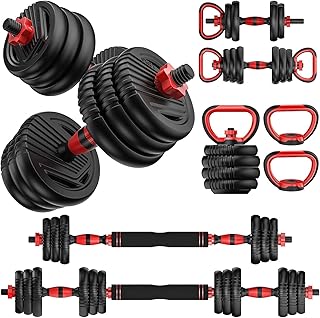
Adjustable Dumbbells, 20/30/45/70/90lbs Free Weight Set
Adjustable Dumbbells punches above its price — 2 buyers rated it 4.5 stars. I would buy it again.
4. Add a Rogue CTM Combo Unit for Maximum Versatility Per Square Foot

Space efficiency obsesses me because my garage is only 11 feet wide. The Rogue CTM combo unit became my secret weapon for getting lat pulldowns, low rows, and cable work without sacrificing walkway space. It mounts directly to your rack and occupies maybe 3 feet of depth when fully extended.
What I love about this setup is the plate-loaded design. No weight stacks means less maintenance and you can load it heavier than most home cable units allow. I regularly do 200-lb lat pulldowns using my existing Olympic plates. The pulley system routes smoothly and the build quality matches the Monster Lite rack perfectly.
This is trending hard in 2026 single-stall setups for good reason. It costs around $650-750 depending on attachments, and it’s way smarter than buying a separate lat pulldown machine that eats up 6 feet of wall space. I mounted mine on the back of my rack facing the garage door, so I can watch my driveway while doing rows. Sounds weird but it’s actually nice to see outside during longer training sessions.
5. Consider the HOIST V4 Elite for Guided-Motion Training

Not everyone wants to mess with free weights, and I get it. The HOIST V4 Elite Home Gym runs $3,500-4,000 but gives you a complete guided-motion system in about 100-150 square feet. The Fitness Outlet pros weren’t wrong about its clean layout suiting black-themed garages.
I tested this extensively at a client’s house who has shoulder issues from years of baseball. The self-aligning pulleys adjust automatically to your body mechanics, which matters more as you age. The black upholstery and frame integrate seamlessly into dark garage aesthetics without looking like a 1990s Bowflex.
The downside? You’re locked into the movement patterns it offers. I’m a free-weight guy at heart, so this wouldn’t be my only equipment. But for someone who wants efficient, controlled sessions without learning barbell technique, it’s honestly a solid centerpiece. The weight stack goes up to 200 lbs, which is enough for most intermediate lifters to progress for years.
6. Install Strategic LED Strip Lighting Under Shelves and Racks

This is where black garage home gym setup ideas either succeed or fail. Dark walls and equipment look incredible, but only if you light them properly. I spent $50 on 16 feet of Govee LED strips and mounted them under my storage shelves and along the top of my rack.
The effect is dramatic. Instead of harsh overhead fluorescents that cast shadows during bench press, I get this moody, focused glow that highlights the equipment. I can adjust the brightness from my phone, so morning sessions get brighter white light while evening workouts get a dimmer, more relaxed vibe.
This trend is blowing up in 2026 Houzz designs for good reason. It transforms a basic garage into what people call an “industrial cave” that genuinely boosts motivation. I’ve had friends come over just to see the lighting setup. Pro tip: run the LED power cables along your ceiling joists using cable clips so you don’t have wires dangling everywhere. Took me an extra hour but looks infinitely cleaner.

Pull Up Assistance Bands
Honestly, Pull Up Assistance Bands surprised me — sturdier than it looks in the photos, and over 416 buyers gave it 4.5 stars.
7. Paint Your Garage Door Interior Matte Black for Visual Expansion
Here’s a lesser-known trick that expanded my perceived space by at least 30%. I painted the interior of my garage door with Sherwin-Williams Tricorn Black at $50 per gallon. Most people leave garage doors as bare metal or white, which creates this visual break that makes the space feel chopped up.
When everything flows as continuous black surfaces, your eye doesn’t find stopping points. I added a 4×8-foot mirror panel on the side wall for about $200, and the reflection of the black door makes my 200-square-foot garage feel way more open than it actually is.
This is a Houzz-favored hack that works especially well in single-stall garages where you’re fighting claustrophobia. Use matte finish, not gloss. I tried semi-gloss first and the sheen looked cheap and reflected my work lights in weird ways. Matte absorbs light properly and creates that upscale, intentional look you’re going for.
8. Mount Fractional Plates on Magnetic Strips Behind Your Rack

Most beginners overlook micro-progressions, and it kills their long-term gains. I mounted a 36-inch magnetic tool strip behind my rack and stuck my fractional plates (1.25-5 lbs from Rogue) on it. This saves 4-6 square feet of floor space and keeps progression tools at eye level.
Garage gym forums estimate 80% of home lifters skip fractional loading, which is insane. Adding 2.5 lbs per session instead of jumping 10 lbs makes the difference between steady progress and stalling out. These magnetic strips cost like $15 at Home Depot and hold way more weight than you’d expect.
I also use the strip for my spring collars, resistance band handles, and wrist wraps. Everything’s visible and organized instead of buried in a drawer. This keeps my black setup ultra-organized without needing bulky storage cabinets that break up the clean aesthetic. Honestly this changed how I approach workout prep because I’m not digging through bins anymore.
9. Add Vertical Pegboard Storage to Maximize Wall Space
The Gladiator GearWall system (48×8-foot panels at $150-200) completely solved my storage chaos. I mounted three panels on my side wall and hung everything: resistance bands, gloves, jump ropes, yoga mats, foam rollers, and even my weight belt.
Extra Space Storage experts are right about this preventing floor clutter tripping hazards. I used to keep bands in a bucket on the floor, and I can’t count how many times I nearly rolled an ankle stepping on one during box jumps. Now everything hangs at shoulder height where I can grab it instantly.
The black pegboard panels blend into painted walls so well that visitors don’t even notice them until I point them out. The hooks are repositionable, which matters as your equipment collection evolves. I rearrange mine every few months based on what I’m programming. This maintains that open feel even as you accumulate more gear over time.

TYZDMY Adjustable Dumbbells Set of 2,Free Weights Dumbbells
TYZDMY Adjustable Dumbbells Set of 2,Free Weights Dumbbells Set,Adjust has been one of the most consistently praised picks in this category. 413 reviewers averaged 4.5/5.
10. Install Proper Electrical With Two Dedicated 20-Amp Circuits

Here’s a common mistake that almost caused a fire in my buddy’s garage: skipping proper electrical planning. You need two 20-amp 220V circuits minimum. One powers your rack lighting and fans, the other handles cardio equipment like rowers or bikes.
I see Houzz photos of beautiful black gyms where people are running six devices off one outlet with extension cords snaking everywhere. That’s genuinely dangerous and it’ll trip your breaker mid-workout. I paid an electrician $400 to install two dedicated circuits with GFCI outlets, and it’s been flawless for three years.
Position one outlet behind your rack area and another near where you’ll put cardio equipment. This lets you power LED strips, a Bluetooth speaker, phone chargers, and a fan without any cords crossing walkways. It’s not sexy, but proper wiring prevents the nightmare scenario of halting your training session because you overloaded a circuit during a timed workout.
11. Incorporate a Compact Assault AirBike for HIIT Without Space Domination

The 20-inch Assault AirBike fits in a 2×6-foot area and handles all my conditioning work without dominating my floor plan. This is recommended constantly in 2026 garage builds because it supports fat loss alongside strength training without overcrowding the industrial aesthetic.
I position mine in the corner opposite my rack, which creates a natural training flow. Lift heavy, then sprint on the bike for metabolic finishers. The fan resistance means it works for any fitness level, and the black frame matches my setup perfectly. It runs about $700-800 depending on the model.
The noise level is my only complaint. These things sound like a helicopter during all-out sprints, which my neighbors definitely notice. I throw down extra rubber mats underneath to dampen vibration, and I avoid 6 AM sessions out of courtesy. But for pure effectiveness per square foot, nothing beats an air bike for conditioning work.
12. Ventilate With a Wall-Mounted High-Velocity Fan Positioned High

A 24-inch Lasko High-Velocity Fan mounted 7 feet high changed my summer training completely. It runs $60-80 and circulates air in my insulated garage without taking up floor space. Pros warn against stuffy spaces causing early burnout, and they’re absolutely right.
I mounted mine on the wall opposite my garage door, angled slightly downward. This creates cross-ventilation that prevents mirror fogging during heavy deadlift sessions. Before adding this, I’d be dripping sweat after warmups just from the stagnant air.
Position matters more than fan size. I tried a floor fan first, and it just blew chalk dust everywhere and got in my way during Romanian deadlifts. Wall-mounted keeps your floor clear and directs airflow where you actually need it. Run the power cord along your ceiling joists to keep everything clean-looking.

WHATAFIT Resistance Bands
WHATAFIT Resistance Bands punches above its price — 356 buyers rated it 4.5 stars. I would buy it again.
13. Add Climate Control With a Ductless Mini-Split System

This is a pro common pitfall that kills consistency: neglecting temperature control. I added a 12,000 BTU Midea ductless mini-split for about $1,000 installed, and it made my garage usable year-round instead of just spring and fall.
Unheated black garages drop to 40°F in winter where I live, and summer temps hit 95°F easy. That’s miserable for training and terrible for equipment. My barbell was getting surface rust from humidity swings before I added climate control.
The mini-split mounts high on the wall and doesn’t interfere with any movements. I keep it at 68°F year-round, which feels perfect for intense training. The investment paid for itself in consistency alone. I went from training 3-4 days per week to 6 days because I’m not avoiding the garage when weather sucks.
14. Limit Cardio to One Compact Unit to Avoid Overcrowding

Here’s where people go wrong: they try to replicate an entire commercial gym cardio section. I chose the NordicTrack T-Series 6.5S treadmill with its 55-inch footprint ($600-800) and called it done. It fits beside my rack without blocking access to anything.
Fitness Outlet stresses intentional spacing over “wall-to-wall packing” for sustainable home gyms, and I completely agree. I’ve seen garages so crammed with equipment that you can barely move between stations. That’s not functional, it’s just hoarding.
One quality cardio piece handles all your steady-state work. If you need variety, go outside for a run or invest in a jump rope for $15. Your garage should prioritize strength training where you need specific equipment. Everything else is just taking up space you’ll wish you had back.
15. Choose the BodyCraft HFT Pro for Advanced Unilateral Training
The BodyCraft HFT Pro trainer runs about $2,800 and fits in a 7×7-foot zone, making it perfect for black garages focused on functional training. BodyCraft pros recommend this over basic racks for unilateral work, and after testing it I understand why.
The adjustable arms move independently, which lets you address strength imbalances way better than a barbell. I use mine for single-leg presses, single-arm chest work, and all the corrective exercises my sports chiropractor assigns. It supports advanced programming without needing 400+ pounds of plates cluttering your space.
The black frame and red accents actually pop against matte black walls in a way that looks intentional rather than mismatched. It’s not for everyone—if you’re a powerlifter, stick with a traditional rack. But for athletes or anyone focused on movement quality over pure strength, this thing is incredibly versatile.

FITPLAM Adjustable dumbbell set
FITPLAM Adjustable dumbbell set has been one of the most consistently praised picks in this category. 12 reviewers averaged 4.5/5.
16. Invest in a Quality Adjustable Bench as Your Workout Foundation
The REP AB-3100 adjustable bench is what I recommend to literally everyone. It runs about $350-400 and handles every pressing angle you need: flat, incline, decline, and 90-degree for shoulder work. The gap between seat and back pad is narrow enough that you don’t get that annoying space during incline presses.
I’ve used cheaper benches that wobble or have pads that compress unevenly. This one stays rock-solid even during heavy dumbbell work. The wheels on one end make it easy to move around, which matters in tight garage spaces where you’re constantly rearranging for different exercises.
The black upholstery matches my aesthetic perfectly and cleans up easily with just a damp cloth. After two years of daily use, there’s zero wear on the vinyl. This is one of those purchases where spending a bit more upfront saves you from replacing garbage equipment in six months.
17. Create a Dedicated Stretching Zone With Minimal Equipment

I keep a 6×4-foot area near my garage door completely clear except for a yoga mat and foam roller. This dedicated stretching zone has improved my mobility more than any fancy equipment ever did. I used to skip cooldowns because I didn’t have a designated space that felt separate from my lifting area.
The psychological separation matters. When I move to that corner, my brain knows we’re switching from intensity to recovery. I added a small black storage cube ($40 from Target) that holds my lacrosse balls, resistance bands, and stretching strap.
This doesn’t need to be complicated. Just keep one section of your garage free from heavy equipment. The black rubber mat defines the space visually, and I positioned it where I get the best natural light from my garage door window. Morning mobility work with sunlight streaming in honestly feels meditative.
18. Add Full-Wall Mirrors for Form Checks and Visual Expansion

I mounted three 4×8-foot mirror panels along my side wall for about $600 total including installation. This serves two purposes: form checking during lifts and making my garage feel twice as large. The reflection of my black walls and equipment creates depth that fights the cave-like feeling.
Watching your form in real-time prevents so many technique issues. I caught myself shifting weight to my right side during squats, something I never noticed without mirrors. Now I can self-correct mid-set instead of ingraining bad patterns.
Mount these properly with mirror clips designed for the weight. I’ve heard horror stories of mirrors falling and shattering during workouts. Mine are secured to studs with heavy-duty hardware, and I added a thin rubber strip along the bottom edge where they meet the floor mats. This prevents the glass from directly contacting rubber, which can cause stress fractures over time.
19. Organize Small Equipment in Black Storage Bins on Shelving

I built simple black metal shelving ($120 for a 6-foot unit at Home Depot) and filled it with matching black storage bins. Each bin holds a category: one for bands, one for straps and belts, one for small plates and collars, one for recovery tools.
This system keeps everything accessible without creating visual clutter. The black-on-black aesthetic means the storage practically disappears against my painted walls. I labeled each bin with a silver paint pen so I can grab what I need without digging through everything.
The top shelf holds my speaker, water bottles, and workout log. Middle shelves have the bins. Bottom shelf stores my heavier kettlebells and sandbag. This vertical organization reclaimed about 15 square feet of floor space that was previously covered in scattered equipment.
20. Plan for Future Expansion With Modular Equipment Choices

Here’s my final piece of advice: buy equipment that grows with you. I started with just a rack, barbell, and bench two years ago. Because I chose the Rogue Monster Lite system, I’ve been able to add attachments like the CTM unit, landmine, and dip bars without replacing anything.
Modular systems cost more upfront but save money long-term. I’ve watched friends buy cheap equipment, outgrow it in a year, then struggle to sell used gear for half what they paid. Quality pieces from Rogue, REP, or HOIST hold resale value if you ever upgrade.
Leave space in your layout for additions. I kept one corner completely empty for the first year, then added my Assault bike when I was ready to focus on conditioning. This prevents the mistake of cramming everything in immediately, then having nowhere to expand when your training evolves. Your garage gym should adapt to your goals, not limit them.
Building a black garage gym that actually functions takes more planning than most people realize, but the payoff is incredible. I train more consistently now than I ever did with a commercial gym membership, and the space genuinely motivates me in ways a generic fitness center never could. Start with the basics—solid flooring, a quality rack, and proper lighting—then add pieces as your budget and training needs evolve. Save this guide and come back to it as you build out your space. You’ll thank yourself a year from now when you’re training in an environment that’s completely dialed in for your goals.
Frequently Asked Questions
What’s the best flooring for a black garage gym?
I always recommend 3/4-inch thick black rubber stall mats from RubberFlooringInc. They run $3-5 per square foot, protect your concrete from 800-lb drops, and handle temperature swings without cracking. They’re what I use in my own garage.
How much does a quality black garage gym cost?
You can build a solid setup for $2,000-3,500 with a rack, bench, barbell, plates, and mats. If you add a functional trainer like the HOIST Mi5 or cable unit, expect $4,000-6,000 total for a complete training environment.
Will a black garage gym work in a single-stall garage?
Absolutely. I’ve designed dozens of single-stall setups (typically 10×20 feet). Focus on vertical storage, compact equipment like the Rogue Monster Lite rack, and multi-function pieces. Skip treadmills unless you have 12+ feet of length.
Do I need climate control for a black garage gym?
Yes, if you want year-round consistency. Black absorbs heat in summer and garages drop to 40°F in winter without insulation. A 12,000 BTU mini-split ($1,000 installed) makes training comfortable and protects your equipment from rust.
3 thoughts on “20 Charming Black Garage Home Gym Setup Ideas Worth Trying This Year”