What’s Inside
- Prioritize Glute Activation Before Every Glute Workout Routine
- Master The Mind-Muscle Connection First
- Make Hip Thrusts The Foundation Of Your Routine
- Implement Progressive Overload Consistently
- Incorporate Unilateral Exercises For Balance And Growth
- Don’t Neglect Glute Medius And Minimus With Abduction Work
- Embrace The Sumo Fairy For Lower Glute Max Development
- Fuel Your Glute Workout Routine With Sufficient Protein
Last Tuesday at my local gym, I ripped my favorite pair of shorts right down the middle while trying to force a 315-pound barbell squat. The noise sounded like a gunshot over the terrible gym playlist, and I had to waddle to the locker room with my sweatshirt tied around my waist. The worst part wasn’t the embarrassment. It was realizing my glutes were asleep during the entire lift, forcing my lower back and hamstrings to do all the heavy work. If you want a glute routine that actually delivers, you can’t just blindly move heavy weights and hope for the best. I’ve spent years making every mistake in the book. I tried lifting with zero activation, I skipped unilateral work because I hated balancing, and I ignored my nutrition. Finding the right routine changed everything for my lower body strength and killed my back pain. Let’s break down exactly what you need to do, the gear you actually need, and the mistakes you need to stop making right now.
1. Prioritize Glute Activation Before Every Glute Workout Routine

You can’t just walk in, throw plates on a bar, and expect your glutes to fire. I learned that the hard way. For years, I skipped warm-ups because I thought they were a waste. My glutes were dormant from sitting at a desk all day. You need to dedicate 5 to 10 minutes to activation drills before your main lift to physically wake up the muscles. Fitness coach Jeremy Ethier constantly emphasizes that these drills increase your body’s ability to recruit glute muscles when you transition to heavy compound lifts.
Here’s my warm-up. I do 2 sets of 15 reps of bodyweight glute bridges, really driving through my heels. Then, 2 sets of 15 reps per side of clamshells. Finally, I finish with 2 sets of 10 to 15 reps per side of banded lateral walks. For the walks, you absolutely need a fabric resistance band. I bought a cheap pack of rubber bands from Target last year for $12.99, and they instantly rolled up and ripped out my leg hair. It was miserable. Now, I exclusively use a fabric band. I highly recommend the Mark Bell Sling Shot Hip Circle, which usually runs about $35. If you want different resistance levels, grab a set of REP Circle Hip Bands. A set of three costs around $44.99. Place the band just above your knees, sink into a quarter squat, and take wide, deliberate steps. You’ll feel a deep burn in your hips within thirty seconds. Trust me.
2. Master The Mind-Muscle Connection First

This sounds like cheap fitness jargon, but I promise it’s real. Consciously focusing on squeezing and feeling your glutes work during each rep will change your results. A pilot study by glute expert Bret Contreras found that this internal focus could increase muscle activation by up to 38 percent in exercises like back extensions. If you’re just going through the motions, you’re leaving gains on the table.
I spent months ego-lifting on the leg press without feeling my glutes do any work. My lower back took all the strain. Walking through the produce aisle at Whole Foods the next day felt like I had a rusty spine. I couldn’t even bend over to look at the bottom shelf of apples without wincing. To fix this, you need to physically touch the muscle. Place a hand on your glute during isolation exercises like clamshells or cable kickbacks. You need to feel the tissue harden and contract. If you don’t feel it squeezing, you’re likely using momentum or letting your hamstrings take over. Slow down. Take a full three seconds to lower the weight, pause for one second at the bottom, and then explode up while squeezing hard. It’s humbling to drop the weight by half just to feel the right muscle, but it’s necessary.
3. Make Hip Thrusts The Foundation Of Your Routine

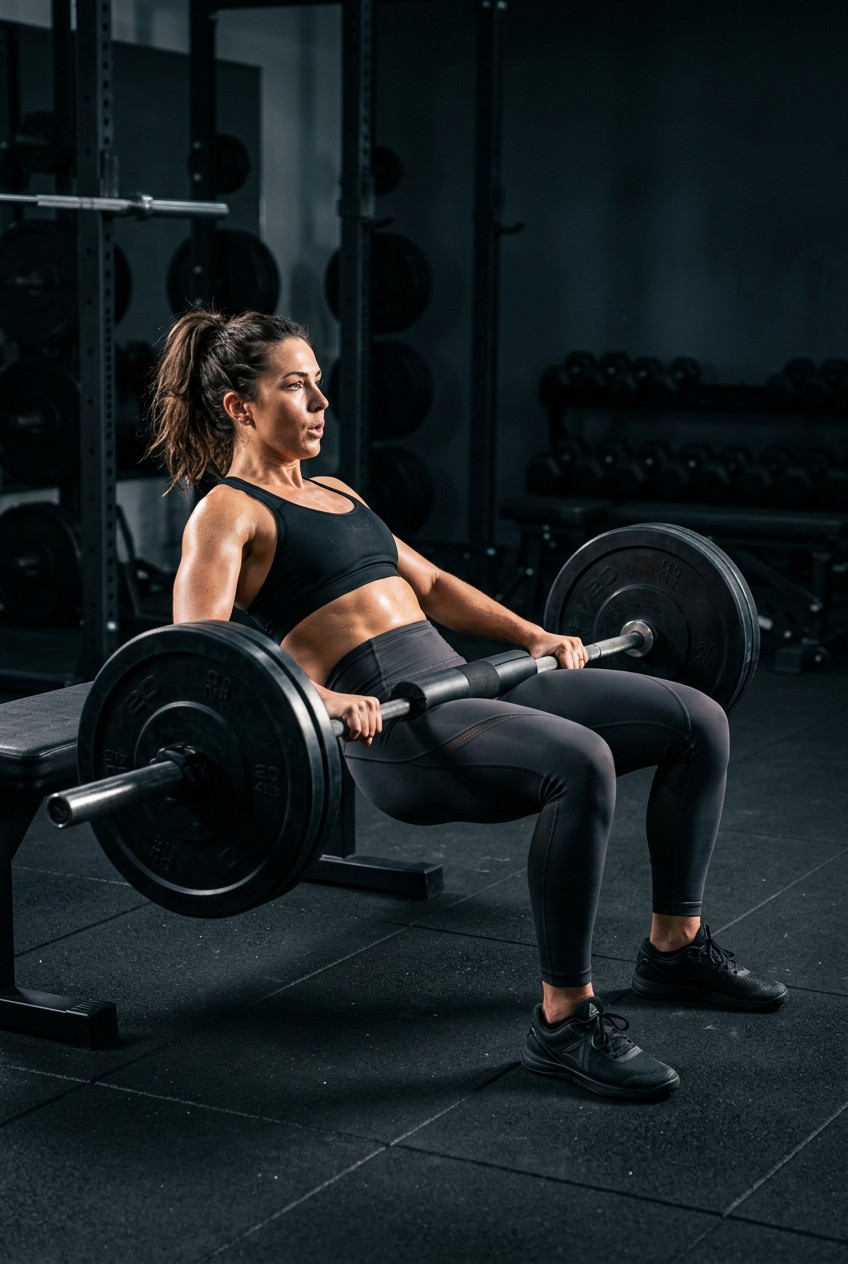
If you want to build your gluteus maximus, hip thrusts are non-negotiable. They’re widely regarded as the most effective exercise for isolating and overloading the glutes. Aim for 3 sets of 8 to 12 reps. The focus is a powerful, aggressive glute squeeze at the top, followed by a slow, controlled descent. Your shins should be vertical at the top. If your feet are too far forward, you’ll feel it in your hamstrings. If they’re too close, your quads take over. You might also like: 20 Gorgeous Garage Home Gym Setup Ideas to Steal Right Now
Let’s talk about the pain of a bare barbell. When I first started, I used a cheap, rolled-up yoga mat from Walmart for $9.99 to cushion my pelvis. It was a disaster. The mat slipped mid-rep, the barbell crashed into my hip bones, and I had massive purple bruises for a week. I couldn’t even wear a belt comfortably. You must invest in a quality pad. I swear by the AbMat Hip Thrust Pad, which costs exactly $50. It’s dense foam that won’t compress. If you want a cheaper option, the Iron Bull Strength Advanced Squat Pad is around $19.99 and features thick, ergonomic foam that eliminates the pain of knurling digging into your skin. Protect your hips so you can focus on the contraction. You might also like: 15 Brilliant Dark Basements Home Gym Setup Ideas Worth Trying This Year

NICEPEOPLE Adjustable Weight Bench for Home Gym
NICEPEOPLE Adjustable Weight Bench for Home Gym has been one of the most consistently praised picks in this category. 32 reviewers averaged 4.5/5.
4. Implement Progressive Overload Consistently

You can have the best routine in the world, but if you aren’t forcing the muscles to adapt, they won’t grow. For continuous growth, you must progressively overload by increasing weight, reps, or intensity over time. A common mistake is lifting the same weight for months. Your body is smart. It adapts to the stress, and then progress stalls. You might also like: 20 Inspiring Journal Home Workout Ideas You Haven’t Thought Of
I was stuck lifting 135 pounds on hip thrusts for four months because I kept forgetting to add weight. I’d show up, do my 3 sets of 10, and leave feeling satisfied but never getting stronger. I fixed this by tracking every workout. I grabbed a $3.99 spiral notebook from Kroger and started writing down my numbers. The rule is simple. If you can complete 3 sets of 10 with perfect form, you must increase the weight by 2.5 to 5 pounds next time. Don’t jump by 20 pounds, or your form will break down. Buy a set of fractional micro-plates if your gym doesn’t have them. A set of 1.25-pound plates usually costs about $25 online. Throwing those tiny plates on the bar might look ridiculous, but that slow, steady 2.5-pound increase every week adds up to massive strength gains over six months.
5. Incorporate Unilateral Exercises For Balance And Growth

Training one leg at a time is brutal, exhausting, and essential. Unilateral exercises address hidden imbalances and drastically improve single-leg stability, which most people overlook. If you only do bilateral movements like squats, your dominant leg will take over without you realizing it.
My left leg used to be weak. I found this out during a busy evening session. I was attempting a heavy single-leg Romanian deadlift, lost my balance, fell sideways, and knocked over my metal water bottle. It clattered across the floor while everyone stared. It was humiliating, but it forced me to confront my imbalance. You need to include exercises like Bulgarian Split Squats. I recommend 3 sets of 8 to 12 reps per leg. Rest the top of your back foot on a bench, hop your front foot forward until your shin is vertical, and lean your torso slightly forward to target the glute. Follow that up with Single-Leg Romanian Deadlifts for 3 sets of 10 to 12 reps per leg. Hold a dumbbell in the hand opposite to your working leg. The deep stretch you feel in your glute and upper hamstring at the bottom is exactly what triggers growth.
6. Don’t Neglect Glute Medius And Minimus With Abduction Work

Your glutes aren’t one giant muscle. They’re comprised of three: the maximus, the medius, and the minimus. While hip thrusts hit the maximus, you need abduction to target the medius and minimus. These smaller muscles sit on the upper side of your hips and are vital for stability and knee tracking. If you skip this, your knees will likely cave inward during squats, which is exactly what happened to me for years.
You need to perform Seated Banded Hip Abductions for 3 sets of 15 to 20 reps. Glute expert Bret Contreras recommends varying your torso angle to target different fibers. Do 10 reps sitting straight up, 10 reps leaning forward at 45 degrees, and 10 reps leaning back. The burn is sickening in the best way. I used to buy cheap rubber bands, but I returned a terrible set to Sprouts because they snapped on day two. You need a heavy-duty fabric band. The Gymreapers Hip Bands are fantastic. A set of 3 costs around $29.99. They’re thick, comfortable, and they refuse to roll up or slip down your thighs no matter how much you sweat.
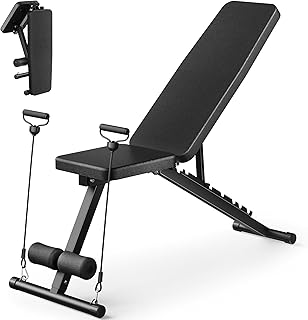
Adjustable Weight Bench for Home Gym
If you want something that just works, Adjustable Weight Bench for Home Gym is a safe bet (517 reviews, 4.5 stars).
7. Embrace The Sumo Fairy For Lower Glute Max Development

If you want to stay ahead of the curve, try the Sumo Fairy. This is a trending exercise popularized by glute specialist Cassidy Morgan, and it’s going to be everywhere by 2026. It targets the lower gluteus maximus, an area neglected by standard workouts. The movement is a wide-stance sumo squat performed with one foot elevated on a platform, like a weight plate or a small step.
I tried this last week, and it changed how I view squats. You set up with one foot on a 45-pound bumper plate and the other flat on the floor in a wide sumo stance. Hold a heavy dumbbell or kettlebell between your legs. As you sink down, the elevation forces a deep stretch in the lower glute of the elevated leg. Perform 3 sets of 10 to 12 reps per leg, focusing on a slow, three-second descent to maximize that stretch. The soreness the next day was unreal. I was walking down the frozen food aisles at Trader Joe’s trying to buy chicken breasts, and I could barely bend my knees to reach the bottom freezer. It’s an intense stretch that forces the lower glute fibers to work overtime. Start with a light 15-pound dumbbell until you master the balance.
8. Fuel Your Glute Workout Routine With Sufficient Protein

You can train until you’re blue in the face, but if you don’t feed your body, your glutes won’t grow an inch. Muscle growth depends on adequate nutrition, specifically total daily protein. You need to aim to consume 1.6 to 2.2 grams of protein per kilogram of body weight daily to support repair. If you weigh 150 pounds, you need roughly 110 to 150 grams of protein every day.
I used to get this wrong. I thought eating plain, dry chicken breasts and broccoli was the only way. It tasted like wet cardboard. I dreaded every meal and eventually binged on junk. You don’t have to suffer to hit your goals. Now, I buy the giant 48-ounce tub of Kirkland Signature Greek Yogurt at Costco for $5.99. Skip the fat-free stuff. It’s chalky. I get the whole milk version. Every morning, I mix one cup of that yogurt with one scoop of Optimum Nutrition Gold Standard Whey in Double Rich Chocolate. A 5-pound tub costs $79.99, but it lasts for months and mixes perfectly. That one breakfast bowl gives me nearly 45 grams of high-quality protein before I leave the house. Stop starving yourself and start feeding the muscle tissue you’re breaking down in the gym. It took me years to figure that out.
Building strong glutes isn’t about doing endless hours of random kickbacks you saw on social media. It’s about picking effective movements, executing them with flawless form, and forcing the muscle to adapt by slowly adding weight. I recommend taking these eight tips, writing them in your gym notebook, and sticking to this plan for twelve weeks. If you found this helpful, save this article, pin it, and share it with a friend who keeps complaining about their back hurting during squats. Now go get to work.
Frequently Asked Questions
How often should I do a glute workout routine?
For optimal muscle growth, you should train your glutes 2 to 3 times per week. This frequency allows for sufficient volume to trigger hypertrophy while providing enough rest days in between for the muscle tissue to repair and grow.
Why don’t I feel my glutes working during squats?
You likely have poor mind-muscle connection or dormant glutes from prolonged sitting. Incorporate 5 to 10 minutes of banded activation drills, like clamshells and glute bridges, before lifting to wake up the muscles and prevent your quads from taking over.
Are hip thrusts really necessary for glute growth?
Yes. Hip thrusts are widely considered the most effective exercise for isolating and overloading the gluteus maximus. They allow you to safely move heavy weight while keeping constant tension on the glutes at the peak of the contraction.
What is the best resistance band for glute activation?
Always choose a thick fabric resistance band over cheap rubber ones. Fabric bands, like the Mark Bell Sling Shot or Gymreapers Hip Bands, won’t roll up, snap, or pull your leg hair during exercises like lateral walks and seated abductions.
