What’s Inside
- Invest In Adjustable Dumbbells For Your Workout Routine At Home
- Dial In Your HIIT Ratios Instead Of Guessing
- Stop Skipping The Warm-Up And Foam Rolling
- Master Bodyweight Basics Before Buying Heavy Gear
- Add Plyometrics For Real Explosive Power
- Fix Your Pre-Workout And Post-Workout Nutrition
- Carve Out A Dedicated Space For Your Workout Routine At Home
- Track Your Hydration With Exact Measurements
- Use Resistance Bands For Progressive Overload
- Curate A Playlist To Keep Your Pace Up
- Limit HIIT Sessions And Prioritize Active Recovery
I’m lying flat on my back on a cheap, peeling blue yoga mat I bought at Target five years ago. I’m staring at a ceiling fan that’s ticking like a time bomb. My lungs are burning. I’ve just failed miserably at my third attempt to build a proper workout routine at home. I tried doing eighty burpees in a row because some fitness influencer said it was a good idea. Spoiler alert. It’s not. I threw up a little bit of the $3.99 Trader Joe’s cold brew I drank an hour prior. Building a workout routine at home that actually builds real strength doesn’t require puking or passing out. It requires a smart setup. I tried this wrong for months before figuring it out. I’d buy random gear, use it twice, and shove it under the couch. I thought I needed a massive garage gym to see any real changes in my physique. I was completely wrong. You don’t need a commercial squat rack in your living room. You just need a few specific pieces of gear, a dialed-in plan, and the willingness to sweat on your own floor. I’m going to walk you through exactly what I do now. Let’s fix this mess and build a system that actually works.
1. Invest In Adjustable Dumbbells For Your Workout Routine At Home

I used to drive to Walmart every single payday to buy a new pair of cast-iron hex dumbbells. I’d drop $45 on a pair of 20-pounders, then $60 on 25-pounders. Before long, my apartment smelled like a literal tire factory. The rubber off-gassing was awful. Plus, I kept stubbing my bare toes on the heavy iron weights left scattered in the hallway. It’s a terrible way to build a home gym. I finally wised up and bought adjustable dumbbells. I highly recommend the Bowflex SelectTech 552. They cost exactly $429.99 at most major retailers. Yes, it’s a steep upfront cost. But they replace fifteen sets of weights. You just turn the dial, hear a satisfying mechanical click, and pull out anywhere from 5 lbs to 52.5 lbs per dumbbell. If you’re on a tighter budget, look at the LifePro PowerFlow Plus for around $189.99. They go up to 25 lbs per hand, which is plenty for upper body isolation work. Having a wide range of resistance is mandatory for a good workout routine at home. You can’t shoulder press the same weight you deadlift. Skip the clutter. Buy the adjustables. You won’t regret getting your floor space back.
2. Dial In Your HIIT Ratios Instead Of Guessing

Most people get high-intensity interval training completely wrong. I know I did. I used to do 60 seconds of frantic jumping jacks followed by 10 seconds of rest. I’d completely gas out by minute three and spend the rest of the workout gasping for air on the carpet. You need specific work-to-rest ratios. If you’re a beginner, start with a 1:3 ratio. That means 20 seconds of hard work, like jump squats, followed by 60 seconds of complete rest. Intermediate exercisers can aim for a 1:2 ratio. That looks like 30 seconds of work and 60 seconds of rest. Advanced folks can push a 1:1 or 2:1 ratio. I personally swear by 60 seconds of work and 30 seconds of rest when I’m short on time. A 20-minute HIIT session using these exact ratios will absolutely wreck you in the best way possible. I bought a cheap $12.99 Casio digital stopwatch at Kroger specifically for this. Trying to use your phone timer is a nightmare because the screen keeps locking mid-set with sweaty fingers. Stick to the math. It’s the only way to build cardiovascular endurance without burning out your central nervous system.
3. Stop Skipping The Warm-Up And Foam Rolling

I used to jump straight out of bed and into heavy squats. My knees sounded like a bowl of Rice Krispies. It’s incredibly stupid. You can’t skip your warm-up and cool-down. A 5-minute dynamic warm-up is non-negotiable. I do 60 seconds of marching in place, 60 seconds of arm circles, and a few dozen leg swings. It physically warms the synovial fluid in your joints. Post-workout, you need to foam roll for 5 to 10 minutes. I found the TriggerPoint GRID Foam Roller at Sprouts near the supplement aisle for $34.99. It has a rigid hollow plastic core wrapped in dense EVA foam. Rolling out my IT bands for the first time was excruciating. It felt like someone was dragging a hot butter knife down my thigh. (Learned that the hard way). But this self-myofascial release technique relieves muscle tightness and inflammation better than static stretching. I spend exactly 2 minutes on my quads, 2 minutes on my hamstrings, and 1 minute on my upper back. Don’t roll directly over your lower spine. Stick to the meaty parts of the muscle. Your joints will feel significantly better the next morning. You might also like: 20 Brilliant Adopt Me Houses Home Gym Setup Ideas That Are Totally Worth It
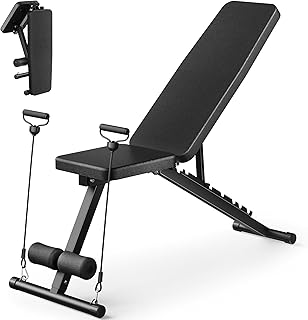
Adjustable Weight Bench for Home Gym
A dependable everyday pick — Adjustable Weight Bench for Home Gym pulls in 517 ratings at 4.5 stars. Not flashy, just solid.
4. Master Bodyweight Basics Before Buying Heavy Gear

A massive mistake I see all the time is people buying a $2,000 cable machine before they can do a single proper push-up. As personal trainer Lyndsey Todd advises, you need to get into the habit of exercising first. Focus on foundational bodyweight exercises. I’m talking about strict, slow squats for 10 to 12 reps. I’m talking about push-ups for 5 to 10 reps. If you can’t do them on your toes, drop to your knees. There’s no shame in scaling the movement. You also need glute bridges for 10 to 12 reps to wake up your posterior chain. Finally, planks. Planks are incredibly boring. I hate them. But holding a strict plank for 20 to 30 seconds builds a bulletproof core. I remember trying to hold a two-minute plank last summer. I was sweating so much my forearms slipped out from under me and I smashed my chin on the floor. Keep it to 30 rigid seconds. Contract your quads, squeeze your glutes, and brace your stomach like you’re about to take a punch. Master these four basic moves. Once you can do 3 sets of each with perfect form, then you’re ready to start adding heavy iron. You might also like: 15 Stunning Room Home Workout Ideas That Make a Real Difference
5. Add Plyometrics For Real Explosive Power

If you want to build athletic speed and power at home, you need plyometrics. These exercises require maximum muscle exertion in very short bursts. I started adding squat jumps to my routine last year. I do 2 to 3 sets of 10 reps. The first time I tried them, I landed stiff-legged. A sharp, shocking pain shot straight up my shins and into my kneecaps. It was a terrible mistake. You have to ensure proper landing mechanics. Practice a slow, controlled air squat first. When you jump, land softly. Think about absorbing the impact like a ninja. The only sound should be a light thud on the floorboards. If it sounds like a bowling ball dropping, you’re doing it wrong. I also love pogo hops. You just bounce on the balls of your feet like you’re using an invisible jump rope. It sets your calves on fire after about 45 seconds. Plyometrics are incredibly taxing. Don’t do them every single day. I throw them in twice a week max. They build the kind of explosive strength you can’t get from slow, heavy lifting alone. You might also like: 20 Gorgeous Garage Home Gym Setup Ideas to Steal Right Now
6. Fix Your Pre-Workout And Post-Workout Nutrition

You can’t out-train a garbage diet. I tried for years. I used to eat a massive bowl of leftover spaghetti 10 minutes before a heavy leg day. The heavy, sloshing stomach feeling made me want to curl up and die. The American Heart Association recommends fueling up two hours before exercise. I eat exactly 1/2 cup of whole-grain cereal with 4 oz of low-fat milk. I buy the Whole Foods 365 brand rolled oats for $4.49 a bag. Skip the fat-free, sugar-free diet stuff. It tastes like wet cardboard and gives you zero energy. If I’m working out within an hour, I just eat one medium banana or a sliced apple. It provides quick, easily digestible carbohydrates. After your workout, you have a two-hour window to consume a meal with both carbohydrates and protein. This aids muscle recovery and replenishes your depleted glycogen stores. I usually mix 1 scoop of whey protein with 8 oz of water and eat a handful of almonds. If you don’t feed your muscles after tearing them down, you won’t grow. It’s basic biology.

NICEPEOPLE Adjustable Weight Bench for Home Gym
Honestly, NICEPEOPLE Adjustable Weight Bench for Home Gym surprised me — sturdier than it looks in the photos, and over 32 buyers gave it 4.5 stars.
7. Carve Out A Dedicated Space For Your Workout Routine At Home

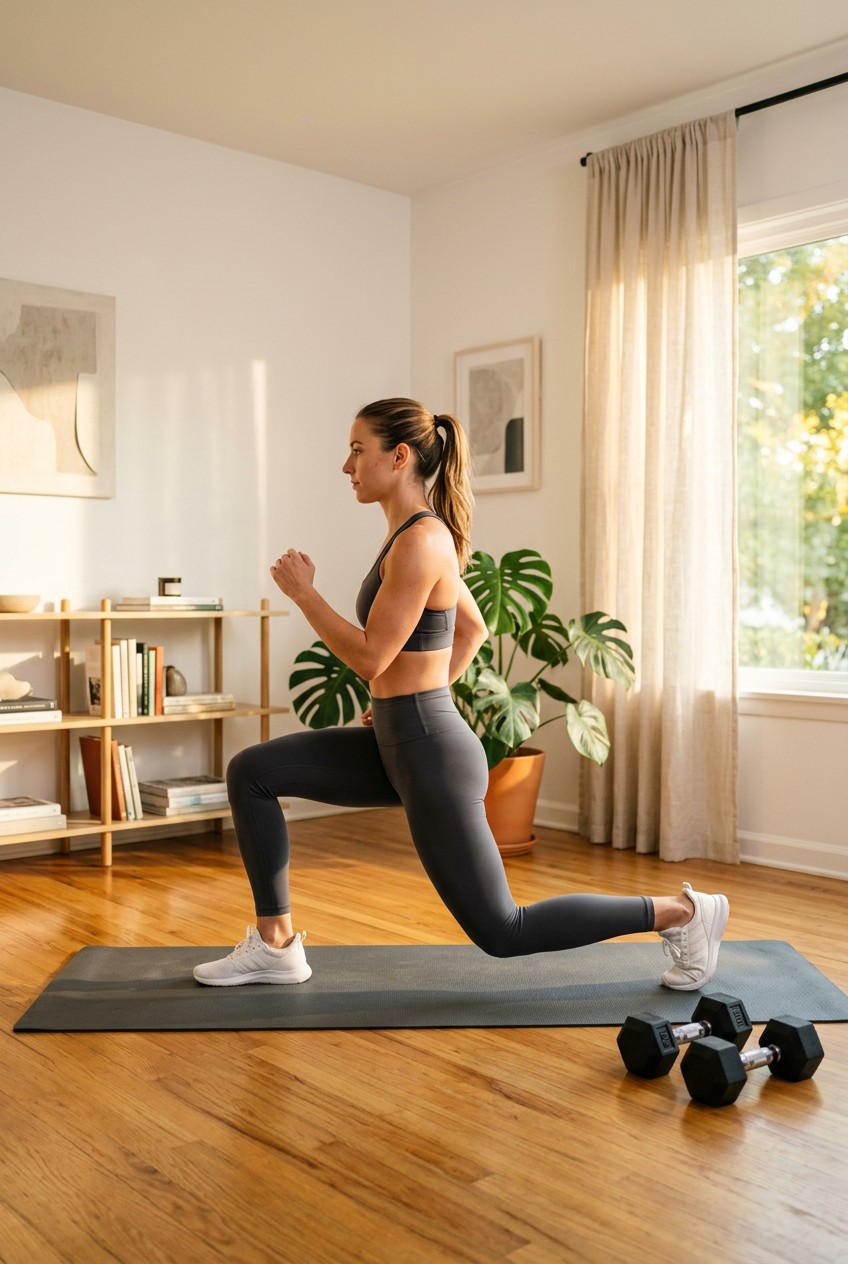
Working out in the middle of your living room next to a pile of unfolded laundry is a recipe for failure. I used to try doing sit-ups while staring at the dust bunnies under my TV stand. The distraction level was absurd. You need a dedicated workout zone. As David Wiener, a personal trainer at Freeletics, says, setting up a mini gym in the corner of a room is a great way to make sure you actually get the work done. This space becomes synonymous with exercise. When you step into it, your brain knows it’s time to work. Ensure you have enough room to extend your arms fully in every direction without hitting a lamp or a bookshelf. I define my space with a Gaiam Premium Yoga Mat. I bought it for $29.98. The sticky grip of a fresh yoga mat is perfect for preventing slips during sweaty burpees. I roll it out in the spare bedroom, close the door, and ignore the rest of the house. You don’t need a huge room. A 6-foot by 6-foot square of clear floor space is plenty.
8. Track Your Hydration With Exact Measurements

Most guys I know drink about four sips of water from the tap and call themselves hydrated. It’s a joke. Dehydration kills your strength output faster than anything else. The American College of Sports Medicine recommends drinking roughly 2 to 3 cups (about 473 to 710 milliliters) of water 2 to 3 hours before your workout. I bought a 32 oz wide-mouth Nalgene bottle at Costco. They sell a two-pack for $14.99. I fill it to the brim and drink the whole thing before noon. During exercise, you need to aim for about 1/2 to 1 cup (118 to 237 milliliters) every 15 to 20 minutes. I made the mistake of chugging 40 oz of ice water right in the middle of a brutal kettlebell circuit. My stomach cramped so hard I had to lie in the fetal position for twenty minutes. (Trust me on this). Sip, don’t chug. Adjust the volume based on your body size and how much you’re sweating. If your shirt is soaked through, you need more water. If your urine looks like dark apple juice, you’re already dangerously dehydrated.
9. Use Resistance Bands For Progressive Overload

Bodyweight squats will only build your legs up to a certain point. Eventually, you need progressive overload. That’s where resistance bands come in. They are incredibly versatile, space-efficient, and cheap. I picked up a TheraBand Resistance Band Set for $14.99 online. You get a whole pack with varying resistance levels. I use the thick red band to add tension to my push-ups. You just loop it behind your back and hold the ends under your palms. It makes the lockout phase brutally difficult. I also use them for glute bridges by looping a smaller band right above my knees. A quick warning. Always check your bands for tiny tears before you stretch them. I once anchored a green band to a door hinge for triceps pushdowns. The band snapped right in the middle and whipped me across the thigh. The sharp, burning sting left a red welt for three days. Always inspect your gear. But don’t sleep on bands. They provide constant tension through the entire range of motion, which forces your muscles to work harder than they do with free weights alone.

OLIXIS Adjustable Weight Bench for Full Body Strength
If you want something that just works, OLIXIS Adjustable Weight Bench for Full Body Strength Training is a safe bet (31 reviews, 4.5 stars).
10. Curate A Playlist To Keep Your Pace Up

Working out in total silence is miserable. Hearing yourself grunt and wheeze is not motivating. Emma Kowalski, a brilliant personal trainer, points out that music works incredibly well at keeping you focused. I used to listen to slow, two-hour history podcasts while lifting weights. My heart rate would drop, I’d take five-minute rest breaks, and my workouts dragged on forever. You need a high-energy playlist. For strength training and HIIT, experts recommend music with 130 to 140 Beats Per Minute (BPM). This tempo naturally encourages you to move faster and maintain intensity. I have a dedicated playlist full of heavy rock and fast electronic tracks. There is nothing worse than the sudden, deafening silence when your Bluetooth speaker dies right before a heavy set of lunges. Charge your gear. Put on something loud. Let the tempo dictate your pace. If a slow acoustic song comes on shuffle, skip it immediately. You want aggressive, driving beats that make you want to pick up heavy things. It sounds like a minor detail, but the right audio environment completely changes your energy levels.
11. Limit HIIT Sessions And Prioritize Active Recovery

More is not always better. I used to do brutal HIIT sessions six days a week. By week three, my legs felt like heavy lead pipes. I couldn’t sleep, and my joints constantly ached. I was severely overtraining. While highly effective, HIIT completely taxes your central nervous system. Experts recommend limiting HIIT sessions to 2 or 3 times per week to prevent injury and keep your cortisol levels in check. You absolutely must allow for full recovery between sessions. Dr. Tim Degan emphasizes that listening to your body prevents burnout. On my off days, I focus on active recovery. I’ll go for a brisk 30-minute walk or do some light yoga. If I want a fun, low-impact challenge, I use the deck of cards workout. You take a standard deck of playing cards. Assign an exercise to each suit. Hearts equal squats. Spades equal push-ups. Diamonds equal lunges. Clubs equal sit-ups. The number on the card dictates the reps. Face cards are 10 reps. Aces are 15 reps. I remember pulling a King of Spades right after an Ace of Spades. Twenty-five push-ups back-to-back. It introduces fun randomness and keeps the routine fresh without frying your nervous system.
Building a home gym setup doesn’t require thousands of dollars or a massive spare room. It just requires consistency, proper form, and a few smart investments. Start with the bodyweight basics, grab some adjustable dumbbells when you’re ready, and dial in your nutrition. I’ve been training at home for years now, and I’ll never go back to a crowded commercial gym. The commute is zero minutes, and I never have to wait for a bench. Pin this article to your fitness board so you can reference these exact ratios and routines later. Now go drink some water and get to work.
Frequently Asked Questions
How do I start a workout routine at home?
Start with foundational bodyweight movements like squats, push-ups, and planks. Master your form before investing in heavy equipment. Dedicate a specific 6×6 foot space in your home, and aim for consistency over extreme intensity.
What equipment is best for a workout routine at home?
Adjustable dumbbells, like the Bowflex SelectTech 552, are the best investment for saving space. Pair them with a high-quality yoga mat, a dense foam roller for recovery, and resistance bands for progressive overload.
How often should I do HIIT in my workout routine at home?
Limit High-Intensity Interval Training (HIIT) to 2 or 3 times a week. Doing it more frequently can tax your central nervous system, elevate cortisol levels, and lead to serious burnout or injury.
What should I eat before my home workout?
Eat complex carbohydrates like whole-grain cereal about two hours before exercising. If you only have an hour, grab a fast-digesting carb like a banana or an apple to fuel your session without causing stomach cramps.

3 thoughts on “11 Workout Routine At Home That Actually Work”