What’s Inside
- Invest in Quality Adjustable Dumbbells for a Lower Body Workout at Home
- Fix Your Squat Depth (Most People Get This Wrong)
- Use Resistance Bands for Glute Activation
- Dial In Your Lunge Angles for Safety
- Strap On Ankle Weights for Targeted Burn
- Unilateral Training for a Balanced Lower Body Workout at Home
- Slow Down Your Reps with Eccentric Control
- Add Plyometrics for Explosive Power
- Fuel Up Properly Before You Lift
- Don’t Forget to Recover and Stretch
I collapsed on my living room rug last Tuesday after trying to do jump squats with a 40-pound bag of Pedigree dog food from Costco. The thin paper ripped with a loud tear. Kibble exploded everywhere, scattering across the hardwood floor like marbles. My golden retriever was thrilled, aggressively crunching the dry pellets. My quads were not. Figuring out a real lower body workout at home took me years of stupid mistakes like that. Trust me on this. You don’t need to destroy your groceries to build strong legs. I’ve spent the last five years testing every piece of gear and bodyweight routine in my tiny apartment. Most of it was a waste of time. But I finally cracked the code on getting a massive leg pump without stepping foot in a commercial gym. The rough carpet burned my elbows, and the smell of cheap beef flavoring filled the air that day. I’m telling you this because I want to save you the headache. Building muscle in your living room is entirely possible if you stop treating it like a joke. You need real tension and proper form. Here are the ten things I’ve learned the hard way.
1. Invest in Quality Adjustable Dumbbells for a Lower Body Workout at Home

I used to own six different pairs of cheap hex weights scattered across my floor. I bought them on clearance at Walmart for $12.99 each. Last month, I tripped over a 15-pounder in the dark and stubbed my toe so badly my nail turned purple. Don’t do that. To continuously challenge your muscles, adjustable dumbbells are a smart investment. You need progressive overload. That means lifting heavier over time to force the muscle fibers to adapt and grow. If you just do 50 bodyweight squats, you’re building endurance, not raw strength.
Brands like NÜOBELL offer a weight range of 5 to 80 lbs per dumbbell. They feature quick 5 to 10 second adjustments with a satisfying metallic click. They come at a higher price point. You’re looking at around $770.00. I know that sounds like a lot of cash. But think about the space you save. For a more budget-friendly option, the Core Home Fitness Adjustable Dumbbell Set provides 5 to 50 lbs per dumbbell. It costs approximately $370.00. The grip feels slightly rubbery, which I actually prefer when my hands get sweaty during goblet squats.
Beginners might find the Bowflex SelectTech 552 ideal. They range from 5 to 52.5 lbs and replace 15 sets of traditional dumbbells. You’re going to need heavy weight for your glutes and hamstrings. Bodyweight squats won’t cut it forever. I remember holding two 50-pounders for walking lunges. The cold knurling dug into my palms. It hurt, but it was the good kind of hurt. You can’t expect your legs to grow if you aren’t pushing them past their comfort zone. Buy the heavy weights.
2. Fix Your Squat Depth (Most People Get This Wrong)

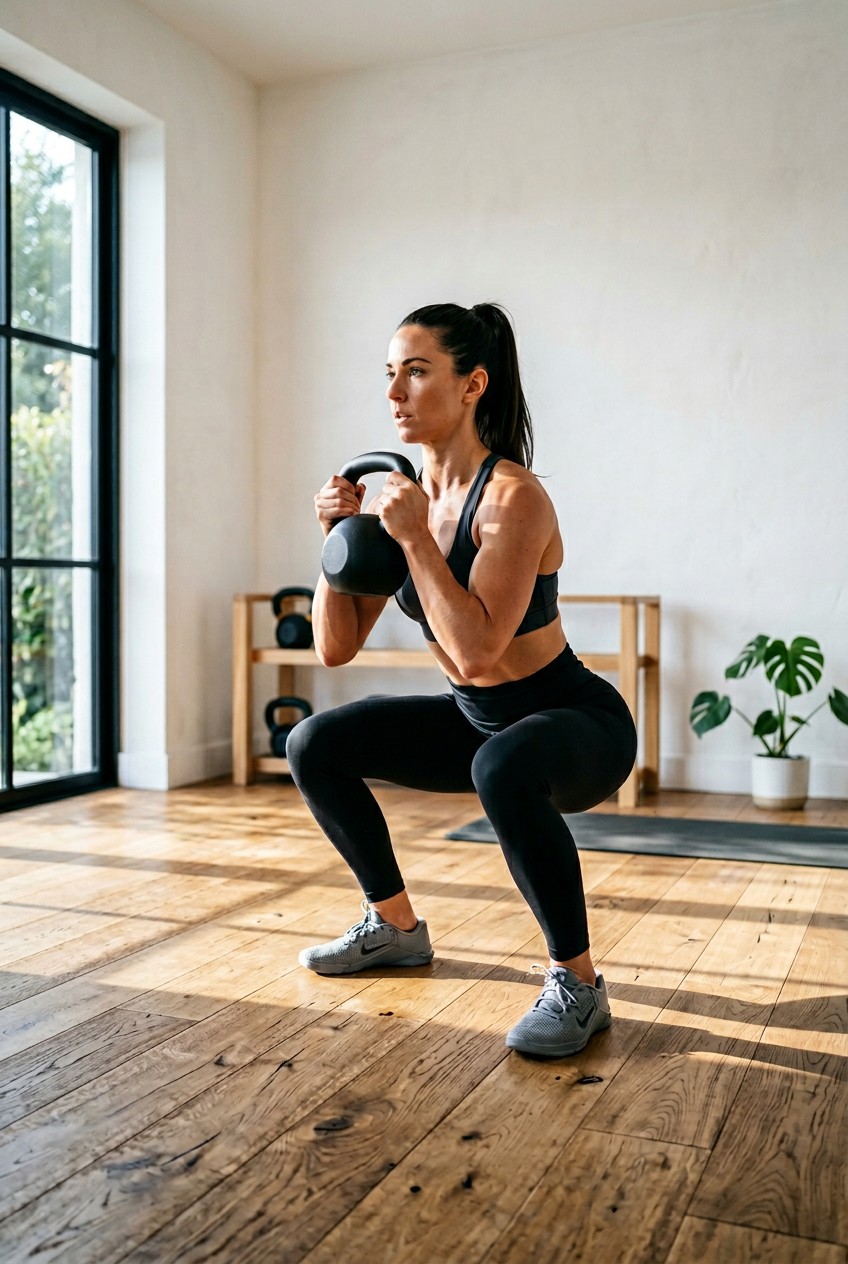
A common mistake is not squatting deep enough or allowing knees to cave inward. I’m guilty of this. For a solid year, I did shallow half-squats. My knees ached constantly with a sharp, stabbing pain. I thought squats were just bad for my joints. I was wrong. My form was just garbage. Aim to lower your hips until your thighs are at least parallel to the ground. Ensure your feet are shoulder-width apart with toes slightly turned out. We’re talking 15 to 30 degrees. Keep your knees tracking over your feet to avoid undue stress. Engage your core and maintain a straight back throughout the movement.
I bought a $14.99 full-length mirror from Target just to watch my form in my bedroom. Seeing yourself makes a massive difference. You realize how high your hips actually are when you think you’re low. When you hit proper depth, you feel a deep stretch in your glutes. The fabric of your shorts should pull tight across your thighs, almost feeling like it might rip.
Pro tip for you. If your heels peel off the floor, your ankle mobility is terrible. Try sliding a $2.50 pack of Trident gum or a thin book under your heels. It changes the angle and lets you drop lower. Once you fix your depth, your quads will feel like they’re on fire after just ten reps. You won’t ever go back to half-reps.
3. Use Resistance Bands for Glute Activation

Loop resistance bands are incredible tools. I’m talking about the small mini bands you place just above your knees during exercises like glute bridges, lateral walks, and squats. This technique effectively activates the gluteus medius. That small muscle is crucial for hip stability. I tried a cheap rubber band from a dollar store once. It rolled up my leg, snapped, and whipped my bare thigh. It left a stinging red welt for a week. Skip the cheap rubber. You want fabric bands.
Brands like REP Fitness or Fit Simplify make great options. A versatile set of five resistance bands offering various resistance levels can be found for around $15.00 to $25.00. I personally swear by the Fitbeast pull-up bands set for heavier assistance. They usually run about £12 to £20 online. Activation is everything. If you skip this step, your quads will take over all your compound lifts, and your glutes will stay completely flat. Nobody wants that.
When you do lateral band walks, keep your toes pointed straight ahead. Most people let their feet turn out like a duck. That completely ruins the tension. I do 20 steps to the left and 20 to the right across my living room rug. The friction of the carpet makes it harder. By step 15, the side of my hip is screaming. It feels like a deep, cramping burn. That’s exactly what you want before you start lifting heavy weights. You might also like: 15 Cozy Aesthetic Morning Workout Routine That Are Totally Worth It
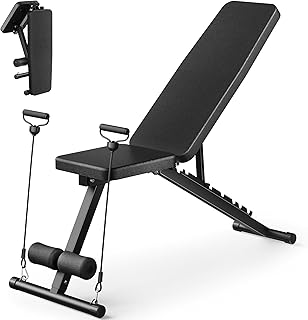
Adjustable Weight Bench for Home Gym
Adjustable Weight Bench for Home Gym has been one of the most consistently praised picks in this category. 517 reviewers averaged 4.5/5.
4. Dial In Your Lunge Angles for Safety

Correct lunge form is crucial for effectiveness and safety. Avoid common lunge mistakes such as taking steps that are too short or too long. I used to step way too far forward. My back arched, and I had zero balance. I looked like a baby giraffe trying to walk on ice. The goal is to lower your body until your front thigh is parallel to the floor. Your back knee should hover just an inch or two from the ground. You might also like: 15 Clever Garage Home Workout Ideas That Are Totally Worth It
When using external weight, maintain a slight forward lean of 10 to 20 degrees in your torso. This properly loads the front leg and takes the pressure off your lower back. I highly recommend doing these on a soft surface. I banged my kneecap on my hardwood floor last month. The loud crack echoed in my empty apartment. It bruised instantly. I immediately went out and bought a 1/2-inch thick Manduka PRO yoga mat for $129.00. It’s expensive, but it saves my joints. You might also like: 15 Stunning Room Home Workout Ideas That Make a Real Difference
When you push back up, drive entirely through your front heel. You should feel the rough texture of the mat pressing into your shoe. Don’t push off your back foot. That’s cheating. Let the front leg do all the heavy lifting. Your glutes will be sore for days if you do this right. You’ll literally feel the muscle fibers twitching when you sit on the couch later that evening.
5. Strap On Ankle Weights for Targeted Burn

I always thought ankle weights were just for 1980s aerobics videos. I was completely wrong. Incorporating ankle weights for targeted muscle engagement is incredibly effective. For beginners, start with light ankle weights. I’m talking 1 to 1.5 pounds per ankle. You can gradually increase to 2 or 3 pounds as you get stronger. I found a pair of GAIAM Restore Ankle Weights at Sprouts of all places. They were sitting near the vitamins for $18.99. They weigh 2.5 to 5 lbs and wrap snugly with thick velcro.
The soft neoprene material doesn’t chafe my skin when I sweat. Theraband Ankle Weights are another solid choice, available in 1 to 2.5 lb increments. I strap these on for side-lying leg lifts and donkey kicks. Walking around the kitchen to grab water with these on makes me feel like an astronaut walking on the moon. The extra resistance seems tiny, but after 20 reps, your muscles start shaking.
Don’t swing your leg. That’s a massive mistake. Use slow, controlled movements. I like to pause at the top of a donkey kick for two full seconds. You can feel the glute muscle contract hard into a tight knot. It’s a localized, intense burn that heavy squats just don’t replicate. Plus, they’re incredibly easy to store. I just toss them in a small basket next to my TV stand when I’m done.
6. Unilateral Training for a Balanced Lower Body Workout at Home

Single-leg exercises are essential for addressing muscular imbalances and improving overall stability. You need to incorporate movements like Bulgarian split squats, single-leg Romanian deadlifts, and single-leg glute bridges. This approach focuses heavily on functional strength and longevity. I remember my first attempt at a Bulgarian split squat. I rested my back foot on my squishy living room couch. As I lowered down, my foot sank deep into the cushion.
I completely lost my balance and tumbled sideways into my coffee table. I spilled a full mug of black coffee everywhere. The sticky puddle ruined my morning. Learned that the hard way. Now, I use a firm $49.99 REP Fitness plyo box. A sturdy dining chair works too. Just make sure it won’t slide. Stand a few feet away, place your laces face down on the box, and drop your back knee straight down.
The stretch in the resting quad is intense. The working leg takes 100 percent of your body weight. If your left leg is weaker than your right, this will expose it immediately. My left leg shakes violently on the eighth rep, while my right leg breezes through ten. Unilateral work fixes that imbalance fast. Don’t skip these, even if you hate them. I promise the agonizing pain of a heavy split squat translates directly to better athletic performance and a more balanced physique.

FitinOne Adjustable Folding Weight Bench for Home Gym
FitinOne Adjustable Folding Weight Bench for Home Gym has been one of the most consistently praised picks in this category. 744 reviewers averaged 4.5/5.
7. Slow Down Your Reps with Eccentric Control

A surprising yet effective tip from experts is to slow down the lowering phase of your exercises. We call this the eccentric phase. Most people drop into a squat like a rock falling off a cliff. Gravity does all the work. You’re robbing yourself of massive muscle growth. Try this. Perform the lowering portion of a squat over a slow count of four seconds. One, two, three, four. Pause at the bottom. Then explode up.
I started doing this with my $370.00 Core Home Fitness dumbbells. The time under tension is brutal. By the third set, sweat drips off my nose and stings my eyes. My quads vibrate uncontrollably. The burning sensation is so deep it feels like my muscles are cooking from the inside out. Slow negatives tear more muscle fibers, which means more growth when you recover. Force yourself to slow down. It changes everything.
It’s mentally exhausting. You’ve got to fight the urge to just drop to the floor. After a session of slow eccentric Romanian deadlifts, my hamstrings feel like tight guitar strings. I usually limp to the fridge and chug a cold $2.50 Fairlife Core Power protein shake from Kroger just to survive the aftermath. You’ll quickly realize that dropping the ego and focusing on the muscle contraction is the true secret to building massive legs at home.
8. Add Plyometrics for Explosive Power

Heavy lifting makes you strong, but plyometrics make you athletic. You need to mix in jump squats, skater jumps, and alternating lunge jumps. These fast-twitch movements recruit different muscle fibers and spike your heart rate instantly. I learned a hard lesson about jumping indoors. I was doing skater jumps in my socks on a smooth laminate floor. I landed on a puddle of my own sweat, slipped, and slammed my hip into the baseboard.
The loud thud woke up my neighbor downstairs. My hip had a massive purple bruise for three weeks. Now, I refuse to do plyos without proper footwear. I wear my $130.00 Nike Metcon 8s. The flat, wide heel and grippy rubber sole stick to my mat like glue. You need that traction when you’re exploding sideways.
When doing jump squats, focus on a soft landing. Don’t land with stiff, locked knees. You’ll hear a harsh slapping sound on the floor, and your lower back will absorb all that shock. Instead, land quietly on the balls of your feet and immediately absorb the impact by sinking right into the next squat. It should sound like a ninja landing. Your lungs will burn like you just sprinted up a steep hill. Plyometrics are the ultimate finisher. I usually throw them in at the very end of my session to completely empty the tank.
9. Fuel Up Properly Before You Lift

You can’t build strong legs on an empty stomach. I tried the whole fasted cardio and fasted lifting trend. I felt dizzy, weak, and my workouts suffered. I couldn’t even hold a 30-pound dumbbell without feeling faint. Your body needs carbohydrates for energy and protein for repair. About an hour before I train, I make a very specific pre-workout meal. I measure out exactly 1/2 cup of Quaker Oats. A large tub costs about $4.29.
I mix in 2 tablespoons of Justin’s Classic Peanut Butter, which runs $7.99 a jar. I buy both of these at Whole Foods. Skip the fat-free stuff. It tastes like wet cardboard. You need healthy fats for joint lubrication and sustained energy. I also grab a $0.19 banana from Trader Joe’s and slice it on top. The sweet, mushy texture of the banana mixes perfectly with the thick, salty peanut butter.
If you eat too much, you’ll feel nauseous during heavy lunges. If you eat too little, you’ll gas out halfway through your routine. This exact combination of complex carbs and fats gives me a steady stream of energy. I don’t get the sudden sugar crash that comes from cheap pre-workout energy drinks. Real food makes a massive difference in how hard you can push your legs. Don’t train hungry, and definitely don’t train on a stomach full of garbage processed food.

OLIXIS Adjustable Weight Bench for Full Body Strength
OLIXIS Adjustable Weight Bench for Full Body Strength Training punches above its price — 31 buyers rated it 4.5 stars. I would buy it again.
10. Don’t Forget to Recover and Stretch

Your legs don’t grow while you’re lifting. They grow while you’re resting. If you skip recovery, you’ll wake up the next morning walking like Frankenstein. I’ve had days where my calves were so tight I couldn’t walk down my apartment stairs normally. I had to go down backward. You need a quality foam roller. I use the TriggerPoint GRID Foam Roller. It costs $34.99 and has a rigid, hollow core with a textured foam grid on the outside. It mimics the fingers of a massage therapist.
Rolling out a tight IT band is pure agony. The first time I did it, I actually groaned out loud. It feels like a rolling pin crushing a bruised muscle. But after two minutes, the tissue releases. The relief is immediate and warming. I spend exactly 10 minutes stretching after my weights are put away. I hold a deep pigeon pose for 60 seconds per leg.
You’ll feel a tight pulling sensation deep in your glute socket. Breathe through it. Drink at least 16 ounces of water immediately after you finish. If you neglect this step, your next workout will suffer. Take care of your tissue, and your legs will reward you with serious strength. I’d never skip recovery again. It’s just as important as the heavy lifting itself.
I’ve made every mistake in the book so you don’t have to. You don’t need a fancy gym membership to build incredible leg strength. You just need a few key pieces of equipment, strict form, and the willingness to push through the burn. I personally swear by the slow eccentric reps and unilateral work. They completely changed the shape and power of my legs. Took me years to figure out. Start with just three of these tips today. Grab those dumbbells, fix your squat depth, and slow down your movements. I promise you’ll feel muscles you didn’t even know existed. If this guide helped you, make sure to pin it or save it for your next leg day. Your quads will thank you later.
Frequently Asked Questions
Can I build leg muscle at home without heavy weights?
Yes, but you need to utilize slow eccentric movements and unilateral exercises like single-leg squats. By increasing the time under tension and focusing on one leg at a time, you force the muscle to adapt and grow without needing massive barbell plates.
How often should I do a lower body workout at home?
I recommend training your legs two to three times a week. Your muscles need at least 48 hours to recover and rebuild tissue. If you train them every single day, you risk overtraining and joint injury.
Are resistance bands effective for glute growth?
Absolutely. Fabric resistance bands are incredible for isolating the gluteus medius during lateral walks and bridges. They provide constant tension that forces blood into the muscle, making them a perfect activation tool before moving into heavy squats.
What is the best home equipment for leg day?
Adjustable dumbbells are the smartest investment for home leg workouts. They save massive amounts of space and allow for progressive overload. Pair them with a thick yoga mat and a sturdy plyo box, and you’ve got a complete leg gym.
