What’s Inside
- Start Your Pilates Arm Workout With Tiny Weights
- Master The Magic Circle For Chest And Arms
- Grab Resistance Bands For Eccentric Control
- Stop Holding Your Breath During The Hard Parts
- Never Lock Your Elbow Joints
- Your Core Should Burn Before Your Arms Do
- Strap On Wearable Weights For A Killer Pilates Arm Workout
- Slow Down Your Reps To Build Real Strength
- Fix Your Posture And Drop Your Shoulders
- Master The Dumb Waiter Exercise
- Survive The Arm Circles Burnout Phase
- Recovery, Stretching, And Staying Consistent
Three weeks ago, I dropped a 20-pound dumbbell on my left toe in a Target fitness aisle. I was trying to prove to my girlfriend that I didn’t need a dedicated pilates arm workout to get toned shoulders. My toe instantly turned a nasty, bruised plum purple. I limped to the car, completely defeated by a chunk of metal. That night, I decided to try the low-impact stuff. I unrolled my sticky, sweat-stained mat and grabbed some tiny pink weights. My ego took a massive hit. But thirty minutes later, my triceps were shaking so hard I couldn’t open a jar of Trader Joe’s salsa. If you’re skeptical about getting a serious pump without heavy iron, I get it. I was the same way. Here is how to actually build strength using these methods. I’ve got plenty of mistakes to share so you don’t repeat them. Learned that the hard way.
1. Start Your Pilates Arm Workout With Tiny Weights

I used to laugh at those tiny neoprene dumbbells. I assumed anything under twenty pounds was a waste of time. I was wrong. A proper pilates arm workout requires you to drop the ego and pick up weights that feel comically light. We’re talking 1 to 3 pounds maximum. Certified Pilates instructor Jackie Ondrusek reminds her clients you can even do these routines with zero weights at all. I grabbed a pair of 2-pound All In Motion neoprene dumbbells from Target last week for $11.99. They have a gritty, rubbery texture that doesn’t slip when your palms get slick. Using light weights allows for high repetitions without compromising your form. When I tried using 5-pound weights for arm circles, my neck cramped up instantly. My shoulders hiked to my ears. It was a disaster. Stick to the 2-pounders. You’ll feel a deep, burning sensation in your deltoids by rep twenty. It’s a different kind of muscle fatigue. Your joints won’t ache the next day. The sheer volume of repetitions creates a lactic acid buildup that heavy lifting just doesn’t replicate. You’re forcing the muscle to endure constant, low-grade stress. It builds endurance. I can’t believe I spent years ignoring these weights. They’re brutal when used correctly.
2. Master The Magic Circle For Chest And Arms

The Pilates ring looks like a medieval torture device. I bought the Balanced Body Ultra-Fit Circle on Amazon for $39.95. I got the 15-inch version. It has firm, foam-padded handles that smell like fresh rubber and glue. The first time I squeezed it, I thought it was broken. It barely budged. That’s the point. This tool creates intense, targeted resistance that wrecks your inner arms and chest. Hold the ring at chest height. Keep your hands flat on the outside pads. Now, press your palms together and hold that tension for 10 to 15 reps. I do this while watching television. Last night, I was squeezing this ring during a commercial break and my pectorals started twitching. A big mistake I made early on was gripping the pads with my fingers. Don’t do that. Keep your fingers long and straight. Press with the heel of your hand. It forces your chest muscles to do the work instead of your forearms. If you wrap your fingers around the pad, you’re just training your grip. We want the chest and anterior deltoids to take the brunt. The magic circle is unforgiving. It won’t let you cheat. If you release the tension too quickly, it snaps back. Control the squeeze. Control the release.
3. Grab Resistance Bands For Eccentric Control

Resistance bands are essential for a complete routine. They force you to control the return phase of the movement. Physio and instructor Claire Mills calls this eccentric control. It means you’re working the muscle while it lengthens. I picked up a power pack of Stott Pilates Flex-Bands at Walmart for $22.50. The pack comes with a regular-strength green band and an extra-strength blue band. They’re 6.5 feet long, giving you plenty of slack to wrap around your hands. The latex has a powdery feel. I hate the smell of cheap latex, but these aren’t too bad. Stand on the middle of the green band. Grab the ends and slowly lift your arms forward. The real magic happens when you lower them back down. If you let the band snap your arms back to your sides, you’re missing half the exercise. Resist the pull. I rushed through a set of bicep curls last month and snapped the band against my bare thigh. It left a red welt that stung for hours. Move slowly. The band wants to snap back. You’re the one in charge. Fight that resistance every inch of the way down. It’ll make your arms shake. You might also like: 15 Brilliant Man Shed Home Gym Setup Ideas to Transform Your Space
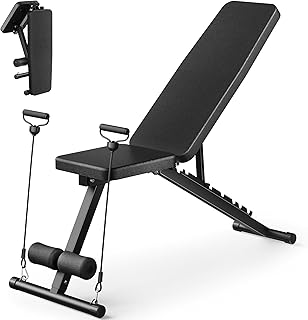
Adjustable Weight Bench for Home Gym
Adjustable Weight Bench for Home Gym has been one of the most consistently praised picks in this category. 517 reviewers averaged 4.5/5.
4. Stop Holding Your Breath During The Hard Parts

I have a habit of holding my breath when an exercise gets tough. I catch myself doing it all the time. Last Friday, I was doing a set of tricep extensions in the parking lot before walking into Whole Foods. My face turned bright red. My neck veins popped out. A lady carrying a grocery bag looked at me like I was insane. Holding your breath kills your core engagement. It creates massive tension in your upper traps. You need to practice lateral breathing. Inhale deeply through your nose and feel your ribcage expand. Exhale forcefully through your mouth like you’re blowing out a candle. As you exhale, pull your belly button tight against your spine. The breath fuels your muscles. When my arms start shaking on rep fifteen, a sharp exhale gives me just enough energy to finish. If you feel dizzy, you aren’t breathing properly. Stop. Reset your posture. Take a loud, obnoxious breath. I used to think breathing techniques were fluff. I’d ignore the instructors and pant like a dog. But once you sync your breath with the movement, everything clicks. You’ll feel stronger. You might also like: 20 Lovely Aesthetic Home Morning Workout Routine to Inspire Your Next Project
5. Never Lock Your Elbow Joints

I see people locking out their elbows constantly. I used to be the worst offender. I thought straightening my arms meant I was doing the move perfectly. Wrong. Overextending your joints places all the stress on your ligaments instead of your muscles. You need to maintain a micro-bend in your elbows. I figured this out after lugging a 40-pound bag of dog food out of Costco last winter. I locked my arms straight to carry it to the trunk. The next morning, my elbows felt like they were packed with crushed glass. I couldn’t even bend my right arm to brush my teeth. In Pilates, you want the muscle belly to do the heavy lifting. When you extend your arms out to the sides for a T-press, keep a soft bend. Imagine you’re hugging an oak tree. If your elbows are totally rigid, your triceps nap. We don’t want that. Keep the tension right where it belongs. It’s a tiny adjustment, but it changes the feel of the exercise. Your muscles will burn twice as fast because they don’t get a break at the top. You might also like: 15 Beautiful Photoshoot Home Workout Ideas to Steal Right Now
6. Your Core Should Burn Before Your Arms Do

You might think an arm routine is just about your arms. That’s a misconception. If your core isn’t locked down, you’re just flailing your limbs around. Before you even lift a one-pound weight, set your foundation. Draw your navel sharply toward your spine. Imagine you’re zipping up tight jeans. I practice this core bracing while standing in the checkout line at Sprouts. I just stand there, squeezing my abs while holding a basket of apples. Nobody notices. If your lower back arches while you lift your arms overhead, your core has checked out. This happens when I get tired. My ribs flare, my back dumps forward, and my shoulders take over. It feels awful. Keep your ribcage knitted down. Your torso should feel like a block of concrete. The stability of your trunk is what allows your arms to move with precision. When I figured out how to brace my core properly, my arm workouts became ten times harder. I wasn’t using momentum anymore. I was using pure, isolated muscle strength. Don’t skip this step.

FLYBIRD WB2 Weight Bench
FLYBIRD WB2 Weight Bench has been one of the most consistently praised picks in this category. 215 reviewers averaged 4.5/5.
7. Strap On Wearable Weights For A Killer Pilates Arm Workout

Wearable weights are everywhere. I understand the hype. They offer a discreet way to add continuous resistance to your pilates arm workout. I caved and bought a pair of 1-pound Bala Bangles for $55. I chose the charcoal gray color. They have thick, soft silicone blocks attached to an elastic velcro strap. The texture is smooth. I strap them around my wrists before I start my floor work. It feels like you aren’t wearing anything at first. But after ten minutes of arm sweeps, your deltoids will be screaming. Natural Pilates also makes a set of 1-pound ankle and wrist weights for $45 that use a secure belt. I wore my Bala Bangles on a walk yesterday. My arms felt heavy and sluggish by the time I got back. The beauty of wearable weights is that you don’t have to grip anything. Your hands stay relaxed. This prevents you from white-knuckling a dumbbell and tensing your neck. You can focus entirely on the movement without worrying about dropping a weight on your face.
8. Slow Down Your Reps To Build Real Strength

Rushing is the enemy of progress. I’m naturally impatient. I want to blast through my sets and get to the couch. Last month, I was doing a quick arm routine before running to Kroger to buy milk. I was swinging my weights up and down like a windmill. I tweaked my right rotator cuff. I felt a sharp, hot pinch in my shoulder. I had to ice it for three days. You can’t use momentum in Pilates. If you swing the weights, gravity is doing the work. You need to emphasize slow, deliberate movements. Take three full seconds to lift your arms. Take another three full seconds to lower them. The slower you move, the more muscle fibers you recruit. It makes a 2-pound weight feel like a cinderblock. Try doing ten slow-motion bicep curls. Squeeze the muscle at the top. Resist the drop. Your arms will feel dense and pumped up within two minutes. I’ve learned that if an exercise feels too easy, I’m probably moving too fast. Slow it down to a crawl. It’s agonizing, but it works.
9. Fix Your Posture And Drop Your Shoulders

Most of us spend eight hours a day hunched over a laptop. Our shoulders are glued to our earlobes. When you start an arm routine, your body wants to stay hunched. You have to actively fight it. Roll your shoulders up, back, and aggressively down. Think about sliding your shoulder blades into your back pockets. I’ve got a tall mirror in my bedroom. I caught my reflection while doing lateral raises yesterday. My left shoulder was sitting two inches higher than my right. It looked ridiculous. I had to drop my weights, shake out my arms, and reset. If your neck feels tight, your shoulders are creeping up. Stop. Give yourself a quick neck massage. Press your feet into the floor. Elongate the back of your neck. A strong posture makes every arm movement fifty percent harder and a hundred percent more effective. I constantly have to remind myself to drop my shoulders. It’s a battle. But once you lock in that posture, the burn shifts into your arms where it belongs.
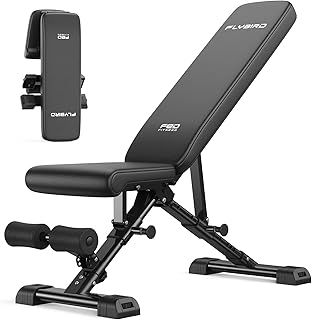
FLYBIRD WB5 Weight Bench
Honestly, FLYBIRD WB5 Weight Bench surprised me — sturdier than it looks in the photos, and over 259 buyers gave it 4.5 stars.
10. Master The Dumb Waiter Exercise

The Dumb Waiter is a classic Pilates move that targets your external rotators and biceps. It sounds easy. It’s not. Grab your green Stott Pilates Flex-Band. Stand tall and pin your elbows against your ribcage. Hold your forearms out straight in front of you, palms facing up. Now, keeping your elbows glued to your sides, slowly open your hands outward. Imagine you’re holding a heavy tray of food and offering it to someone. Return to the center. Do three sets of ten reps. The first time I tried this, my elbows kept flying away from my ribs. I couldn’t keep them tucked. I had to wedge two rolled-up hand towels under my armpits to force myself to maintain form. If the towel drops, you lose. The burn hits deep in the back of your shoulders. It’s fantastic for fixing rounded posture. Keep those palms flat and your wrists perfectly straight. Don’t let your wrists curl inward. I used to cheat by flicking my wrists at the end to make it feel like I was going wider. Keep the wrists rigid. Let the shoulders do the rotation.
11. Survive The Arm Circles Burnout Phase

Arm circles are torture. They are the ultimate burnout move. I save them for the end of my routine. Grab your 2-pound All In Motion weights. Extend your arms out to the sides, parallel to the floor. Now, draw tiny, golf-ball-sized circles in the air. Do twenty circles forward. Then do twenty circles backward. The circles must be tiny and round. No sloppy ovals. No flapping your arms like a bird. The burn creeps up on you. By rep fifteen, my arms feel like they are submerged in wet cement. I wanted to quit this morning. My forearms were shaking. My deltoids were screaming. This is where the sculpting happens. Don’t drop your arms. If you need a break, hold your arms out straight without moving. The isometric hold keeps the tension alive. Breathe through the fire. I’ve found that staring at a fixed point on the wall helps me ignore the pain. Don’t look at your arms. Just keep drawing those circles until the timer goes off.
12. Recovery, Stretching, And Staying Consistent

You can’t just blast your arms and expect them to recover magically. You need to stretch. After my workout, I spend five minutes doing cross-body shoulder stretches and tricep pulls. I hold each for thirty seconds. The muscles feel warm, and a good stretch prevents next-day stiffness. I also recommend soaking in a hot bath. I buy the lavender Epsom salts from Trader Joe’s. A big bag costs $4.99. The scent fills the bathroom and relaxes my nervous system. I dump a half cup into the tub. Consistency is the final piece of the puzzle. Doing this once a month won’t change anything. You need to hit these exercises two or three times a week. I schedule my arm days on Mondays and Thursdays. If I skip a day, I feel sluggish. Stick to the light weights, focus on your breathing, and trust the process. I can’t believe I spent years ignoring these low-impact movements. My shoulders are healthier, my posture is better, and I don’t have to deal with clunky iron plates clanking around my living room. Give this routine a try for two weeks. I promise your arms will feel stronger and more stable. Pin this article to your favorite fitness board so you don’t lose it, and let me know which exercise made you sweat the most.

FitinOne Adjustable Folding Weight Bench for Home Gym
Honestly, FitinOne Adjustable Folding Weight Bench for Home Gym surprised me — sturdier than it looks in the photos, and over 744 buyers gave it 4.5 stars.
Frequently Asked Questions
What weight should I use for a pilates arm workout?
Stick to 1 to 3 pounds maximum. The high repetitions and slow movements make light weights feel incredibly heavy. You can even do the routine with zero weights.
Can I build arm muscle with Pilates?
Absolutely. Pilates focuses on eccentric control and time under tension. This constant resistance builds lean, dense muscle fibers without needing heavy iron plates.
How often should I do this routine?
Aim for two to three times a week. Consistency is crucial for building muscular endurance. Give your arms at least one full rest day between sessions.
Do I need a resistance band?
I highly recommend one. A light or medium resistance band forces you to control the return phase of the exercise, which maximizes your muscle engagement and results.
