What’s Inside
- Invest in Adjustable Dumbbells for Your Full Body Dumbbell Workout
- Prioritize Compound Movements (Not Just Bicep Curls)
- Master the Dumbbell Thruster (It Sucks But Works)
- Implement Progressive Overload Consistently
- Stop Bending Your Wrists (A Huge Mistake)
- Ditch the Ego and Focus on Form
- Maximize Your Range of Motion
- Use Foam Rollers for Better Full Body Dumbbell Workout Recovery
- Try Foam Roller Pullovers for Core Activation
- Fuel Up with Protein and Creatine
- Don’t Neglect Your Grip Strength or Warm-ups
I dropped a 35-pound rusty cast iron hex weight right on my left big toe in my freezing garage last winter. The sharp metallic clang followed by intense throbbing pain made me rethink my entire home gym setup. I realized right then that a proper full body dumbbell workout doesn’t require a chaotic pile of dangerous metal hazards scattered across the floor. You just need a solid plan and the right gear. A full body dumbbell workout is honestly the most efficient way to build muscle without wasting hours waiting for machines at a crowded commercial gym. I’m Ryan Brooks. I’ve spent the last decade making every dumb lifting mistake you can imagine. I bought useless gadgets. I skipped leg day. I ate dry chicken breasts out of Tupperware until I wanted to cry. Today I’m sharing exactly how to build a routine that actually works. We’re going to cover the gear, the movements, and the nutrition you need to stop spinning your wheels. There aren’t any shortcuts here, but if you put in the effort, the results will blow your mind. Trust me on this.
1. Invest in Adjustable Dumbbells for Your Full Body Dumbbell Workout

I’m a massive hypocrite because I used to absolutely hate adjustable weights. I thought they felt cheap, clunky, and fragile. Then I moved into a tiny apartment and realized I couldn’t fit a massive rack of fixed weights in my living room. To maximize your home workout space and budget, you really need a high-quality adjustable set. I finally caved and bought the NÜOBELL Adjustable Dumbbells. They sell a 5 to 80-pound pair for about $745. They’re incredible. The smooth twist-to-adjust mechanism feels incredibly solid in your hands. The machined steel plates clink together with a satisfying, heavy sound when you lift them off the cradle. If that price makes you sweat, another excellent option is the Bowflex SelectTech 552. A 5 to 52.5-pound pair runs around $429 at Target. They replace 15 sets of weights and feature easy-to-use selection dials on the ends. I actually tested the Bowflex set at a friend’s house last month. The plastic housing feels slightly bulky during certain movements like bicep curls, and the grip is a bit thick, but you can’t beat the value for a beginner. Skip the cheap plastic sand-filled weights from discount bins. They leak gritty sand all over your floor and the handles are too thick to grip properly. Buy once, cry once.
2. Prioritize Compound Movements (Not Just Bicep Curls)

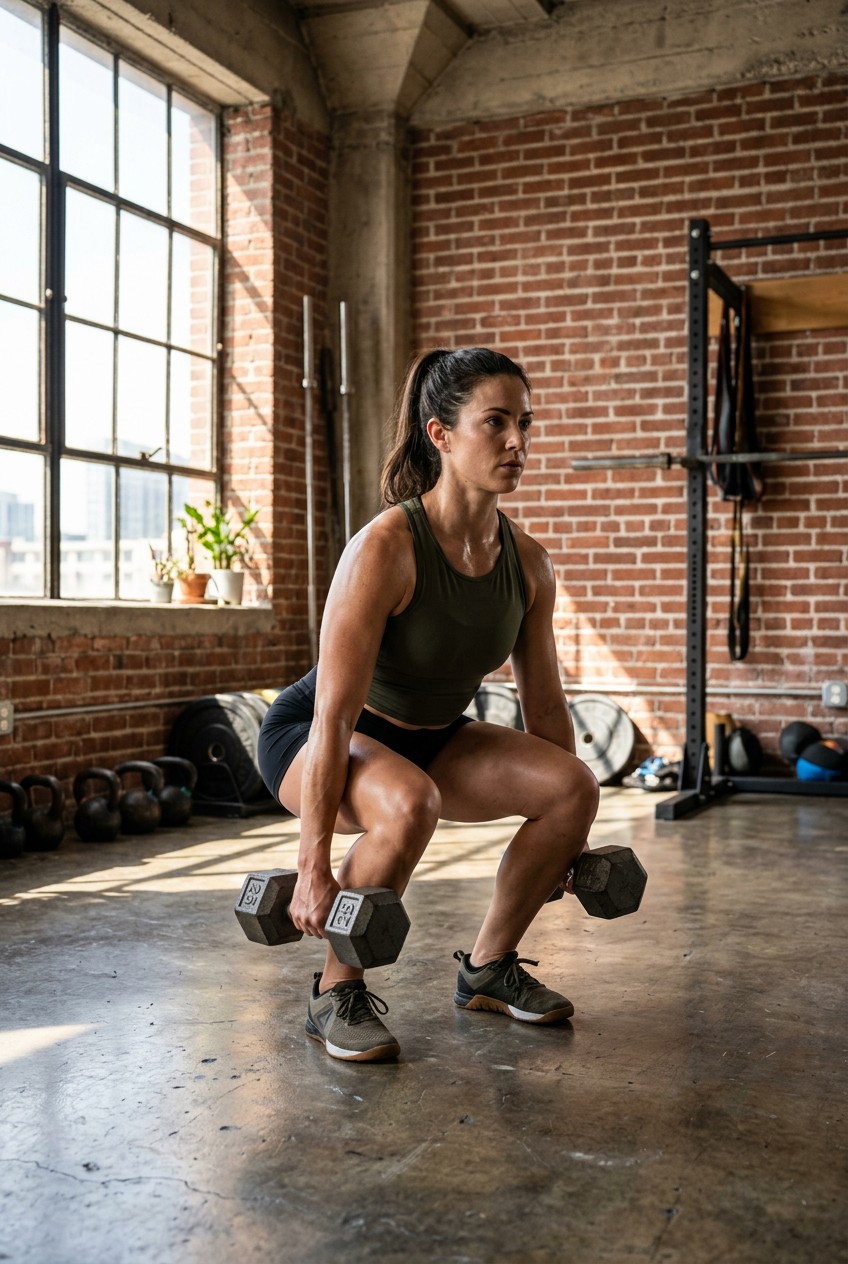
Most people get this completely wrong when they start lifting. I spent my first two years of training doing endless sets of concentration curls in the mirror. My arms got a tiny bit bigger, but I was still weak everywhere else. I looked like a lightbulb. You need to focus on exercises that work multiple muscle groups simultaneously. Think about goblet squats, dumbbell deadlifts, dumbbell bench presses, and renegade rows with push-ups. These are highly efficient for full-body strength and muscle mass development. Last Tuesday at Whole Foods, I carried four heavy paper bags of groceries up three flights of stairs without stopping. My legs and upper back handled the load easily because of my obsession with goblet squats. I use a single 50-pound Rogue Fitness Rubber Hex Dumbbell for my squats. It costs exactly $67.50 on their website. The thick rubber coating smells a bit like hot car tires when you first unbox it, but it protects your floors if you drop it. Holding that heavy weight against your chest forces your core to brace hard. You feel your abs burning and your quads screaming by the tenth rep. Stop wasting your time on isolation exercises until you build a foundation with compound lifts. It’s just simple math. More muscle activation equals more calories burned and more total growth.
3. Master the Dumbbell Thruster (It Sucks But Works)

I absolutely despise dumbbell thrusters. They make my lungs burn. They make salty sweat sting my eyes. They make me want to lay on the rubber matting and quit. But I do them every single week because they work better than almost anything else. This exercise is a total powerhouse. It engages your entire lower body, core, shoulders, upper back, and arms all at once. The movement is simple but brutal. You hold the weights at shoulder height. You squat down until your thighs are parallel to the floor. Then you stand up violently, pressing the weights overhead simultaneously. I tried this wrong for months before figuring it out. Learned that the hard way. I used to pause at the top of the squat before pressing. That completely kills all your momentum. You must use the upward drive of your legs to help launch the weights overhead. It’s one fluid motion. I usually wear Harbinger Wrist Wraps when I do these. I grabbed a pair at Walmart for $14.99. The stiff elastic material digs into my skin a little bit and leaves red marks, but it keeps my joints completely stable when the weights get heavy overhead. Start light with these. Even a pair of 15-pound weights will leave you gasping for air after three sets of twelve reps. You might also like: 20 Charming Black Garage Home Gym Setup Ideas Worth Trying This Year

OLIXIS Adjustable Weight Bench for Full Body Strength
Honestly, OLIXIS Adjustable Weight Bench for Full Body Strength Training surprised me — sturdier than it looks in the photos, and over 31 buyers gave it 4.5 stars.
4. Implement Progressive Overload Consistently

You can’t just lift the exact same weights for the exact same reps every week and expect your muscles to grow. Your body adapts to the stress. You must force it to change. Progressive overload is crucial for continued muscle growth and strength. You need to gradually increase the weight, reps, or sets over time. For example, if you complete 3 sets of 10 reps with 20-pound weights today, aim for 3 sets of 11 reps next session. Or bump the weight up to 22.5 pounds. You must track this stuff meticulously. I used to rely entirely on my memory. I’d show up to the gym, guess what I lifted last week, and usually guess wrong. Now I write everything down in ink. I bought a simple black Mead Composition Notebook at Kroger for $2.49. The cheap paper feels rough under my pen, but it gets the job done perfectly. Seeing your numbers slowly climb over six months is incredibly motivating. It proves your hard work is paying off. Don’t rely on phone apps. You’ll just end up scrolling social media between sets, losing your focus, and cooling down too much. Get a cheap notebook. Write down the date, the exercise, the weight, and the reps. It’s old school, but it works better than any digital tracker I’ve ever tried. You might also like: 20 Inspiring Journal Home Workout Ideas You Haven’t Thought Of
5. Stop Bending Your Wrists (A Huge Mistake)

I used to get terrible shooting pains up my forearms when I did overhead presses. I thought I had severe tendonitis. I bought a tube of Icy Hot at CVS for $8.99 and slathered it on every night before bed. The intense menthol smell made my eyes water and ruined my sheets, but the pain kept coming back. Then a physical therapist watched me lift. He pointed out that my wrists were bent backward like a waiter carrying a heavy tray of drinks. A common mistake is bending your wrists during lifts. This causes massive strain and increases your injury risk exponentially. You must ensure your hands, wrists, and forearms are stacked in a perfectly straight line for almost every exercise. This applies to presses, curls, and rows. When you let the weight bend your hand back, you lose pushing power and stretch the delicate tendons in your wrist. It feels highly unnatural at first. You must actively squeeze the handle and punch your knuckles toward the ceiling. I practice this form with a pair of 10-pound Amazon Basics Neoprene Dumbbells. They cost $22.99 for the pair. The soft neoprene texture gives you a great grip to practice squeezing hard. Keep those wrists completely straight. Your joints will thank you later. You might also like: 15 Brilliant Dark Basements Home Gym Setup Ideas Worth Trying This Year
6. Ditch the Ego and Focus on Form

We all want to look strong. I totally get it. A few years ago I was at LA Fitness trying to impress some guys lifting next to me. I grabbed a pair of 80-pound weights for a flat bench press. I un-racked them, lowered them about three inches, and pushed them back up while my lower back arched completely off the bench. I looked absolutely ridiculous. Lifting beyond your capability with poor form is a critical mistake. It increases your injury risk and ruins the effectiveness of the movement. As fitness experts at Snap Fitness advise, mastering the movement is far more beneficial than lifting for ego. If your form falters, you must reduce the weight immediately. Nobody cares how much you lift. They only care if you drop a heavy weight on your face and they need to call an ambulance. I use SPRI Liquid Chalk to help lock in my grip so I can focus purely on my form. I buy the 1.5 oz bottle at Sprouts for $6.99. It smells strongly of rubbing alcohol when you squirt it on your hands. It dries into a chalky white crust that stops the metal handles from slipping out of your sweaty palms. Focus on a slow, controlled negative phase. Feel the muscle working. Forget the numbers printed on the side of the weight.
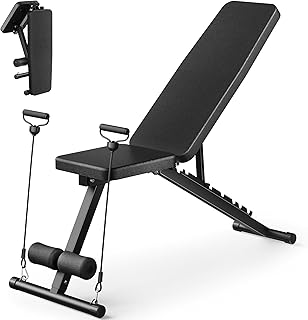
Adjustable Weight Bench for Home Gym
Honestly, Adjustable Weight Bench for Home Gym surprised me — sturdier than it looks in the photos, and over 517 buyers gave it 4.5 stars.
7. Maximize Your Range of Motion

Dumbbells are superior to barbells for one specific reason. They allow for a much greater range of motion. A barbell stops dead when the metal bar hits your chest. Weights in each hand can go deeper, giving your muscles a massive stretch. Don’t limit your movements. You need to fully extend and contract your muscles on every single rep. For instance, in a bench press, allow your hands to come down until they’re just above your chest, slightly outside your shoulders. This engages the pectoral muscles effectively. You’ll feel a deep pulling sensation across your chest at the bottom of the rep. That stretch is exactly where the growth happens. I do my pressing on a REP Fitness AB-3000 Adjustable Bench. It costs $319.99 on their site. The textured vinyl padding feels slightly sticky against my sweaty shirt, but it keeps my shoulders locked firmly in place. I used to do half-reps because I could lift heavier weights that way. My chest never grew. Once I dropped the weight by 20 pounds and started going all the way down, my pecs finally started responding. Leave your pride at the door. Stretch the muscle under load. It burns like crazy, but the visible results speak for themselves.
8. Use Foam Rollers for Better Full Body Dumbbell Workout Recovery

I used to skip recovery completely. I’d finish my last set, grab my keys, and drive home with my muscles locked up tight. The next morning I’d wake up walking like a stiff zombie. Incorporating a foam roller changed everything for me. Beyond just recovery, foam rolling can improve flexibility, increase blood flow, and activate muscles before you even start lifting. Post-workout, it helps reduce delayed onset muscle soreness and speeds up recovery significantly. You should aim for 30 to 60 seconds of moderate pressure on each major muscle group. I personally swear by the TriggerPoint GRID Foam Roller. I bought mine at Target for $36.99. It features a rigid hollow plastic core surrounded by dense EVA foam. The foam has different textured zones that dig into your tight spots. Rolling out my IT bands on this thing is pure torture. It feels like someone is pressing a hot thumb directly into the side of my leg. But when I stand up, my hips feel loose and my knee pain vanishes completely. Don’t just roll aimlessly back and forth. Find a tender spot, pause, breathe deeply, and let the muscle relax over the roller. It hurts, but it’s the good kind of hurt that leads to better mobility.
9. Try Foam Roller Pullovers for Core Activation

Here’s a weird trick I learned from a physical therapist last year. A surprising way to boost muscle activation is to use a long foam roller as a substitute for a bench during pullovers. You lie on the roller lengthwise so it supports your head and tailbone. This destabilizes your body completely. It forces your core to engage aggressively to keep you from rolling off onto the hard floor. It also provides instant form feedback. If you arch your lower back too much, you’ll feel your spine lift off the foam. I use a 36-inch Amazon Basics High-Density Round Foam Roller for this movement. It costs exactly $18.41 online. The black speckled foam feels slightly abrasive on your bare back, so wear a shirt. Grab a single moderate weight. Hold it with both hands straight up over your chest. Slowly lower it backward over your head until your biceps are near your ears. You’ll feel a massive stretch in your lats and your abs will shake violently trying to keep your balance. Pull it back up to the starting position. I do 3 sets of 12 reps with a 30-pound weight. It completely torches my core and lats at the exact same time.

FLYBIRD WB2 Weight Bench
If you want something that just works, FLYBIRD WB2 Weight Bench is a safe bet (215 reviews, 4.5 stars).
10. Fuel Up with Protein and Creatine

You can’t just lift perfectly every day, but if you eat garbage, you won’t grow. I spent years eating greasy fast food after workouts and wondering why I looked soft and felt sluggish. For active individuals aiming to build muscle, a protein intake of 1.6 to 2.2 grams per kilogram of body weight per day is highly recommended to support maximum growth. For a 154-pound guy, that’s about 112 to 154 grams of protein daily. I get a lot of my protein from Optimum Nutrition Gold Standard 100% Whey. I buy the massive 5.64-pound bag at Costco for $64.99. The Extreme Milk Chocolate flavor actually tastes decent mixed with cold water. It doesn’t have that chalky, chemical aftertaste that cheap powders usually have. You should also seriously consider creatine monohydrate supplementation. This well-researched supplement enhances workout performance. The common approach is a loading phase of 20 to 25 grams daily for 5 to 7 days. You divide it into 4 or 5 servings. This quickly saturates your muscle stores. After that, take a maintenance dose of 3 to 5 grams daily. I buy BulkSupplements Creatine Monohydrate powder on Amazon. A 500-gram bag is $22.99. It looks like powdered sugar and has zero taste. I just dump a scoop dry into my mouth and wash it down with water.
11. Don’t Neglect Your Grip Strength or Warm-ups

A significant mistake people make is believing dumbbells are only for arm exercises. They’re incredibly versatile for heavy squats and deadlifts. But here’s the catch. When you do heavy lower body work with hand weights, your grip usually fails long before your legs do. If you find your grip tiring before your target muscles, you’re not alone. I used to drop the weights during Bulgarian split squats because my forearms were burning so badly I couldn’t hold on. You need to strengthen your grip long-term. In the short term, vary your grip to prevent fatigue. I use Fat Gripz Original to build forearm strength. I bought a blue pair on Amazon for $29.99. They’re thick rubber cylinders that snap tightly over the metal handles. They smell heavily of rubber and make the handle twice as thick. Doing bicep curls with these will make your forearms feel like they’re going to explode. Also, don’t neglect warm-ups and cool-downs. Skipping these phases is a critical oversight. A dynamic warm-up increases flexibility and circulation. I spend 5 minutes doing arm circles, bodyweight squats, and walking lunges before I ever touch a weight. It gets my heart rate up, starts a light sweat, and makes my joints feel perfectly lubricated.
If you take anything away from this, just remember that consistency beats perfection every single time. You don’t need a fancy commercial gym membership to get in the best shape of your life. You just need a solid pair of weights, a tiny bit of floor space, and the discipline to show up even when you’re tired. I’ve built far more muscle in my freezing garage with a simple set of adjustable weights than I ever did wandering aimlessly around a crowded gym floor. Drop the ego. Focus entirely on your form. Eat enough high-quality protein to recover properly. It’s really that straightforward. If you found this guide helpful, pin this article to your fitness board so you can easily reference these specific tips before your next session. Let’s get to work.
Frequently Asked Questions
How often should I do a full body dumbbell workout?
You should aim for three to four days a week. Your muscles need time to recover and grow. I highly recommend taking at least one full rest day between sessions to prevent overtraining and joint fatigue.
Can I build real muscle with just dumbbells?
Absolutely. As long as you’re using progressive overload and eating enough protein, your muscles don’t know the difference between a barbell and a dumbbell. A full body dumbbell workout actually forces better stabilization and core engagement.
What weight should I start with?
Start much lighter than you think. For a beginner doing a full body dumbbell workout, a pair of 10 to 15-pound weights is plenty to learn the form. You can always buy heavier weights once your technique is perfectly dialed in.
How long should the workout take?
A highly effective full body dumbbell workout shouldn’t take more than 45 to 60 minutes. If you’re pushing hard and keeping your rest periods under two minutes, you’ll be completely exhausted by the time the hour is up.
