What’s Inside
- Master The Transverse Abdominis In Your Deep Core Workout
- Start With Pelvic Tilts For Foundational Control
- Progress Your Dead Bugs With Light Weights
- Optimize Planks Using The Candle Blow Cue
- Add A Pilates Ring To Your Deep Core Workout
- Do Not Ignore Your Pelvic Floor Health
- Use A Foam Roller For Unstable Activation
- Fix Your Breathing With The String Vacuum
- Grab A Kettlebell For Anti-Rotational Strength
- Ditch The Crunches For Real Consistency
I’m standing in the beverage aisle at Whole Foods last Tuesday. Fluorescent lights buzz overhead, casting a harsh glare on the floor. It smells like ground coffee and soap. I reach down to grab a 12-pack of Spindrift. As I twist to put the cold, wet box into my cart, a sharp pain shoots up my lower back. I dropped the box on the linoleum. That moment was a wake-up call. I needed a real deep core workout. Doing crunches wasn’t protecting my spine. Your core isn’t just the six-pack you see in the mirror; it’s a system of deep stabilizers meant to keep you upright. If you’re tired of tweaking your back picking up groceries, you’re in the right place. I’ve spent the last few years fixing how I train my midsection. I made every mistake in the book. I tried it the wrong way for months before figuring it out. No exaggeration. I’m sharing the steps to build a foundation that works. Let’s get into the specifics.
1. Master The Transverse Abdominis In Your Deep Core Workout

The transverse abdominis is your deepest abdominal muscle. Think of it as a natural corset for your spine. If you don’t know how to turn it on, your workout is useless. I did this wrong for months. I used to suck in my stomach like I was posing at the beach. That’s a mistake. Sucking in just moves air around and creates pressure in your chest. To engage it, you need tactile feedback. Lie flat with your knees bent at 90 degrees. I use my Lululemon The Reversible Mat 5mm. It costs $88.00 and has 5 millimeters of dense rubber cushion with a sticky top layer that keeps me from sliding. Place your fingertips inside your hip bones. Take a deep breath in. As you exhale, gently draw your belly button toward your spine. Don’t arch your back. You should feel a subtle tightening under your fingertips, like a rubber band snapping taut. Hold this for 10 to 15 seconds while breathing normally. It’s subtle. Most people brace way too hard. Keep it light. Trust me. I do this before every gym session now.
2. Start With Pelvic Tilts For Foundational Control

Pelvic tilts are the foundation of spinal control. If your pelvis is out of alignment, your lower back takes the impact during heavy lifts. Lie on your back, knees bent, feet flat. Flatten your lower back into the mat by tightening your abs and tilting your pelvis upward. Hold for 5 to 10 seconds. Release. Repeat 10 to 15 times. Honestly, this changed how I view core engagement. I remember doing these on my living room floor a few years ago, smelling the dust in my cheap rug. I realized my lower back was so tight I couldn’t even flatten it against the floor. It was a wake-up call regarding my mobility. To get comfortable, I grabbed a Gaiam Yoga Block. It costs $14.98 at Walmart. I put it under my head for support. The dense EVA foam was perfect while I focused on my pelvis. Don’t skip this. If you can’t control your pelvis on the floor, you won’t control it during squats.
3. Progress Your Dead Bugs With Light Weights

The Dead Bug is my favorite for spinal stability. It looks easy until you do it right. Lie on your back, knees at 90 degrees in a tabletop position. Arms extended toward the ceiling. Slowly extend your right arm overhead and your left leg out. Hover an inch above the floor. The rule: keep your lower back glued to the mat. Alternate sides for 12 to 15 reps. Once you master the bodyweight version, add resistance. I use CAP Barbell 3 lb Neoprene Dumbbells. They cost $6.99 for a pair at Costco. The neoprene is gritty, so they don’t slip, and the hex shape stops them from rolling away. Hold these weights above your chest. I have a painful story here. I tried a 15-pound dumbbell once. I lost my grip and dropped the iron weight on my chest. It left a massive bruise. Keep the weights light. The goal is stability. You might also like: 20 Lovely Aesthetic Home Morning Workout Routine to Inspire Your Next Project

NICEPEOPLE Adjustable Weight Bench for Home Gym
NICEPEOPLE Adjustable Weight Bench for Home Gym punches above its price — 32 buyers rated it 4.5 stars. I would buy it again.
4. Optimize Planks Using The Candle Blow Cue

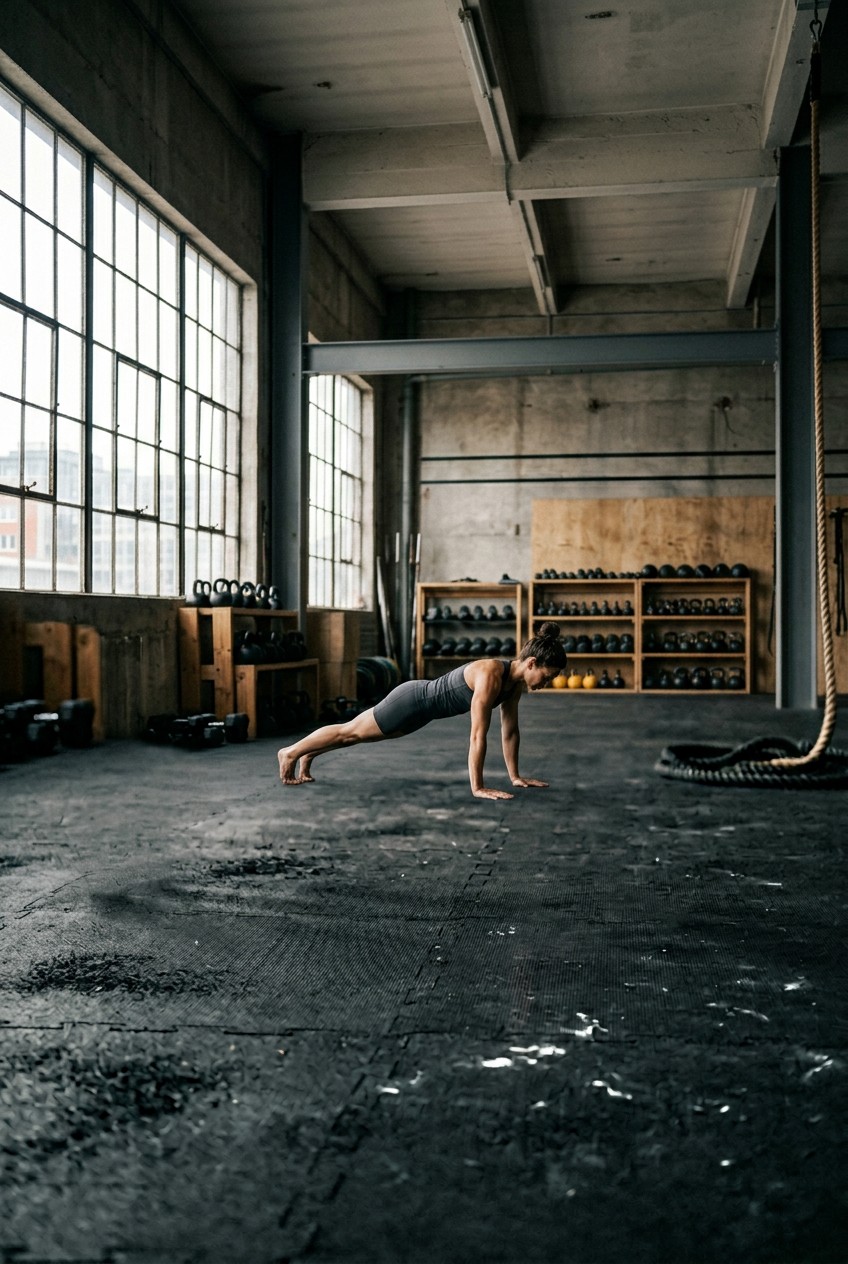
Planks are legendary, but most people do them wrong. They let their hips sag, putting pressure on the lower spine. Start in a forearm plank. Shoulders over elbows. Your body should be a straight line. Aim for 30 to 60 seconds. To make sure you’re using your deep stabilizers, use the candle blow cue. While holding the plank, imagine you’re blowing out a giant candle. Purse your lips and blow hard. You’ll feel your abs contract instantly. I used to struggle because my feet slid on the gym floor. I was wearing worn-out sneakers. I upgraded to Nike Metcon 9 training shoes. They cost $130.00 and have a rigid heel plate with a textured grip that locks me in. A solid grip changes everything. If you feel it in your lower back, you’re doing it wrong. Drop to your knees and reset. You might also like: 20 Brilliant Commercial Home Gym Setup Ideas Worth Trying This Year
5. Add A Pilates Ring To Your Deep Core Workout

I used to think Pilates rings were a gimmick. I was wrong. A ring, or magic circle, is a versatile tool. I swear by the Balanced Body Ultra-Fit Circle. It’s 15 inches and costs $35.95. If you want a cheaper option, I saw a generic one at Sprouts for $19.99. It had firm foam padding that felt durable. Place the ring between your inner thighs during glute bridges. As you lift, squeeze the ring. This forces your pelvic floor and deep abs to fire up. You can also hold the ring between your hands and squeeze during Russian twists. The isometric resistance makes your stabilizers work twice as hard. I tried this during a class last month. The room smelled of lavender floor cleaner. I was squeezing that fiberglass ring so hard my legs were shaking. You don’t need heavy iron to exhaust your midsection. You might also like: 15 Beautiful Photoshoot Home Workout Ideas to Steal Right Now
6. Do Not Ignore Your Pelvic Floor Health

When guys hear pelvic floor, they tune out. Huge mistake. Those muscles are the foundation of your core. They support your organs and control your bladder. If you neglect them, your core is weak. To strengthen these, do Kegels. Yes, men need them too. Contract your muscles like you’re stopping the flow of urine. Hold for 5 seconds. Relax for 5 seconds. Aim for 10 to 15 reps. Do three sets every day. The best part? Nobody knows you’re doing it. I practice mine in traffic. I also do them at my desk while drinking from my Yeti Rambler 26 oz Water Bottle. That bottle costs $40.00 and has a heavy-duty chug cap. Every time I take a sip, I do a 5-second hold. It builds a habit. Skip the crunches and focus on this internal foundation first.

OLIXIS Adjustable Weight Bench for Full Body Strength
OLIXIS Adjustable Weight Bench for Full Body Strength Training punches above its price — 31 buyers rated it 4.5 stars. I would buy it again.
7. Use A Foam Roller For Unstable Activation

A foam roller isn’t just for massage. It’s a tool for challenging balance. You need a firm, high-density roller. I use the Amazon Basics 36-Inch High-Density Foam Roller. It costs $21.49 and is made of firm, molded polypropylene foam. I saw a similar Gaiam roller at Kroger for $24.99. Place the roller on the floor and lie on it lengthwise. Your head and tailbone must be supported. Bend your knees at 90 degrees. Perform a Double Knee Fold. Lift both feet and bring your knees toward your chest without letting your lower back peel off the roller. The unstable surface forces your stabilizers to work overtime. I fell off the first time. I hit the floor hard and bruised my shoulder. Take it slow. Lift one leg at a time until you have the balance.
8. Fix Your Breathing With The String Vacuum

Most people hold their breath during core work. I see it at the gym every day. People turn red doing sit-ups. Holding your breath ruins muscle activation. Focus on diaphragmatic breathing. Inhale through your nose. Let your belly expand. Exhale slowly through your mouth while drawing your belly button toward your spine. To isolate the transverse abdominis, use the string vacuum. Imagine a string tied to your belly button. Pretend someone is pulling it inward toward your spine. Exhale fully, then pull your lower abdomen in and up. Don’t hold your breath. It creates a hollow sensation. I practice this wearing my Gymshark Arrival T-Shirt. It costs $20.00 and is lightweight and breathable. I stand sideways in the mirror to watch my stomach pull inward. You can do this standing, sitting, or lying down. It’s the secret to building control without moving a joint.
9. Grab A Kettlebell For Anti-Rotational Strength

Kettlebells are the best tool for anti-rotational training. Unlike a dumbbell, the center of mass sits outside the handle. This pulls you off balance, forcing your core to fight back. I’d pick a kettlebell over anything else. Start moderately heavy. For men, a 12kg or 26 lb kettlebell is perfect. For women, an 8kg or 18 lb kettlebell works. I own the Rogue 26 lb Cast Iron Kettlebell. It costs $45.00 and has a matte powder coat that holds chalk. Target sells a Yes4All 18 lb kettlebell for $29.99. Try a single-arm farmer’s carry. Hold the weight in your right hand. Stand tall and walk 50 feet. Your left obliques have to fire to keep you from leaning. I tried to swing a 50-pounder before I was ready last year. I tweaked my shoulder and couldn’t lift my arm for a week. Start light. Focus on resisting the pull.

Yoleo Adjustable Weight Bench
If you want something that just works, Yoleo Adjustable Weight Bench is a safe bet (974 reviews, 4.5 stars).
10. Ditch The Crunches For Real Consistency

True core strength is about consistency, not intensity. Traditional crunches target the rectus abdominis—the superficial six-pack muscle. They do nothing for your deep stabilizers. Doing hundreds of crunches usually leads to neck pain and a rounded back. Skip the superficial stuff. Incorporate these exercises three to four times a week. Start with two or three if you’re a beginner. A great way to check progress is your posture. If your shoulders roll forward and your lower back aches, your stabilizers are failing. I practice bracing all day. Yesterday, I did a Trader Joe’s run. I carried two heavy paper bags of canned beans and almond milk. They weighed about 10 pounds each. The parking lot was packed, so I walked a quarter mile. The handles were digging into my fingers. Instead of slouching, I braced my core and walked tall. That real-world application is the goal. Build your foundation slowly and avoid overworking your spine.
Building a resilient midsection takes patience. I’ve abandoned the crunches that used to hurt my neck. By focusing on breathing, pelvic control, and anti-rotational strength, you’ll build a foundation that protects your spine. I recommend starting with dead bugs and the string vacuum. They are incredible for beginners. Pin this article for your next home workout, and save these tips so you don’t forget the breathing cues. Your lower back will thank you.
Frequently Asked Questions
What exactly is a deep core workout?
A deep core workout focuses on internal stabilizing muscles like the transverse abdominis, multifidus, and pelvic floor, rather than superficial six-pack muscles. It builds a foundation that protects your spine and improves your posture.
How often should I train my deep core?
You should aim to train your deep core three to four times a week. Consistency is much more important than high intensity. Starting with just two or three focused exercises per session is perfect for beginners.
Why do my neck and lower back hurt during core exercises?
Neck and back pain usually happen when you rely on superficial muscles like the rectus abdominis instead of engaging your deep stabilizers. Poor form, like letting your hips sag during planks, also puts dangerous pressure on your spine.
Do I need equipment for a deep core workout?
You don’t need equipment to start. Bodyweight exercises like pelvic tilts and the string vacuum are highly effective. However, adding light dumbbells, a Pilates ring, or a kettlebell can significantly increase the resistance as you progress.
