What’s Inside
- Upgrade Your Abs Workout At Home With A Real Ab Roller
- Use Resistance Bands For Progressive Overload
- Stop Arching Your Lower Back On The Floor
- Master Diaphragmatic Breathing (The Secret Sauce)
- Master The Hollow Body Hold For An Intense Abs Workout At Home
- Slow Down The Eccentric Phase Of Every Rep
- Keep Your Sessions Short (15 Minutes Max)
- Swap Standard Crunches For Functional Core Training
- Abs Are Made In The Kitchen (Skip The Fat-Free Junk)
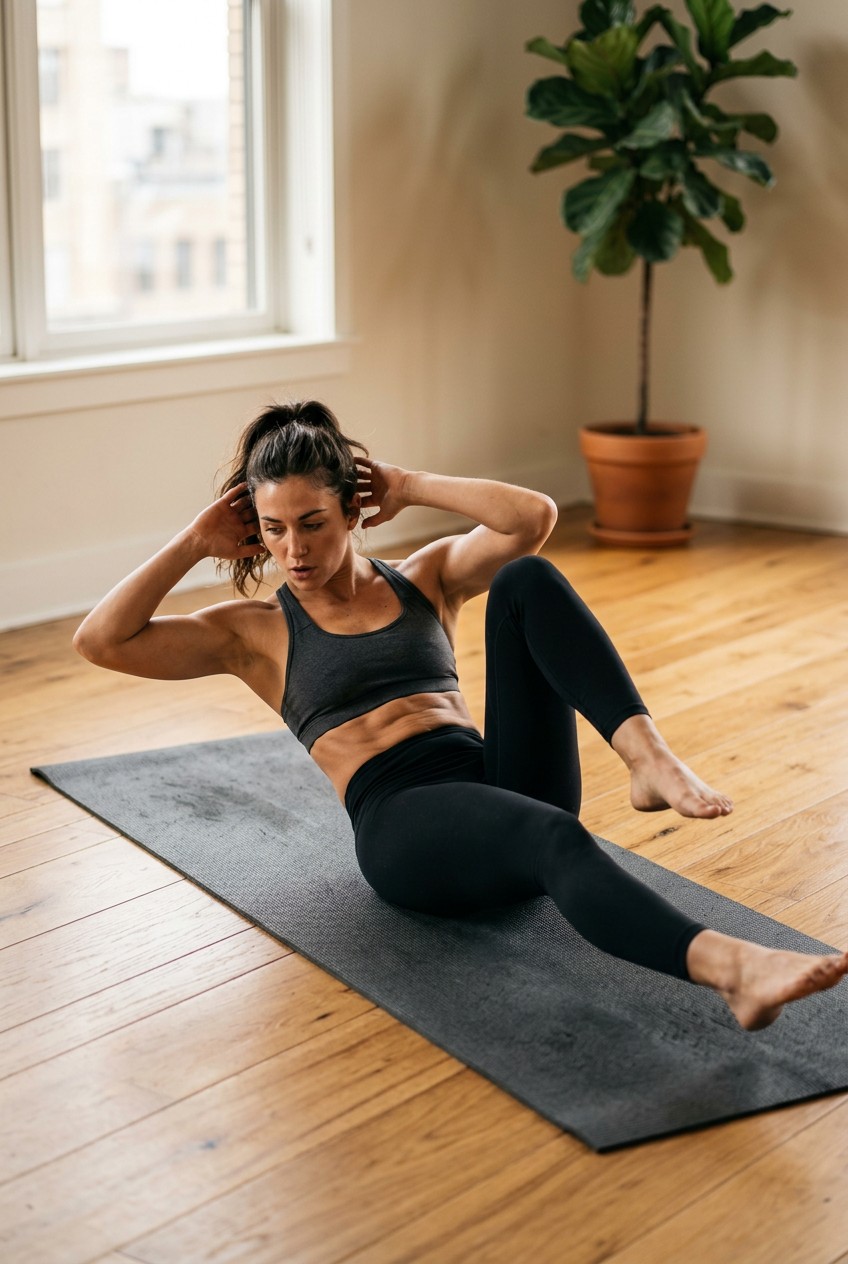
I was lying flat on my back on a cheap, 5mm thick blue yoga mat I bought from Target for $12.99. My lower back was screaming. I was sweating through a gray cotton t-shirt, struggling to do a basic sit-up while my bare feet slipped on the dusty hardwood floor. That was my frustrating reality before I finally figured out how to actually program an abs workout at home. You don’t need a fancy commercial gym membership to get a defined core. You just need the right mechanics and a little bit of discipline. I tried this wrong for months before figuring it out. I’d do hundreds of unweighted crunches until my neck cramped up so badly I couldn’t turn my head. I’d buy infomercial gadgets that ended up gathering dust in the back of my closet. It was a complete waste of time. Let’s fix that right now. I’m going to walk you through exactly how I train my midsection today. No fluff. Just the raw, sweaty truth about what actually works when you’re training in your living room.
1. Upgrade Your Abs Workout At Home With A Real Ab Roller

I personally swear by the ab roller. It forces your entire core to stabilize while moving, which builds incredible functional strength. But most people get this completely wrong. They buy the cheapest, flimsiest plastic wheel they can find and end up hurting themselves. Last Tuesday, I watched a buddy try to use a cheap plastic roller on his bare hardwood floor. The hard plastic wheel slipped on the wood. He face-planted right into the white baseboard. Don’t do that. You need something with actual rubber grip and internal resistance. I use the Perfect Fitness Ab Carver Pro. It costs exactly $39.99 at Target. It has this ultra-wide, textured rubber wheel that smells faintly like a brand new car tire out of the box. The internal carbon steel spring provides heavy resistance on the way out and a little helpful assistance on the way back in. It’s brilliant for keeping your form strict. If you’re on a tighter budget, grab the Vinsguir Ab Roller Wheel for $14.99 at Walmart. It lacks the internal spring, but the dual-wheel design gives you the lateral stability you need so you aren’t wobbling side to side like a drunk sailor. When you roll out, keep your core braced tight. Squeeze your glutes hard. If you feel a sharp, pinching sensation in your lower back, you’ve gone too far out. Pull back immediately. Mastering this one specific tool will completely change how your core looks and feels.
2. Use Resistance Bands For Progressive Overload

You can’t just rely on your own bodyweight forever. Eventually, your muscles adapt to the load. You need progressive overload to keep growing. That means adding external tension. I like using heavy resistance bands for this. They’re cheap, easy to store in a drawer, and provide incredible continuous tension on your muscles. I bought a set of Fit Simplify Resistance Loop Exercise Bands for $12.95 at Sprouts on a whim. I was standing in the checkout aisle holding a green basket of avocados and just grabbed them off the rack. Best impulse buy I’ve ever made. I loop the heaviest black band around the thick leg of my heavy oak dining table. Then I do standing Pallof presses. You stand perpendicular to the anchor point, hold the rubber band with both hands right at your sternum, and press straight out. The thick band violently wants to snap you back toward the table. You’ve got to fight it with everything you’ve got. Your obliques will absolutely scream. I tried this wrong for months by just doing unweighted side bends. Total waste of time. The bands force your core to act as an anti-rotation stabilizer. Just be incredibly careful. I once bought a cheap, unnamed band from a discount bin. I stretched it out for a seated Russian twist and it snapped right across my left shin. It stung like a hornet sting for a solid hour. Learned that the hard way. Buy quality bands. Check them for tiny micro-tears before you pull.
3. Stop Arching Your Lower Back On The Floor

This is the single biggest mechanical mistake I see. People lie flat on the floor to do leg raises or flutter kicks. As their heavy legs drop toward the ground, their lower back arches aggressively up off the floor. You could slide a whole thick textbook under their lumbar spine. That’s a massive red flag. I ruined my back doing 100 sloppy leg raises a day in my early twenties. I couldn’t even push a heavy metal shopping cart at Costco without wincing. The cartilage in my lower spine felt like it was grinding together with every step. To fix this, you’ve got to find and maintain your neutral spine. Lie on your back. Tuck your pelvis slightly upward. Press your lower back firmly into the floor. Now, slowly lower your legs. The exact second your lower back starts to peel off the floor, stop moving. That’s your current safe range of motion. Don’t go any lower. Over time, as your deep transverse abdominis gets stronger, you’ll be able to lower your legs further without breaking form. I practice this on a thick, 1-inch foam mat I got for $22.50 online. The extra dense padding helps me feel exactly where my spine is making contact. If you can’t keep your back flat, bend your knees at a 90-degree angle. It shortens the lever and instantly takes the dangerous pressure off your lumbar spine. You might also like: 15 Creative Inside She Sheds Home Gym Setup Ideas to Steal Right Now
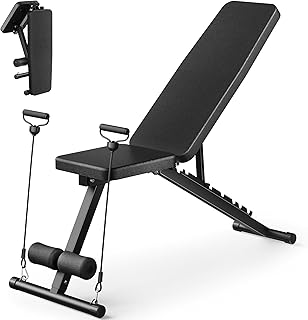
Adjustable Weight Bench for Home Gym
Adjustable Weight Bench for Home Gym has been one of the most consistently praised picks in this category. 517 reviewers averaged 4.5/5.
4. Master Diaphragmatic Breathing (The Secret Sauce)

Most people hold their breath when they do intense core work. Their face turns bright purple. The thick veins in their neck bulge out. I used to do this exact thing during plank holds. I’d stare down at the dusty gray carpet in my old apartment, holding my breath for a full agonizing minute, smelling stale coffee and loose dog hair. I’d stand up and feel completely dizzy and nauseous. You’re starving your muscles of vital oxygen when you do that. You need to master diaphragmatic breathing. It’s deep belly breathing. Inhale deeply through your nose. Let your stomach expand outward like a water balloon. When you exert force, like pulling your chest up in a crunch, exhale sharply and loudly through your mouth. Draw your belly button down aggressively toward your spine. This isn’t just weird yoga nonsense. Exhaling on the exertion phase physically contracts your deep core muscles. It creates massive intra-abdominal pressure. That internal pressure protects your delicate spine like a thick leather weight belt. I actually practice this with a 5 lb paper bag of flour resting right on my stomach. I got it for $3.49 at Kroger. I lie flat, breathe in, and watch the white bag rise up. I breathe out, and watch it fall back down. Once you connect your breath to your reps, the intensity of your workout doubles. You might also like: 20 Beautiful Home Gym Setup Ideas That Changed Everything
5. Master The Hollow Body Hold For An Intense Abs Workout At Home

Standard crunches get boring incredibly fast. You need heavy isometric holds to build real endurance. The Hollow Body Hold is a strict gymnastics staple that will humble you immediately. I vividly remember the first time I tried it. I was watching a quick gymnastics tutorial on my phone. I lay on my back, pressed my lower lumbar flat into the floor, lifted my straight legs 6 inches up, and raised my shoulder blades completely off the ground. My arms were extended straight back past my ears. I formed a tight, rigid little boat shape. Within 10 seconds, my entire body was shaking uncontrollably. Salty sweat was dripping directly into my left eye. It burned terribly. My entire midsection felt like it was locked inside a rusty steel vice grip. I barely lasted 20 seconds before collapsing. This brutal move trains your core to function as one solid, unbreakable unit. If you can’t hold the full extended position, you’ve got to modify it. Tuck your knees tightly into your chest and reach your hands forward toward your heels. As you get stronger over the weeks, slowly extend one leg out straight. Then the other. Then carefully move your arms back. I do three strict sets of 30-second holds now. It absolutely fries my rectus abdominis. I prefer this painful hold over any expensive infomercial ab machine you can buy on late-night TV. It requires zero equipment. You might also like: 20 Charming Black Garage Home Gym Setup Ideas Worth Trying This Year
6. Slow Down The Eccentric Phase Of Every Rep

Stop speed-running your reps. You aren’t impressing anyone by doing 50 sloppy crunches in 30 seconds. You’re just using momentum to cheat yourself. The real muscle growth happens during the eccentric phase. That’s the slow lowering part of the movement. I used to rush through my reps like a madman. I’d flop back down to the floor like a dead fish after every sit-up. I wasn’t getting any stronger. Then I started counting out loud. I take 3 full seconds to lower my heavy torso back to the floor on every single crunch. One. Two. Three. Pause. The muscular tension is absolutely brutal. I do this while holding a 10 lb cast-iron dumbbell I picked up at Walmart for $11.99. I hold it right against my upper chest. The cold, rough texture of the black iron pressing against my collarbone keeps me highly focused. Lowering that heavy weight slowly forces the muscle fibers to work overtime just to control the descent. This causes more micro-tears in the muscle tissue, which leads to much more growth when you recover. Try doing just 12 reps of a weighted crunch with a strict 3-second negative. You’ll feel a deep, aching soreness the next morning that you’ve never felt from doing 100 fast, sloppy reps. Control the weight. Don’t let gravity do the hard work for you.
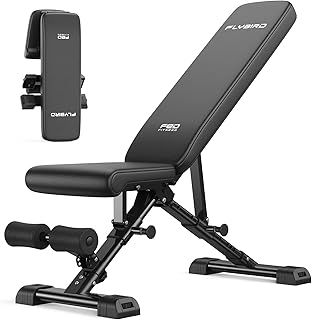
FLYBIRD WB5 Weight Bench
FLYBIRD WB5 Weight Bench punches above its price — 259 buyers rated it 4.5 stars. I would buy it again.
7. Keep Your Sessions Short (15 Minutes Max)

More isn’t always better. You don’t need a grueling 45-minute core circuit to see results. I used to follow these massive, endless YouTube routines. I’d spend 40 minutes doing every single variation of a twist, crunch, and plank known to man. By the end of the video, my tight hip flexors were doing all the actual work. My stomach felt like it was physically tearing. I couldn’t even laugh for two days without doubling over in sharp pain. It was completely counterproductive. Your abs are just regular muscles. They need intense stimulus, and then they desperately need rest. I keep my dedicated core sessions to exactly 15 minutes. I do them two or three times a week. That’s it. I pick three tough exercises. I do 3 to 4 working sets of each. I stay strictly in the 8 to 20 rep range. If I can easily hit 20 reps, the exercise is way too light. I’ll add a thick resistance band or grab a heavy dumbbell. I rest for exactly 60 seconds between sets. I use the digital timer on my phone. I listen to the loud, obnoxious radar beep so I don’t get distracted scrolling through social media. Hit the muscles hard, fatigue them completely, and then stop. Go eat some lean protein and let them recover.
8. Swap Standard Crunches For Functional Core Training

The traditional crunch only works your rectus abdominis. That’s the superficial six-pack muscle on the front. But your core is actually a massive, thick cylinder that wraps entirely around your torso. You need functional movements that train the deep transverse abdominis, the side obliques, and the erector spinae in your back. I started doing Dead Bugs and Bird Dogs to hit everything. Honestly, I felt like a complete idiot the first time I did Dead Bugs. I was flailing my arms and legs around like a flipped turtle on my living room rug. I couldn’t coordinate my opposite arm and opposite leg to save my life. But once I nailed the strict form, it changed everything. You lie on your back, arms pointing up, knees bent at 90 degrees. You slowly lower your right arm and left leg toward the floor while keeping your lower back pinned down. Then you switch sides. It requires intense mental focus. The mind-muscle connection is incredibly real here. Actively think about squeezing your deep abdominal wall. I also use a large stability ball for an exercise called ‘Stir the Pot’. I bought a blue Trideer Exercise Ball for $23.99 on Amazon. You plank on the ball with your bare forearms and make small, tight circles. The constant instability makes your core fire on all cylinders. It smells strongly of cheap PVC plastic straight out of the box, but it’s totally worth it for the functional strength gains.
9. Abs Are Made In The Kitchen (Skip The Fat-Free Junk)

I’ve got to say it loudly. You can do thousands of perfect reps, but if your overall body fat percentage is too high, you’ll never actually see your abs. They’ll remain completely hidden under a soft layer of adipose tissue. I learned this the hard way. I used to buy those crunchy fat-free snickerdoodle cookies at Trader Joe’s. They were $3.49 a box. I thought I was being incredibly healthy because the nutrition label said zero fat. But they were packed to the brim with refined sugar. They tasted exactly like wet, sugary cardboard, and they kept my body fat hovering around a soft 18 percent. Skip the fat-free processed stuff. It’s pure garbage. You need a slight caloric deficit and plenty of high-quality protein. I buy large bulk packs of organic chicken breast at Whole Foods for $5.99 a pound. I grill it in a hot cast iron pan with just coarse sea salt, cracked black pepper, and a little bit of olive oil. I eat it with a cup of steamed green broccoli and half a cup of white jasmine rice. Real, whole foods. That’s the boring secret. No amount of aggressive ab rolling is going to out-train a terrible diet of frozen pizzas and sugary midnight snacks. Track your macros. Drink a full gallon of water a day. Get 8 hours of deep sleep. When you combine a dialed-in diet with the heavy, progressive core training we just talked about, the results are inevitable. Trust me on this.
I’ve spent years figuring out how to train properly at home. I’ve wasted hard-earned money on useless plastic gadgets and wasted precious time on terrible fitness advice from fake influencers. Stick to the heavy basics. Grab a good rubber ab roller, slow down your eccentric reps, and focus heavily on your kitchen habits. Stop looking for a magic shortcut because it doesn’t exist. Save this routine right now. Pin it to your fitness board so you don’t lose it. Try it out this week, push through the burning sensation, and let me know exactly how sore your core is the next day. You won’t regret putting in the real work.

FitinOne Adjustable Folding Weight Bench for Home Gym
FitinOne Adjustable Folding Weight Bench for Home Gym punches above its price — 744 buyers rated it 4.5 stars. I would buy it again.
Frequently Asked Questions
How often should I do an abs workout at home?
You should train your abs two to three times per week. Like any other muscle group, they need 48 to 72 hours of rest to recover and grow. Daily training often leads to overtraining and diminished results.
What is the best equipment for an abs workout at home?
A high-quality ab roller and a set of heavy resistance bands are all you really need. These tools allow for progressive overload and continuous tension, which are essential for building thick, visible core muscles without a gym.
Why does my lower back hurt during my abs workout at home?
Lower back pain usually happens because you’re arching your spine during exercises like leg raises. You’ve got to keep your pelvis tucked and press your lower back flat against the floor to protect your lumbar spine.
Can an abs workout at home burn belly fat?
No, you can’t spot-reduce belly fat with core exercises. Visible abs are made in the kitchen. You need a slight caloric deficit and a high-protein diet to lower your overall body fat percentage so your abdominal muscles show.
