What’s Inside
- Optimize Creatine Supplementation for Muscle Volumization
- Prioritize Heavy Compound Lifts for Density
- Dial In Your Pre-Workout Carbohydrates
- Perfect Your Lateral Deltoid Isolation
- Hydration and Electrolyte Balance for the Pump
- Master the Mind-Muscle Connection on Back Day
- Strategic Caloric Surplus with Quality Foods
- Prioritize Sleep and Recovery Metrics
- Track Progression with Brutal Honesty
Last Tuesday at Whole Foods, I caught a glimpse of myself in the reflective glass of the dairy aisle. I had a carton of eggs in one hand and a gallon of milk in the other. I looked flat, tired, and honestly, a little soft around the waist. I’d been chasing a specific gym workout aesthetic for months, but my reflection looked like a deflated balloon. It was a massive wake-up call. I was doing endless cable crossovers and eating plain chicken breast that tasted like wet cardboard. It sucked. I realized I was focusing entirely on chasing a temporary pump and ignoring the heavy lifts and exact nutrition that actually build dense muscle. I’m Ryan Brooks, a fitness trainer who’s spent the last ten years making every mistake possible in the weight room. I’m going to walk you through the exact strategies that actually work. No fluff. Just the raw, sweaty truth about building a physique that looks like it belongs on a magazine cover. Let’s get into the dirt of what actually builds a solid gym workout aesthetic without wasting your time on useless gimmicks.
1. Optimize Creatine Supplementation for Muscle Volumization

I tried this wrong for months before figuring it out. I used to buy cheap, unflavored creatine from a discount bin at Walmart, mixing it with just a splash of water. The gritty texture would coat the back of my throat, and I’d cough up white powder for ten minutes. I’d stand in the kitchen, gagging on the chalky water, wondering why I wasn’t getting huge. It’s embarrassing to look back on. I was wasting my money and my time. Learned that the hard way. I wasn’t even taking enough to make a difference. Creatine monohydrate is a highly researched supplement known to enhance workout performance by boosting ATP availability. It leads to increased strength and muscle mass. It also draws water directly into your muscle cells, contributing to a fuller, more volumized look. If you’re serious about your results, you need to saturate your muscles. For rapid muscle saturation, consider a loading phase of 20 to 25 grams per day for the first five days. Split this into four 5-gram doses so you don’t wreck your stomach. I personally swear by Optimum Nutrition Micronized Creatine Powder. It costs exactly $34.99 for 120 servings at Target. It mixes perfectly into my morning oatmeal without that nasty sandy crunch. After the loading phase, drop down to a maintenance dose of 5 grams daily. Don’t skip days. Consistency is the only thing that matters here. If you miss a few days, your muscle cells lose that intracellular water, and you’ll look flat again. I’ve noticed a massive difference in my shoulder fullness just by staying strictly consistent with this exact protocol. It’s the cheapest, most effective way to look bigger almost overnight.
2. Prioritize Heavy Compound Lifts for Density

You can’t build a solid foundation with isolation machines. I spent my entire first year lifting doing triceps pushdowns and leg extensions. I had a decent pump, but I looked exactly the same in a t-shirt. Real density comes from heavy compound movements. Squats, deadlifts, overhead presses, and barbell rows. These lifts force your central nervous system to adapt, releasing a cascade of growth hormones that isolation exercises simply can’t match. Last month at my local gym, I loaded up 315 pounds on the squat bar. The sharp, metallic smell of iron and chalk in the air always gets my adrenaline going. I failed the third rep and had to dump the bar on the safety pins. It was loud and embarrassing, but pushing to that level of mechanical failure is what forces your body to grow. I’ll never forget the sting of the knurling on my calluses that day. It hurt, but it’s a good kind of pain. You have to embrace that discomfort. Isolation moves are easy. Squats are hard. Do the hard stuff. For grip on heavy pulls, I rely on cheap liquid chalk. I found a generic liquid chalk at Walmart for $9.98 that works perfectly. A strong grip means you can pull more weight on rows and deadlifts, which builds that thick, cobra-like back. If you want a true gym workout aesthetic, you need a wide back to create the illusion of a smaller waist. Stop wasting your first thirty minutes on the pec deck. Get under a heavy barbell. Push your limits safely, and accept that you’re going to fail sometimes. That’s where the actual growth happens.
3. Dial In Your Pre-Workout Carbohydrates

Most people get this wrong by either training completely fasted or eating a massive meal right before they lift. I’ve done both, and they both ruin your performance. Two years ago, I ate a giant bowl of heavy pasta thirty minutes before a brutal leg day. By the second set of walking lunges, I was in the gym bathroom throwing up. The smell of cheap gym air freshener mixed with my own regret is burned into my brain forever. I felt completely drained, dizzy, and embarrassed. My legs were shaking, and I hadn’t even finished my warm-up sets. I learned right then that timing your nutrition is just as important as the food itself. You need fast-digesting carbohydrates to fuel intense muscular contractions, but you need them to clear your stomach before you start lifting. I’ve found the sweet spot is exactly sixty to ninety minutes before you train. I eat exactly 1/2 cup of Trader Joe’s Organic Rolled Oats. A 32 oz bag costs $3.99, making it incredibly cheap fuel. I mix it with 1 tablespoon of raw honey and a pinch of salt. The oats provide a sustained release of glucose, while the honey gives an immediate spike in blood sugar. This combination fills your muscle glycogen stores, giving you that skin-tearing pump when you train. If you go into a workout depleted, your muscles will look flat and stringy. Carbohydrates hold water inside the muscle tissue. Skip the fat-free stuff and trendy low-carb diets if you want to look muscular. You need fuel to push heavy weights, and oats are the most reliable source I’ve found. You might also like: 20 Gorgeous Easy Home Workout Ideas That Actually Work
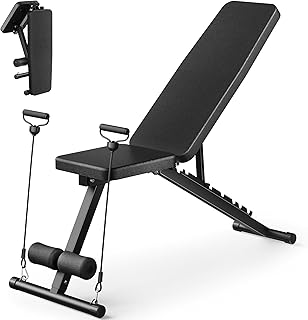
Adjustable Weight Bench for Home Gym
If you want something that just works, Adjustable Weight Bench for Home Gym is a safe bet (517 reviews, 4.5 stars).
4. Perfect Your Lateral Deltoid Isolation

Nothing screams gym workout aesthetic quite like a pair of capped, round shoulders. The problem is that the lateral deltoid is incredibly stubborn. I used to grab heavy 35-pound dumbbells and swing them up using my lower back and momentum. My traps grew, but my side delts stayed completely flat. I’d look in the mirror and wonder why I still looked narrow. It’s because I was cheating the movement. When you cheat on lateral raises, your traps take over completely. Your traps are massive, powerful muscles that will gladly steal the workload from your tiny side delts. It’s a classic mistake. You aren’t trying to move weight from point A to point B. You’re trying to contract a very specific, small muscle group. Drop your ego and drop the weight. I now use the Bowflex SelectTech 552 Dumbbells in my garage gym. They cost $429.00 at Costco, and they let me micro-adjust the weight in 2.5-pound increments. I set them to exactly 15 pounds. I lean slightly forward, keep my shoulder blades depressed, and raise the dumbbells out to the sides as if I’m pouring water out of two pitchers. The burn is immediate and intense. I aim for high volume here. Four sets of 15 to 20 reps. You want to flood the muscle with blood. The smell of the rubber grips on those dumbbells always reminds me to slow down and focus on the squeeze at the top. If you can’t hold the weight at the top of the movement for a full second, it’s too heavy. Wide shoulders physically push your shirtsleeves out and make your waist look drastically tighter in comparison. It’s the ultimate optical illusion for a classic physique. You might also like: 20 Beautiful Home Gym Setup Ideas That Changed Everything
5. Hydration and Electrolyte Balance for the Pump

Drinking plain water during a brutal workout is a rookie mistake. I learned this the hard way during a summer session in an un-air-conditioned garage gym. I was sweating through my shirt, drinking gallons of filtered water, and suddenly my left hamstring locked up completely on the leg press. The pain was blinding. I had to roll off the machine and lay on the dirty rubber floor while my training partner tried to stretch my leg out. It was humiliating and completely preventable. I was flushing all the sodium and potassium out of my system without replacing it. Your muscles need sodium to contract forcefully and to pull water into the cells for a massive pump. Now, I never train without a proper electrolyte mix. I use Liquid I.V. Hydration Multiplier. A bag of 16 sticks costs $24.49 at Sprouts. I mix one Lemon Lime packet into 32 oz of cold water. I also add a 1/4 teaspoon of Redmond Real Salt, which costs $8.99 for a 8.25 oz shaker. The extra sodium makes the water taste slightly like the ocean, but it forces your veins to pop and your muscles to swell. The difference in vascularity is insane. When you’re properly hydrated with adequate sodium, your skin looks thinner and your muscles look significantly harder. Don’t fall for the myth that sodium makes you look bloated. Subcutaneous water retention happens when your diet is garbage, not when you’re fueling intense training sessions with essential minerals. Drink your salty water and watch your forearms light up with veins. You might also like: 20 Brilliant Adopt Me Houses Home Gym Setup Ideas That Are Totally Worth It
6. Master the Mind-Muscle Connection on Back Day

Building a wide back is notoriously difficult because you can’t see the muscles working in the mirror. For years, I just yanked the lat pulldown bar to my chest using entirely my biceps and forearms. My back was completely flat. Your biceps are secondary movers here. If your arms are burning before your lats, you’re doing it wrong. I’d highly suggest watching a few videos on proper lat engagement. It takes practice to build that neurological pathway. You have to learn how to turn your hands into hooks. I finally bought a pair of Harbinger Lifting Straps for $14.99 at Kroger of all places. They were hanging in a random fitness aisle next to the pharmacy. Using straps takes your grip completely out of the equation. Once I wrapped those cheap cotton straps around a barbell for bent-over rows, I finally felt my lats engage. The rough canvas texture biting into my wrists was a small price to pay for the activation. When you pull, imagine driving your elbows down into your back pockets. Don’t pull with your hands. Squeeze your shoulder blades together at the top of every single rep. Hold it there for a full second. If you’re doing cable rows, use the V-bar attachment and pull it directly to your belly button, not your chest. A thick, detailed back is what separates an average gym-goer from someone with a serious physique. It gives you that thick, three-dimensional look from the side. Take your time, lower the weight by twenty percent, and actually feel the muscle fibers stretching and contracting.

NICEPEOPLE Adjustable Weight Bench for Home Gym
If you want something that just works, NICEPEOPLE Adjustable Weight Bench for Home Gym is a safe bet (32 reviews, 4.5 stars).
7. Strategic Caloric Surplus with Quality Foods

You can’t build new muscle tissue out of thin air. You have to eat in a caloric surplus, but the dirty bulk is a massive trap. I fell for it hard in my early twenties. I ate fast food, ice cream, and entire boxes of cereal to get my calories up. I gained twenty pounds, but my face got puffy, my energy crashed, and I had to buy new jeans because my waist exploded. It was a disaster. I was so focused on the scale going up that I ignored the mirror. Big mistake. You aren’t a powerlifter trying to move maximum weight at any cost. You’re trying to build a specific aesthetic. You want to build muscle, not just get fat. You need a slight surplus of roughly 300 to 500 calories above your maintenance level, sourced from high-quality, nutrient-dense foods. I rely heavily on Kirkland Signature Greek Yogurt from Costco. It costs $6.49 for a massive 48 oz tub. I eat exactly 1 cup every night before bed. It provides 18 grams of slow-digesting casein protein. I top it with 2 tablespoons of Kirkland Signature Almond Butter, which is $7.99 for a 27 oz jar. The healthy fats keep my hormones optimized, and the thick, creamy texture feels like a cheat meal. Eating clean foods in a surplus keeps your digestion running smoothly and ensures the weight you gain is predominantly lean tissue. Stop eating garbage and wondering why your midsection looks soft. Treat your body like a high-performance engine and give it premium fuel.
8. Prioritize Sleep and Recovery Metrics

You don’t grow in the gym. You grow in your bed while you’re asleep. This is the hardest pill for most guys to swallow. I used to train six days a week, sleep five hours a night, and drink three energy drinks a day to survive. My joints ached constantly, and my bench press was stuck at 225 pounds for an entire year. I was chronically under-recovered. I’d wake up feeling like I got hit by a truck. My eyes were always bloodshot, and I relied on pre-workout powders just to function. It’s a miserable way to live. I finally invested in a Whoop Strap 4.0. The annual membership costs $239.00, and I picked it up after seeing it on display at Whole Foods. It tracks my heart rate variability and deep sleep cycles. It was a harsh reality check. My sleep quality was garbage. To fix it, I started taking Natural Vitality Calm Magnesium Powder. It costs $23.99 for a 16 oz bottle at Whole Foods. I mix 2 teaspoons into hot water thirty minutes before bed. It fizzes up and tastes like a tart raspberry tea. Magnesium relaxes your central nervous system and helps prevent muscle cramps. Since dialing in my sleep, my recovery has skyrocketed. My muscles look fuller, my strength is up, and I no longer have that stringy, depleted look. If you aren’t getting at least seven hours of high-quality sleep, you’re leaving massive gains on the table. Turn off your phone, drink your magnesium, and go to sleep.
9. Track Progression with Brutal Honesty

If you aren’t logging your workouts, you’re just guessing. For a long time, I’d walk into the gym and just do whatever felt good that day. I’d wander around, wasting time, looking for a machine that was open. That’s a recipe for mediocrity. You need a plan before you ever step foot inside the building. I’d grab the 60-pound dumbbells for incline press because I couldn’t remember what I did the week before. That lack of structure is why most people look exactly the same year after year. Progressive overload is the undeniable law of muscle growth. You must force your muscles to do more work over time. I bought a simple black Moleskine Classic Notebook for $22.95 at Target. The smooth paper and firm cover make it easy to write on between sets. I write down every single exercise, the exact weight, and the exact number of reps. If I hit 8 reps with 225 pounds on the bench press last week, I know I need to hit 9 reps or add 5 pounds this week. It’s brutal, objective honesty. There’s no hiding from the ink on the page. The notebook smells faintly of leather and sweat, and it’s the most valuable piece of equipment in my gym bag. Don’t rely on your memory. Write it down. When you force progression on your heavy lifts week after week, your body has no choice but to adapt by adding dense, aesthetic muscle mass. It’s not magic. It’s just math and consistent, grueling effort.
Building a physique you’re actually proud of takes time, patience, and a lot of heavy lifting. I’ve made all the mistakes so you don’t have to. I’m telling you right now, there aren’t any shortcuts. No exaggeration. You can’t buy a quick fix. You just have to show up, eat your oats, lift heavy, and go to sleep. Stop chasing the pump with light weights and start focusing on the heavy, foundational movements. Fuel your body with quality carbohydrates, hydrate with sodium, and get your sleep dialed in. I highly recommend grabbing that Moleskine notebook and starting your tracking today. It’s the one habit that changed everything for me. If you found this helpful, pin this article to your fitness board or save it for your next trip to the grocery store. You’ve got the blueprint now. It’s time to put in the work.

OLIXIS Adjustable Weight Bench for Full Body Strength
Honestly, OLIXIS Adjustable Weight Bench for Full Body Strength Training surprised me — sturdier than it looks in the photos, and over 31 buyers gave it 4.5 stars.
Frequently Asked Questions
How long does it take to build a gym workout aesthetic?
It honestly takes most guys at least twelve to eighteen months of consistent, heavy lifting and a strict caloric surplus to see massive visual changes. You can’t rush dense muscle tissue. Consistency is everything.
Do I need supplements for a gym workout aesthetic?
You don’t strictly need them, but creatine monohydrate and a solid whey protein make hitting your goals drastically easier. I’d prioritize whole foods first, then add supplements to fill the gaps in your nutrition.
How many days a week should I train?
I’ve found four to five days a week is the absolute sweet spot for natural lifters. It gives you enough volume to stimulate muscle growth but leaves enough time for your central nervous system to recover.
Can I build muscle and lose fat at the same time?
It’s possible if you’re a total beginner, but it’s highly inefficient. I’d recommend eating in a slight caloric surplus to build a solid base of muscle first, then entering a dedicated fat-loss phase later.
