What’s Inside
- Master The Mind-Muscle Connection For Your Big Biceps Workout
- Prioritize The Eccentric Phase (Stop Dropping The Weight)
- Try Blood Flow Restriction (BFR) Training
- Vary Your Grip Width And Try Mid-Range Partials
- Eliminate Momentum And Stop Overtraining
- Hammer Curls And Towel Grips For Forearm Thickness
- Hit The Zottman Curl And Barbell Drag Curls
- Fuel Your Big Biceps Workout With Creatine And Variation
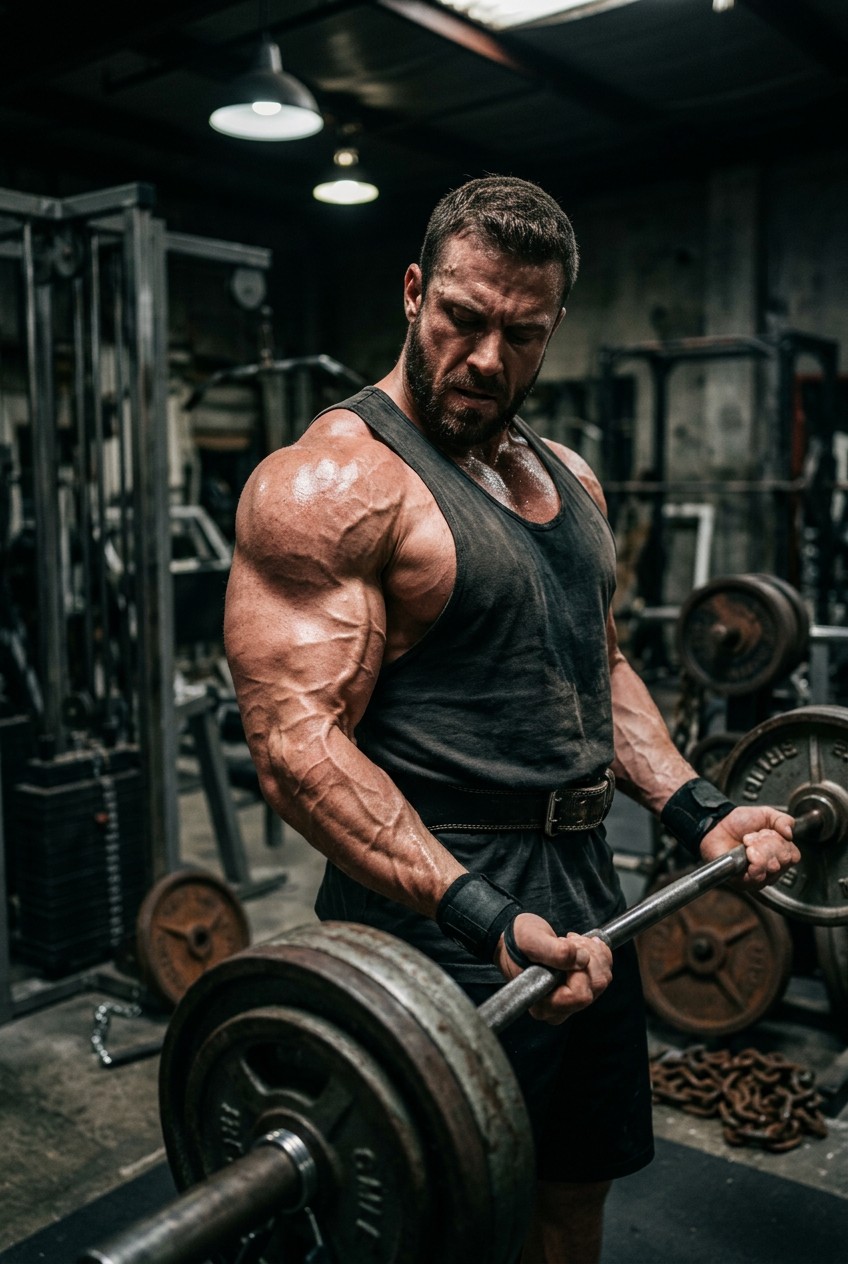
I dropped a full gallon of whole milk in the parking lot of Whole Foods last Tuesday because my arms were completely dead. If you want to avoid that embarrassment, you need a big biceps workout that prioritizes form over ego. My forearms were fried, my grip gave out without warning, and cold milk exploded all over my favorite black sneakers. The sour, sharp smell of dairy on hot asphalt was terrible, and I had to drive home with sticky shoes. That embarrassing little disaster is exactly why I had to rethink my approach to arm day. If you’re stuck doing the same tired routine every week, your muscles won’t adapt. I spent years mindlessly throwing heavy weights around, wondering why my arms looked the same month after month. It’s frustrating. You put in the time, you drink the chalky protein shakes, but your t-shirt sleeves still flap in the wind. I’m going to walk you through exactly what I changed. No fluff. Just the raw, painful lessons I learned the hard way. I used to think I knew what I was doing, but my lack of progress proved otherwise. I was doing endless half-reps, rushing the process, and ignoring the science of muscle hypertrophy. Let’s fix that right now.
1. Master The Mind-Muscle Connection For Your Big Biceps Workout

I used to laugh at the mind-muscle connection. I thought it was bro-science invented by guys who didn’t want to lift heavy. But IFBB Pro Zac Perna is right. You have to actively focus on squeezing the muscle. Don’t just move the weight from point A to point B. I remember standing in front of the mirror at my old commercial gym, violently throwing up 40-pound dumbbells. My lower back was screaming. My shoulders ached. My biceps weren’t doing much of anything. I finally bought a set of Rogue Rubber Hex Dumbbells for my garage gym. They run about $2 to $3 per pound, and the thick rubber coating smells strongly of fresh tires when you first unbox them. I dropped the weight down to just 20 pounds. I closed my eyes and focused on the squeeze. Learned that the hard way. Research shows this internal focus boosts electromyography (EMG) activity. That means your biceps work much harder with less weight. Celebrity coach Stan Kravchenko also talks about ensuring a full range of motion. I used to do terrible half-reps. I’d stop halfway down to keep tension, but it just limited my overall growth. Now, I fully extend my arms at the bottom of every rep. The cold steel of the knurled dumbbell handle presses deeply into my calluses. The deep, tearing burn in the muscle belly is undeniable. It’s a different feeling. I wasted time doing partial reps and letting my ego dictate my weight selection. Don’t be like me. Drop your ego. Go lighter. Squeeze hard at the top. Take 2 tablespoons of accountability and realize your form probably sucks. Mine certainly did.
2. Prioritize The Eccentric Phase (Stop Dropping The Weight)

The lowering phase of a bicep curl is where the magic happens. It’s called the eccentric phase. I bought a PowerBlock Elite USA Adjustable Dumbbell Set last year. The price range is usually $300 to $500 for a 5 to 50 lb set. The square grip takes some getting used to, and the metal selector pins make a loud clanking noise when you change weights. Before I understood eccentric training, I was doing heavy curls and letting gravity yank the weight down. I woke up one morning with terrible elbow tendonitis. The pain was sharp and constant. I had to drive to Target and buy three different $14.99 gel ice packs just to get through my workday without wincing every time I bent my arm. You generate more force while lowering the weight. You need to take 3 to 5 full seconds to lower it. Count it out in your head. One, two, three, four, five. The burning sensation is intense. Your biceps will shake uncontrollably. I use my free hand to help lift the weight up on the concentric portion, then I slowly resist the negative on the way down. It’s brutal. But it works better than anything else I’ve tried. I tried this with a 35-pound weight last month and couldn’t even brush my teeth the next morning without supporting my elbow. If you aren’t controlling the negative, you aren’t training your biceps. You’re just fighting gravity and losing.
3. Try Blood Flow Restriction (BFR) Training

Blood flow restriction training sounds like medieval torture, but it’s a massive trend for 2026. BFR allows for muscle growth with much lighter weights, which reduces joint stress. I use SmartCuffs 4.0 for this. The price range is between $150 and $300. You wrap them high on your upper arms, just below the shoulders. The manual says to use a tightness level of 7 out of 10. I messed this up horribly my first time. I wrapped them to a 10. My fingers turned a scary shade of purple and went numb within two minutes. I panicked, ripped the velcro off, and sat on the floor breathing heavy. Don’t do that. Keep it at a 7. You only use 20 to 30 percent of your one-rep max. The protocol is strict. You do 30 reps, rest 30 seconds, then do three sets of 15 reps with 30 seconds rest between each. The pump is absurd. Your skin feels like it’s going to tear open. The nylon cuffs dig into your skin, and warm sweat pools underneath the straps. It’s uncomfortable. But it saves your joints. My elbows used to click every time I curled a barbell. Now I use BFR once a week, and my joints feel fresh. It takes 4 oz of courage to strap these things on and push through the lactic acid buildup, but the results are undeniable. You might also like: 20 Inspiring Journal Home Workout Ideas You Haven’t Thought Of
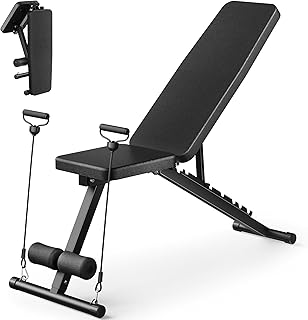
Adjustable Weight Bench for Home Gym
Adjustable Weight Bench for Home Gym punches above its price — 517 buyers rated it 4.5 stars. I would buy it again.
4. Vary Your Grip Width And Try Mid-Range Partials

I do most of my heavy barbell work with a REP Fitness Colorado Barbell. The price range is $320 to $330. I love the knurling on this bar. It’s aggressive enough to stick to your hands but won’t shred your palms like cheap gym bars. I used to grip the bar exactly shoulder-width apart every time I curled. My arms got slightly thicker from the side profile, but looking straight in the mirror, they looked flat. Sticking to one grip width limits your muscle development. You need to vary your grip width to hit different angles. A wider-than-shoulder-width grip targets the short head of the biceps. A closer grip hits the long head. I also started doing partial mid-range bicep curls recently. This is a lesser-known technique. You just stay in the middle of the movement. You never fully extend at the bottom, and you never fully contract at the top. The continuous, unbroken tension is agonizing. I pair this finisher with a quick trip to Sprouts for a post-workout meal. I usually grab an 8 oz sirloin steak and 1 cup of dry white rice to cook at home. The mid-range partials flood the muscle with blood, and the steak provides the raw materials to repair the damage. If you’re only doing full-range standard curls, you’re leaving growth on the table. Mix up your grip and play with the range of motion. You might also like: 20 Inspiring Outfit Home Workout Ideas That Changed Everything
5. Eliminate Momentum And Stop Overtraining

We need to talk about momentum. Swinging the weight or using your hips and shoulders to lift is a mistake that ruins tension on the biceps. It also leads to lower back injuries. Zac Perna recommends resetting at the bottom of each rep. I used to do 30 sets of biceps a week. I thought more volume was better. I was dead wrong. Stan Kravchenko recommends aiming for just 10 to 15 sets per week spread over two to three sessions. I ended up buying a cheap $15 full-length mirror from Walmart just to watch my form in my garage gym. I realized I was throwing my hips into every rep. I looked like I was doing a weird standing crunch, not lifting weights. Reset at the bottom. No momentum. If you have to swing, the weight is too heavy. I spent months doing this wrong. My lower back ached constantly, a dull throb that kept me awake at night. Now I stand perfectly still. I squeeze my glutes, brace my core, and only my elbows move. It’s humbling. I had to drop the weight on my curls by 20 pounds. I felt weak. But my arms finally started growing again. Quality over quantity always wins. More sets won’t fix terrible form. You might also like: 20 Gorgeous Garage Home Gym Setup Ideas to Steal Right Now
6. Hammer Curls And Towel Grips For Forearm Thickness

You can’t have big biceps with tiny, weak forearms. Hammer curls are performed with a neutral grip, meaning your palms face each other. This targets the brachialis and brachioradialis muscles. These muscles contribute to arm thickness and push the biceps peak higher from underneath. I use my Rogue Rubber Hex Dumbbells for these. I also use a cheap $9.99 rough cotton bath towel from Target for towel hammer curls. You wrap the towel tightly around the dumbbell handle and grip the loose ends. It’s hard to hold onto. The rough cotton fabric tears at your skin, and your fingers will cramp immediately. Your forearms will scream. Stronger forearms and grip strength contribute to bigger biceps by allowing you to handle more weight. I do 3 sets to failure. I tried doing this with a 40-pound dumbbell once and my grip gave out. I dropped it right on my toe. The heavy thud on the rubber mat scared my dog. Start light. Like 15 pounds. The brachialis sits underneath the bicep. When it grows, it pushes the whole muscle up, creating a better peak. I do 3 sets of 8 to 12 reps of standard hammer curls before moving to the towel grip torture.

NICEPEOPLE Adjustable Weight Bench for Home Gym
NICEPEOPLE Adjustable Weight Bench for Home Gym punches above its price — 32 buyers rated it 4.5 stars. I would buy it again.
7. Hit The Zottman Curl And Barbell Drag Curls

The Zottman curl is an unconventional exercise. It targets the biceps during the concentric phase and the brachioradialis and brachialis during the eccentric phase by rotating your wrists. You curl up with your palms up, then rotate your wrists at the top, and lower the weight slowly with your palms down. The rotation feels awkward at first. My wrists popped loudly the first few times I tried it. I do 3 sets of 8 to 12 reps. Then I move to barbell drag curls. Vince Gironda popularized the barbell drag curl. It maximizes tension at the top of the movement. I grab a Synergee Commercial EZ Curl Bar for this. The price range is $70 to $150. Grab the bar with a supinated grip, lean forward, and physically drag the bar up your body. Keep your elbows tucked behind you. Do 4 sets of 10 reps. Hold the contraction for 1 full second at the top. The knurled bar drags against your t-shirt, leaving a faint, chalky white streak. It targets the bicep peak like nothing else I’ve felt. I usually hit Kroger right after this workout to buy a 32 oz bottle of chocolate milk. The simple sugars and fast-digesting protein hit perfectly right after those grueling drag curls.
8. Fuel Your Big Biceps Workout With Creatine And Variation

You can’t build muscle if you aren’t fueling properly. For muscle growth and performance, 5 grams of creatine monohydrate daily is non-negotiable. I personally swear by Thorne Creatine Powder or Momentous Creatine. Both are NSF Certified for Sport. They cost around $25 to $35 for 30 to 60 servings. It tastes like gritty sand if you don’t mix it well. I usually just dry scoop it and wash it down with 8 oz of cold water. You also need to vary your rep ranges. Bodybuilder Mark Bell suggests varying your rep schemes within a single workout. Start with heavier weights for 5 to 6 reps, move to 8 to 10 reps for a second movement, and finish with higher reps of 15 to 20 for a third exercise. I also incorporate incline dumbbell curls. You lie back on an incline bench set at a 60-degree angle. The deep stretch at the bottom is intense. You feel it pulling right at the insertion point near the elbow. I do 3 to 4 sets of 8 to 12 reps. To fuel all this volume, I buy my bulk chicken breasts from Costco. I buy 5 pounds at a time. I also hit Trader Joe’s for their 16 oz jars of creamy peanut butter. Skip the fat-free stuff. It tastes like wet cardboard. You need those dense calories to grow thick arms. Trust me.
I’ve spent years doing the wrong things in the gym, and it cost me a lot of time. If you apply these eight strategies, your arms won’t have a choice but to grow. It won’t happen overnight, but the pump you’ll feel during your next session will be proof enough that you’re on the right track. I recommend starting with the eccentric focus and the mind-muscle connection before you worry about buying BFR bands or fancy supplements. Master the basics, control the negative, and eat enough food to recover. If you found this helpful, pin this article to your fitness board so you can pull it up during your next arm day. Let’s get to work.
Frequently Asked Questions
How often should I do a big biceps workout?
Aim for 10 to 15 total sets per week, spread across two to three sessions. Overtraining your biceps with too much volume can actually hinder muscle growth and lead to elbow tendonitis.
Why do my forearms hurt during a big biceps workout?
You likely have a weak grip or you’re squeezing the dumbbells too hard to compensate for lifting weights that are too heavy. Incorporating towel hammer curls can help strengthen your forearms.
What is the best rep range for a big biceps workout?
You should vary your rep ranges. Start with heavy weights for 5 to 6 reps, move to moderate weights for 8 to 12 reps, and finish with lighter weights for 15 to 20 reps.
Does blood flow restriction (BFR) really work for biceps?
Yes. BFR training allows you to use 20 to 30 percent of your one-rep max while still achieving massive muscle growth. It saves your joints while providing an insane muscle pump.
