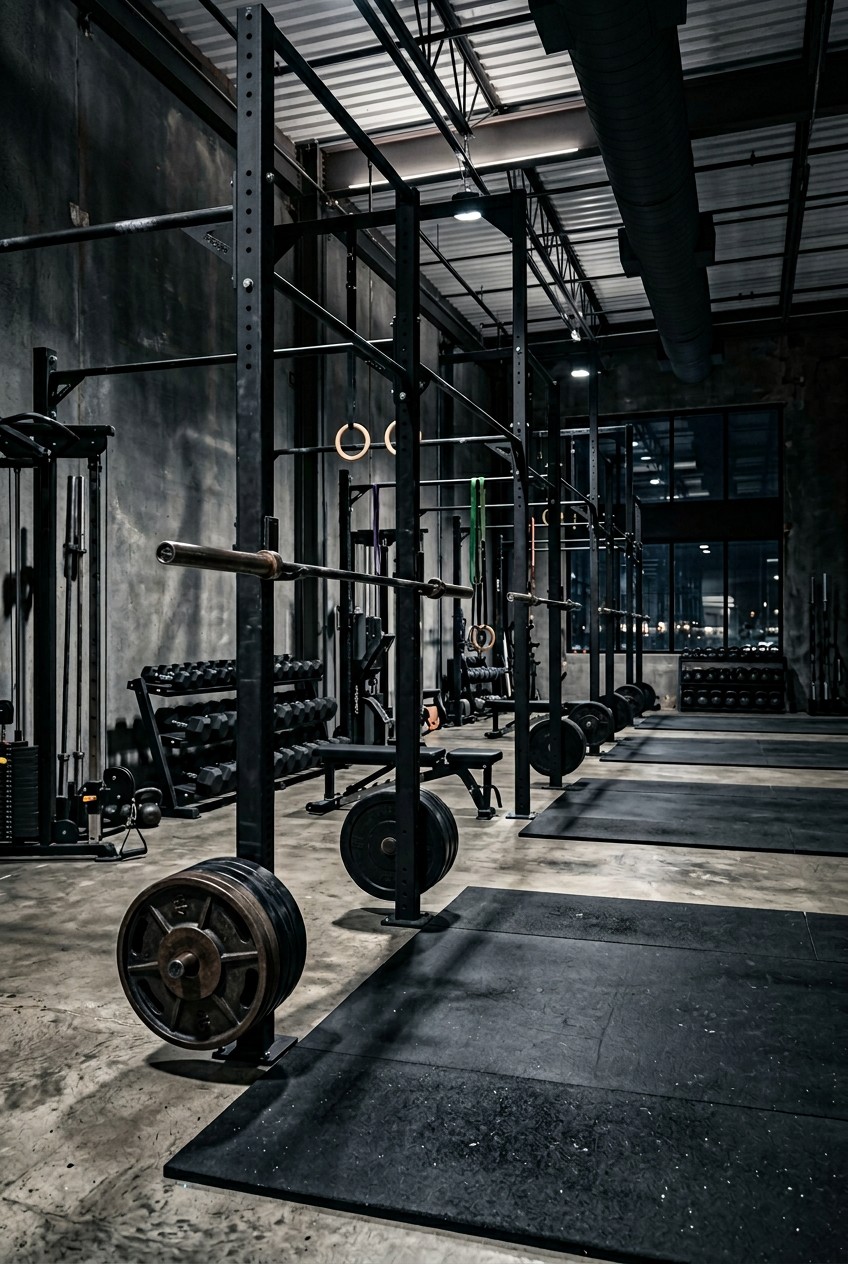
What’s Inside
- Ditch The Static Stretching Before Your Best Gym Workout
- Force Progressive Overload To See Real Changes
- Master The Mind-Muscle Connection For Growth
- Optimize Your Protein With Precision
- Hydrate Like Your Performance Depends On It
- Let Wearable Tech Guide Your Best Gym Workout
- Build Around Heavy Compound Movements
- Perfect Your Form Before Adding Weight
- Schedule Deload Weeks To Prevent Burnout
- Use Cold Recovery To Bounce Back Faster
Last Tuesday, I found myself flat on my back on the rubber floor at my local gym. I was staring at the fluorescent lights while my left hamstring cramped so hard I thought it might snap. I’m embarrassed to admit it, but I skipped my warm-up to rush into what I thought was the best gym workout of my life. Spoiler alert: it wasn’t. I’d just grabbed a cheap $3.99 spiral notebook from Target to track my lifts and felt invincible. I learned the hard way that enthusiasm doesn’t replace preparation. If you want to stop spinning your wheels and actually build strength, you need a plan that respects human physiology. Let’s break down how to structure your training.
1. Ditch The Static Stretching Before Your Best Gym Workout

I did this wrong for months. I used to sit on the floor holding toe touches for 45 seconds, thinking I was doing my body a favor. Research shows holding static stretches for more than 30 seconds before lifting kills your maximal strength and power output. Your muscles are like cold rubber bands. If you yank them, they snap. Instead, you need 5 to 10 minutes of dynamic movement. I personally swear by using a light resistance band to wake up my shoulders. I bought a SPRI Medium Resistance Band for $12.98 at Walmart last month, and it lives in my gym bag. Doing 2 sets of 15 band pull-aparts gets the blood flowing. Save the long, static holds for your post-workout cool-down. That’s when your muscles are warm and pliable. If you’re still doing static stretches before heavy squats, you’re actively making yourself weaker. Stop it. Your joints will thank you. The smell of stale sweat and chalk dust in the air always reminds me to grab my band. The rubber texture of the SPRI band feels grippy in my hands. The tension builds a slight burning sensation in my rear delts. That’s exactly what you want. You want the muscles firing before you load them with heavy iron.
2. Force Progressive Overload To See Real Changes

Constantly changing your routine every few days is a massive mistake. I call it program hopping. You aren’t confusing your muscles; you’re just confusing yourself. To build muscle, you must force progressive overload. This means gradually increasing the demands on your body. It doesn’t always mean slapping another 45-pound plate on the bar. You can increase reps, add sets, or reduce rest times. For example, if you’re curling 20-pound dumbbells for 3 sets of 8 reps this week, hit 3 sets of 9 reps next week. I track every metric. I used to rely on my memory, but last Thursday at the gym, I completely blanked on what I lifted the week prior. It was frustrating. Now, I write everything down in a Mead Five Star wirebound notebook I grabbed for $5.49 at Kroger. Stick to a structured program for at least 4 to 6 weeks. Give your central nervous system time to adapt. If you jump from a bodybuilding split to CrossFit to powerlifting in a single month, you won’t excel at any of them. Pick a lane. Add a little more tension each week. That’s how the magic happens. I remember the metallic clink of the weights as I finally bumped up my bench press by just 2.5 pounds on each side. Those tiny micro-plates (I bought a pair of CAP Barbell 2.5 lb plates for $14.99 on Amazon) are your best friends for steady progress. Don’t let ego dictate your weights. Let the math do it.
3. Master The Mind-Muscle Connection For Growth

I used to just heave weights from point A to point B. I looked like a flailing fish on the lat pulldown machine. I thought as long as the weight moved, I was growing. Mastering the mind-muscle connection is what separates the veterans from the beginners. Studies show that consciously focusing on the specific muscle you’re working boosts electromyography activity. That means more muscle fibers are recruited. When you do a bicep curl, don’t just swing your arm. Squeeze the bicep at the top like you’re trying to crush a walnut in the crook of your elbow. For isolation exercises, you only need about 20 to 60 percent of your one-rep max to maximize this internal focus. I learned this lesson while snacking on a 2-ounce bag of Blue Diamond Lightly Salted Almonds ($4.99 at Sprouts) before a workout. I was mindlessly chewing while scrolling my phone, not even tasting the salty, crunchy nuts. Lifting without focus is the exact same thing. You’re going through the motions without extracting the benefit. Next time you’re doing cable triceps pushdowns, close your eyes. Feel the smooth glide of the cable. Focus entirely on the triceps extending. I use a Harbinger Tricep Rope ($24.99) at my home gym because the thick nylon rope provides a brutal grip challenge that forces me to concentrate. If you aren’t feeling the target muscle doing the work, lower the weight immediately. You might also like: 20 Gorgeous Garage Home Gym Setup Ideas to Steal Right Now

NICEPEOPLE Adjustable Weight Bench for Home Gym
Honestly, NICEPEOPLE Adjustable Weight Bench for Home Gym surprised me — sturdier than it looks in the photos, and over 32 buyers gave it 4.5 stars.
4. Optimize Your Protein With Precision

You can’t out-train a terrible diet. I spent my early twenties lifting heavy and eating garbage. My results were pathetic. For muscle gain, you need 1.6 to 2.2 grams of protein per kilogram of body mass daily. The International Society of Sports Nutrition recommends splitting this into 4 to 6 servings throughout the day. Each serving should be roughly 20 to 40 grams. Skip the fat-free, sugar-free protein bars that taste like wet cardboard. They’re miserable to eat and usually packed with cheap fillers. I personally rely on Optimum Nutrition Gold Standard 100% Whey in Double Rich Chocolate. A 2-pound tub costs exactly $44.99 at Whole Foods. The powder is fine, and it mixes perfectly in 8 ounces of cold water without leaving those chalky clumps. I drink it exactly 30 minutes post-workout. If you prefer a cleaner profile, the Transparent Labs Grass-Fed Whey Protein Isolate is fantastic, though it runs about $59.99 for a 2-pound tub. I tried blending 1 scoop of the Transparent Labs vanilla with 1/2 cup of frozen blueberries and 1 cup of unsweetened almond milk last Sunday. The icy, thick texture was incredible. Don’t guess your protein intake. Weigh your chicken breasts (a standard 4-ounce serving yields about 25 grams of protein) on a digital scale. I use an Ozeri Pronto scale I bought for $13.95. Precision is everything when you’re trying to force your body to build new tissue. You might also like: 15 Clever Garage Home Workout Ideas That Are Totally Worth It
5. Hydrate Like Your Performance Depends On It

Dehydration will wreck your session faster than a bad playlist. A general rule is to drink 17 to 20 ounces of water a few hours before exercising. Then, sip 7 to 10 ounces every 10 to 20 minutes while you sweat. I used to ignore this. I’d show up to the gym running on two cups of black coffee and zero water. By minute thirty, my mouth felt like it was stuffed with cotton balls, and my strength plummeted. Now, I carry a massive 64-ounce Yeti Rambler Jug ($100.00) everywhere I go. For sessions lasting over an hour, plain water isn’t enough. You need electrolytes. I buy the Liquid I.V. Hydration Multiplier packets in Lemon Lime. A 16-count box costs $24.49 at Costco. The slightly salty, citrusy taste cuts through the thick gym air perfectly. Pour one packet into 16 ounces of cold water. Shake it up. It replenishes the sodium and potassium you lose through sweat. Post-workout, you need 16 to 24 ounces of liquid for every pound of body weight lost. I actually weigh myself before and after brutal summer leg days just to calculate this. It sounds excessive, but the difference in my recovery is night and day. If your pee looks like apple juice, you’re already failing. You might also like: 20 Brilliant Adopt Me Houses Home Gym Setup Ideas That Are Totally Worth It
6. Let Wearable Tech Guide Your Best Gym Workout

Wearable technology is everywhere now, and for good reason. Guessing your recovery status is a fool’s game. I used to wake up feeling exhausted but force myself through a heavy deadlift session anyway. I’d inevitably tweak my lower back. Now, I rely on data to guide my gym work. I wear a Garmin Vivoactive 5, which I picked up for $299.99 at Best Buy. It tracks my heart rate variability and sleep quality, giving me a daily body battery score. If my score is below 40, I know it’s a day for light accessory work, not max-effort squats. Another trend is bio-syncing. This means aligning your training with your body’s natural circadian rhythm. I spent years trying to be a 5:00 AM workout guy because I thought it made me disciplined. The truth? I felt stiff, weak, and miserable. The cold morning air made my joints ache. I shifted my training to 4:30 PM, right when my body temperature is naturally higher. My strength numbers shot up within two weeks. You must experiment to find your personal power hour. Don’t fight your physiology. Use a device like the Oura Ring Gen3 ($299.00) to track your deep sleep cycles. The titanium ring is lightweight. If you aren’t recovering, you aren’t growing. Data takes the emotion out of your training decisions.
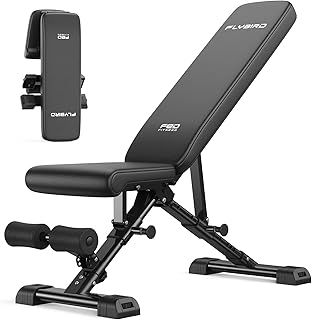
FLYBIRD WB5 Weight Bench
Honestly, FLYBIRD WB5 Weight Bench surprised me — sturdier than it looks in the photos, and over 259 buyers gave it 4.5 stars.
7. Build Around Heavy Compound Movements

If you want maximum efficiency, prioritize compound movements. I’m talking about squats, deadlifts, bench presses, overhead presses, and barbell rows. These multi-joint exercises engage a massive amount of muscle mass simultaneously. I wasted my first two years in the gym doing endless sets of triceps kickbacks and calf raises, wondering why my physique wasn’t changing. You must move heavy iron. When I finally committed to the barbell back squat, my entire body grew. The feeling of a heavily knurled Rogue Ohio Bar ($295.00) pressing into my upper traps is brutally uncomfortable, but it’s the undisputed king of exercises. To grip the bar securely during heavy deadlifts, I always use gym chalk. I buy the SPRI Gym Chalk blocks for $7.99 a pair at Walmart. The dry, powdery texture instantly absorbs the sweat on my palms, locking my hands onto the steel. I can’t lift heavy without it. You also must engage your core during all of these lifts. Imagine someone is about to punch you directly in the stomach. Brace hard. A strong core protects your spine and transfers power from your lower body to your upper body. If you’re doing overhead presses with a soft, relaxed core, you’re begging for a back injury. Master the big five movements before you even look at a cable crossover machine.
8. Perfect Your Form Before Adding Weight

Lifting too heavy with garbage form is the most common mistake I see. Ego lifting will destroy your joints. I learned this the hard way last October. I loaded 225 pounds on the bench press before I was ready. I bounced the bar off my chest so hard it left a red welt, and my elbows flared out like chicken wings. My right shoulder clicked loudly, and I spent the next three weeks icing my rotator cuff. It was humiliating and completely avoidable. Always prioritize perfect technique with a lighter weight. If you’re unsure, record a video of yourself or ask a trainer for a form check. A great tool for grooving proper mechanics is a kettlebell. I bought a Bowflex SelectTech 840 Adjustable Kettlebell for $149.00 at Target. The hard plastic handle is wide enough for a comfortable two-handed grip. I practice goblet squats with just 20 pounds to ensure my torso stays upright and my knees track over my toes. Only once the movement pattern is flawless do I increase the load. If you can’t control the eccentric lowering portion of the lift for a full two seconds, the weight is too heavy for you. Drop your pride. Strip the plates off the bar. Your tendons aren’t invincible, and a torn pec will keep you out of the gym for six months.
9. Schedule Deload Weeks To Prevent Burnout

Every 6 to 8 weeks of intense training, you absolutely must plan a deload week. This involves intentionally reducing your training volume or intensity by up to 50 percent. Most guys skip this because they’re terrified of losing their gains. I used to be one of them. I’d grind for 12 weeks straight until I felt like I’d been hit by a truck. My joints ached, my sleep suffered, and my grip strength plummeted. A deload week is a proactive recovery strategy, not a vacation. It allows your central nervous system to repair itself. During my deloads, I cut my sets from four down to two, and I drop the weight by 30 percent. I also focus on recovery supplements. I take Natural Vitality Calm Magnesium Powder every night. A 16-ounce container costs $23.95 at Trader Joe’s. I mix exactly 2 teaspoons of the raspberry-lemon powder into 4 ounces of warm water. The tart, soothing drink relaxes my muscles and helps me sleep deeply. Doing the exact same brutal routine for months on end guarantees a plateau. Your body stops responding to the stimulus. By pulling back for one week, you dissipate the accumulated fatigue. When you return to your normal heavy weights the following week, you’ll feel explosive. I’ve hit some of my best personal records immediately after a properly executed deload week. Don’t skip it.

Yoleo Adjustable Weight Bench
Honestly, Yoleo Adjustable Weight Bench surprised me — sturdier than it looks in the photos, and over 974 buyers gave it 4.5 stars.
10. Use Cold Recovery To Bounce Back Faster

Cold recovery techniques are exploding in popularity for a good reason. Exposing your body to extreme cold drastically reduces inflammation and accelerates muscle repair. While full cryotherapy chambers are amazing, they’re expensive. I use a much cheaper method at home. After a grueling leg day, I fill my bathtub with cold water and dump in three 10-pound bags of ice. I buy the Reddy Ice bags for $2.49 each at my local Kroger. Stepping into that 45-degree water takes every ounce of willpower I possess. The initial shock takes my breath away, and my skin immediately turns red. But after 10 minutes of sitting in the freezing water, the deep, throbbing ache in my quads vanishes. The numbing sensation is relieving. If you can’t handle a full ice bath, even a 5-minute cold shower post-workout provides benefits. On days when I’m too busy for a full gym session, I rely on micro-workouts to maintain my metabolism. Short, intense bursts of activity are a lifesaver. I keep a pair of 35-pound CAP Barbell Hex Dumbbells ($45.00 each on Amazon) right next to my home office desk. I’ll do a 10-minute circuit of thrusters and renegade rows between Zoom calls. These exercise snacks keep my heart rate up and ensure I don’t lose momentum.
I’ve spent years making every mistake in the book so you don’t have to. Implementing these strategies changed my physique and my relationship with the gym. Stop winging it. Grab a notebook, plan your progressive overload, and respect your body’s need for recovery. It took me years to figure out. If you found this breakdown helpful, save this page or pin it to your fitness board for your next session.
Frequently Asked Questions
How long should the best gym workout last?
A highly effective session shouldn’t take more than 45 to 60 minutes. If you’re lifting with intense focus, taking proper rest periods, and pushing close to failure, you won’t need two hours. Get in, hit the compound movements hard, and get out to start recovering.
What should I eat before my best gym workout?
I’d recommend eating a mix of fast-digesting carbs and a little protein about 60 minutes before lifting. I usually grab a banana and a scoop of whey protein. Avoid heavy, high-fat meals right before training because they’ll sit in your stomach and make you feel sluggish.
How many days a week is optimal for the best gym workout routine?
For most people, training three to four days a week is the sweet spot. It provides enough stimulus to force muscle growth while allowing adequate time for your central nervous system to recover. You grow outside the gym, not while you’re lifting weights.
Do I need supplements for the best gym workout results?
You absolutely don’t need them, but they help fill the gaps. A high-quality whey protein powder and basic creatine monohydrate are the only two I’d consider essential for maximizing your efforts. Spend your money on real food and good sleep before buying expensive pre-workout powders.
