What’s Inside
- Ditch the Cotton for Real Performance Fabrics
- Finding the Right High-Support Sports Bra
- The Secret to Squat-Proof Gym Wear For Women
- Layering Smartly When You Have No Equipment
- Footwear Matters Even Without Weights
- Washing Your Gym Wear For Women the Right Way
- Killing Odors With Vinegar and Vodka
- Embracing Bold Colors and Sustainable Tech
I’ll never forget the damp, sour smell of my client Sarah’s cotton t-shirt at the squat rack last Tuesday. Finding the right gym wear for women isn’t just about looking cute in the locker room. Her shirt was drenched, heavy, and clinging to her back like a wet rag. It’s about not feeling miserable twenty minutes into a simple circuit. You don’t need fancy machines for a killer workout, but you do need gear that works. I’ve spent six years testing, ruining, and replacing workout clothes. I’ve recommended pricey leggings that ripped on day two. I’ve watched clients struggle with cheap bras that offered zero support and caused real pain. Let’s fix that. Here’s exactly what you need to build a functional, comfortable workout wardrobe for your home routines.
1. Ditch the Cotton for Real Performance Fabrics

I see this mistake constantly. You grab an old, oversized 100% cotton tee because it feels soft. Don’t do it. Cotton acts like a giant sponge. It absorbs every drop of sweat, gets heavy, and causes raw chafing under your arms. I’d honestly rather do push-ups in denim jeans. I tried working out in cotton for months before I learned my lesson. My skin was raw and stinging by the end of every push-up circuit. You need moisture-wicking synthetic blends. Look for polyester, nylon, and spandex. These fabrics pull sweat away from your skin so it evaporates fast. You stay dry. You stay comfortable. A standard running shirt usually features an 88% polyester and 12% spandex blend. Aim for something around 160 GSM for the best stretch and wicking. Last week, I was at Target for snacks and spotted the All in Motion Women’s Short Sleeve T-Shirt for $12.00. It has that exact performance blend. It feels light and breezy. I bought three for my girlfriend on the spot. Skip the cotton. It feels like wet cardboard. Your skin will thank you. Plus, when you sweat through a tough routine in your living room, you won’t look like you just climbed out of a pool. Synthetic blends aren’t optional. They’re mandatory.
2. Finding the Right High-Support Sports Bra

A bad sports bra will ruin your workout faster than anything else. I’ve had clients cancel sessions because of neck and back pain caused by zero support. If you’re doing jump squats, burpees, or mountain climbers, you need firm, reliable compression. I’m talking about 20-30 mmHg of pressure to keep everything locked down. Adjustable straps aren’t just a bonus. They’re a requirement for a proper fit. Most people get this wrong. They buy a bra based on a cute pattern and ignore the mechanics. I swear by the Lululemon Energy Bra. It costs $58.00 and handles medium to high-impact work perfectly. The straps won’t dig into your shoulders. The band stays flat against your ribs. I made the mistake of suggesting a cheaper, flimsy option to a client last year. She ended up with bleeding chafing under her arms. I learned that the hard way. Never cheap out on a bra. You want something that holds firm without restricting your breathing. If you can’t take a deep belly breath, it’s too tight. If the band rides up when you raise your arms, it’s too loose. Find that sweet spot. Your comfort and posture depend on it.
3. The Secret to Squat-Proof Gym Wear For Women

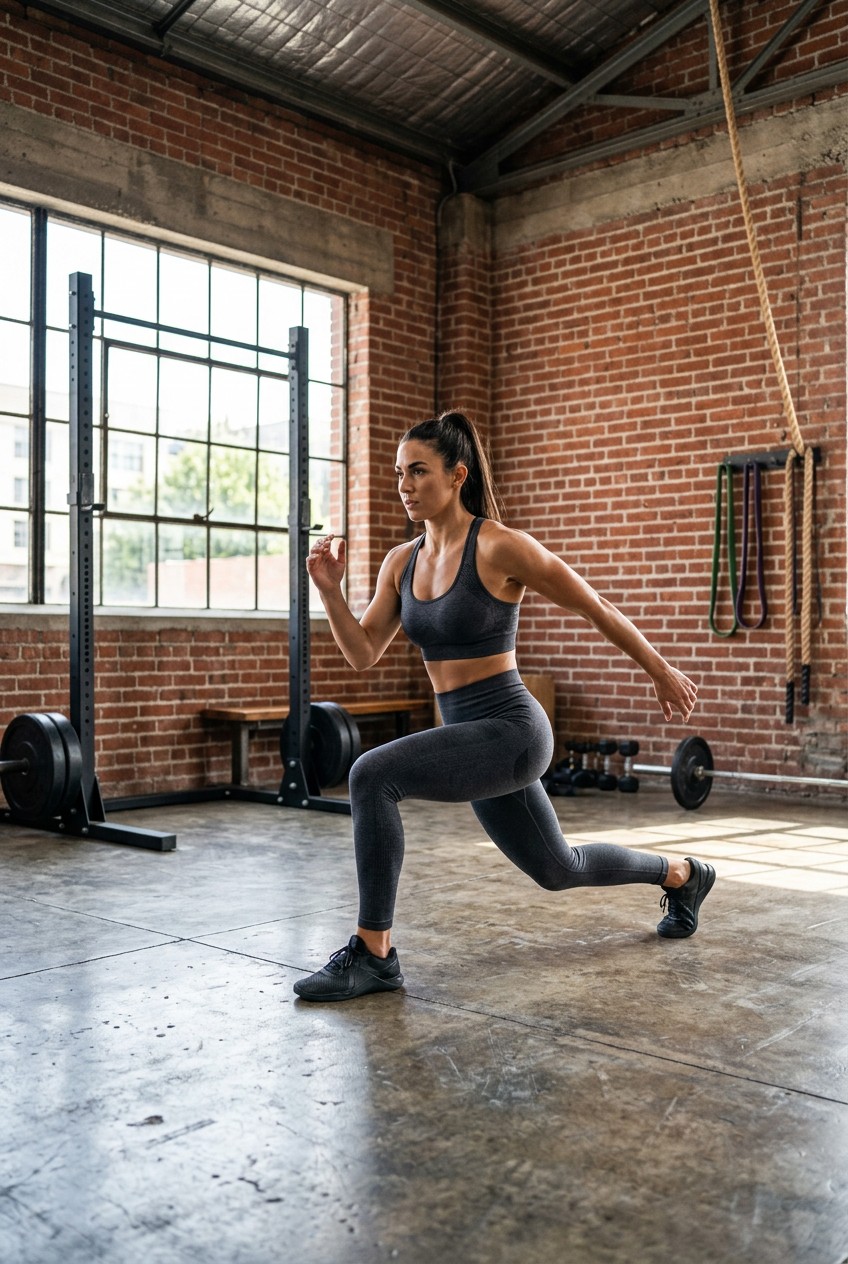
Let’s talk about the nightmare of sheer leggings. There’s nothing worse than realizing your pants are see-through in a room full of people. I’ve had to quietly pull clients aside to warn them. It’s awkward. To avoid this, read the tag. You want gym wear for women with a spandex content between 15% and 25%. A high-performance blend is usually 75-80% nylon and 20-25% spandex. You also need a fabric weight between 230 and 280 GSM. Anything less is a disaster waiting to happen when you bend over. I recommend seamless designs to prevent chafing during lunges. The Lululemon Align High-Rise Pant costs $98.00 and features that smooth construction. It gives you a barely-there feel while offering medium compression (20-30 mmHg) to reduce muscle fatigue. I bought a pair of cheap knockoffs once to test them. Big mistake. The inner thigh pilled and ripped after three uses. After a tough leg day, I usually run into Whole Foods to grab a $3.99 green juice. You want leggings that look good for errands but perform under pressure. That 20% spandex sweet spot gives you the coverage and stretch you need. You might also like: 15 Creative Inside She Sheds Home Gym Setup Ideas to Steal Right Now

Jump Rope, Tangle-Free Rapid Speed Jumping Rope Cable with
Jump Rope punches above its price — 24 buyers rated it 4.5 stars. I would buy it again.
4. Layering Smartly When You Have No Equipment

Bodyweight workouts at home can be deceiving. You start out freezing in a drafty garage, and ten minutes later you’re burning up. Layering is how you survive this. Start with a fitted, moisture-wicking base layer. Add a technical fleece or hoodie for the warm-up. As your temperature rises, peel the layers off. I love the Nike Training Dri-Fit Fitted Long Sleeve Top as a base. It’s about $45.00 and hugs the body without suffocating you. Be careful with fits, though. Clothes that are too tight restrict circulation. Baggy clothes get in your way. I used to wear giant, baggy cotton sweatpants. One morning I tripped over my own pant leg during a reverse lunge. I face-planted on the hardwood. It was embarrassing and completely avoidable. Aim for activewear that fits snugly but lets you move freely. Even if you’re just doing push-ups at home, the right layers make a difference. Last month I was at Walmart buying a $4.48 pack of microfiber towels and noticed they had some decent, cheap thermal layers. Just make sure the base layer is synthetic. You want that sweat pulled away immediately. You might also like: 20 Lovely Aesthetic Home Morning Workout Routine to Inspire Your Next Project
5. Footwear Matters Even Without Weights

Just because you aren’t lifting barbells doesn’t mean you can ignore your feet. Wearing the wrong shoes is a massive mistake. I see people trying to do stability exercises in squishy running shoes. It’s like trying to balance on a marshmallow. You’ll eventually roll an ankle. I tried doing single-leg deadlifts in cushioned running shoes last year. I wobbled, lost balance, and strained my calf. If your routine involves squats, lunges, or planks, you need flat-soled shoes. They give you a hard, stable base. If your routine is mostly cardio, jumping jacks, and high knees, you need proper running shoes with cushioning to absorb the impact. Don’t mix them up. A great flat option is the classic Converse Chuck Taylor All Star for $65.00. They’re cheap, flat, and grip the floor well. Your feet are your foundation. If your foundation is unstable, your knees and hips take the damage. Pay attention to your arches. If you feel your foot collapsing inward during a squat, your shoes aren’t working. Switch to a flatter, firmer sole. It’ll fix your form and prevent joint pain. You might also like: 20 Brilliant Adopt Me Houses Home Gym Setup Ideas That Are Totally Worth It
6. Washing Your Gym Wear For Women the Right Way

You can buy the best gym clothes, but if you wash them wrong, they’ll fall apart in a month. Most people destroy their leggings in the laundry. Always wash your gear inside out. This protects the fabric and helps the detergent reach the sweatiest parts. Use cold water (under 30 degrees Celsius). Hot water melts elastic fibers and ruins the wicking properties. Never use fabric softener. Skip it entirely. It coats synthetic fibers in a waxy film, traps odors, and ruins the fabric’s ability to breathe. I ruined a $60 pair of running shorts because I used liquid softener. They smelled like a locker room forever. Use only 1 to 2 tablespoons of high-quality detergent. I buy a jug of Tide Free & Gentle at Costco for $24.99. It lasts for months. Excess detergent builds up and traps bacteria. Finally, air dry your gear. High heat from a dryer destroys elasticity. I hang my shirts and shorts on a cheap drying rack. If you have to use a dryer, use the lowest heat setting. Your clothes will last twice as long.

Retrospec Solana Yoga Mat 1" Thick w/Nylon Strap for Men &
Retrospec Solana Yoga Mat 1″ Thick w/Nylon Strap for Men & Women – Non punches above its price — 141 buyers rated it 4.5 stars. I would buy it again.
7. Killing Odors With Vinegar and Vodka

Sometimes detergent isn’t enough. If your clothes still smell like a swamp after a wash, you need to intervene. Don’t throw them away. Pre-soak the smelly items for 15 to 30 minutes in a solution of one part distilled white vinegar to four parts cold water. Vinegar is a natural deodorizer. It breaks down sweat stains and kills bacteria at the source. I do this once a month for my knee sleeves and base layers. It works miracles. For items you can’t machine wash, like sneakers or a yoga mat, use vodka. Yes, cheap, clear vodka. I picked up a bottle at Kroger for $8.99 for this. Pour it into a spray bottle and mist your shoes. The alcohol kills the bacteria instantly. Once it dries, it’s odorless. I learned this from a theater wardrobe manager. I used to spray chemical deodorizers, but that just masked the smell with fake floral scents. The vodka eliminates the root problem. Keep a spray bottle in your gym bag. Give your shoes a spritz after a session. It takes ten seconds.
8. Embracing Bold Colors and Sustainable Tech

We’re moving beyond boring black leggings. The current trend is all about loud, bold colors. Think deep burgundy, forest green, cobalt blue, and earth tones. Wearing a matching set gives you a mental boost. It makes you feel prepared and athletic before you start. Gymshark has some incredible matching sets right now. You can grab an Align Top and Shorts combo starting around $40.00. I bought my sister a forest green set for her birthday, and she wears it constantly. Beyond looking good, look for sustainable materials. Brands like Girlfriend Collective are making activewear out of recycled plastic water bottles. A pair of their Compressive High-Rise Leggings runs about $88.00. They feel soft and hold up to intense movement. These fabrics also feature UV protection and odor control. Last Thursday I was walking out of Sprouts with a $5.99 bag of almonds and noticed half the people in the parking lot were wearing these bright, matching sets. I saw similar styles at Trader Joe’s later that day. It’s a great, energetic look. You don’t need a fancy gym membership to dress like an athlete. Invest in a few colorful, high-quality pieces that make you want to roll out your mat.
Building a reliable workout wardrobe doesn’t have to be a mess. Stick to synthetic fabrics, find a sports bra that supports you, and wash your gear properly. You’ll save money and feel better during your routines. I’ve made the expensive, painful mistakes so you don’t have to. If you found this helpful, pin this article for later. Keep it handy next time you’re shopping for gear. Now go crush that bodyweight circuit.
Frequently Asked Questions
What is the best fabric for workout clothes?
Always choose moisture-wicking synthetic blends like polyester, nylon, and spandex. Avoid 100% cotton because it acts like a sponge, absorbs all your sweat, and causes severe chafing during your routines.
How tight should my sports bra be?
It should offer firm compression, around 20-30 mmHg, without restricting your breathing. If you can’t take a deep belly breath, it’s too tight. If the band rides up when you raise your arms, it’s too loose.
How do I stop my leggings from being see-through?
Check the fabric tag before buying. You want a spandex content between 15% and 25%, and a fabric weight of 230 to 280 GSM. Anything lighter will stretch and become sheer when you bend over.
How should I wash my activewear?
Always wash your gear inside out in cold water. Use only 1 to 2 tablespoons of high-quality detergent and never use fabric softener. Air dry your clothes to protect the elastic fibers from high heat.
