
What’s Inside
- Mix Vertical And Horizontal Pulling For A Complete Back Gym Workout
- Master The Mind-Muscle Connection With Lighter Weights
- Use Lifting Straps To Overload Your Pulling Movements
- Pre-Activate Your Lats With Resistance Bands
- Isolate With Chest-Supported Rows
- Optimize Your Protein Intake For Real Muscle Growth
- Control The Eccentric Phase On Every Single Rep
- Ditch The Ego Lifting To Actually Grow Your Back
Last Tuesday at the local YMCA, I watched a guy load four 45-pound plates onto a T-bar row and start humping the air for eight reps. I know exactly what his lower back felt like the next morning because I spent three years doing the exact same stupid thing. Figuring out a proper back gym workout took me a solid decade of trial, error, and expensive physical therapy appointments. You can’t just heave heavy iron and expect your lats to grow. It requires specific pulling angles, strict muscle tension, and a lot less weight than your ego wants to lift.
Most beginners walk into the weight room, grab the widest bar they can find, and yank it down to their collarbones while leaning back at a 45-degree angle. I tried this wrong for months before figuring out I was basically doing a messy decline row instead of a vertical pull. Your back is a complex web of muscles. You have the lats, rhomboids, traps, erector spinae, and rear delts all fighting for control. If you don’t intentionally isolate them, your biceps and lower back will take over every single movement. I’m writing this guide to save you the joint pain and frustration I went through. We’re going to break down the exact mechanics, the gear you actually need, and the techniques that force real tissue growth. Here is how I build back strength without wrecking my spine.
1. Mix Vertical And Horizontal Pulling For A Complete Back Gym Workout

When I first started lifting, my entire back routine consisted of wide-grip pull-ups. I did hundreds of them every week. My lats got wider, but when I turned sideways in the mirror, my back looked completely flat. I was missing half the equation. To build a complete back gym workout, you have to mix vertical pulling with horizontal pulling. Vertical movements like pull-ups and lat pulldowns build your lat width. Horizontal movements like barbell rows and seated cable rows build that thick, dense muscle in your mid-back and rhomboids.
I learned that the hard way after a physical therapist pointed out my severely rounded shoulders. My chest was tight, and my mid-back was too weak to pull my posture upright. Now, I split my volume right down the middle. If I do four sets of vertical pulls, I match it with four sets of horizontal rows. I usually start my sessions with heavy barbell rows before moving to the cable stack. Speaking of cables, the standard metal attachments at most commercial gyms are garbage. The knurling is always worn down to smooth metal, which makes gripping them a nightmare when your hands sweat. I bring my own MAG Grip Medium Supinate attachment. It costs exactly $79.00 on their site, and the ergonomic palm support completely changes the tension curve. You get a much deeper stretch at the top of the movement without your grip failing. If you’re stuck using the rusty gym equipment, at least pick up some liquid chalk. I buy the Spider Chalk Liquid Chalk for $19.99 on Amazon. Just balance your pulling angles. Your posture will improve, and your shirts will fit a lot tighter across the shoulders.
2. Master The Mind-Muscle Connection With Lighter Weights

You can’t see your back when you train it. This sounds incredibly obvious, but it’s the main reason people struggle to grow their lats. When you bench press, you watch your chest contract. When you curl, you stare right at your biceps. But during a row, you’re just pulling a weight blindly. This is why mastering the mind-muscle connection with lighter weights is mandatory. Instead of always chasing heavy lifts, I dedicate my first two warm-up sets specifically to conscious muscle engagement.
I drop the weight to about 40 percent of my max and physically close my eyes during the set. I focus entirely on the sensation of my shoulder blades squeezing together. If I don’t feel the muscle working, the rep doesn’t count. I used to rush through my sets, using momentum to jerk the weight back. My forearms would be on fire, but my back felt nothing. Now, I slow down my reps and focus on the contraction, especially during the eccentric lowering phase. To help with focus, I started taking a pre-workout supplement about 30 minutes before my session. I pick up the Optimum Nutrition Gold Standard Pre-Workout for $27.99 at Kroger in the health aisle. The caffeine and L-citrulline give me just enough mental clarity to focus on the muscle fibers without making me jittery. Try dropping the pin on the weight stack up three slots next time you do cable rows. Pull the handle to your stomach, hold it there for a full two seconds, and slowly release it. You’ll realize how much momentum you’ve been relying on.
3. Use Lifting Straps To Overload Your Pulling Movements

There is a massive debate in the fitness community about lifting straps. Purists will tell you that using straps ruins your natural grip strength. I bought into that nonsense for years. I stubbornly refused to use straps, and as a result, my back development completely stalled. Your grip will almost always fail before your lats do. Your lats are massive, powerful muscles capable of moving serious weight. Your forearms are small. Letting your grip be the limiting factor on heavy rows or deadlifts is a terrible strategy for back growth. You might also like: 15 Creative Inside She Sheds Home Gym Setup Ideas to Steal Right Now
I finally gave in and bought a pair of Gymreapers Lifting Straps for $19.99. The cotton is thick, and the neoprene padding stops the strap from cutting into my wrists. The first time I used them on barbell rows, I immediately added 40 pounds to my working set and hit two more reps than usual. My back was sore for three days afterward because it finally received the mechanical overload it needed. I don’t use straps for my warm-ups or light isolation work, but the second I move to my heavy working sets, they go on. If you’re doing heavy dumbbell rows, straps are non-negotiable. Trying to hold onto a 100-pound dumbbell with sweaty hands is miserable. I tried a cheaper, unnamed leather pair I found at Target for $12, but they stretched out and slipped off the bar within a month. Stick to heavy-duty cotton or nylon. Strap yourself to the bar, take your hands out of the equation, and let your lats do the actual pulling. You might also like: 20 Brilliant Commercial Home Gym Setup Ideas Worth Trying This Year

NICEPEOPLE Adjustable Weight Bench for Home Gym
NICEPEOPLE Adjustable Weight Bench for Home Gym has been one of the most consistently praised picks in this category. 33 reviewers averaged 4.5/5.
4. Pre-Activate Your Lats With Resistance Bands

Walking into the gym cold and immediately jumping into heavy pull-ups is a great way to tear a rotator cuff. I know guys who do this, and they constantly complain about shoulder impingements. Before I touch a single iron plate, I perform five to ten minutes of resistance band exercises to wake up my back muscles. This dynamic warm-up builds the mind-muscle connection and pumps synovial fluid into the shoulder joints.
I keep a set of WHATAFIT Resistance Bands in my gym bag. I bought the 5-band set for $29.99, and they have lasted two years without snapping. I loop the lightest yellow band around a squat rack pole and do straight-arm pulldowns. This specifically targets the lower lats and gets the blood flowing. Then I grab the band with both hands and do high-rep band pull-aparts. This targets the rhomboids, traps, and rear delts. You want to pull the band apart until it touches your sternum, squeezing your shoulder blades together hard. I usually do three sets of twenty reps. By the time I walk over to the lat pulldown machine, my upper back is already flushed with blood and highly responsive. I tried skipping this step last winter when I was short on time. I went straight into heavy rows, and my right shoulder clicked loudly on every single rep. It ached for a week. Don’t skip the activation work. It takes five minutes and makes the rest of your back gym workout infinitely more effective. You might also like: 9 Workout Plan Gym You Need to See
5. Isolate With Chest-Supported Rows

The standard bent-over barbell row is a classic mass builder, but it has a massive flaw. It requires incredible lower back strength just to hold the isometric hinge position. If your lower back fatigues before your upper back, the set is over. I used to dread heavy barbell rows because my lumbar spine would scream by the third set. That’s when I shifted my focus to chest-supported rows, and it completely changed my training.
Chest-supported rows remove the need for lower back stabilization. You lie face down on an incline bench, allowing you to focus entirely on contracting your lats and upper back. This is an S-tier exercise for muscle building because of the sheer stability it provides. I set up the Rep Fitness AB-3000 adjustable bench (which runs about $259.00) to a 30-degree incline. I grab two heavy dumbbells, let my arms hang dead straight to get a deep stretch, and pull my elbows back toward my hips. Because my chest is braced against the pad, I can’t cheat the weight up with momentum. The isolation is brutal. If your gym has a dedicated T-bar chest-supported row machine, use it. Just make sure you adjust the footplates so your chest is actually resting on the pad, not hanging off the top. I see guys load four plates on the chest-supported row and then lift their chest completely off the pad to heave the weight. That defeats the entire purpose of the machine. Keep your sternum glued to the leather.
6. Optimize Your Protein Intake For Real Muscle Growth

You can do the most perfectly programmed back gym workout in the world, but if you don’t eat enough protein, your lats aren’t going to grow an inch. Muscle hypertrophy requires a caloric surplus and a steady stream of amino acids to repair the micro-tears you create in the gym. The current sports science consensus recommends a daily protein intake of 1.6 to 2.2 grams per kilogram of body mass. For a 175-pound guy like me, that translates to roughly 125 to 135 grams of protein every single day.
Hitting that number requires actual planning. I used to try winging it, eating a protein bar here and there, and I stayed skinny-fat for years. Now, I buy in bulk. I hit up Costco every Sunday and grab the Kirkland Signature Greek Yogurt ($6.49 for the massive 48 oz tub) and a flat of eggs. I also stop by Trader Joe’s for their frozen chicken breasts, which run about $8.99 for a 2.5-pound bag. I boil the chicken, shred it, and keep it in Tupperware. It tastes pretty dry by Thursday, but it gets the job done. If I’m falling short on my macros by the evening, I mix a scoop of Dymatize ISO100 Whey Protein ($34.98 at Walmart) with water. Skip the fat-free, sugar-free protein snacks that taste like wet cardboard. Stick to whole food sources like chicken, beef, eggs, and Greek yogurt for the bulk of your intake. Your back muscles are huge, and rebuilding them requires serious fuel.
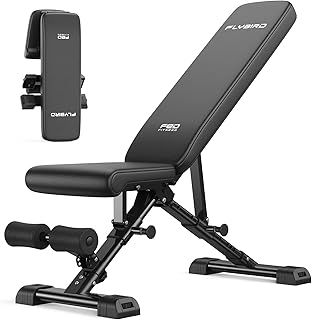
FLYBIRD WB5 Weight Bench
FLYBIRD WB5 Weight Bench has been one of the most consistently praised picks in this category. 259 reviewers averaged 4.5/5.
7. Control The Eccentric Phase On Every Single Rep

Walk into any commercial gym, and you’ll hear the constant clanking of weight stacks slamming together. That sound is the sound of people throwing away 50 percent of their muscle-building potential. The eccentric phase is the lowering portion of the movement. When you pull the bar down to your chest on a lat pulldown, that’s the concentric phase. When you let the bar travel back up, that’s the eccentric phase. Most people just let the weight drop, letting gravity do the work.
You need to consciously control that negative motion. Muscle damage and mechanical tension occur heavily during the eccentric phase. If you just drop the weight, you aren’t maximizing your time under tension. I used to be a weight-dropper. I’d yank the cable row to my stomach and let it fly back, ripping my shoulders forward. I started forcing myself to take three full seconds to lower the weight on every single rep. It was humiliating because I had to drop my working weight by 30 pounds just to maintain the tempo. To force myself to grip tighter and move slower, I bought a pair of Fat Gripz for $29.99. You snap them over the barbell or dumbbell handle, and they double the thickness of the grip. You literally can’t rush the eccentric phase with these on, or the weight will slip out of your hands. Slowing down the negative stretches the lat fibers under load, which is a massive trigger for hypertrophy. Stop dropping the weights.
11. Ditch The Ego Lifting To Actually Grow Your Back

The biggest obstacle to a massive back isn’t your genetics; it’s your ego. I see guys in the gym every day loading up the seated cable row with the entire weight stack. They lean all the way forward, round their lower back, and violently heave the weight backward using pure lower lumbar extension. They aren’t training their lats. They’re just begging for a herniated disc. Lifting weights that are too heavy leads to compromised form, a reduced range of motion, and zero muscle activation.
I was guilty of this in my early twenties. I wanted to row two plates on the barbell to look strong in front of strangers. I ended up tweaking my lower back so badly I couldn’t tie my shoes without wincing. I had to spend a fortune on physical therapy and over-priced ginger turmeric shots ($3.99 a pop at Whole Foods) trying to beat the inflammation. No exaggeration. Now, I prioritize proper technique over the amount of weight lifted. I bought a Schiek Sports Model 2004 Lifting Belt for $64.95 to remind me to brace my core, but I don’t use it as an excuse to lift sloppy. If I can’t hold the weight at the peak contraction for a split second, the weight is too heavy. Strip the plates off the bar. Drop the pin on the cable stack. Focus on the stretch, the squeeze, and the slow eccentric release. Your back will grow faster with 135 pounds of strict tension than it ever will with 225 pounds of sloppy momentum.
Building a thick, wide back takes years of consistent, intentional work. You won’t get there by just yanking heavy bars around. Focus on the tension, respect the eccentric phase, and leave your ego at the door. If you found this breakdown helpful, save this page or pin it to your fitness board so you can reference these techniques before your next back gym workout. Now go chalk up and get to work.
Frequently Asked Questions
How many times a week should I do a back gym workout?
For optimal muscle growth, aim to train your back twice a week. This allows you to split your volume between vertical pulling days and horizontal rowing days, giving the muscles enough stimulus without overtraining.
Do I really need lifting straps for back exercises?
Yes, if you want to maximize lat growth. Your grip will almost always fail before your larger back muscles do. Straps take your forearms out of the equation, allowing you to overload the lats safely.
Why don’t I feel my lats working during pull-ups?
You are likely pulling with your biceps and rounding your shoulders. To fix this, initiate the movement by pulling your shoulder blades down and back (scapular retraction) before bending your elbows.
Is foam rolling my back actually necessary?
Foam rolling releases tight fascia in the lats, which improves your overhead mobility and shoulder health. Focus the roller on the meaty part of your lats under the armpit, avoiding direct pressure on the lower spine.
