What’s Inside
- Prioritize Progressive Overload from Day One
- Master Form Over Heavy Weight
- Hydrate Strategically Throughout Your Session
- Fuel Your Body with Smart Pre-Workout Nutrition
- Embrace the Mind-Muscle Connection
- Don’t Skip Your Warm-Up and Cool-Down
- Invest in Quality Resistance Bands For Your Beginner Workout At Gym
- Choose a Beginner-Friendly Protein Powder
- Follow a Structured Full-Body Plan 3 Times a Week
- Embrace “Strength for Longevity” In Your Beginner Workout At Gym
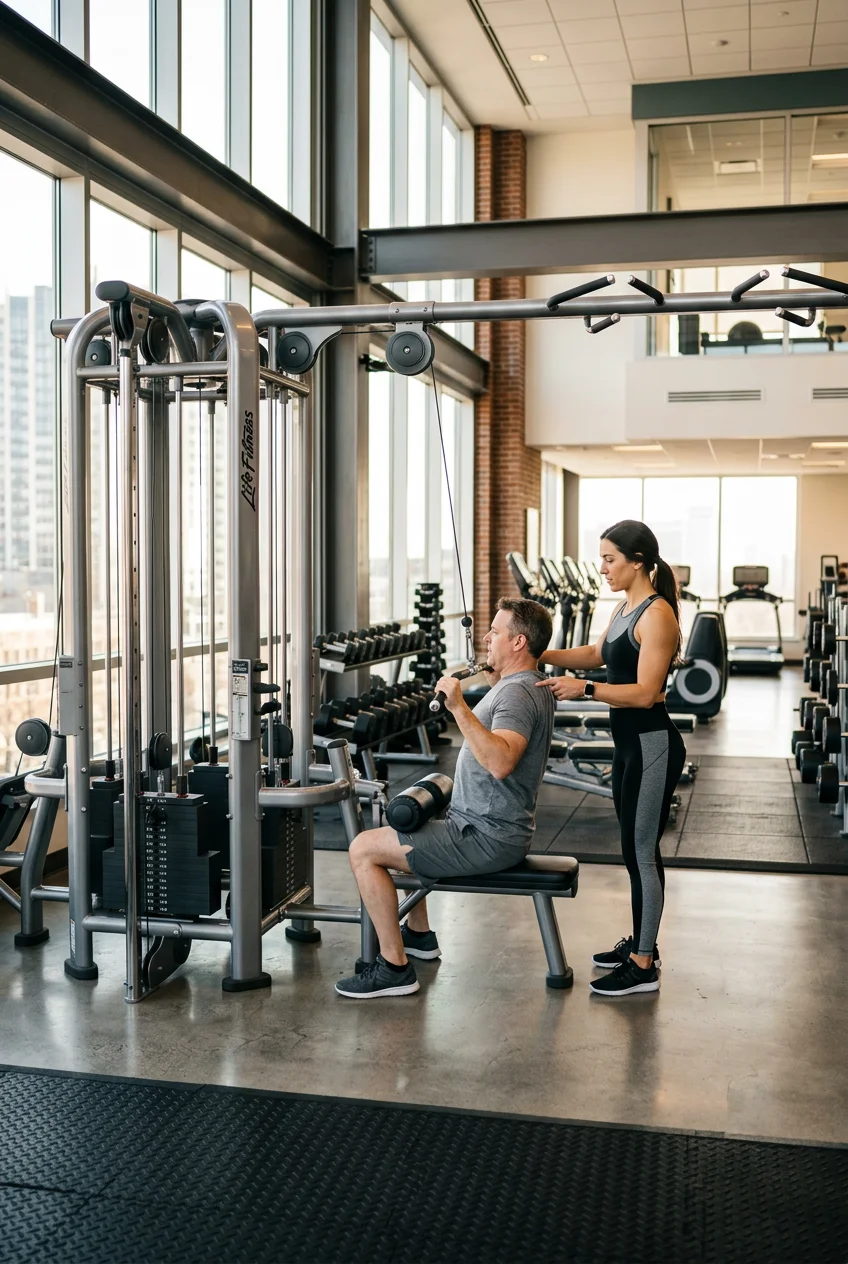
I still remember my first time trying to put together a beginner workout at gym facilities near my old apartment. I walked through the sliding glass doors, hit a wall of stale sweat and bleach smells, and immediately froze. I spent twenty minutes wandering between complex cable machines and massive squat racks before doing ten sad minutes on an elliptical and leaving. It’s a humiliating feeling, and I wasted months doing random exercises with zero results because I didn’t have a plan. You don’t need to repeat my mistakes. Building a solid foundation isn’t about perfectly optimized routines or lifting massive weights on day one. It’s about showing up, nailing the basics, and using a few cheap, reliable tools to keep yourself on track. Let’s break down exactly how you can stop guessing and start building actual strength, whether you’re working out in a massive commercial facility or a dusty garage setup.
1. Prioritize Progressive Overload from Day One

Most guys walk into the weight room, grab the exact same 25-pound dumbbells they used last week, do three sets of ten, and wonder why their chest isn’t growing. I did this for an entire year. I’d just show up, go through the motions, and leave. You can’t build muscle if you aren’t forcing your body to adapt to new stress. This concept is called progressive overload, and it’s the only rule that actually matters. For lower body exercises like squats, you need to add 2.5 to 5 lbs to the bar every two weeks. For upper body movements, aim for 1 to 2.5 lbs.
The problem is that most commercial racks only have 2.5-pound plates, meaning the smallest jump you can make on a barbell is 5 pounds total. That’s way too much for smaller muscle groups. I stalled on my bench press for three months because a 5-pound jump felt like hitting a brick wall. I finally bought a set of Micro Gainz 1.25lb Fractional Plates for $39.99 off Amazon. They fit right into my gym bag. By adding just 2.5 pounds total to the bar each week, I broke my plateau immediately. If you don’t want to buy plates, your other option is to push for one or two more repetitions with your current weight until a set of 12 feels easy, then bump the weight up.
2. Master Form Over Heavy Weight

Ego lifting is the fastest way to ruin your lower back. I learned this the hard way last Tuesday at a local powerlifting spot. I tried pulling a 315-pound deadlift without properly bracing my core, and I felt a sharp, electric tweak in my lumbar spine that kept me out of commission for a week. Learned that the hard way. Expert personal trainers, like the staff at Theory of Motion, constantly emphasize that a lack of core awareness and improper movement patterns will destroy your progress. You have to nail the mechanics before you load the bar.
Start your training with bodyweight movements or extremely light implements. I literally used a basic white PVC pipe from Home Depot that cost me $4.50 to practice my hip hinges in my living room for two weeks before I touched a barbell again. If you’re doing floor work, grab an All in Motion 5mm Yoga Mat from Target for $15.99. It gives you enough grip so your hands won’t slide out during pushups. Set up your phone against your water bottle and record your sets. Watching yourself is brutal at first, but it’s the only way to see if your back is rounding during a row or if your knees are caving in during a squat.
3. Hydrate Strategically Throughout Your Session

I used to think chugging a massive bottle of water right as I walked through the gym doors was enough. All that did was make water slosh around in my stomach while I tried to do leg presses, making me incredibly nauseous. Proper hydration requires an actual schedule. You need to drink 17 to 20 ounces (roughly 500-600 ml) of water two to three hours before your workout even starts. Then, knock back another 8 ounces about 20 to 30 minutes prior to your warm-up. During the actual training, aim for 7 to 10 ounces every 10 to 20 minutes. You might also like: 15 Brilliant Dark Basements Home Gym Setup Ideas Worth Trying This Year
To track this, I rely on a standard Nalgene 32 oz Wide Mouth water bottle. I picked mine up at Whole Foods for $12.99. The measurement lines printed on the side make it ridiculously easy to know exactly how much I’ve consumed. I will admit the plastic loop connecting the lid to the bottle usually snaps after about eight months of heavy use, but replacement lids are cheap. Post-workout, you need to replenish with 16 to 24 ounces of fluid for every pound of body weight you lose through sweat. Weigh yourself before and after a heavy session once just to get a baseline idea of your water loss. You might also like: 20 Brilliant Commercial Home Gym Setup Ideas Worth Trying This Year

NICEPEOPLE Adjustable Weight Bench for Home Gym
NICEPEOPLE Adjustable Weight Bench for Home Gym punches above its price — 33 buyers rated it 4.5 stars. I would buy it again.
4. Fuel Your Body with Smart Pre-Workout Nutrition

Training on an empty stomach leaves you weak and shaky, but eating the wrong thing will ruin your session just as fast. I once ate a massive, greasy burrito bowl an hour before leg day. By my third set of squats, I was lying on the rubber floor trying not to throw up. To maximize energy and prevent muscle breakdown, you need a balanced meal of complex carbs, protein, and healthy fats two to three hours before you train. You might also like: 9 Aesthetic Fitness Gym for Every Budget
If you’re in a rush and only have 30 to 60 minutes before hitting the weights, you need fast-digesting carbohydrates and a tiny bit of protein. My standard go-to is a plain banana smeared with one tablespoon of Kroger brand Creamy Peanut Butter, which costs about $2.49 a jar. It digests in 20 minutes and gives me an immediate spike in energy without the heavy stomach feeling. If I want something cold, I’ll grab a single-serve cup of Fage 2% Greek Yogurt from Sprouts for $1.99 and toss a handful of blueberries on top. Skip the high-fiber protein bars right before you lift; they sit in your gut like a brick and pull blood away from your muscles to aid digestion.
5. Embrace the Mind-Muscle Connection

For my first two years of lifting, I just threw the weights up and down as fast as possible. I could bench press decent numbers, but my chest was completely flat. I was using my front deltoids and triceps to muscle the weight up, completely bypassing the pectoral muscles I was trying to target. The mind-muscle connection isn’t some mystical gym bro nonsense; it’s the conscious act of focusing on and squeezing the specific muscle you’re trying to work.
To fix my chest development, I dropped my ego and bought a pair of Cap Barbell 10 lb rubber hex dumbbells from Walmart for $14.99. Before I even touch a heavy barbell, I lie on a bench and do 15 slow, controlled dumbbell flyes. I close my eyes and focus entirely on the stretching and contracting of the chest fibers. This pre-activation wakes up the targeted muscle group. When you slow down your repetitions—taking three full seconds to lower the weight and one second to push it up—you force the correct muscles to do the work. You’ll have to use lighter weights initially, but the actual muscle growth will be significantly better.
6. Don’t Skip Your Warm-Up and Cool-Down

Walking straight from your car to the squat rack and slapping a 45-pound plate on each side is a guaranteed ticket to joint pain. I skipped warm-ups for years because I thought they were a waste of time. Now, at 32, my knees sound like bubble wrap if I don’t prep them first. A proper warm-up only takes 5 to 10 minutes and drastically reduces your injury risk by literally warming up the synovial fluid in your joints.
Start with a dynamic warm-up: arm circles, leg swings, and deep bodyweight squats. Then, I spend three minutes on my TriggerPoint GRID Foam Roller. I bought it at Target for $34.99, and while the hard plastic grid pattern hurts like absolute hell on a tight IT band, it breaks up the fascia perfectly. After your workout, you need a 5 to 10-minute cool-down with static stretching. Holding a hamstring stretch for 30 seconds tells your nervous system that the physical trauma is over, which kickstarts the recovery process and helps prevent the kind of delayed onset muscle soreness that makes walking down stairs impossible the next day.

FLYBIRD WB3 Weight Bench Fits up to 6’5”
If you want something that just works, FLYBIRD WB3 Weight Bench Fits up to 6’5” is a safe bet (16 reviews, 4.5 stars).
7. Invest in Quality Resistance Bands For Your Beginner Workout At Gym

You don’t need a massive cable machine tower to get a good beginner workout at gym facilities or in your bedroom. Resistance bands are the most versatile, portable, and underutilized tools in fitness. They provide constant tension through the entire range of motion, which you don’t get with standard free weights. I used to think bands were just for physical therapy until a cheap, unbranded band snapped in half and whipped me across the cheek during a face-pull. Trust me on this.
Now, I stick to high-quality latex. The Myprotein 11-Piece Resistance Band Set runs about $29.99 and includes handles, ankle straps, and a door anchor. It’s incredibly durable. If you want something simpler just for glute activation or pull-up assistance, you can find a basic Core Balance resistance band set online for around $12. The heavy tension bands are perfect for looping around a pull-up bar so you can finally get your chin over the bar, while the lighter bands are excellent for warming up your rotator cuffs before heavy pressing. Just check them for micro-tears every few weeks so you don’t end up with a welt on your face like I did.
8. Choose a Beginner-Friendly Protein Powder

If you’re training hard, your body needs protein to repair the micro-tears in your muscle fibers. Trying to eat four chicken breasts a day gets exhausting and expensive. A good protein powder fills the gap easily. However, the supplement aisle is full of overpriced garbage loaded with fillers and artificial dyes. I’ve choked down some truly horrific shakes in my time, including a generic strawberry flavor that tasted exactly like children’s cough syrup mixed with chalk. No exaggeration.
Stick to the proven classics. Optimum Nutrition Gold Standard 100% Whey Protein is the benchmark for a reason. I buy the 2lb tub of Double Rich Chocolate at Costco for around $44.99. It mixes perfectly in a standard shaker bottle with just 8 ounces of water—no blender required—and delivers 24 grams of protein per scoop. If dairy destroys your stomach, plant-based options have gotten much better recently. Transparent Labs Organic Plant-Based Protein Isolate is a solid choice, though it has a slightly grittier texture than whey. Aim for 20 to 30 grams of protein per serving within an hour of finishing your workout to kickstart the recovery process.
9. Follow a Structured Full-Body Plan 3 Times a Week

The worst thing you can do as a beginner is copy the six-day “bro split” from a professional bodybuilder magazine. Hitting chest on Monday, back on Tuesday, and legs on Wednesday is a massive mistake for a novice. Your muscles recover quickly when you’re new, and hitting them only once a week leaves potential growth on the table. Instead, three full-body workouts per week on non-consecutive days (like Monday, Wednesday, and Friday) is the absolute sweet spot for building habits and seeing rapid progress.
Each 30 to 45-minute session should focus on foundational compound movements: a squat variation, a pushing movement (like a dumbbell press), and a pulling movement (like a seated cable row). To track this, I skip the complicated apps and use a simple 99-cent spiral notebook I grabbed from the school supply aisle at Kroger. Writing down your sets, reps, and weights forces you to be honest about your progress. When you see that you lifted 50 lbs last Wednesday, you know exactly what you need to beat today. Keeping it to three days a week also prevents mental burnout, which is what usually makes people quit in week three.

Adjustable Weight Bench
If you want something that just works, Adjustable Weight Bench – 1000LBS Capacity Heavy Duty Foldable Workout is a safe bet (182 reviews, 4.5 stars).
10. Embrace “Strength for Longevity” In Your Beginner Workout At Gym

The fitness industry is shifting heavily heading into 2026. The focus is moving away from purely aesthetic, bodybuilding-style workouts and heavily toward “Strength for Longevity.” This means prioritizing muscle mass, joint mobility, and overall healthspan so you aren’t walking with a cane at age sixty. To do this during your beginner workout at gym sessions, you need to prioritize compound movements like squats, deadlifts, presses, and rows over isolation exercises like bicep curls.
Footwear plays a massive role in this. I used to squat in thick, squishy running shoes. The foam compressed unevenly under the weight, causing my ankles to roll inward and putting terrible sheer force on my knees. I finally dropped $140 on a pair of Reebok Nano X3 cross-training shoes from Dick’s Sporting Goods. They have a flat, stable, rigid sole that anchors your feet to the floor during heavy lifts. Additionally, consider integrating micro-workouts into your rest days. Doing just 5 to 15 minutes of intense kettlebell swings or bodyweight lunges keeps your metabolism elevated and reinforces the habit of daily movement without overtaxing your central nervous system. If you need help structuring this, AI coaching apps like FitnessAI ($14.99/month) analyze your past performance to suggest exact weights and rep ranges, taking the guesswork out of your longevity training.
Getting comfortable in the weight room takes time, but having a concrete plan strips away the anxiety. Focus on your form, track your progressive overload, and don’t neglect your hydration or sleep. Your muscles grow while you’re resting in bed, not while you’re sweating under a barbell. If you found these tips helpful, pin this article to your fitness board so you can pull it up the next time you’re standing in the gym trying to remember what to do next.
Frequently Asked Questions
How many days a week should a beginner workout at the gym?
A beginner should aim for three full-body workouts per week on non-consecutive days. This schedule allows for adequate muscle stimulation while providing the necessary 48 hours of recovery time your body needs to repair and build new tissue.
What should I eat before my gym workout?
Consume a balanced meal of complex carbs and protein two to three hours before training. If you only have 30 to 60 minutes, eat easily digestible carbohydrates like a banana with a tablespoon of peanut butter to avoid stomach cramps.
How much weight should I lift as a beginner?
Start with bodyweight or very light weights (like a PVC pipe or 10 lb dumbbells) to master your form. Once your technique is solid, choose a weight that makes the last two repetitions of a 10-12 rep set feel challenging but doable.
Do I need to take protein powder to build muscle?
You don’t absolutely need it if you eat enough protein through whole foods like chicken, beef, or tofu. However, a quality whey or plant-based protein powder offers a convenient, cost-effective way to hit your daily goal of 20-30 grams post-workout.
