
What’s Inside
- Prioritize Direct Upper Back Activation Over Compound Lifts Alone
- Master the Face Pull for Shoulder Health in Your Upper Back Workout
- Integrate the Trap Raise for Upper Trap Thickness
- Utilize Chest-Supported Rows to Maximize Isolation
- Emphasize Scapular Retraction in All Rowing Movements
- Embrace Eccentric Training for Enhanced Muscle Growth
- Implement Partial Reps and Ladder Holds for Peak Contraction
- Prioritize Scapular Primers in Your Warm-up
- Don’t Neglect Mobility and Post-Workout Stretching
- The Inverted Row for Bodyweight Mastery in Any Upper Back Workout
I pulled a muscle in my neck so badly last October that I couldn’t look over my right shoulder for two weeks. I was trying to muscle up a 315-pound barbell row at my local gym. I was relying entirely on momentum instead of actually engaging my muscles. That embarrassing failure forced me to rethink my approach to back training. Finding the right upper back workout isn’t just about throwing heavy plates on a bar and yanking them to your chest. A proper upper back workout requires precision, specific angles, and checking your ego at the door. I spent years doing it wrong. I ended up with rounded shoulders and a constantly stiff neck. Learned that the hard way. Once I started paying attention to the specific mechanics of my shoulder blades and the exact angle of my elbows, everything shifted. You don’t need to lift the entire gym to build a thick, resilient back. You just need to stop using your lower back to cheat the weight up.
1. Prioritize Direct Upper Back Activation Over Compound Lifts Alone

I used to think pulling heavy deadlifts was enough to build a massive back. I’d load up my Rogue Fitness Ohio Bar ($295) with 405 pounds, grind out five ugly reps, and call it a day. The reality hit me hard last November during a routine trip to Costco. I leaned over to grab a 40-pound bag of Kirkland dog food from the bottom rack, and my lower back completely seized up. My upper back was incredibly weak because I was relying entirely on compound lifts and lower back momentum. According to physical therapist Jeff Cavaliere of ATHLEAN-X, direct isolation exercises are crucial to laser target the upper back for a truly thick and three-dimensional look. Heavy deadlifts and barbell shrugs engage the back, but they often don’t sufficiently isolate the upper back muscles for optimal thickness. You need to target the rhomboids, rear deltoids, and upper/mid trapezius directly. I switched my routine the very next week. I dropped the deadlift weight by 40 percent and started adding specific isolation movements. The difference in my posture was noticeable within a month. My shoulders sat further back, and my neck pain vanished. If you’re only doing deadlifts, you’re missing out on vital muscle development. Start adding direct upper back work before you end up stuck in the pet aisle unable to stand up straight.
2. Master the Face Pull for Shoulder Health in Your Upper Back Workout

The Face Pull is an indispensable exercise for strengthening the upper back, lower trapezius, rear deltoids, and rotator cuff. I ignored this movement for years because it looked too light and unimpressive. Then my right shoulder started clicking every time I pressed a dumbbell over my head. I bought a set of Bodylastics Stackable Tube Resistance Bands ($49.95) and started doing face pulls in my living room. Perform 3-4 sets of 15-20 repetitions using a cable machine with a rope attachment or a resistance band. Pull the rope towards your face with an overhand grip, flaring your elbows out to the sides, and consciously squeezing your shoulder blades together at the peak contraction. A massive mistake I made early on was pulling too heavy. I’d load up 70 pounds on the cable stack and end up leaning backward, turning it into a weird standing row. Keep the weight light. You want to feel a deep, burning squeeze right between your shoulder blades. I do these every single upper body day now. Last Tuesday at Target, I reached up to grab a heavy cast-iron skillet off the top shelf, and my shoulder felt completely stable. That’s the real benefit of face pulls. Trust me on this.
3. Integrate the Trap Raise for Upper Trap Thickness

Most people try to build their traps by doing endless heavy dumbbell shrugs. I tried this wrong for months before figuring it out. Shrugs mostly hit the upper fibers in a very limited range of motion. The Trap Raise effectively targets the lower and mid trapezius muscles, which actually pull your shoulder blades down and back. Use a cable machine or resistance band, starting with your arms parallel to the ground and a neutral grip. Pull the resistance until your arms are directly overhead, focusing on engaging the upper traps for a strong squeeze at the top. Aim for 3 sets of 12-15 controlled repetitions. I use the Spud Inc. Econo Triceps Pulley ($109) for these in my garage gym. I originally bought a cheap elastic band from Walmart for $9.99, but it snapped mid-set and whipped me in the cheek. Don’t cheap out on your resistance equipment. The Trap Raise feels awkward at first. You’ll probably have to use five or ten pounds. That’s fine. The goal isn’t to move massive weight. The goal is to feel the muscles at the base of your neck contracting hard at the top of the movement.

NICEPEOPLE Adjustable Weight Bench for Home Gym
Honestly, NICEPEOPLE Adjustable Weight Bench for Home Gym surprised me — sturdier than it looks in the photos, and over 33 buyers gave it 4.5 stars.
4. Utilize Chest-Supported Rows to Maximize Isolation

To eliminate lower back involvement and prevent momentum, making your upper back muscles do all the work, perform chest-supported rows. I spent my twenties doing bent-over barbell rows, aggressively jerking the weight up while my lower back screamed in agony. Now, I use a Rep Fitness AB-3000 Adjustable Bench ($319.99) set at a 45-degree angle. Lie prone on the incline bench with a dumbbell in each hand. Target 3 sets of 8-12 strict, controlled repetitions. Many individuals inadvertently use their lower back or momentum in bent-over rows. Chest support completely negates this. The pad forces you to stay honest. If the weight is too heavy, the dumbbells simply won’t move. You can’t cheat by throwing your hips into it. The vinyl pad on my bench gets incredibly sweaty and smells like old rubber after a few sets, but the isolation is worth it. When you pull the dumbbells up, think about driving your elbows toward the ceiling. Don’t just pull with your biceps. This single adjustment changed my entire back development. I finally started feeling soreness in my rhomboids the next day instead of just a dull ache in my lumbar spine. You might also like: 10 Calisthenics Workout Plan for Every Budget
5. Emphasize Scapular Retraction in All Rowing Movements

Regardless of the rowing variation you choose, consciously focus on initiating the pull by retracting your shoulder blades. Before your arms even bend, your shoulder blades should pinch together. For a Seated Cable Row, use a narrow V-grip handle and pull it towards your mid-torso, pausing briefly to squeeze your shoulder blades together. I use the Gymreapers V-Handle Cable Attachment ($24.99) because the knurling is aggressive and it doesn’t slip out of my sweaty hands. This mind-muscle connection ensures optimal engagement of the rhomboids and mid-traps. Aim for 3 sets of 10-12 repetitions. I used to just yank the cable handle backward, letting my shoulders roll forward at the end of the movement. That’s a great way to tear a bicep and completely miss the back muscles. Think about trying to crack a walnut between your shoulder blades on every single rep. I was grabbing a 16 oz bottle of tart cherry juice at Sprouts last week, and just the motion of pulling the heavy glass bottle off the shelf made me realize how much better my scapular control has gotten. Retraction is everything. You might also like: 15 Creative Inside She Sheds Home Gym Setup Ideas to Steal Right Now
6. Embrace Eccentric Training for Enhanced Muscle Growth

A trending approach for maximizing hypertrophy in 2026 is to significantly slow down the lowering phase of your exercises. We call this the eccentric phase. For movements like the Lat Pulldown, pull the weight down with controlled power, but take 3-4 seconds to slowly return to the starting position. This increases time under tension, which is a key stimulus for muscle growth. I do this on my Titan Fitness Lat Tower ($599.99). Let me tell you, a four-second negative on a heavy pulldown is brutal. Your forearms will shake. The cable stack will whine. You’ll want to just drop the weight back to the top. Don’t do it. Fight the resistance the entire way up. I started doing this after reading a sports science journal, and the muscle soreness the next day was intense. I actually had to run to Kroger to buy a 24-pack of ibuprofen ($8.49) because my lats were so stiff I couldn’t lift my arms to put on a t-shirt. The eccentric phase causes the most micro-tears in the muscle fiber. If you’re just letting the weight slam back down, you’re wasting half the exercise. You might also like: 20 Creative Men Home Workout Ideas You’ll Want to Bookmark
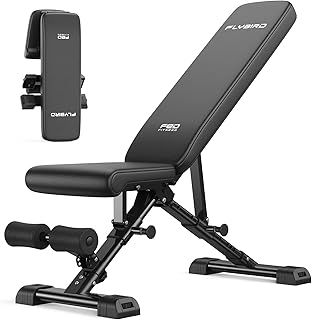
FLYBIRD WB5 Weight Bench
A dependable everyday pick — FLYBIRD WB5 Weight Bench pulls in 259 ratings at 4.5 stars. Not flashy, just solid.
7. Implement Partial Reps and Ladder Holds for Peak Contraction

To push past conventional failure and intensify muscle tension, particularly in the stretched position, incorporate partial repetitions and ladder holds. For example, during a dumbbell pullover, after completing full-range reps to failure, perform partial reps where you take the dumbbell down, come up halfway, then go back down and hold the stretched position for 1-2 seconds. Gradually increase the hold time on subsequent partials. I use my Bowflex SelectTech 552 Dumbbells ($429) for this. Set the weight to about 30 pounds. Lay across a flat bench with your upper back supported. Lower the dumbbell behind your head until you feel a deep stretch in your lats and upper back. Pull it back up. Once you can’t do a full rep, just do the bottom half. The stretching position under load is highly anabolic. I ripped a cheap t-shirt doing this once because the pump in my lats was so severe. It hurts in a very specific, deep way. This technique helps maximize the hypertrophic stimulus when your muscles are too fatigued to complete a full range of motion. It’s brutal, but it works.
8. Prioritize Scapular Primers in Your Warm-up

Before diving into heavy back exercises, prepare your shoulder girdle and scapula with specific warm-up movements. Perform 1-2 sets of 10-15 sub-maximal Scap Pulldowns on a lat pulldown machine. Keep your elbows locked and focus on pulling the bar down just 1-2 inches by actively depressing and retracting your scapula. This improves shoulder mobility and primes the muscles for the workout ahead. I actually prefer doing these with a Rogue Monster Band ($18.50) looped over a pull-up bar. The variable resistance of the rubber band feels better on my shoulder joints than a rigid cable stack. I used to skip warm-ups entirely. I’d walk into the gym, throw 135 pounds on the barbell, and start rowing. That’s exactly why my shoulders constantly clicked and popped. Now, I spend at least five minutes just getting my shoulder blades moving smoothly. I was at Trader Joe’s yesterday picking up a 12 oz bag of roasted almonds ($4.99), and I noticed an older guy struggling to reach the top shelf because his shoulders were completely frozen forward. That’s what happens when you don’t maintain scapular mobility. Warm up properly.
9. Don’t Neglect Mobility and Post-Workout Stretching

Incorporate dynamic stretches like the Cat-Cow or Thoracic Extensions as part of your warm-up to improve spinal mobility. Post-workout, perform static stretches such as the Rhomboid Stretch, holding for 15-30 seconds and repeating 2-4 times. This alleviates stiffness and improves overall range of motion. I use a Lululemon The Reversible Mat 5mm ($88) for my floor stretches. It has a sticky polyurethane top layer that keeps me from sliding around when I’m sweating. After a heavy upper back session, your rhomboids and traps are going to be locked up tight. If you just hop in your car and drive home, they’ll heal in that shortened, tight position. I learned this the hard way. I did a massive back workout, skipped stretching, and then drove an hour to Whole Foods to buy two pounds of Epsom salts ($6.99) for an ice bath. By the time I got out of the car, my upper back was so cramped I could barely stand up straight. Spend the extra ten minutes stretching. Cross your right arm over your chest, hook your left arm under it, and pull gently until you feel the stretch right between your shoulder blades.

FLYBIRD WB2 Weight Bench
A dependable everyday pick — FLYBIRD WB2 Weight Bench pulls in 215 ratings at 4.5 stars. Not flashy, just solid.
10. The Inverted Row for Bodyweight Mastery in Any Upper Back Workout

The Inverted Row is an incredibly effective and scalable exercise that builds significant back, arm, and grip strength, while also enhancing body awareness and midline stabilization. It requires minimal equipment and allows for extended time under tension. I use a TRX Suspension Trainer Basic Kit ($179.95) looped over a sturdy oak branch in my backyard. Adjust the height of the straps to modify the difficulty. The more horizontal your body is to the ground, the harder the exercise becomes. Most guys ignore bodyweight rows because they think they’re too strong for them. That’s a mistake. If you set the straps low enough and pause for two seconds at the top of every rep, your upper back will be on fire by rep ten. I actually prefer inverted rows to heavy barbell rows now. There’s zero lower back shear force, and the core engagement is massive. Keep your body in a perfectly straight line from your ankles to your ears. Don’t let your hips sag. I was doing these last weekend before running to Walmart for a 32 oz bottle of Gatorade ($1.48), and my lats were so pumped I felt like I had wings. It’s the perfect finisher.
Building a strong upper back takes time, patience, and a willingness to drop the weight to focus on form. I’ve completely rebuilt my posture over the last two years just by implementing these specific techniques. Skip the ego lifting. Focus on the stretch, the squeeze, and the slow eccentric phases. Your shoulders and neck will thank you. Save this guide and pin it for your next gym session so you don’t forget the setup cues.
Frequently Asked Questions
What is the best exercise for an upper back workout?
Chest-supported rows and face pulls are highly effective. Chest-supported rows isolate the rhomboids and mid-traps without stressing the lower back, while face pulls are essential for rear deltoid development and overall shoulder health.
How often should I train my upper back?
Aim for two to three times per week. The upper back muscles, particularly the rear delts and rhomboids, recover relatively quickly and respond well to higher frequency training with moderate volume.
Why do I feel lower back pain during my upper back workout?
You’re likely using momentum and arching your lumbar spine to move the weight, especially on bent-over rows. Switch to chest-supported variations to physically prevent your lower back from taking over the movement.
Do I need heavy weights to build my upper back?
No. Exercises like face pulls, trap raises, and inverted rows require lighter weights or bodyweight. Focusing on scapular retraction and slow eccentric phases builds muscle effectively without relying on massive loads.
