What’s Inside
- Structure Your 30 Minute Workout Around HIIT Intervals
- Swap Clunky Iron For Adjustable Dumbbells
- Use Heavy Resistance Bands For Progressive Overload
- Track Your Zones With A Chest Strap Heart Rate Monitor
- Let AI Build Your Routine With Fitbod
- Never Skip The 5-Minute Dynamic Warm-Up
- Fuel Up Properly Before You Train
- Prioritize Compound Movements Over Isolation
- Break It Down Into 10-Minute Exercise Snacks
- Force Your Body To Cool Down And Stretch
I spent six months doing 90-minute gym sessions that left me with chronic shoulder pain and zero energy for my kids. I figured a 30-minute workout was just a warm-up for lazy people. I was completely wrong. Last Tuesday at my local gym, I watched a guy get more done in half an hour than I did in my entire bloated routine. He was dripping sweat while I was scrolling Instagram between sets. That was my wake-up call. You don’t need two hours to get fit. You just need to stop wasting time. I stripped away all the filler, the useless isolation exercises, and the endless treadmill jogging. What I found is that a condensed, intense session actually builds more functional strength and burns more fat if you program it right.
I tried this wrong for months before figuring it out. I used to skip warm-ups and go straight into heavy lifting, which resulted in a pulled hamstring that sidelined me for three weeks. Took me years to figure that one out. Now, I’ve got a dialed-in system. This guide breaks down exactly how to structure your routine, the specific gear that holds up to daily abuse, and the mistakes you need to avoid so you don’t end up injured. Let’s get into the details.
1. Structure Your 30 Minute Workout Around HIIT Intervals

For optimal results in a short timeframe, you can’t just casually lift weights while checking your phone. You need High-Intensity Interval Training. This involves short bursts of intense exercise followed by brief recovery periods. I spent years trying to count seconds in my head while doing burpees, which usually meant I cheated and took longer rests. That’s a massive mistake. If you aren’t strictly timing your intervals, you aren’t doing HIIT.
I bought the Gymboss Classic Interval Timer for $19.99 at Walmart last spring. It clips directly onto my shorts and delivers a loud, sharp double-beep that forces me to start moving again. After a 5-minute dynamic warm-up, I set the timer for 30 seconds of work and 30 seconds of rest. I cycle through 4 to 6 rounds of mountain climbers, jump squats, and push-ups. The 30-second rest feels like five seconds when you’re gasping for air, but that’s exactly the point. The specific 1-to-1 work-to-rest ratio keeps my heart rate spiked the entire time. A common mistake here is pacing yourself. During that 30 seconds of work, you need to go completely breathless. If you can hold a conversation during your work interval, you aren’t pushing hard enough.
2. Swap Clunky Iron For Adjustable Dumbbells

I tripped over a rusty 25lb hex dumbbell in my garage last October and nearly broke my toe. Having a massive rack of weights takes up too much room and slows down your transitions. When you only have half an hour, you can’t waste two minutes unscrewing collars or searching for the right pair of weights. Maximize your strength training in a compact space by using adjustable dumbbells.
I switched to the NordicTrack 55lb Select-a-Weight dumbbells, which run about $399.00. They adjust from 10 to 55 pounds in 2.5 to 5-pound increments with a simple sliding pin mechanism. The knurling on the grip feels like a commercial gym barbell, rough enough to hold when my hands are sweating but not so sharp that it tears my calluses. I tried a cheap $100 knockoff brand before this, and the adjustment pin would constantly stick between plates. It was incredibly frustrating. The NordicTrack set clicks smoothly into place, allowing me to drop from a 40lb chest press to a 15lb lateral raise in about three seconds. Pro tip: never drop adjustable dumbbells on the floor. The internal plastic housing will crack, and the warranty won’t cover it. Always set them down gently.
3. Use Heavy Resistance Bands For Progressive Overload

You can’t always rely on gravity for resistance. Resistance bands are an affordable tool to add tension to bodyweight exercises or assist with movements like pull-ups. They force your muscles to work through the entire range of motion, providing peak tension right at the top of the lift. I used to think bands were just for physical therapy until I actually tried doing a heavy banded chest press. You might also like: 11 Full Body Workout At Gym That Actually Work
I bought the 5-piece Fitbeast Resistance Bands Set for $29.99 in the sporting goods aisle at Target. The set provides resistances ranging from 2kg to 56kg and includes heavy-duty handles and a thick nylon door anchor. The latex has a strong rubber smell out of the box, but it fades after a few days in the garage. I use the thickest black band to add resistance to my squats. You step on the middle of the band, loop it over your shoulders, and stand up. It burns your quads instantly. A major warning here: pay attention to where you anchor these. In 2021, I wedged a door anchor into a cheap hollow-core bathroom door. The band snapped back, ripped the trim off the frame, and left a dent in the drywall. Always anchor to the hinge side of a solid wood or exterior door. You might also like: 9 Workout Plan Gym You Need to See

FLYBIRD WB2 Weight Bench
A dependable everyday pick — FLYBIRD WB2 Weight Bench pulls in 215 ratings at 4.5 stars. Not flashy, just solid.
4. Track Your Zones With A Chest Strap Heart Rate Monitor

For intense sessions, precise heart rate data is crucial for staying in your target zones. I relied on an old wrist-based smartwatch for two years. Every time my wrist got sweaty during kettlebell swings, the optical sensor would lose contact and tell me my heart rate was 80 beats per minute while I was practically hyperventilating. Learned that the hard way. Wrist sensors just aren’t accurate during high-movement activities. You might also like: 10 Gym Motivation Wallpapers for Every Budget
I upgraded to the Polar H10 Heart Rate Sensor, which costs $89.95. The fabric strap wraps tightly around your ribs. It feels cold and slightly constricting when you first snap it on, but you forget it’s there after two minutes. The accuracy is unmatched. During my 30-minute workout, my goal is to maintain 70 to 90 percent of my maximum heart rate during the work intervals. The Polar app gives me a real-time graph on my phone. If I see my heart rate dropping into the 60 percent zone, I know I’m slacking and need to increase the pace. Don’t guess your intensity based on how much you’re sweating. Sweat is just a thermal response. Heart rate is the actual metric of cardiovascular output.
5. Let AI Build Your Routine With Fitbod

Writing your own programming usually leads to doing the exact same five exercises every single week. Your body adapts, and you stop seeing progress. I used to carry a sweat-stained notebook around the gym, but I’d constantly lose my pen or forget what weight I used the previous week. AI-powered fitness apps fix this completely by offering personalized plans that adapt to your progress and recovery.
I subscribe to the Fitbod app, which costs $9.99 per month. You input the exact equipment you own, and it generates a custom circuit. The best feature is the muscle recovery heat map. It shows a visual of your body, highlighting the muscles you fatigued in your last session in red, and the fresh muscles in green. If my chest is fried from Monday, Fitbod automatically builds a lower-body focused routine for Tuesday. I do have one negative to point out. Sometimes the algorithm gets a little too creative and suggests bizarre movements like a Bosu ball single-leg deadlift. You have to go into the settings and exclude exercises that require excessive setup time. Keep the app focused on basic, heavy movements for the best results.
6. Never Skip The 5-Minute Dynamic Warm-Up

A common mistake in short workouts is skipping the warm-up to save time. I did this constantly in my twenties. I’d walk into the garage, load up a barbell, and immediately start squatting. Now that I’m older, my knees sound like bubble wrap if I don’t lubricate the joints first. A 5-minute dynamic warm-up increases blood flow to muscles and significantly reduces the risk of injury.
I dedicate the first five minutes of my session to active movement. I bought a TriggerPoint GRID Foam Roller for $34.99 at Costco last winter. The dense foam grid digs deep into my tight calves and upper back. After two minutes of rolling, I move into dynamic stretches: 20 large arm circles, 15 deep bodyweight lunges, and torso twists. The goal isn’t to exhaust yourself, but you should have a light sweat going before you touch a single weight. Static stretching (holding a toe touch for 30 seconds) before a workout actually decreases your muscle’s power output. Save the static holds for the end. Right now, you just need to get the blood pumping and the synovial fluid moving in your joints.

Adjustable Weight Bench
Adjustable Weight Bench – 1000LBS Capacity Heavy Duty Foldable Workout punches above its price — 182 buyers rated it 4.5 stars. I would buy it again.
7. Fuel Up Properly Before You Train

You can’t drive a car on an empty tank, and you can’t push through a high-intensity circuit if your blood sugar is completely bottomed out. I tried the fasted cardio trend for about a month. I felt dizzy, weak, and my performance tanked. I couldn’t even finish a set of twenty push-ups without feeling lightheaded. If you want to push hard for half an hour, you need a small amount of fast-digesting carbohydrates beforehand.
Skip the fat-free, heavily processed pre-workout bars. They taste like wet cardboard and sit like a brick in your stomach. Instead, I rely on dried fruit. I usually grab a bag of Trader Joe’s Organic Dried Mango, which costs $3.99 for an 8 oz bag. The texture is leathery and sweet, and it digests incredibly fast. I eat exactly two slices about 15 minutes before I start my timer. It provides just enough glucose to keep my energy levels spiked without causing stomach cramps while I’m jumping around. I tested the Whole Foods 365 brand dried mango ($4.49) as well, but it tends to be a little too dry and hard to chew quickly. Stick to a small, simple carb source and drink at least 8 ounces of water with it.
8. Prioritize Compound Movements Over Isolation

To get the most out of your 30 minutes, you have to prioritize exercises that work multiple muscle groups simultaneously. Bicep curls and tricep kickbacks are a massive waste of time when you’re on the clock. They burn very few calories and don’t build functional strength. You need compound movements: squats, deadlifts, overhead presses, and rows.
I use a Rogue Fitness 16kg Kettlebell, which cost me $60.00. The cast-iron handle has a rough, chalky texture that doesn’t slip out of my hands when I’m sweating. I structure my circuits around goblet squats and kettlebell swings. A goblet squat engages your quads, glutes, core, and upper back all at once. It’s incredibly efficient. I used to isolate every muscle group, spending 15 minutes just on my shoulders. Now, a heavy set of thrusters (a squat combined with an overhead press) destroys my shoulders and legs in 60 seconds. Also, hydration is key when doing compound lifts. I buy the large 1-gallon jug of spring water from Kroger for $1.49 and make sure I’ve drank at least half of it by the time my workout is done.
9. Break It Down Into 10-Minute Exercise Snacks

Sometimes a full 30-minute block just isn’t happening. I work from home, and there are days when back-to-back calls eat my entire schedule. A trending approach is using exercise snacks. These are short, intense bursts of activity lasting 5 to 10 minutes that boost your metabolism and contribute significantly to your overall daily volume.
I wear a Garmin Forerunner 245, which retails for $209.00. I set it to vibrate with a move alert every two hours. When it buzzes, I drop whatever I’m doing and execute a 10-minute micro-workout right in my home office. I’ll do three rounds of 20 push-ups, 20 walking lunges across the carpet, and a 60-second plank. By the end of the day, I’ve accumulated my full 30-minute workout without ever changing into gym clothes. The only negative is the sweat. I’ve definitely shown up to a Zoom call with a visible sweat stain on my collar because I misjudged how hard the lunges would hit me. Keep a towel near your desk if you try this.
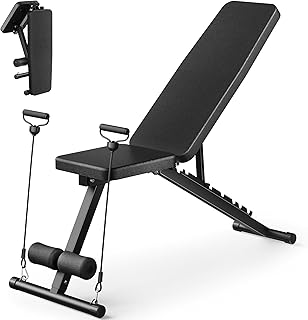
Adjustable Weight Bench for Home Gym
Honestly, Adjustable Weight Bench for Home Gym surprised me — sturdier than it looks in the photos, and over 565 buyers gave it 4.5 stars.
10. Force Your Body To Cool Down And Stretch

Just as important as the warm-up, a cool-down helps your body transition from exercise to rest. It gradually lowers your heart rate and improves flexibility. I used to finish my last set of squats, immediately jump into my car, and drive to pick up my kids. My hamstrings would cramp up so badly during the drive that I could barely press the brake pedal. You have to force yourself to slow down.
I allocate the final five minutes entirely to static stretching. I sit on the floor and hold a deep pigeon pose for 30 seconds per leg, feeling the intense pull in my glutes. I also stretch my chest by placing my forearm against a wall and twisting away. To further aid recovery, I highly recommend an Epsom salt bath later in the evening. I buy Dr. Teal’s Pure Epsom Salt for $6.99 (the 3 lb bag) at Sprouts. The lavender scent is strong, and the magnesium sulfate significantly reduces post-workout muscle soreness. Skipping the cool-down leaves your muscles tight and prone to tearing during your next session. Take the five minutes to breathe, stretch, and let your heart rate drop below 100 beats per minute.
If you’re tired of spending hours in the gym with nothing to show for it, implement these strategies immediately. A tight, focused session will absolutely crush a lazy two-hour workout. Pin this guide for your next session, and start tracking your intervals today.
Frequently Asked Questions
Is a 30 minute workout actually enough to build muscle?
Yes, if you focus on heavy compound movements like squats and presses, and utilize progressive overload. Keep your rest periods short and push close to failure during your sets to maximize muscle recruitment in a short timeframe.
How many times a week should I do a 30 minute workout?
For most people, aiming for 4 to 5 sessions per week provides excellent volume for cardiovascular health and strength building, while still allowing adequate days for muscle recovery.
Should I do cardio or weights during my 30 minute workout?
Combining both through High-Intensity Interval Training (HIIT) or heavy kettlebell circuits is the most efficient method. You elevate your heart rate for cardio benefits while simultaneously challenging your muscles with resistance.
What is an exercise snack?
An exercise snack is a micro-workout lasting 5 to 10 minutes. By completing three 10-minute exercise snacks spread throughout your workday, you achieve the same cumulative volume as a continuous 30-minute session.
