What’s Inside
- Prioritize Commercial-Grade Vinyl for Durability
- Combat Humidity with Moisture-Resistant Options
- Embrace Biophilic Design for Mental Well-being
- Leverage Typography and Motivational Quotes
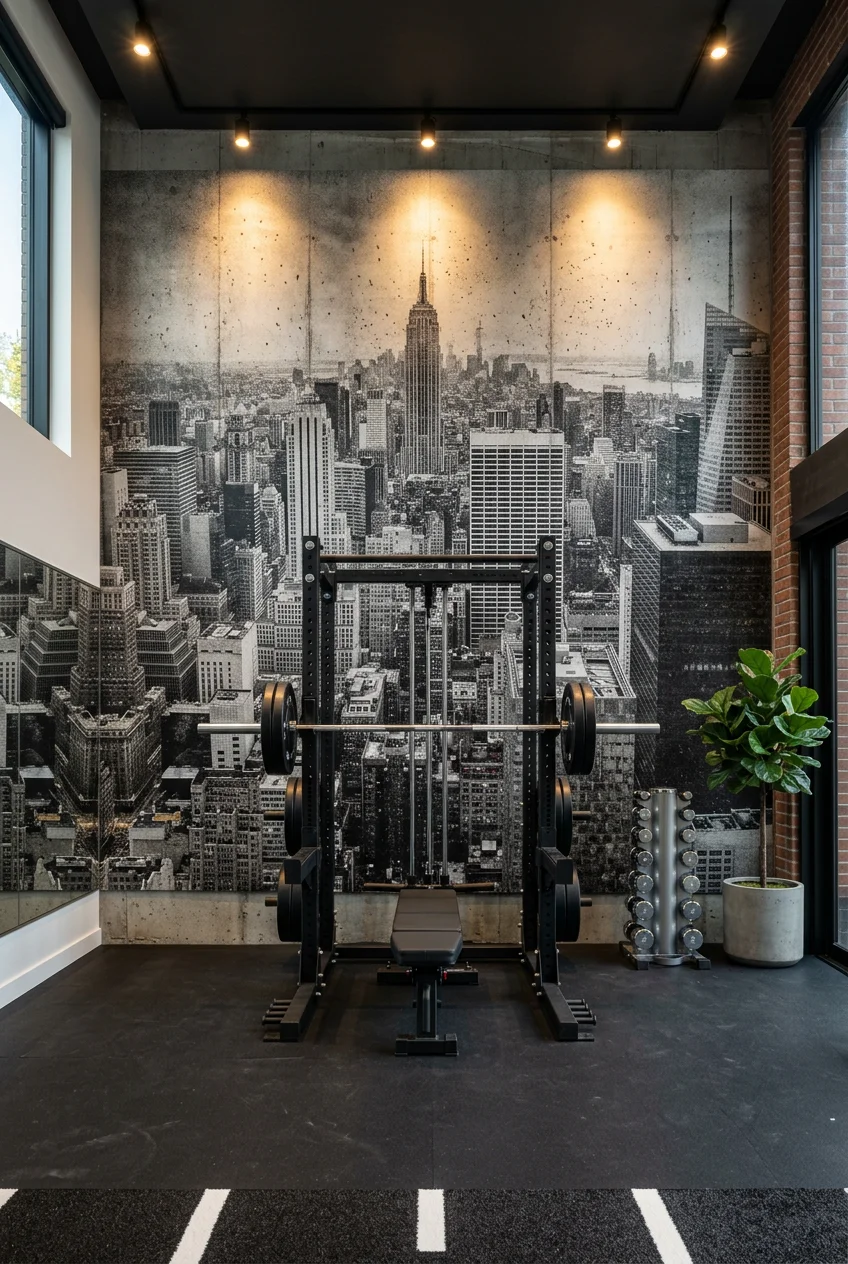
- Create Depth with Texture Illusions
- Define Zones with Accent Walls
- Consider UV-Resistant Inks for Longevity
- Budget for Professional Installation for Murals
- Factor in Wall Preparation and Removal Costs
- Explore Peel-and-Stick for DIY and Renters
- Choose Colors Strategically for Psychological Impact
- Invest in Anti-Microbial and Acoustic Features
Last July, I stood in my sweltering garage gym peeling latex paint off my drywall in rubbery sheets. The humidity from my morning assault bike sprints basically melted the builder-grade eggshell finish right off the wall. That afternoon, I started researching gym art wallpaper because standard paint just can’t survive the chalk, sweat, and flying medicine balls of a serious training space. I spent weeks looking at residential options before realizing most of them tear the second a rogue bumper plate grazes them. I bought a cheap floral print from a big box store, slapped it up near my squat rack, and watched it shred three days later when my weight belt scraped against it. Wasted forty bucks and an entire Saturday. If you’re building a home gym or upgrading a commercial facility, you need materials engineered for impact and moisture. Let’s break down what works, what fails, and how much it costs to put something on your walls that motivates you without falling apart after one heavy leg day.
1. Prioritize Commercial-Grade Vinyl for Durability

When I first set up my garage gym, I used standard paper-backed wall covering. Big mistake. Last Tuesday, I was doing power cleans, and the knurling on my 45-pound Ohio bar grazed the wall as I set it down. It tore a jagged three-foot hole straight through the paper. Cheap residential papers aren’t built for abuse. You need commercial-grade Type II vinyl. This material is engineered to resist scuffing, abrasion, and direct impact. I ordered panels from Livette’s Wallpaper. They run $145 per 25-inch by 108-inch panel. The texture feels like heavy canvas, and it has a rubbery give when you press your thumb into it. I tested a sample by rubbing a 10-pound iron change plate against it; it barely left a faint gray mark that wiped off with a damp rag. After finishing the installation, I drove to Trader Joe’s for a 16 oz bag of roasted almonds to stress-eat because hanging wallpaper solo is frustrating, but the durability means I won’t have to do it again for a decade.
2. Combat Humidity with Moisture-Resistant Options

Gyms are inherently gross spaces. Train hard, and you’re pumping moisture into the air. Before I fixed my ventilation, the air felt thick and the walls literally sweated. I noticed a mildew smell near the baseboards last winter. Use standard wallpaper, and that trapped moisture breeds black mold behind the paper. You need vinyl or fabric-backed vinyl with a mold-inhibiting backing. Olive et Oriel makes a heavy-duty moisture-resistant option that costs $120 for a 24-inch by 393-inch roll. The backing feels slick, like a thin layer of wax, stopping condensation from hitting the drywall. I learned this the hard way after finding fuzzy green patches near the floor. I had to scrub the drywall with a mix of 1/2 cup of bleach in a gallon of warm water to kill the spores. Now, I run a $49.99 Holmes cool mist humidifier from Target during dry months, but I keep a heavy-duty dehumidifier running all summer. The wallpaper acts as a barrier. Sweat beads up on the surface instead of soaking in, letting me wipe the walls down with a microfiber towel.
3. Embrace Biophilic Design for Mental Well-being

Staring at a blank wall while grinding through 20-rep back squats is draining. I used to face bare drywall, and it felt like a concrete prison. The 2026 trend is biophilic design, which means plastering massive nature motifs on your walls. Companies like Biofit specialize in this. They print hyper-realistic foliage and mountain vistas that trick your brain into feeling less confined. I ordered a custom 8-foot by 10-foot forest print for $315. The green tones actually reduce my perceived exertion. It sounds ridiculous, but having a visual escape route when my heart rate hits 170 BPM makes a difference. The ink has a matte finish, so it doesn’t reflect the harsh overhead LED shop lights into my eyes. Last Friday, after a grueling session, I dragged myself into Whole Foods and bought 1.5 pounds of their hot bar mac and cheese for $14.99 because my legs were shaking too much to cook. The nature print doesn’t make the weight lighter, but it stops the room from feeling like a box closing in.

OLIXIS Adjustable Weight Bench for Full Body Strength
OLIXIS Adjustable Weight Bench for Full Body Strength Training punches above its price — 39 buyers rated it 4.5 stars. I would buy it again.
4. Leverage Typography and Motivational Quotes

I usually hate motivational quotes. They look like something you’d see in a corporate breakroom. But when you’re training alone at 5:30 AM and the barbell feels glued to the floor, having a massive, aggressive piece of typography helps. I looked for gym art wallpaper with bold, industrial text. I found a digital download shop on Etsy called Eramsca that sells typography files for $18.50. I took the file to a local printer and had them blow it up onto a 4-foot by 6-foot vinyl adhesive sheet for $85. It says “Push Your Limits” in a distressed, blocky font. Avoid cursive. You want thick, black lettering that looks stenciled on a shipping container. I stuck it in my deadlift zone. The 2-millimeter thick vinyl covers imperfections in my drywall perfectly. I made the mistake of trying to apply it without a squeegee, leaving massive air bubbles. I had to run to Walmart, buy a $4.97 plastic smoothing tool, and spend an hour pushing the trapped air out. You might also like: 15 Creative Inside She Sheds Home Gym Setup Ideas to Steal Right Now
5. Create Depth with Texture Illusions

If your home gym is a spare bedroom, it probably feels tiny. Solid colors make it feel smaller. You can create depth by using wallpaper that mimics industrial materials. I tested a faux exposed concrete pattern from Milton & King that costs $169 for a 33-foot roll. The printing is so precise you have to touch the wall to realize it’s flat. The shadows and highlights create a 3D illusion that pushes the wall back. I tried real brick veneer in my old basement gym, and it was a nightmare. The rough texture scraped my knuckles when I walked past with dumbbells, and it shed red dust onto my mats. Textured vinyl gives you that warehouse aesthetic without the abrasion or the mess. The Milton & King paper has a satin finish, so it wipes clean. I use a spray bottle with 4 oz of white vinegar mixed with water to clean off the chalk dust that settles after a lifting session. You might also like: 11 Slim Leg Workout That Actually Work
6. Define Zones with Accent Walls

You don’t need to wrap your entire garage in a loud pattern. That usually feels chaotic. The smartest approach is an accent wall to define a training zone. I applied a geometric, high-contrast pattern behind my power rack. It creates a focal point. The other three walls are painted dark charcoal. This anchors the room and separates the lifting area from the cardio equipment. It also saves money because you’re only buying enough vinyl for a 10-foot stretch instead of 40 feet. I bought three rolls for the accent wall, totaling $435. To finish the zone, I laid down 3/4-inch thick rubber horse stall mats from Tractor Supply that cost $55 each. The transition from the dark walls to the sharp pattern looks deliberate. I grabbed a 32 oz tub of Greek yogurt from Costco for $6.49 after finishing the trim, feeling good about the setup. Just make sure the accent wall is the one you face while lifting. You might also like: 9 Workout Plan Gym You Need to See

Jump Rope, Tangle-Free Rapid Speed Jumping Rope Cable with
If you want something that just works, Jump Rope is a safe bet (242 reviews, 4.5 stars).
7. Consider UV-Resistant Inks for Longevity

Garages often have harsh natural light pouring in from bay windows. Spend money on a vibrant mural, and the sun will bleach it in two years. I had a cheap banner hanging near my garage window, and the black ink turned a sickly purple by the end of the first summer. When you order custom murals, specify UV-resistant inks. Companies like Limitless Walls use specialized UV inks that cure instantly and resist fading for up to 200 years indoors. I ordered a custom 9-foot by 9-foot mural for $450. The colors are saturated, and the material feels thick, like a thin sheet of plastic. It sits in the direct path of the afternoon sun, and the black hasn’t faded a shade in eighteen months. I remember inspecting it last Wednesday with the sun hitting it, holding a $3.99 can of Zevia. The UV ink costs 20% more upfront, but replacing a faded mural because you tried to save a few bucks is a brutal lesson.
8. Budget for Professional Installation for Murals

Don’t try to hang a massive, multi-panel custom mural by yourself unless you have a high tolerance for frustration. I helped a buddy install a pasted commercial mural in his facility last year. We mixed the clay-based adhesive, slapped it on the back of the heavy vinyl, and tried to maneuver a 54-inch wide, 12-foot long sheet into place while on ladders. We tore the corner, got paste in our hair, and the pattern mismatched by half an inch. It ruined the effect. Professional installation is expensive, but it’s non-negotiable for large-scale paper. The national average runs between $1,570 and $3,280, or $10 to $50 per square foot. I finally hired a local installer for my main wall. He charged $450, brought his own laser levels, and had the 12-foot section perfectly seamed in under two hours. The seams are invisible. If you’re dropping five hundred dollars on materials, pay the extra money to have someone who knows how to handle a smoothing brush put it up.
9. Factor in Wall Preparation and Removal Costs

You can’t stick premium vinyl over damaged drywall. If your gym walls look like mine did—covered in dents from kettlebells and scuffs—you have to fix the substrate first. Any bump will show through the wallpaper, especially with a dark background. Before I could order paper, I had to prep the space. Removing old, stubborn wallpaper can cost $1 to $3 per square foot if you hire it out. I did it myself with a steamer, and it took ten miserable hours. Then came the patching. Drywall repair contractors usually charge $120 to $430 per hole. I fixed it myself to save cash. I bought a 32 oz tub of DAP DryDex Spackle from Lowe’s for $8.98. I spent an entire Sunday filling gouges, sanding with 120-grit paper, and wiping dust away with a tack cloth. You also have to apply a wallpaper primer, which costs about $25 a gallon. Skip the primer, and the adhesive will soak into the drywall and fail to stick.

Fitness Tracker, Activity Trackers with 24/7 Heart Rate
If you want something that just works, Fitness Tracker is a safe bet (402 reviews, 4.5 stars).
10. Explore Peel-and-Stick for DIY and Renters

If you are renting or change your mind every two years, traditional pasted vinyl is a bad idea. The removal process destroys the drywall. For home gyms in spare bedrooms, peel-and-stick wallpaper is the only logical choice. It uses a low-tack adhesive that grips firmly but releases cleanly. NuWallpaper makes heavy-duty options that cost around $35 for a 20.5-inch by 18-foot roll, or about $1.14 per square foot. I used a dark charcoal geometric pattern in my stretching room. The installation is forgiving. Misalign a panel, and you just peel it back off and try again. It doesn’t stretch like wet pasted paper. The only negative is that the adhesive can fail if the room gets hot, so it’s not ideal for non-climate-controlled garages in the summer. Last week, I noticed a slight peel at the top corner near the ceiling vent. I hit it with a hair dryer for thirty seconds to reactivate the glue and pressed it back down. Afterward, I grabbed a $5.49 rotisserie chicken from Kroger, thrilled I didn’t have to mix wallpaper paste.
11. Choose Colors Strategically for Psychological Impact

Wall color impacts training intensity. It’s not bro-science; it’s environmental psychology. Warm, saturated colors like red and deep orange trigger a dopamine release. They increase heart rate and heighten visual attention. If you’re building a space for powerlifting or HIIT, you want aggressive, warm tones. I bought a roll of allen + roth textured red vinyl for $42 to test this behind my assault bike. It definitely makes the space feel more intense. Conversely, if you’re setting up a yoga studio or mobility space, red is the worst color. Cool blues, deep greens, and muted earth tones are linked to oxytocin release. They calm you down. I painted the far corner of my basement deep navy blue and used a subtle, wave-patterned paper for my stretching zone. When I move from the red heavy-lifting area to the blue mobility zone, my heart rate drops faster. Pick colors based on the physiological response you need.
12. Invest in Anti-Microbial and Acoustic Features

Gyms are loud and dirty. Drop a loaded barbell, and the sound waves bounce off the drywall and concrete, creating an echoing environment that gives me a headache. While standard vinyl helps, some specialized commercial wallpapers feature acoustic dampening. They have a thick, porous backing that absorbs high-frequency noise. It won’t soundproof the room, but it takes the bite out of clanking iron. Additionally, black-themed wallpaper is dominating the market, accounting for over 35% of commercial sales in 2024. I went with a matte black, anti-microbial vinyl for the lower half of my walls. The coating prevents bacteria from surviving on the surface, which is crucial because I’m constantly leaning against the wall between sets. The black color hides the scuffs from my shoes and chalky hands. I used to wipe down my white walls daily; now, the matte black hides the grime until I do my deep clean on Sundays with 2 tablespoons of dish soap mixed in a bucket of water.
Upgrading your training space with legit gym art wallpaper isn’t just about looks; it’s about building an environment that can withstand your workouts while pushing you to finish them. Stop wasting money on flimsy residential paper that rips when you look at it wrong. Invest in heavy-duty commercial vinyl, prep your drywall correctly, and pick a design that makes you want to lift. If you found this helpful, pin this article to your home gym inspiration board so you have the specs and prices handy when you’re ready to start taping off your baseboards.

The Original Body Roller
The Original Body Roller – High Density Foam Roller Massager for Deep has been one of the most consistently praised picks in this category. 159 reviewers averaged 4.5/5.
Frequently Asked Questions
What is the best material for gym art wallpaper?
Type II commercial-grade vinyl is the most durable option. It resists scuffing from equipment, handles physical impact, and survives high humidity far better than standard paper-backed residential alternatives.
Can I use peel-and-stick wallpaper in a garage gym?
Yes, but only in climate-controlled spaces. Extreme summer heat or high humidity can cause the low-tack adhesive on peel-and-stick rolls to fail and peel away from the drywall.
How much does custom gym mural installation cost?
Professional installation typically ranges from $1,570 to $3,280, depending on the size and material. It usually breaks down to $10 to $50 per square foot for printed vinyl murals.
Does wallpaper in a gym cause mold?
Standard residential wallpaper can trap sweat and condensation against the drywall, leading to mold. You must use moisture-resistant vinyl with a mold-inhibiting backing and maintain proper ventilation to prevent this.
