What’s Inside
Last Tuesday at the local park, I tried showing off with a muscle-up and ended up eating a mouthful of wet, sour-smelling mulch. That embarrassing moment reminded me why a solid calisthenics workout for beginners is mandatory before trying the flashy stuff. When I first started, I thought bodyweight training meant doing 100 sloppy push-ups until my shoulders screamed. I was wrong. I spent months nursing a rotator cuff impingement because my ego was bigger than my understanding of basic biomechanics. You can’t just throw yourself at a pull-up bar and expect magic. It takes patience. It takes discipline. Let’s break down the exact moves you need to build real functional strength safely. I’m going to share the exact routine I use with my online clients. No fluff. Just the raw basics that actually work. If you skip these foundational movements, you’re setting yourself up for failure and chronic joint pain.
1. Master the Bodyweight Squat

A calisthenics workout for beginners always starts with the humble bodyweight squat. I ignored these for years. I figured lifting heavy barbells was the only way to build legs. I was dead wrong. Last month at my apartment gym, I watched a guy crank out 50 bodyweight squats with zero depth. His knees were caving inward like a collapsing tent. It made my own joints ache just watching him. Don’t be that guy. Coach Zach Watson says you need to focus on mastering the technique, form, and range of motion before adding extra reps. Drop your hips below your knees. Keep your chest up. I actually use a full-length mirror to check my depth. If you struggle with hip mobility, grab a pack of Target All in Motion resistance bands ($12.99 for a 3-pack) and wrap the lightest one just above your knees. It forces your abductors to fire, keeping your knees tracking correctly over your toes. I tried this hack last Friday and the burn in my outer glutes was intense. The texture of those cheap rubber bands isn’t great. They pull your leg hair aggressively if you wear shorts. But they fix your form instantly. Aim for 3 sets of 12 controlled reps. Stop rushing. A three-second descent makes your quads burn like crazy. Most people bounce at the bottom to use momentum. Stop doing that. Pause for a full second at the lowest point. It kills your ego, but it builds incredible leg strength.
2. Incline Push-Ups for Chest Control

Regular push-ups are incredibly tough when you’re just starting. Your lower back sags toward the floor. Your elbows flare out like chicken wings. I see it every single day. Instead, find a sturdy bench or a low wall. I use the concrete retaining wall near my driveway. The rough stone shreds the skin on my palms, but the angle is perfect for my chest. Place your hands slightly wider than shoulder-width. Lower your chest to the edge, keeping your elbows tucked at a 45-degree angle. This protects your shoulders from nasty impingements. I made the mistake of doing wide-grip push-ups for six months straight back in 2021. My right shoulder clicked loudly every time I reached for a coffee mug. It was awful. If you’re working out at home, grab an Athletic Works yoga mat from Walmart ($15.98, 5mm thick). The cheap foam smells strongly of car tires right out of the plastic wrapper, but it stops your sweaty hands from slipping on hardwood floors. Grip the mat slightly with your fingertips to engage your forearms. Squeeze your glutes tightly. Your body should form a rigid, straight line from your heels to the top of your head. Do 3 sets of 8 to 10 reps. If you can’t hit 8 reps cleanly, find a higher surface. A kitchen counter works great. Just make sure your core stays tight the entire time. You might also like: 20 Gorgeous Easy Home Workout Ideas That Actually Work
3. Inverted Rows Under a Sturdy Table

Pulling strength is the hardest thing to build in a calisthenics workout for beginners. You can’t just rely on push-ups. Your posture will turn into a permanent slouch. I learned that the hard way. I completely neglected my back muscles for a year. My shoulders rolled forward so badly I looked like a caveman. Inverted rows are the ultimate fix. If you don’t have low rings or a suspension trainer, a sturdy dining table works perfectly. Lie underneath it. Grab the edge with an overhand grip. Pull your chest to the underside of the table. Squeeze your shoulder blades together like you’re trying to crush a walnut between them. I tried doing these under a flimsy IKEA desk once. The whole thing tipped over and smacked me square in the forehead. I had a throbbing purple bruise for a week. Make sure the table is heavy and stable. After a tough back session, I usually inhale one of those Kirkland Signature protein bars from Costco ($22.99 for a 20-pack). The Chocolate Peanut Butter Chunk flavor tastes a bit chalky and dry, but it gets 21 grams of protein into my system fast. Aim for 3 sets of 6 to 8 slow reps. Control the descent. Don’t just drop back down to the floor. The eccentric lowering phase is where you build the thickest muscle fibers in your upper back. You might also like: 20 Charming Black Garage Home Gym Setup Ideas Worth Trying This Year

FLYBIRD WB2 Weight Bench
If you want something that just works, FLYBIRD WB2 Weight Bench is a safe bet (215 reviews, 4.5 stars).
4. Perfecting the Glute Bridge

Most guys skip glute work entirely. They think it’s unnecessary for upper body strength. That’s a massive error. Weak glutes lead directly to agonizing lower back pain. I spent two years dealing with a stiff lumbar spine because my glutes were essentially asleep. The glute bridge wakes them up instantly. Lie on your back with your knees bent and feet flat on the floor. Drive through your heels and push your hips toward the ceiling. Pause at the top for two full seconds. Squeeze hard. If you feel this in your lower back instead of your glutes, you’re arching your spine too much. Tuck your pelvis slightly before you lift. I do these on the floor of my living room while watching TV. Sometimes my hamstrings cramp up violently if I place my feet too far away from my body. It’s a sharp, stabbing pain that makes me jump up and hop around the room cursing. To help with muscle cramps, I mix a scoop of Sprouts brand magnesium powder ($14.99 for an 8 oz tub) into a glass of cold water before bed. The raspberry flavor is incredibly tart, almost sour enough to make you wince, but it stops the nighttime leg spasms. Hit 3 sets of 15 reps. Focus entirely on the mind-muscle connection. If you don’t feel your glutes burning, adjust your foot placement until you do. You might also like: 20 Brilliant Commercial Home Gym Setup Ideas Worth Trying This Year
5. Hollow Body Hold for a Rock-Solid Core

Crunches are total garbage. Stop doing them. They wreck your neck and do very little for actual functional core strength. The hollow body hold is what Olympic gymnasts use, and it’s brutally effective. Lie flat on your back. Press your lower back firmly into the floor. This is non-negotiable. If there’s a gap between your back and the floor, you’re resting the weight on your spine instead of your abs. Lift your legs a few inches off the ground. Extend your arms over your head. Now, hold it. Last Tuesday at the local high school track, I tried holding this for a full minute. By second 30, my entire abdominal wall was shaking violently. I felt like I was vibrating off the turf. My face turned bright red. It’s an incredibly humbling exercise. If it’s too hard, bend your knees slightly or bring your arms down by your sides. Just keep that lower back pinned down. After a grueling core session, I usually grab a bottle of 365 Everyday Value electrolyte water from Whole Foods ($1.49 for a 33.8 oz bottle). It has a slightly salty aftertaste that I don’t love, but it rehydrates me quickly. Try to accumulate 60 seconds of total hold time. Break it into 15 or 20-second chunks if needed. Don’t hold your breath. Breathe shallowly into your stomach while maintaining the intense tension.
6. Negative Pull-Ups to Build Lat Strength

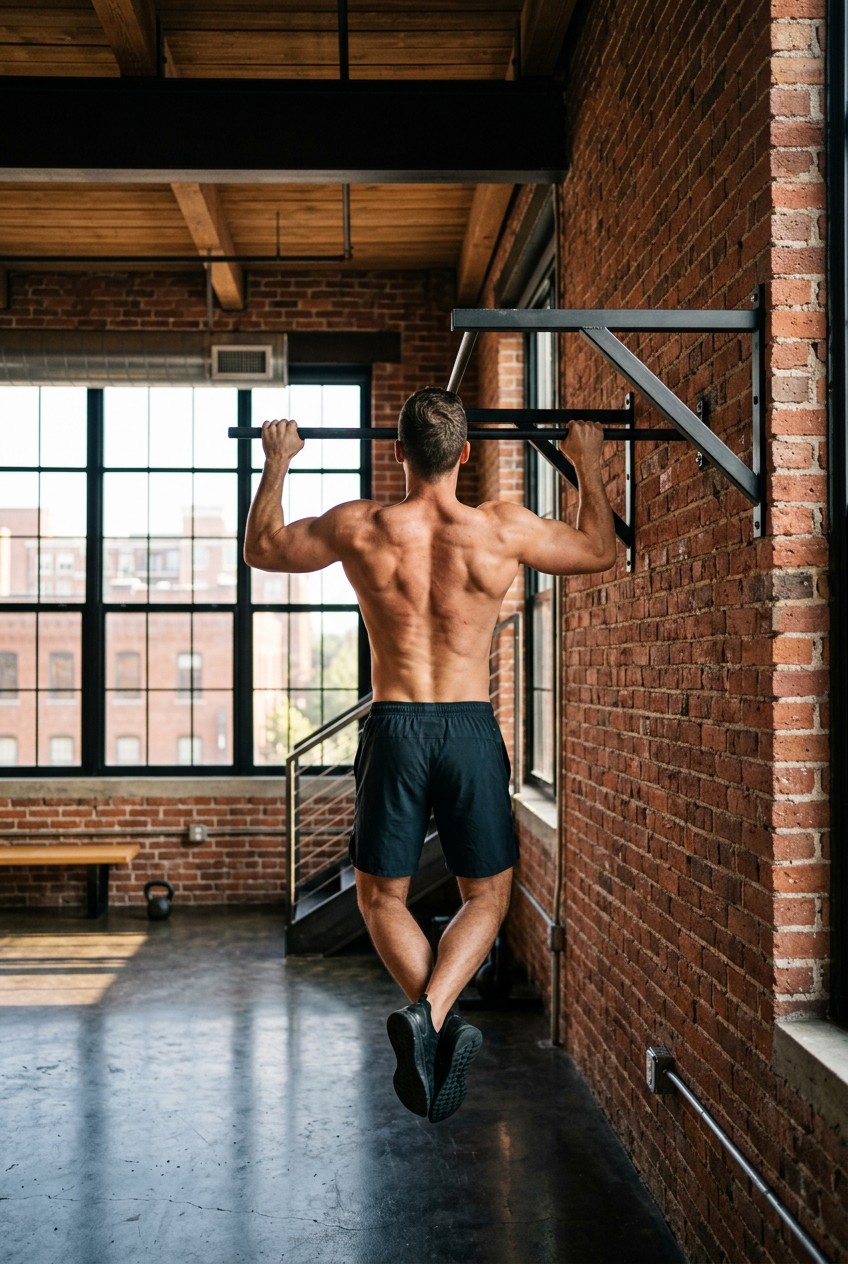
You won’t get a strict pull-up by just hanging from a bar and wishing for the best. You have to work the eccentric phase. That means the lowering part of the movement. Grab a sturdy chair. Step up so your chin is over the pull-up bar. Grab the bar tightly. Step off the chair and lower yourself down as slowly as humanly possible. Aim for a five-second descent. I used to rush these when I lacked strength. I’d drop like a stone and jar my shoulder sockets. It felt like someone was driving a rusty nail into my AC joint. Control the descent all the way to a dead hang. Your lats will scream. Your grip will fail. Sweaty palms are a nightmare here. I picked up some Simple Truth liquid chalk from Kroger last month ($9.99 for a 1.7 oz bottle). It smells strongly of rubbing alcohol when you squeeze it out, but it dries into a chalky white crust that glues your hands to the cold steel bar. Don’t overdo negatives. They cause intense delayed onset muscle soreness. Just do 3 sets of 3 to 5 slow, agonizing reps. If you can’t control the drop for at least three seconds, wrap a heavy resistance band around the bar and loop it under your foot to help support your body weight.
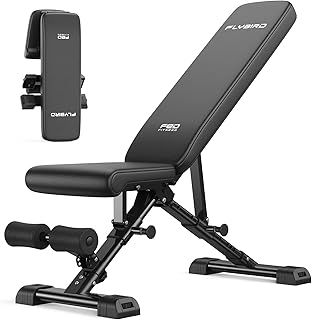
FLYBIRD WB5 Weight Bench
Honestly, FLYBIRD WB5 Weight Bench surprised me — sturdier than it looks in the photos, and over 259 buyers gave it 4.5 stars.
7. Pike Push-Ups for Boulder Shoulders

Building broad shoulders without heavy dumbbells requires getting upside down. The pike push-up is your best friend here. Start in a downward dog yoga position. Your hips should be high in the air. Your body forms an inverted V shape. Lower the top of your head toward the floor, slightly in front of your hands. Push back up. I completely messed this up when I first tried it. I looked straight down at my toes instead of slightly forward. I lost my balance and face-planted onto my rough basement carpet. I had a red friction burn on my nose for three days. It was highly embarrassing. Keep your gaze focused slightly ahead of your fingertips to maintain a stable triangle base. This isolates the front deltoids beautifully. It’s significantly harder than a standard push-up. I usually perform these mid-workout when I’m already a bit fatigued. My arms visibly shake on the push upward. After pushing through 3 sets of 6 to 8 reps, I’m completely gassed. I’ll usually rip open a Trader Joe’s RxBar ($1.99, Chocolate Sea Salt flavor). The dates make it incredibly sticky. It sticks to my molars like cement, but the 12 grams of egg white protein hits the spot perfectly. Keep your elbows tucked in. Flaring them out places dangerous stress on your rotator cuffs.
8. Rest and Progressive Overload

You can’t just do the exact same routine every week and expect to look different. Consistent strength gains depend on progressively increasing the demands on your muscles. You have to embrace progressive overload from day one. You can increase reps, add sets, or decrease your rest time. I used to rest for five minutes between sets while scrolling on my phone. My heart rate would plummet. I wasn’t getting stronger. I was just wasting time. Now, I strictly time my rest periods. I use my Garmin Forerunner 55 watch from Target ($199.99). The silicone strap gets a bit sweaty and gross underneath if I don’t wash it daily, but the interval timer is absolutely flawless. I keep my rest strictly to 90 seconds. If you hit 3 sets of 10 reps easily this week, try for 3 sets of 11 next week. It sounds tiny, but those micro-progressions compound over months. Also, rest days are mandatory. Your muscles grow when you sleep, not when you train. I typically train calisthenics three days a week, resting fully on the days between. If you push too hard, your central nervous system fries. You’ll feel sluggish, irritable, and weak. Listen to your body. Drink plenty of water. Eat enough protein. The basics aren’t sexy, but they are the only things that actually deliver results.
Honestly, mastering your body weight is the most rewarding thing you can do for your fitness. I’ve lifted heavy iron for a decade, but nothing feels quite as good as moving my own body through space with total control. Start with these basics. Don’t rush the process. If you found this routine helpful, pin this article to your workout boards so you can reference it during your next session. You won’t master all these moves in a single day, and that’s perfectly fine. Put in the work, stay consistent, and I promise you’ll see incredible changes. Let’s get after it.
Frequently Asked Questions
How many times a week should a beginner do calisthenics?
I’d recommend training three days a week. Your muscles need time to recover and grow. Training every single day fries your central nervous system and leads to burnout.
Can you build muscle with just bodyweight exercises?
Absolutely. If you use progressive overload by increasing reps, decreasing rest time, or trying harder variations, your muscles will grow. You don’t need heavy barbells to see serious size gains.
What is the hardest calisthenics move for beginners?
Pulling exercises are usually the toughest. Most beginners struggle with strict pull-ups. That’s why starting with inverted rows and negative pull-ups is crucial for building foundational back strength.
Do I need equipment for a beginner calisthenics workout?
Not much. A sturdy chair, a table for rows, and maybe a cheap yoga mat or resistance bands are plenty. You can do almost everything using just your body weight.
