What’s Inside
- Optimize Your 6-Day Training Frequency
- Prioritize Adequate Protein Intake Daily
- Strategically Use a Quality Pre-Workout
- The Non-Negotiable Creatine Habit
- Nailing the Dynamic Warm-Up
- Master the Mind-Muscle Connection
- Vary Rest Times and Force Overload
- Gear Up for Heavy Lifts
- Intra-Workout Carbs for Long Sessions
- Integrate HILIT Finishers
- Track Sleep and Force Deload Weeks
Last Tuesday at Whole Foods, I caught my reflection in the dairy case glass. I looked totally deflated. Clutching a $6.99 carton of organic almond milk, I realized my bro-split routine was doing nothing for my physique. I looked flat. My shoulders were rounded. I felt weak carrying groceries to the car. That harsh realization forced me to rethink how I lift. I switched to a strict push pull legs workout right then. If you want a routine that actually delivers visible results in 30 days, stop guessing and start following a rigid, scientific plan. I did this wrong for months before figuring it out—took me years, honestly. I’d wander into the gym, do some random chest presses, maybe a few curls, then leave once I got bored. Skip that generic approach. It’s a massive waste of time and energy. You need specific exercises, exact protein targets, and the right gear to make this split work. I’m going to break down how I structure my training, what supplements I swallow, and the painful mistakes I’ve made. Let’s look at how to build serious muscle over the next month.
1. Optimize Your 6-Day Training Frequency

If you’re serious about packing on mass, a 3-day split won’t cut it. For experienced lifters aiming for growth, you need a 6-day push pull legs split. The schedule is brutal but effective. You hit push, pull, legs, repeat, then take one rest day. This frequency lets you hit each major muscle group twice a week. Hitting a muscle twice a week maximizes volume and spikes protein synthesis better than destroying it once a week. I swear by this now, though I fought it for a long time. I used to do a 3-day split and wonder why my chest looked like plywood. I thought I was overtraining, but I was just under-recovering and under-stimulating my muscles. Most people get this wrong. They train chest Monday and don’t touch it again until the following week. To stay accountable on this 6-day grind, I bought a spiral notebook from Target for $2.99. I write down every set and rep. You can also use an app like Hevy, which I highly recommend. It tracks your volume so you aren’t guessing what you lifted last week. Consistency is the key. Don’t skip leg day just because your hamstrings are sore. Push through, get blood flowing, and stimulate that tissue again.
2. Prioritize Adequate Protein Intake Daily

You can lift until your hands bleed, but if you aren’t eating enough protein, you won’t grow. To support repair and growth, you must eat 1.6 to 2.2 grams of protein per kilogram of body weight every single day. For a 180-pound guy like me, that’s roughly 131 to 180 grams of protein daily. I spread this across four or five meals so my stomach doesn’t feel like a balloon. I buy massive packs of chicken breast from Sprouts, usually around $12.99, and grill them on Sundays. Skip the fat-free cheese and low-fat yogurt. It tastes like wet cardboard and leaves you starving. I’ve made the mistake of ignoring protein targets. Last year, I trained flawlessly for a month but barely ate 80 grams a day. I lost weight, but I lost muscle and looked stringy. Now, I invest in high-quality protein. I use Transparent Labs 100% Grass-Fed Whey Protein Isolate. It costs $59.99 for 30 servings, but it’s worth every penny. It mixes perfectly and doesn’t wreck my stomach. Don’t buy cheap, chalky protein from the bottom shelf. I bought a discount tub from Walmart once for $19.99 and it left disgusting clumps in my shaker. I’d gag trying to drink it after leg day. Trust me. Spend the extra money on quality isolate.
3. Strategically Use a Quality Pre-Workout

Walking into the gym at 5:30 AM requires chemical assistance. I don’t care how motivated you feel. A good pre-workout taken 30 to 60 minutes before training makes a massive difference in focus and output. I look for 175 to 350mg of caffeine, L-citrulline for blood flow, and beta-alanine for endurance. Right now, I’m using Optimum Nutrition Gold Standard Pre-Workout. I grabbed a tub at Kroger for $29.99. The sour green apple flavor hits with a sharp, acidic bite, and about 20 minutes later, the beta-alanine makes my face and ears tingle. That tingling is my cue to grab my bag and get out the door. I’ve messed up my timing before. A few months ago, I took a full scoop of heavy stimulant pre-workout at 7 PM for a late pull day. I smashed the workout, but I stared at my ceiling until 3 AM with my heart hammering. Most people get this wrong by relying on cheap energy drinks loaded with sugar. Those cans give you a quick rush and a terrible crash mid-squat. Stick to a dedicated powder. Mix it with ice-cold water. The ritual of shaking the cup and hearing the blender ball gets my mind right for the lifting ahead. You might also like: 20 Beautiful Home Gym Setup Ideas That Changed Everything

Iron Gym Pull-Up Bar – Total Upper Body Workout Bar for
A dependable everyday pick — Iron Gym Pull-Up Bar – Total Upper Body Workout Bar for Doorway pulls in 25 ratings at 4.5 stars. Not flashy, just solid.
4. The Non-Negotiable Creatine Habit

If you aren’t taking creatine, you’re leaving free muscle and strength on the table. You need 3 to 5 grams of creatine monohydrate daily. Take it on workout days, take it on rest days. It’s the most researched and cost-effective supplement on the planet. It pulls water into muscle cells and helps produce ATP, the explosive energy you need for heavy sets. I buy a 500g tub of Creapure Monohydrate at Costco for $35.00. That tub lasts months. I take it every morning with my first glass of water. It’s gritty and flavorless, but the results are undeniable. I tried to dry scoop a teaspoon of unflavored creatine last month in the parking lot because I forgot my shaker. Terrible idea. I inhaled wrong and coughed white powder all over my steering wheel and dashboard. It looked like a powdered donut exploded in my truck. Don’t do that. Mix it in water or a shake. Some guys cycle off, but there’s zero scientific reason to do that. Keep your muscles saturated. You’ll notice they look fuller, shirts fit tighter, and you can squeeze out extra reps on your heaviest sets. You might also like: 20 Inspiring Journal Home Workout Ideas You Haven’t Thought Of
5. Nailing the Dynamic Warm-Up

Skipping your warm-up is the fastest way to tear a muscle and ruin your 30-day progress. I used to walk in, load 135 pounds on the bench, and start pushing. I paid for it with constant shoulder impingements and elbow pain. Now, a dynamic warm-up is mandatory. I start with 5 to 10 minutes of light cardio on the treadmill to break a sweat and get my core temperature up. Then, I move into dynamic stretches specific to the muscle groups I’m training. On push day, I do arm circles, light dumbbell presses, and band pull-aparts. I keep Rogue Fitness resistance bands in my bag. They cost $16.50 online. I love the sharp snap of the cold rubber band hitting my shoulder blades as I warm up my rotator cuffs. This improves blood flow and gets synovial fluid moving in your joints, reducing injury risk. Most people get this wrong by doing static stretching before lifting. Holding a toe touch for 30 seconds before squats actually weakens the muscle temporarily. Save static stretching for after. Before you lift, you want dynamic, explosive movements to prime your nervous system. I noticed a huge difference in my pressing power once I took my band work seriously. You might also like: 15 Creative Inside She Sheds Home Gym Setup Ideas to Steal Right Now
6. Master the Mind-Muscle Connection

You can’t just move weight from point A to point B and expect to grow. For isolation work and moderate loads, you have to actively feel the target muscle contract and stretch through the entire movement. Research indicates this internal focus increases muscle activation and leads to greater hypertrophy. Some studies show up to a 12.4% increase in size just by focusing your mind on the squeeze. I’m guilty of ego lifting in the past. I used to load the lat pulldown with the whole stack, throwing my torso backward to yank the bar down. My biceps burned, my lower back ached, but my lats felt nothing. I was using momentum. Now, I drop the weight by 30%, close my eyes, and visualize my lats pulling my elbows to the floor. The pump is totally different. To brace my core so I can focus on the working muscle, I wear a Gymreapers lifting belt. I bought it for $39.99, and it helps me stay rigid during heavy rows. When you’re doing a curl, don’t just swing the dumbbell. Squeeze the handle, contract the bicep at the top for a second, and lower it slowly over three seconds. You’ll feel a deep, burning sensation. That burn is what forces tissue to adapt and grow.

Ally Peaks Pull Up Bar for Doorway | Thickened Steel Max
Ally Peaks Pull Up Bar for Doorway | Thickened Steel Max Limit 440 lbs punches above its price — 127 buyers rated it 4.5 stars. I would buy it again.
7. Vary Rest Times and Force Overload

If you’re resting the same amount of time for a heavy squat as you are for a light tricep extension, your programming is flawed. You must adjust rest periods based on the exercise. For heavy compound lifts in the 3 to 6 rep range, I rest 2 to 5 minutes. You need that time for ATP to replenish so you can lift heavy again. For moderate sets in the 6 to 12 rep range, I aim for 2 to 3 minutes. For lighter isolation work, 60 to 90 seconds is plenty. You also have to implement structured progressive overload. You can’t lift the same 50-pound dumbbells for a month and expect your chest to grow. You have to systematically increase the demands. I add 2.5 to 5 pounds to my lifts every single week. I bought Micro Gainz fractional plates for $44.99 for this purpose. They are tiny steel plates that let me add just 1.25 pounds to each side. It sounds insignificant, but it forces the muscle to adapt without crushing my central nervous system. I noticed my grip strength improving outside the gym, too. Last week at Trader Joe’s, I carried six heavy bags in one hand without my fingers uncurling. Track your numbers. Staring at the gym clock feels tedious, but it’s the only way to ensure you’re actually progressing.
8. Gear Up for Heavy Lifts

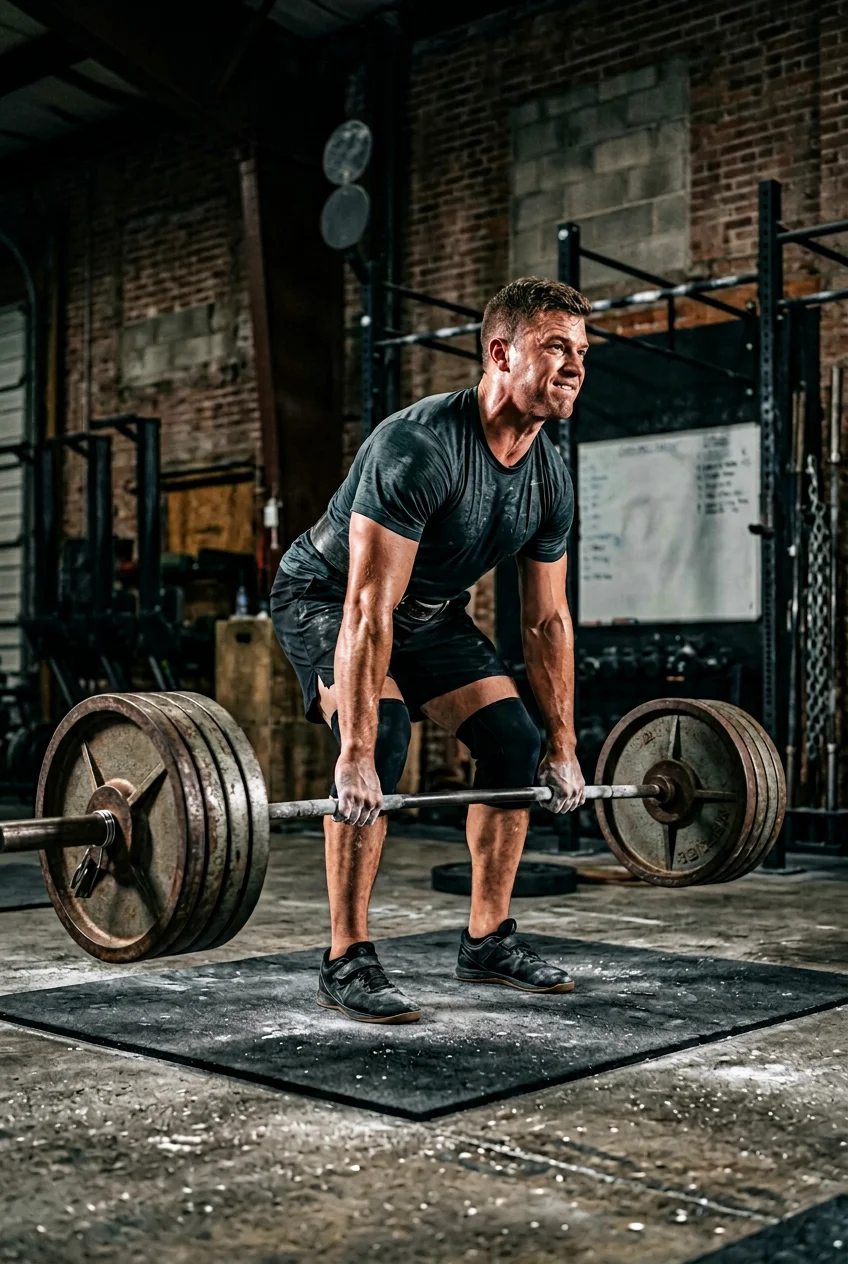
As your strength increases during this 30-day block, your grip and joints will become the limiting factors. You need to invest in specialized lifting accessories. On heavy pull days, your grip will fail long before your back muscles do. I use SBD Lifting Straps, which cost me $35.00. They are thick, rough cotton that bites into the knurling of the barbell. Before I bought these, I attempted a sweaty 315-pound deadlift in a hot gym. My hands were slick, and the bar ripped out of my fingers just past my knees. The steel knurling tore a thick callous off my palm. It bled, it stung, and it ruined my workouts for a week. Don’t let your grip hold back your back development. Strap up for your heaviest sets of deadlifts and rows. For leg days, I rely on SBD Knee Sleeves. They run about $90.00 a pair, but they are incredibly dense neoprene. You have to aggressively yank them up, but once they’re on, they provide intense warmth and compression. They keep my knee joints tracking perfectly during heavy squats and leg presses. The smell of sweaty neoprene isn’t great, but the support is undeniable. Don’t wear the gear for warm-ups, though. Let your body do the work naturally for light sets, and only throw on the sleeves and straps when the weight gets genuinely intimidating.
9. Intra-Workout Carbs for Long Sessions

When you’re running a high-volume push pull legs workout, your sessions will regularly exceed 60 to 90 minutes. If you’re training that long, plain water won’t cut it. You’ll hit a wall, your blood sugar will plummet, and your last few exercises will be garbage. An intra-workout shake is crucial for these sessions. I mix 20 to 40 grams of fast-digesting carbs with 10 to 20 grams of whey isolate and a heavy pinch of pink Himalayan salt for electrolytes. I usually buy a 51-ounce tub of orange Gatorade powder from Walmart for $10.99 for my carb source. I mix it with unflavored protein in a giant jug. The salty-sweet orange liquid coats my throat during a brutal leg session. It prevents muscle breakdown and sustains my energy when I’m an hour deep into squats and lunges. I used to crash hard during workouts. I’d suddenly feel cold, dizzy, and weak. I’d end up sitting on a bench scrolling through my phone instead of finishing calf raises. The fast carbs spike your insulin enough to shuttle nutrients directly into the working muscles, giving you a pump and keeping energy stable. It’s a simple, cheap trick that completely changed how I feel during long, grueling workouts.

Ally Peaks Pull Up Bar for Doorway | Thickened Steel Max
Ally Peaks Pull Up Bar for Doorway | Thickened Steel Max Limit 440 lbs has been one of the most consistently praised picks in this category. 127 reviewers averaged 4.5/5.
10. Integrate HILIT Finishers

You need conditioning, but you can’t afford to wreck your joints with high-impact running when you’re already squatting heavy twice a week. That’s why I integrate High-Intensity, Low-Impact Training, or HILIT, at the end of my sessions. I do this once or twice a week to build functional strength and metabolic conditioning. It’s a massive trend for a reason. At the end of leg day, I’ll load up a sled and push it across the turf for 10 minutes, or I’ll grab the battle ropes. I bought a set of Titan Fitness battle ropes for my garage for $54.99. They are incredibly heavy and smell like thick industrial rubber. Thrashing those ropes for 30 seconds on, 30 seconds off, leaves my lungs burning and my shoulders engorged with blood. Assault bike sprints are another brutal option. These finishers improve work capacity, meaning you recover faster between heavy sets. I used to skip cardio because I thought it would kill my gains. I was dead wrong. Adding low-impact conditioning helped me recover faster by flushing lactic acid out of my legs. Just keep it brief. 10 to 15 minutes of hell at the end is all you need. You’ll leave the gym drenched in sweat, but your joints won’t ache the next morning.
11. Track Sleep and Force Deload Weeks

You grow outside the gym, specifically when you’re unconscious in bed. You must prioritize 7 to 9 hours of quality sleep nightly. Deep sleep is when your body releases Human Growth Hormone, which repairs the tissue you tore up during training. I track my sleep stages using an Oura Ring. I paid $299.00 for the ring, plus a $5.99 monthly subscription. It tells me exactly how much deep and REM sleep I get. If my recovery score is in the red, I know I need to dial back the intensity that day. To help me wind down, I drink a mug of chamomile tea from Whole Foods. A box costs $4.49, and it genuinely helps me relax. You also have to force yourself to take a deload week every 8 to 12 weeks. During a deload, you reduce your volume and weight by 40 to 60 percent. I fought this for years. I had a stubborn refusal to deload because I thought I’d shrink. Instead, I kept pushing until I was waking up feeling like a bruised peach, my joints aching constantly. Over-training is real. When I finally took a proper deload, I came back the following Monday and smashed all my personal records. Your body needs time to supercompensate and heal accumulated fatigue. Drop your ego, lower the weight for one week, sleep 8 hours a night, and watch your strength explode when you return to heavy lifting.
This 30-day push pull legs workout will absolutely change your physique if you follow it strictly. You have to eat the protein, track the weights, and push through the soreness. I’ve tested this protocol, and the results speak for themselves. No exaggeration. Save this routine, pin it to your fitness board, and start your first push day tomorrow morning.
Frequently Asked Questions
How many days a week should I do a push pull legs workout?
For maximum muscle growth, you should aim for a 6-day split. This means you train push, pull, legs, push, pull, legs, and take one rest day. This hits every muscle group twice a week.
What supplements work best with a push pull legs workout?
I highly recommend 3 to 5 grams of creatine monohydrate daily, a high-quality whey protein isolate post-workout, and a pre-workout supplement with caffeine and L-citrulline to power through heavy sessions.
How long should I rest between sets on a push pull legs workout?
Rest 2 to 5 minutes for heavy compound lifts like squats and deadlifts to replenish ATP. For moderate isolation exercises like bicep curls, 60 to 90 seconds of rest is plenty.
Do I need a deload week on a push pull legs workout?
Yes. Every 8 to 12 weeks, you must reduce your weight and volume by 40 to 60 percent. This allows your central nervous system to recover and prevents long-term joint injuries.
