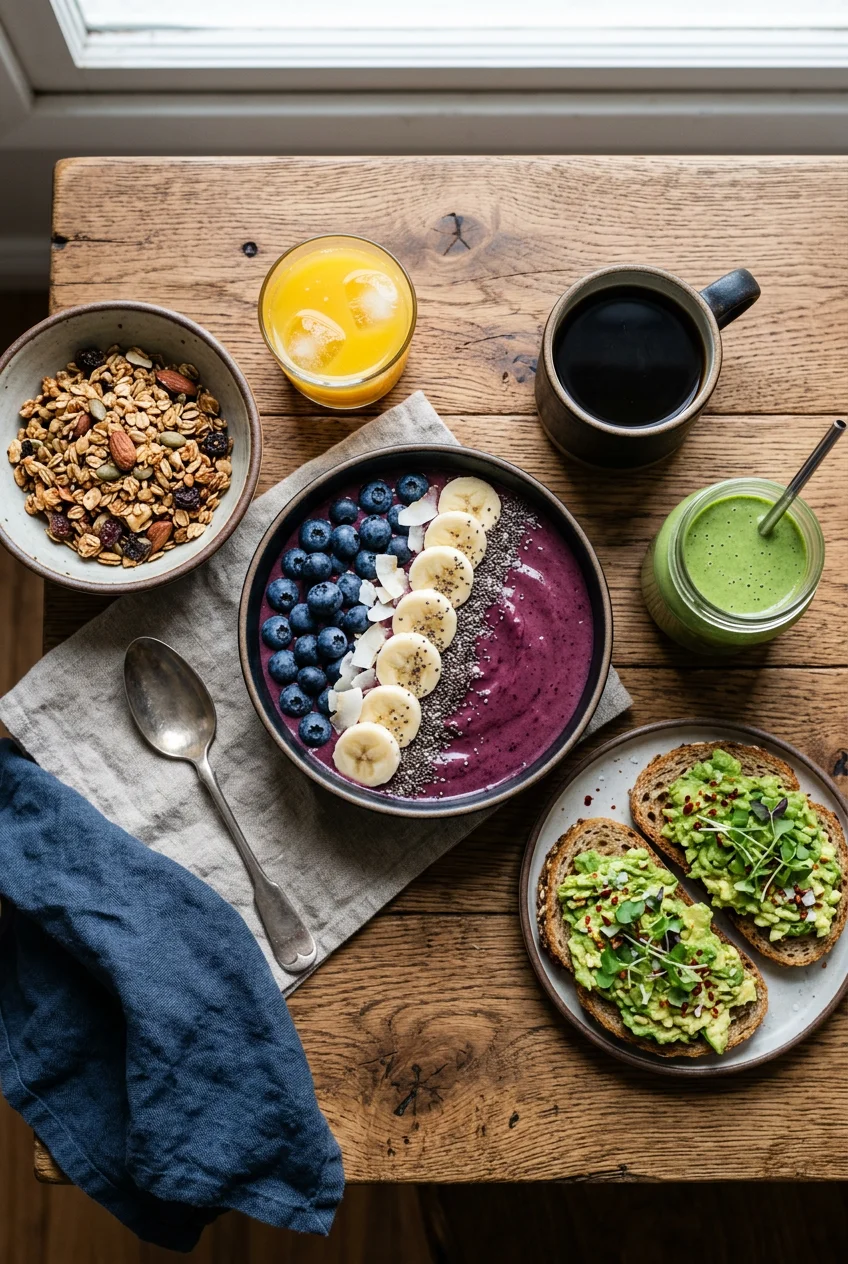
What’s Inside
- The 30-Minute Window: Fast-Digesting Carbs Are Your Pre Workout Breakfast Best Friend
- Add Smucker’s Peanut Butter for Sessions Over an Hour
- Timing the Full 2-3 Hour Meal Without Ruining Your Session
- Overnight Oats with Optimum Nutrition Whey for Sustained Energy
- Fage Greek Yogurt for a Quick Probiotic Boost
- Strategic Caffeine Intake for Peak Performance
- Beetroot Juice for Insane Endurance (Trending 2026)
- The Avocado Toast Mistake: Avoid High Fat and Fiber
- Liquid IV and Pre-Training Hydration Are Non-Negotiable
- Plain Rice Cakes with Jam for Quick Fuel
- The Simple Apple and Mini-Meal Approach for Early Risers
I was leaning against the cold metal of my truck in the Target parking lot last Tuesday, heavily regretting my life choices. I thought a massive bacon, egg, and cheese bagel was the ultimate pre-workout breakfast to fuel a heavy leg day. I was dead wrong. My stomach violently disagreed mid-squat, and I spent twenty minutes trying not to throw up. Finding the right pre-workout breakfast is a massive pain if you don’t know how your digestion actually works. I tried this wrong for months before figuring it out. You don’t need a full kitchen setup or an hour of prep time to get it right. You just need to know what fuels your muscles without sitting in your gut like a lead weight. Here’s exactly what you should be eating before you hit the gym, using stuff you can grab straight from the pantry.
1. The 30-Minute Window: Fast-Digesting Carbs Are Your Pre Workout Breakfast Best Friend

If you’re hitting the gym in less than an hour, stop overthinking your food. Most people get this wrong. They try to eat a giant bowl of oatmeal thirty minutes before a workout and wonder why they feel sluggish. If your workout is within an hour, you’ve got to prioritize fast-digesting carbohydrates. These give you quick energy without the stomach discomfort. I personally swear by just grabbing one medium banana. It gives you about 27 grams of carbs and costs roughly $0.25 at Kroger. It’s nature’s pre-workout. You peel it, eat it, and go. The texture is soft, it digests in minutes, and it doesn’t leave you feeling bloated when you strap on your lifting belt. I used to think I needed a massive meal to lift heavy. Learned that the hard way. I’d force down a huge plate of food and then feel completely lethargic during my warmups. Don’t do that. Your body needs blood in your muscles during a workout, not in your stomach trying to digest a heavy meal. Keep it light. A plain banana is sweet, easy on the gut, and gets the job done. You can also try two plain rice cakes. They have about 35 calories and only 0.4 grams of fiber per cake. You want low fiber right before training. Fiber slows down digestion, which is exactly what we don’t want when we need immediate fuel.
2. Add Smucker’s Peanut Butter for Sessions Over an Hour

If you’re planning to be in the gym for over 60 minutes, or you have a solid 1 to 3 hours before you start training, plain carbs won’t cut it. You’ll burn through that banana in forty minutes and crash during your working sets. I learned this the hard way during a brutal 90-minute back day. I was shaking by the time I got to rows. To fix this, you need to pair your fast-digesting carbs with a small amount of protein and fat. My go-to is taking that same medium banana and adding exactly 1 tablespoon of Smucker’s Natural Peanut Butter. A jar is about $4.50 at Walmart, making it roughly $0.30 per serving. You get about 4 grams of protein, which helps stabilize your blood sugar and prevents that mid-workout crash. You’ve got to get the natural stuff. The ingredient list should just be peanuts and salt. Skip the fat-free stuff. It tastes like wet cardboard and is loaded with weird fillers. The natural peanut butter has a thick, grainy texture and smells incredibly rich. Smearing a tablespoon on a banana gives you this perfect sweet and salty combination. It sits well in the stomach as long as you give it at least an hour to digest. Just don’t go crazy with the portion size. One tablespoon is plenty. Any more than that, and the fat content will slow down your digestion too much, putting you right back in the sluggish zone.
3. Timing the Full 2-3 Hour Meal Without Ruining Your Session

Sometimes you actually have time to eat a real meal before you train. If you wake up early enough on a Saturday, the 2 to 3 hour window is the optimal timing for a full meal. This is where you can actually sit down and eat a balanced plate of carbohydrates, protein, and a small amount of fat. I love making a massive bowl of Quaker Old Fashioned Oats with fresh berries, or a three-egg omelet with a slice of whole-grain toast. This timing allows for proper digestion and gives you a sustained energy release throughout your entire session. But you’ve got to respect the clock. I tried eating a massive three-egg omelet with avocado just 45 minutes before heavy deadlifts once. I spent the entire workout burping up eggs. It was disgusting. If you’re eating a full meal, you must give your body at least two full hours to process it. I usually grab my ingredients from Whole Foods for this specific meal. I’ll get their organic eggs (usually around $5.99 a dozen) and a fresh avocado. The smell of eggs cooking in a hot cast iron pan is the best way to wake up, but you’ve got to be disciplined with your timing. If you sleep in and only have an hour before the gym, skip the eggs. Revert back to the banana. You can’t force digestion. Listen to the clock, and your performance will drastically improve. You might also like: 20 Inspiring Journal Home Workout Ideas You Haven’t Thought Of

FitinOne Adjustable Folding Weight Bench for Home Gym
Honestly, FitinOne Adjustable Folding Weight Bench for Home Gym surprised me — sturdier than it looks in the photos, and over 774 buyers gave it 4.5 stars.
4. Overnight Oats with Optimum Nutrition Whey for Sustained Energy

If you hate waking up early to cook, overnight oats will save your life. You do the work while you’re sleeping. I prep a batch of Quaker Old Fashioned Oats the night before using water or unsweetened almond milk. The real trick is adding a scoop of protein powder. I exclusively use Optimum Nutrition Gold Standard 100% Whey in the Double Rich Chocolate flavor. I buy the massive 5-pound tub at Costco for around $65.00, which breaks down to about $1.20 per scoop. You mix it all together in a glass jar, throw it in the fridge, and wake up to a cold, thick, pudding-like breakfast. The texture is incredibly dense and satisfying. The oats soak up all the liquid and the whey powder, creating this rich, chocolatey base. I’ll usually toss in a handful of frozen blueberries. By morning, the berries thaw and release this dark purple juice into the oats. It looks awesome and tastes even better. This combination provides complex carbohydrates for a slow, sustained energy release throughout your workout. The whey gives you fast-acting protein to protect your muscles while you train. I eat this about 90 minutes before I train. It’s heavy enough to keep me full during a two-hour session, but the cold temperature makes it really easy to get down first thing in the morning when you aren’t super hungry yet. You might also like: 15 Brilliant Man Shed Home Gym Setup Ideas to Transform Your Space
5. Fage Greek Yogurt for a Quick Probiotic Boost

Sometimes you just want something cold and fast that isn’t a protein shake. That’s where Greek yogurt comes in. But you can’t just buy any yogurt. You need a 5.3 oz container of Fage Total 0% Milkfat Plain Greek Yogurt. I usually grab a stack of these at Trader Joe’s for about $1.50 each. This specific brand gives you 15 to 18 grams of protein per serving, and it has zero fat. This makes an absolutely excellent choice if you’re eating 30 to 60 minutes before your workout. It’s incredibly easy to digest and provides muscle-building protein along with gut-friendly probiotics. The texture of Fage is ridiculously thick. It practically sticks to the spoon. The plain version is very tart, almost sour, which I actually prefer first thing in the morning. It wakes up your taste buds. I’ll usually throw in a handful of fresh raspberries to cut the tartness. Do not buy the flavored yogurts. They’re absolutely packed with added sugars and artificial junk that will spike your blood sugar and make you crash hard. Stick to the plain stuff. It sits so light in your stomach. I’ve eaten a cup of this 30 minutes before doing heavy conditioning work, and I didn’t feel it sloshing around at all. It’s clean, efficient fuel. You might also like: 20 Creative Men Home Workout Ideas You’ll Want to Bookmark
6. Strategic Caffeine Intake for Peak Performance

Let’s talk about the original pre-workout supplement: black coffee. You don’t always need a neon-colored powder loaded with artificial sweeteners to get a good pump. I consume 1 to 2 cups of black coffee about 30 to 60 minutes before my workout. This provides roughly 100 to 200mg of caffeine. The International Society of Sports Nutrition recommends 3 to 6 mg per kg of body mass for performance enhancement, with peak effectiveness hitting around 30 to 75 minutes after you drink it. I buy huge bags of whole bean coffee from Sprouts for about $12.99. I grind the beans fresh every morning. The smell of freshly ground coffee at 5 AM is intoxicating. It immediately signals to my brain that it’s time to work. I drink it completely black. No cream, no sugar, no butter. Adding fats or heavy dairy to your coffee right before a workout will just upset your stomach. The bitter, acidic taste of black coffee is an acquired taste, but once you get used to it, you won’t want it any other way. It gives you this sharp, clean focus without the jittery crash you get from cheap energy drinks. Just make sure you aren’t drinking it on a completely empty stomach if you have a sensitive gut. Pair it with that banana or rice cake we talked about earlier.
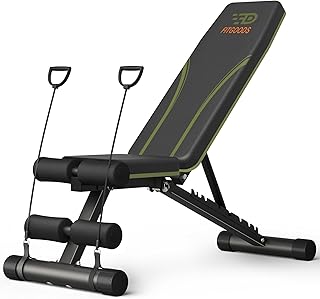
Fitgoods Adjustable Weight Bench for Home Gym
If you want something that just works, Fitgoods Adjustable Weight Bench for Home Gym is a safe bet (86 reviews, 4.5 stars).
7. Beetroot Juice for Insane Endurance (Trending 2026)

This one sounds weird, but you need to trust me. Beetroot juice is becoming massive in 2026 for a very good reason. Emerging research shows it drastically improves stamina, reduces perceived exertion, and aids recovery. It works by converting nitrates into nitric oxide in your body, which boosts blood flow and oxygen delivery to your muscles. I buy Biotta Organic Beetroot Juice. It runs about $7.99 for a 16 oz bottle at Whole Foods. You want to drink a dose that gives you 8.3 to 16.4 mmol of nitrate, which is roughly half the bottle, about 2 to 3 hours before you exercise. I’m not going to lie to you: it tastes like literal dirt. It has this very strong, sweet, earthy flavor that takes some getting used to. The liquid is this intense, dark crimson red. I usually hold my breath and chug it over the sink. But the pumps you get in the gym are absolutely unreal. Your veins will pop, and you’ll feel like you can do endless reps. It’s completely natural and doesn’t give you any central nervous system fatigue. I started using this before my heavy squat days, and the difference in my muscular endurance was shocking. Just don’t freak out when you go to the bathroom later. It turns everything red.
8. The Avocado Toast Mistake: Avoid High Fat and Fiber

We need to talk about what not to eat. A very common mistake is consuming meals rich in fat and fiber too close to a workout. I see people eating massive plates of avocado toast on thick sourdough bread right before they hit the gym. This is a terrible idea. Fat and fiber dramatically slow down your digestion. If you eat this stuff close to your training time, it will lead to severe gastrointestinal distress, bloating, and sluggishness. I used to buy those frozen avocado chunks from Target (about $4.50 a bag) and blend them into my pre-workout smoothies thinking I was being healthy. I felt like I was working out with a brick in my stomach. The fat literally just sat there, refusing to digest. When you start lifting, your body pulls blood away from your digestive tract and sends it to your working muscles. If you have a stomach full of slow-digesting fats and complex fibers, that food is just going to rot in your gut while you train. Save your avocado toast, your massive salads, and your heavy nut butters for your post-workout meal or dinner. Keep your pre-workout window strictly focused on easy, fast-digesting carbohydrates and lean proteins. You’ll feel so much lighter and more explosive.
9. Liquid IV and Pre-Training Hydration Are Non-Negotiable

You can eat the perfect meal, but if you’re dehydrated, your workout will be garbage. Hydration is completely non-negotiable. You need to begin hydrating well before you even step foot in the gym. I aim to drink 16 to 20 ounces of water 2 to 3 hours before exercise, and then another 8 to 10 ounces about 10 to 20 minutes prior. Proper hydration supports temperature control, stamina, and mental focus. If I’m doing a longer or incredibly intense session, plain water isn’t enough. I’ll use an electrolyte powder. I really like Liquid IV in the Lemon Lime flavor. I buy the big multi-packs at Costco for about $28.99, which makes it roughly $1.00 per serving. You tear open the little stick pack and dump the fine white powder into ice water. It dissolves instantly and turns the water slightly cloudy. The taste is very sweet and noticeably salty. That sodium is exactly what you need to maintain fluid balance and get a good muscle pump. Waking up dehydrated is the fastest way to ruin your strength. Your muscles are 70 percent water. If you try to lift heavy while dehydrated, your joints will ache and you’ll feel weak. Drink your water. Add your electrolytes. It makes a massive difference.

NICEPEOPLE Adjustable Weight Bench for Home Gym
A dependable everyday pick — NICEPEOPLE Adjustable Weight Bench for Home Gym pulls in 33 ratings at 4.5 stars. Not flashy, just solid.
10. Plain Rice Cakes with Jam for Quick Fuel

Here is a surprising tip that completely changed how I fuel for high-intensity days. If you need an immediate energy boost without feeling heavy at all, grab two plain rice cakes and top them with a thin layer of fruit jam. I use Smucker’s Strawberry Jam. A jar is about $3.99 at Walmart. This combination provides incredibly fast-digesting carbohydrates. It’s extremely low in fiber and has zero fat, making it the ideal meal for consumption 30 minutes before a brutal high-intensity interval session. The sensory experience of this snack is great. The plain rice cakes have this loud, styrofoam-like crunch, and they taste like nothing. But when you spread that bright red, sticky, sweet strawberry jam on top, it becomes delicious. The sugar hits your bloodstream almost instantly. I used to rely on expensive energy chews for this exact feeling, but rice cakes and jam do the exact same thing for a fraction of the price. Honestly, this changed how I view pre-workout snacks. You don’t need fancy supplements. You just need simple sugars that your body doesn’t have to work hard to break down. Just make sure you buy the plain rice cakes, not the flavored ones that have weird oils and artificial flavorings added to them.
11. The Simple Apple and Mini-Meal Approach for Early Risers

Don’t overlook the power of a simple apple. A medium Honeycrisp apple offers natural sugars and just enough fiber to provide a quick, sustained energy boost without wrecking your gut. I buy a bag of them at Kroger for about $5.99. They are crisp, loud when you bite into them, and super juicy. It’s a highly convenient, low-calorie option that can be eaten 30 to 60 minutes before a workout. This brings me to a crucial point about early morning training. I highly recommend avoiding fasted cardio if performance is your actual goal. While some people love training on an empty stomach, eating before you train objectively helps improve strength, endurance, and overall workout output. If you struggle to eat early in the morning, you’ve got to try the mini-meal approach. Keep it around 250 calories max. Half an apple, or a handful of dry cereal. Just get something in your system. I used to train completely fasted at 5 AM. I felt lightheaded, weak, and my lifts stalled for months. The second I started eating a small apple before I trained, my numbers shot up. You need to ensure your blood isn’t redirected to your digestive system mid-squat, but you also need fuel in the tank. A cold, crisp apple is the perfect compromise.
Finding the right pre-workout breakfast takes some trial and error. You’ve got to listen to your body because individual tolerance varies wildly. What works perfectly for my stomach might make you feel sluggish. Start with the banana or the rice cakes, see how you feel, and adjust from there. Pin this guide so you don’t forget these specific timing windows next time you’re prepping your gym bag.
Frequently Asked Questions
How long before my workout should I eat my pre workout breakfast?
If you’re eating fast-digesting carbs like a banana, 30 to 60 minutes is perfect. If you’re eating a full meal with protein and fat like oatmeal or eggs, you need to wait 2 to 3 hours to allow for proper digestion.
What is the best quick pre workout breakfast if I train at 5 AM?
Keep it light and under 250 calories. A medium apple, two plain rice cakes with jam, or half a banana are excellent choices. They provide fast energy without drawing blood away from your muscles to aid digestion.
Should I add peanut butter to my pre workout breakfast?
Only if your workout will last longer than an hour or you have at least 90 minutes to digest. Fat slows down digestion, which prevents mid-workout crashes but can cause bloating if eaten too close to your session.
Is it better to train fasted or eat a pre workout breakfast?
If your goal is maximum performance, strength, or endurance, eating a pre workout breakfast is always better. Fasted training can lead to weakness and stalled lifts. Even a small piece of fruit can drastically improve your output.
