What’s Inside
- The Core Chest Exercise For Men: Prioritize Full Range of Motion
- Optimize Your Incline Press Angle for Upper Chest
- Master the 45-Degree Elbow Tuck on Presses
- The Best Chest Exercise For Men Requires All Three Angles
- Utilize a Medium Grip Width for Balanced Activation
- Focus on the 8-12 Rep Range for Hypertrophy
- Engage Your Scapula and Core Before Unracking
- Invest in Adjustable Dumbbells for Home Workouts
- Incorporate Cable Flies for Constant Tension
- Control the Eccentric Phase of Movements
I spent three years stuck at a 185-pound bench press, convinced I was doing the right chest workout for men. I remember lying on a sweat-stained bench at a crowded LA Fitness last Tuesday, smelling stale chalk and cheap body spray, as the barbell pinned my ribcage. I had to do the embarrassing roll of shame down to my hips while a teenager in Crocs watched me struggle. I’d just bought a massive $22.99 pack of chicken breasts at Costco, thinking that eating 8 oz of protein per meal alone would magically fix my flat chest. It didn’t. You can’t just eat your way to a bigger chest if your lifting mechanics are trash. After taking a step back, reading up on actual hypertrophy science, and overhauling my routine, I finally saw real growth. If you’re tired of spinning your wheels and dealing with shoulder pain, I’m going to break down exactly what works. These ten specific adjustments to your lifting routine will get you noticeable results in 30 days.
1. The Core Chest Exercise For Men: Prioritize Full Range of Motion

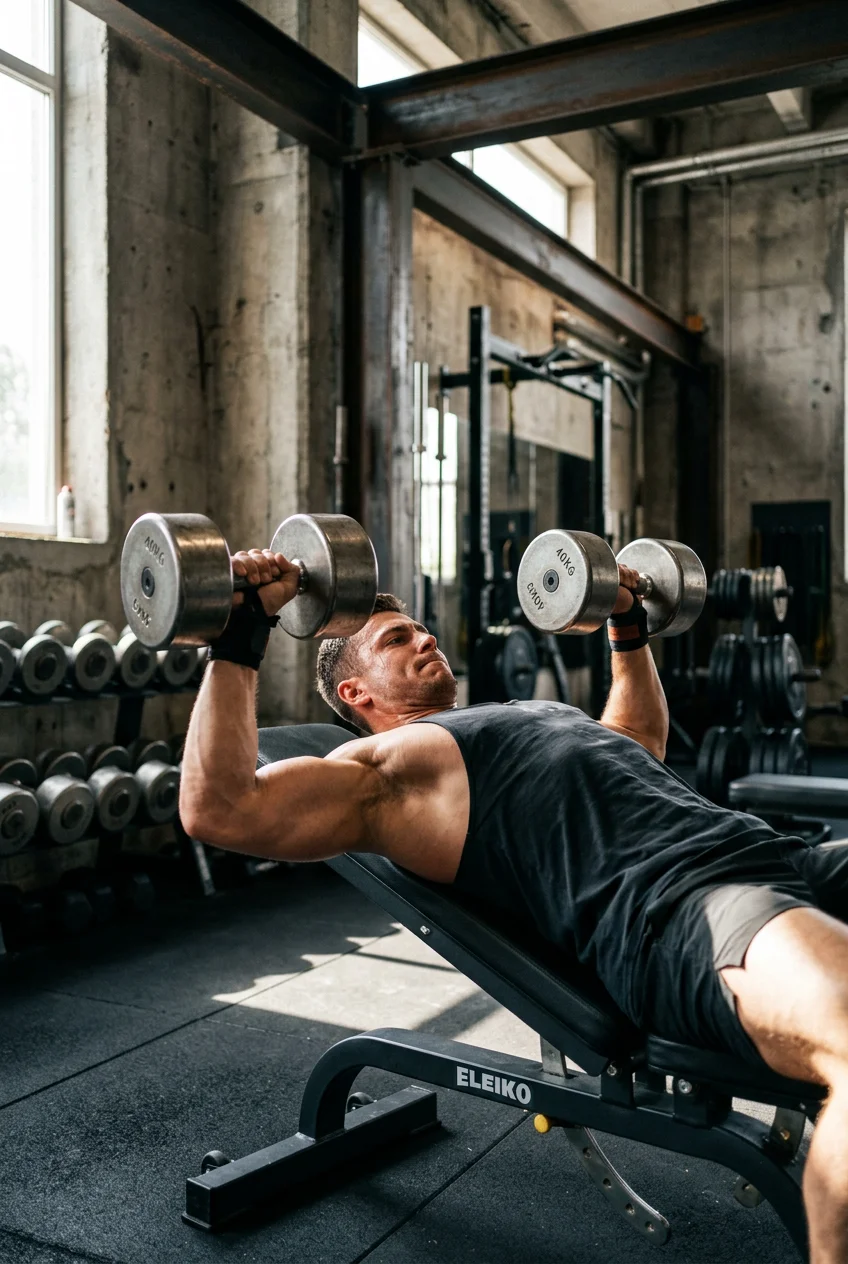
Most guys in the gym load up the bar with plates they can’t actually lift. I did this for months. I’d slap 225 lbs on my Rogue Ohio Power Bar ($325.00) and lower the weight maybe four inches before pressing it back up. My triceps grew a bit, but my chest stayed flat. Expert Dr. Mike Israetel frequently emphasizes that full range of motion beats heavy weight for actual chest development. For barbell presses, the bar needs to touch your chest. You should feel the cold steel resting against your t-shirt for a split second. For dumbbell presses, let the weights travel deeper than chest level. Go just outside your shoulder width to maximize the stretch at the bottom. It feels uncomfortable at first. Your ego takes a hit when you have to drop from 80 lb dumbbells down to 50 lb dumbbells just to reach the proper depth. But that deep, tearing stretch at the bottom of the movement is where the actual growth happens. I bought a dense $14.99 foam roller from Target to crack my upper back before pressing, which helped my thoracic mobility enough to reach full depth safely. Learned that the hard way. If you aren’t feeling a deep stretch in your armpits at the bottom of the rep, you’re stopping too short. Drop the weight and go deeper.
2. Optimize Your Incline Press Angle for Upper Chest

For years, I set my incline bench to a steep 45-degree angle because that’s what the highest notch looked like it was made for. I ended up with massive front delts and persistent shoulder pain that kept me awake at night. To target the upper chest, or the clavicular head, without over-engaging the shoulders, set your incline bench to a 30-35 degree angle. Research indicates this specific angle maximizes upper pec activation while minimizing anterior deltoid involvement. I use the REP Fitness AB-3000 adjustable bench ($319.99) in my garage gym because it has a dedicated 30-degree notch. The first time I lowered the angle, the movement felt different. Instead of my front shoulders burning with lactic acid, the tension sat squarely under my collarbones. It’s a subtle mechanical shift, but it changes the dynamics of the lift. I usually drink a $2.50 Celsius energy drink from Kroger right before my heavy incline days because this angle requires focus. Keep your chest proud and drive the weight straight up toward the ceiling. If you’re feeling a deep burn in your shoulders during the set, your bench is too high. Lower it one notch and try again.
3. Master the 45-Degree Elbow Tuck on Presses

A mistake I see constantly is guys flaring their elbows out at a harsh 90-degree angle during bench presses. I did this for a long time because I thought a wider flare meant more chest activation. Instead, it just ground my rotator cuffs into dust. Flaring your elbows puts unnecessary stress on the shoulder joints. Instead, maintain a 45-degree upper arm angle relative to your torso. This protects your shoulders and better engages your lats, allowing for more reps and increased chest size over time. I actually bought the original Sling Shot by Mark Bell ($60.00) specifically to train this motor pattern. The thick red elastic band forces your elbows into the correct tucked position as you lower the bar. Wearing it feels like a tight, aggressive hug around your lower biceps. Once I took the band off after a few weeks, my body naturally remembered the 45-degree groove. You don’t want your elbows glued to your ribs like you’re doing a close-grip tricep extension, but they shouldn’t be parallel to the bar either. Find that sweet spot. I practice this tuck even when I’m just doing warm-up push-ups on the rough gym carpet. It saves your joints and builds a thicker lower chest.

Trideer Exercise Ball for Yoga, Pilates & Fitness
Trideer Exercise Ball for Yoga has been one of the most consistently praised picks in this category. 529 reviewers averaged 4.5/5.
4. The Best Chest Exercise For Men Requires All Three Angles

You can’t just flat bench press and expect a fully developed chest. I tried that in college. I ended up looking like I had small, droopy pecs because I neglected the upper and outer portions of the muscle. For comprehensive development, your weekly routine must include horizontal pressing, incline pressing, and isolation movements. Horizontal work builds overall mass and thickness. Incline work fills out the upper shelf near your collarbone. Isolation movements like flyes carve out the inner chest and provide a deep stretch without causing excessive tricep fatigue. I finally invested in a Titan Fitness Plate-Loaded Cable Crossover ($300.00) for my garage gym just to hit those isolation angles properly. The smooth glide of the cables lets me focus on the squeeze. A good routine might look like flat barbell bench for heavy sets, incline dumbbell press for volume, and cable flyes to finish. I track all my sets in a cheap $3.99 spiral notebook I grabbed at Walmart. Writing it down ensures I’m hitting all three categories every week without skipping anything. If you skip the isolation work because you’re tired after pressing, you’re leaving muscle on the table. Force yourself to do the flyes. You might also like: 12 Abs And Cardio Workout Worth Trying
5. Utilize a Medium Grip Width for Balanced Activation

Grip width is something most guys never measure. They just grab the bar wherever it feels natural, which is usually way too wide. I used to put my index fingers on the outer rings of the barbell knurling. It felt powerful until my AC joint started clicking loudly every time I put on a tight t-shirt. A medium grip, approximately 1.4 times your shoulder width, is optimal for maximizing muscle activation in the pectoralis major. It also allows for maximum force while drastically reducing the risk of shoulder injuries. While a wider grip can technically emphasize the outer chest, it decreases triceps activation and makes your shoulders vulnerable at the bottom of the rep. I use Liquid Grip chalk ($14.99) to mark my exact hand placement on the bar so I don’t drift wider as the sets get heavier and fatigue sets in. The strong alcohol smell of the liquid chalk wakes me up before a heavy set. Trust me. Measure your shoulder width, multiply by 1.4, and find that exact spot. It will feel a bit narrow at first. Your triceps will have to work harder to lock out the weight. But after two weeks, your chest will take over the movement properly. You might also like: 9 Gym Poses Women Worth Trying
6. Focus on the 8-12 Rep Range for Hypertrophy

I spent my early twenties running strict 5×5 strength programs. I got decent at moving heavy weight, but I didn’t look like I lifted. My chest was dense but flat in a t-shirt. For actual muscle growth, aim for 8-12 repetitions for compound chest exercises and 10-20 repetitions for isolation movements. You also need to take these sets close to failure. This moderate rep range offers an excellent balance between stimulus, fatigue, and injury risk. Doing sets of five reps just doesn’t provide enough time under tension to trigger significant hypertrophy in the pecs. I use a basic Gymboss Interval Timer ($19.99) clipped to my gym shorts to keep my rest periods strictly at 90 seconds. The loud beeping keeps me accountable and keeps the metabolic stress high. When you’re pushing for that 11th or 12th rep, your muscles should be burning. If you can easily hit 12 reps with perfect form, the weight is too light. If you fail at 6 reps, it’s too heavy. I usually eat a Trader Joe’s barebells protein bar ($1.99) right after these high-volume workouts because the massive chest pump leaves me depleted. Chase the pump, not just the heavy numbers. You might also like: 10 Gym Motivation Wallpapers for Every Budget

Trideer Exercise Ball for Yoga, Pilates & Fitness
Trideer Exercise Ball for Yoga punches above its price — 529 buyers rated it 4.5 stars. I would buy it again.
7. Engage Your Scapula and Core Before Unracking

A bench press isn’t just an upper body movement. If your legs are dancing around and your back is flat against the pad, you’re losing pressing power. I learned this when I slipped on a slick vinyl bench at a hotel gym and nearly dropped 135 lbs on my teeth. Before unracking the bar, retract and depress your shoulder blades. Think about pinching a pencil between your shoulder blades and pulling them down toward your back pockets. This creates tension across your torso and gives you a stable base to press from. Additionally, maintain a tight core and drive your feet aggressively into the floor. This leg drive stabilizes your body and transfers force up through your torso into the bar. I wear Nike Romaleos 4 weightlifting shoes ($200.00) on heavy bench days because the solid heel and grippy rubber sole prevent my feet from sliding backward on the dusty gym floor. Plant your feet, squeeze your glutes, and arch your upper back slightly. The bench press should feel like an intense full-body hold before the bar even leaves the J-hooks.
8. Invest in Adjustable Dumbbells for Home Workouts

If you work out at home, standard hex dumbbells take up too much floor space. I used to trip over my scattered 20 lb and 30 lb pairs in my garage constantly. For versatility and space-saving, adjustable dumbbells are the smartest investment you can make. You need the ability to quickly jump from heavy flat presses to lighter flyes without losing your pump. I bought the Bowflex SelectTech 552 dumbbells ($429.00 per pair) three years ago, and they adjust from 5 to 52.5 lbs with a simple dial turn. The plastic casing clanks a bit when you press, which is annoying, but the space savings are worth the noise. If you have a bigger budget, the NÜOBELL sets or the REP Fitness QuickDraw (around $600.00 per set) offer a more traditional knurled steel handle feel. Being able to do heavy flat presses, drop the weight by 15 lbs in two seconds, and immediately do incline presses is crucial for hitting that 30-day growth goal. I usually wipe mine down with a damp paper towel and a dab of Dawn dish soap (about $3.99 at Sprouts) because the grip handles get sweaty and slick during high-rep summer sets.
9. Incorporate Cable Flies for Constant Tension

The standard pec deck machine at most commercial gyms feels terrible on my shoulders. The fixed path forces your arms into an unnatural arc that grinds the joints. I ditched the machine entirely and switched to cable flies. Cable flies offer a greater range of motion and allow you to adjust the pulley angles to target different parts of the chest perfectly. Most importantly, cables provide constant tension throughout the movement. When you use dumbbells for flies, there is zero tension at the top of the rep when the weights are stacked over your joints. With cables, your pecs have to fire constantly just to keep your hands together. This leads to significantly greater pectoral muscle activation. I use a Spud Inc Econo Triceps and Lat Pulley system ($119.00) hooked to the top of my squat rack for these. The nylon straps feel smooth, and I can cross my wrists at the end of the movement for an intense peak contraction. After a heavy session of cable flies, I usually hit the Whole Foods hot bar for a $11.99/lb serving of roasted chicken and sweet potatoes. The constant tension from cables creates micro-tears in the muscle, so you need serious fuel to recover.

Retrospec Luna Exercise Ball with Pump
Retrospec Luna Exercise Ball with Pump – Anti-Burst Fitness Equipment has been one of the most consistently praised picks in this category. 18 reviewers averaged 4.5/5.
10. Control the Eccentric Phase of Movements

The biggest mistake I ever made was dropping the heavy barbell to my chest and bouncing it off my sternum to get momentum. I bruised my ribs badly doing this last October. Letting gravity do the work on the way down robs you of half the exercise. You must control the eccentric, or lowering, phase. Pausing briefly at the bottom and controlling the descent for a strict 2-3 seconds prevents injury, improves your mind-muscle connection, and increases your time under tension. The eccentric phase is where the most muscle damage occurs, which triggers new growth. Try loading 70% of your max on the bar. Lower it slowly while counting to three in your head, pause on your shirt for one full second, and explode up. Your chest will be on fire by rep five. No exaggeration. I wear Rehband 7mm Elbow Sleeves ($45.00 each) during these slow eccentrics because the prolonged tension can make my elbow tendons ache slightly. It takes mental discipline to lower the weight slowly when you’re fatigued. But if you rush the negative phase, you’re just wasting your time on the bench.
Building a bigger chest doesn’t require circus-style movements. It requires strict form, proper angles, and leaving your ego at the door. I tried doing it the wrong way for years, bouncing heavy bars off my chest and flaring my elbows until my joints screamed in pain. Once I slowed down, fixed my incline angle, and started eating enough to actually grow, my chest finally responded. Stop rushing the process. Pick a weight you can control, hit the 8-12 rep range hard, and focus on the deep stretch at the bottom of every single rep. If you implement these ten adjustments during your next chest day, you’ll feel a massive difference immediately. Save this routine, pin it to your fitness board for your next gym session, and let’s get to work.
Frequently Asked Questions
How often should men train their chest for maximum growth?
For optimal results, train your chest two times per week. This frequency allows for sufficient recovery while maximizing muscle protein synthesis. Ensure you leave at least 48 hours of rest between chest sessions to prevent overtraining.
Is the flat bench press enough for a complete chest?
No, relying solely on the flat bench press will leave your upper and inner chest underdeveloped. You must include incline presses for the upper chest and isolation movements like cable flies to achieve a balanced, full look.
Why do my shoulders hurt during chest exercises?
Shoulder pain usually stems from flaring your elbows too wide or using an incline angle that is too steep. Tucking your elbows at a 45-degree angle and lowering your incline bench to 30 degrees will drastically reduce joint stress.
Can I build a bigger chest using only dumbbells?
Absolutely. Dumbbells actually offer a better range of motion than a barbell, allowing for a deeper stretch at the bottom of the movement. Adjustable dumbbells are perfect for home workouts and can yield massive chest growth if progressive overload is applied.
