What’s Inside
- Prioritize Compound Glute Movements in Your Slim Thick Workouts
- Integrate Unilateral Exercises for Symmetry
- Optimize Protein Intake for Muscle Growth
- Master the Mind-Muscle Connection
- Glute Activation Warm-ups Are Essential
- Utilize Fabric Resistance Bands for Enhanced Work
- Boost Performance with Creatine Monohydrate
- Prioritize Adequate Sleep for Recovery
- Stay Consistently Hydrated and Track Progress
- Incorporate Waist-Slimming Core Exercises
- Avoid Excessive Cardio and Embrace Functional Strength
Last Tuesday at Target, I watched a client try to buy her way into a new body with a cart full of detox teas and a $12 flimsy plastic stepper. I had to gently explain that effective slim thick workouts don’t come in a cardboard box. Building a solid lower body while maintaining a tight core requires heavy lifting, precise nutrition, and a lot of sweat. When I first started training women who wanted this specific aesthetic, I tried this wrong for months before figuring it out. I kept pushing endless cardio circuits, which just flattened them out completely. You can’t just jump around your living room and expect to build serious muscle tissue. Trust me on this.
To get that specific shape, you have to approach your training like an athlete. You need to feed the muscle, lift with intent, and stop wasting time on exercises that don’t yield a high return on investment. I’m going to walk you through exactly how to structure your routine, the gear that actually matters, and the mistakes you need to stop making right now. Let’s get into the mechanics of how this actually works.
1. Prioritize Compound Glute Movements in Your Slim Thick Workouts

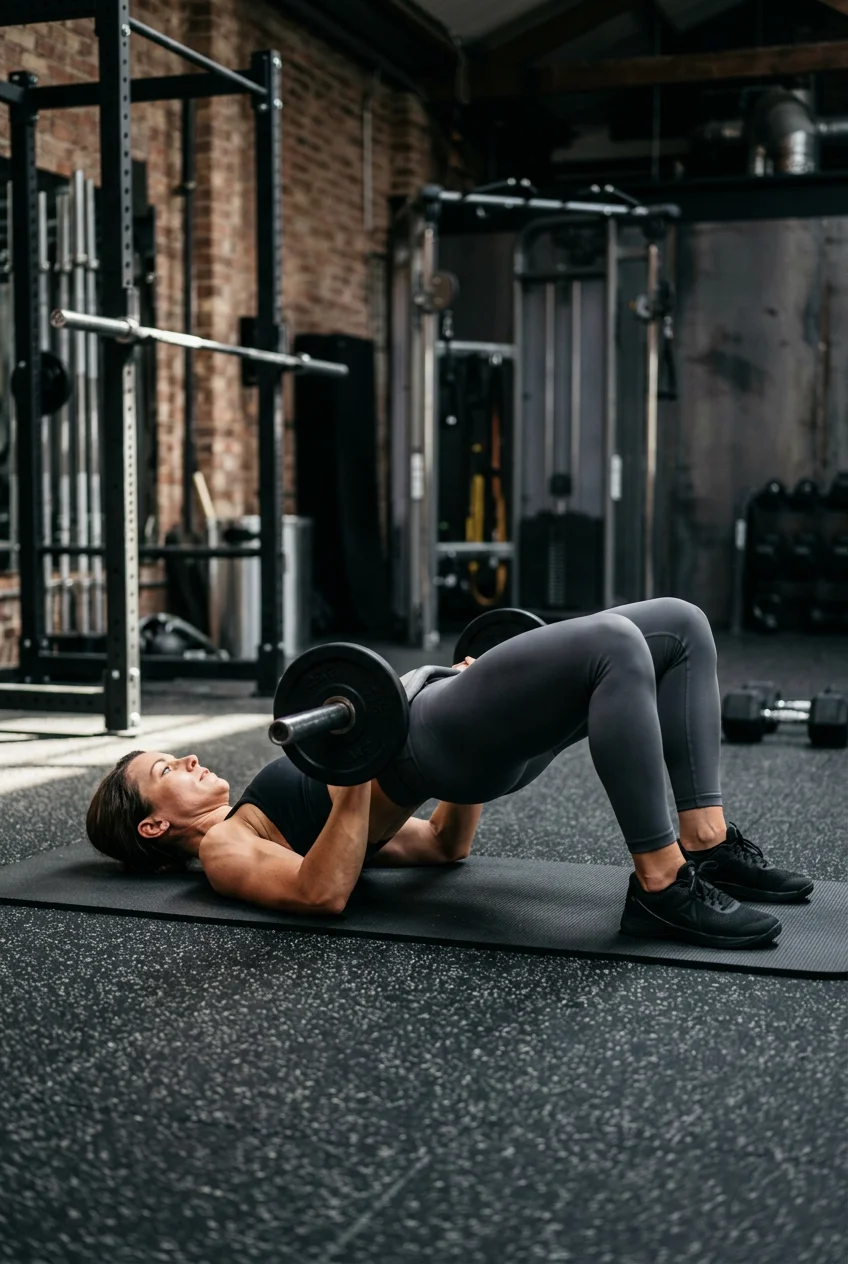
If you want to build serious size in your lower body, you have to prioritize compound glute movements with progressive overload. You can’t build a house with a screwdriver, and you can’t build glutes with just bodyweight kickbacks. You need to focus on exercises that work multiple glute muscles simultaneously. Incorporate barbell hip thrusts, Romanian deadlifts (RDLs), and Bulgarian split squats into your routine two to three times per week. For hip thrusts and RDLs, aim for 3 to 4 sets of 8 to 12 reps.
To make this work, you need the right equipment. I use the Iron Bull Advanced Squat Pad, which costs $24.95 on Amazon. The thick, high-density foam prevents the heavy barbell from bruising your hip bones. The rough velcro closure ensures it won’t slip mid-set. I learned that the hard way. I spent months using a rolled-up yoga mat that slipped and left me with massive purple bruises across my pelvis.
Progressive overload is the actual secret here. You have to gradually increase the weight, reps, sets, or time under tension over time. If you lift the exact same 45-pound bar every week, your body has zero reason to grow. Add 5 pounds to the bar every two weeks. The smell of the chalk, the rough knurling of the bar against your hands, and the deep muscle fatigue are signs you’re doing it right.
2. Integrate Unilateral Exercises for Symmetry

You have to include single-leg movements like Bulgarian split squats or single-leg RDLs if you want a balanced physique. These exercises help address muscle imbalances and improve overall stability. Most people have one leg that’s significantly stronger than the other. If you only do bilateral movements like standard squats, your dominant leg will take over, leaving you with lopsided muscle development.
For Bulgarian split squats, I recommend performing 3 sets of 10 to 15 reps per leg. You don’t need a massive barbell for these. I bought a pair of All in Motion 15-pound dumbbells at Target last month for $16.99 each. The hexagonal rubber heads prevent them from rolling across the gym floor, and the textured metal handles give you a solid grip when your hands get sweaty.
I have a vivid memory of falling over sideways while doing Bulgarians on a slick vinyl gym bench because my back foot cramped. A pro tip is to place the top of your foot flat on the bench rather than flexing your toes, which reduces the stretch on your quad and keeps the tension squarely on your working glute. The sharp, localized burning sensation in your trailing leg is completely normal, but you have to push through it to see results.
3. Optimize Protein Intake for Muscle Growth

You can lift heavy all day, but if you don’t feed your muscles, they won’t grow. You need to aim for a daily protein intake of 1.6 to 2.0 grams per kilogram of body weight to support muscle protein synthesis and recovery. For a 60kg (132-pound) individual, this translates to 96 to 120 grams of protein daily. Hitting this target with whole foods alone can feel like a full-time job.
I rely heavily on protein powder to bridge the gap. I grab the 5.64-pound bag of Optimum Nutrition Gold Standard 100% Whey at Costco for $64.99. It breaks down to about $2.16 per serving. I mix 1 scoop (31 grams) with 8 ounces of cold water or almond milk. Skip the fat-free milk for mixing. It tastes like wet cardboard and leaves a chalky film on the roof of your mouth.
Common mistake: people dump the powder into a wet shaker bottle first, resulting in a concrete-like sludge stuck to the bottom. Always pour your 8 ounces of liquid first, then add the powder on top. The fine, dusty texture of the whey mixes perfectly this way. I’ve used this specific brand for two years now because it doesn’t cause the extreme bloating I get from cheaper, filler-heavy proteins.

FLYBIRD WB2 Weight Bench
FLYBIRD WB2 Weight Bench has been one of the most consistently praised picks in this category. 215 reviewers averaged 4.5/5.
4. Master the Mind-Muscle Connection

Mindless lifting won’t get you anywhere. You have to consciously focus on squeezing and engaging your glutes during each repetition. Research indicates that this internal focus enhances muscle activation and leads to greater gains. If you just drop down and bounce out of a squat, your quads and lower back will take over the movement entirely. You might also like: 20 Beautiful Home Gym Setup Ideas That Changed Everything
For exercises like hip thrusts, hold the peak contraction at the top of the movement for 1 to 2 seconds to maximize glute engagement. You need a stable base to push from. I wear standard Converse Chuck Taylors, which cost $65. The flat, hard rubber sole helps me drive my heels directly into the floor. Running shoes with thick, squishy foam soles absorb your power and make your ankles wobble during heavy lifts. You might also like: 15 Creative Workout Motivation Tips You Haven’t Thought Of
Last week, I had a client close her eyes during her working sets. The visual isolation helped her feel the sharp, deep contraction in her glute medius instead of just moving the weight from point A to point B. You should feel a distinct, cramp-like squeeze at the top of every single rep. If you don’t feel it, drop the weight by 10 pounds and slow your tempo down. You might also like: 10 Gym Motivation Wallpapers for Every Budget
5. Glute Activation Warm-ups Are Essential

Before you even touch a barbell, you need to perform 5 to 10 minutes of glute activation exercises using resistance bands. This process wakes up the glutes, preventing other muscles like your hamstrings or lower back from compensating during compound lifts. I used to skip this step entirely, and I paid for it with chronic lower back stiffness every time I deadlifted.
Your warm-up should include banded glute bridges, clam shells, and fire hydrants. Perform 2 to 3 sets of 10 to 15 reps for each movement. I used to buy cheap rubber resistance bands at Kroger for $8.99. That was a huge mistake. The thin rubber rolled up my thighs, pulled my leg hair, and eventually snapped with a loud crack right in the middle of a crowded gym.
You need proper tools for this. The goal is to create a mild burning sensation in the upper glutes before you start your heavy working sets. You should feel a light sweat breaking on your forehead by the time you finish the activation circuit. This isn’t a full workout, but it’s the mandatory prep work that makes your heavy lifts actually target the right muscle groups.
6. Utilize Fabric Resistance Bands for Enhanced Work

Resistance bands are excellent for increasing tension and glute activation, especially in movements like glute kickbacks, hip abductions, and banded squats. But as I mentioned, the material matters immensely. You need to invest in a set of fabric resistance bands. They’re vastly superior for comfort and durability, as they’re completely immune to rolling or snapping.
I use the BC Strength Glute Loops, which start around $20. They have a thick, woven cotton-latex texture that grips your leggings without sliding down. If you want a full set with different resistance levels, the Gymreapers Hip Bands cost $39.99 for a pack of three. The heavy resistance band in this pack provides an incredibly stiff, unforgiving tension that forces your abductors to work overtime.
I keep the medium resistance band in my gym bag permanently. I use it for seated hip abductions at the end of my leg days. Sit on the edge of a bench, wrap the band just above your knees, and push your knees outward against the thick fabric for 3 sets of 20 reps. The localized burn is intense, and the fabric band distributes the pressure evenly across your thighs instead of digging in like a rubber wire.
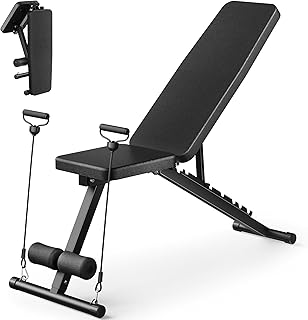
Adjustable Weight Bench for Home Gym
Honestly, Adjustable Weight Bench for Home Gym surprised me — sturdier than it looks in the photos, and over 565 buyers gave it 4.5 stars.
7. Boost Performance with Creatine Monohydrate

If you aren’t taking creatine, you’re leaving progress on the table. You should supplement with 3 to 5 grams of creatine monohydrate daily. This heavily researched supplement improves strength, power output, and muscle growth, especially during high-intensity training. It pulls water into your muscle cells, making them look fuller and helping them recover faster between sets.
I pick up the Orgain Monohydrate Micronized Powder at Sprouts for $22.99. It’s budget-friendly and Informed Choice certified. If you want a premium option, Thorne Research Creatine is NSF Certified for Sport and costs $52 for 30 servings. I mix 5 grams (about one rounded teaspoon) into 12 ounces of room-temperature water every morning.
A common mistake is dumping the powder directly into your mouth or using too little water. Creatine has a gritty, sand-like texture that doesn’t dissolve well in ice-cold liquids. I tried dry-scooping it once last year and nearly choked on the dry, chalky dust. Mix it properly with a spoon until the water turns slightly cloudy. You won’t feel a sudden rush of energy like a pre-workout, but after two weeks of consistent use, you’ll notice you can push out two extra reps on your heaviest squats.
8. Prioritize Adequate Sleep for Recovery

You build muscle in your bed, not in the gym. You have to aim for 7 to 9 hours of quality sleep per night. During deep sleep, your body releases human growth hormone (HGH), which is crucial for muscle repair and tissue regeneration. Consistent sleep is just as vital as your training and nutrition for muscle development. If you sleep four hours a night, your cortisol levels spike, prompting your body to store fat around your midsection.
To help me wind down, I use Natural Vitality Calm Magnesium Powder. I buy the 8-ounce tub at Whole Foods for $24.99. I mix 2 teaspoons into 4 ounces of hot water about an hour before bed. It makes a satisfying fizzing sound when the hot water hits the powder, and the tart raspberry lemon flavor is actually pretty decent.
I used to stare at my phone until 1 AM, wondering why my legs were perpetually sore and my lifts were stalling. The blue light suppresses melatonin production completely. Now, I shut down all screens by 9:30 PM. The physical sensation of waking up fully recovered, without that heavy, dragging feeling in your quads, is worth giving up late-night scrolling.
9. Stay Consistently Hydrated and Track Progress

Proper hydration is essential for nutrient transport, muscle function, and recovery, especially since muscle tissue is about 70 to 75 percent water. Women need to drink at least 91 to 125 ounces (2.7 to 3.7 liters) of water daily, and even more if you’re sweating heavily during workouts. Dehydration causes muscle cramps and makes your fatigue levels skyrocket mid-workout.
I carry a Yeti Rambler 36 oz water bottle, which costs $50. The heavy stainless steel construction means it survives being dropped on concrete gym floors, and it keeps water ice-cold for 24 hours. I drink three of these full bottles every single day. The cold, metallic rim and the shock of ice water hitting your throat between heavy sets is the best way to reset your nervous system.
You also need to track your progress beyond the scale. The scale is a liar when you’re building muscle and losing fat simultaneously. Take progress photos in the same lighting every week, and use a soft fabric tape measure to track your waist, hips, and thighs. I bought a standard Singer sewing tape measure for $3.99 at Joann Fabrics. Tracking the actual inches gives you a factual view of your body recomposition.

FLYBIRD WB3 Weight Bench Fits up to 6’5”
If you want something that just works, FLYBIRD WB3 Weight Bench Fits up to 6’5” is a safe bet (16 reviews, 4.5 stars).
10. Incorporate Waist-Slimming Core Exercises

While spot reduction isn’t biologically possible, strengthening your core can create the illusion of a smaller waist by pulling everything in tight. You need to include exercises like side planks, Russian twists, and bicycle crunches. These target the obliques and deep core muscles without adding bulky width to your midsection. I recommend holding side planks for 30 to 60 seconds per side.
For Russian twists, perform 3 sets of 15 to 20 reps per side using a light medicine ball. I use the SPRI 8-pound medicine ball, which I found at Walmart for $34.98. The dimpled, textured rubber surface gives you a solid grip even when your hands are slick with sweat. Keep your chest up and follow the ball with your eyes to ensure full rotation of your torso.
Don’t neglect your pelvic floor, either. A strong pelvic floor contributes to core stability and improves your posture, which indirectly supports a slim thick aesthetic. Incorporate Kegels by doing 10 to 15 contractions, holding for 5 seconds each, for 3 sets. I tried doing heavy core work without bracing my pelvic floor early in my lifting days, and it led to lower back strain that kept me out of the gym for a week. No exaggeration.
11. Avoid Excessive Cardio and Embrace Functional Strength

Overdoing long-duration, steady-state cardio will actively hinder your muscle growth. If you spend an hour on the elliptical every day, your body will break down muscle tissue for energy. Instead, incorporate 2 to 3 sessions of High-Intensity Interval Training (HIIT) per week, lasting just 10 to 30 minutes. This burns calories efficiently while preserving the muscle mass you worked so hard to build.
A major trend for 2026 is moving away from isolated machine work and embracing functional strength training. Incorporate movements that mimic real-world activities, like heavy kettlebell swings or loaded carries. I practice farmer’s carries every Friday. It translates perfectly to real life. I noticed the difference last week while carrying $45 worth of heavy glass jars and produce in flimsy paper bags from Trader Joe’s across a massive parking lot without losing my grip.
For specific glute isolation exercises like donkey kicks or straight leg raises, ankle weights add effective resistance without needing a cable machine. I use the Sportneer Adjustable Ankle Weights, which go from 2 to 10 pounds and cost $29.99 on Amazon. The soft neoprene material doesn’t chafe your ankles, and the heavy sandbags slip in and out easily so you can adjust the weight on the fly.
Building a slim thick physique takes serious dedication, heavy lifting, and eating enough protein to fuel the process. Stop buying into quick fixes and start executing the basics with ruthless consistency. If you found this breakdown helpful, pin this article to your fitness board so you can pull up these exact measurements and rep ranges during your next gym session.
Frequently Asked Questions
How often should I do slim thick workouts?
You should aim for 2 to 3 dedicated lower body days per week. This frequency allows for sufficient progressive overload on compound movements like hip thrusts and squats, while giving your muscles 48 hours to recover and grow between sessions.
Can I get a slim thick body without lifting heavy weights?
No, significant muscle growth requires progressive overload. Bodyweight exercises will tone existing muscle, but to build the size required for a slim thick aesthetic, you must lift heavy weights using barbells, dumbbells, or kettlebells to force tissue adaptation.
How much protein do I need for slim thick workouts?
Aim for 1.6 to 2.0 grams of protein per kilogram of body weight daily. For a 130-pound person, this is roughly 95 to 120 grams of protein. Consistent protein intake is mandatory for repairing and growing the glute muscles after heavy training.
Does cardio ruin a slim thick physique?
Long-duration, steady-state cardio can break down muscle tissue if overdone. Instead, limit cardio to 2 to 3 short High-Intensity Interval Training (HIIT) sessions per week. This burns fat efficiently while preserving the lower body muscle mass you’ve built.
