What’s Inside
- The Viral 12-3-30 Incline Treadmill Workout Formula
- Let Go Of The Handrails To Actually Work Your Core
- Target Glutes With The 10 To 12 Percent Sweet Spot
- The Mandatory Zero Percent Warm-Up Phase
- Using Negative Incline For Downhill Conditioning
- Add Light Rucking For A Massive Calorie Burn
- Tracking Heart Rate Zones During An Incline Treadmill Workout
- Lateral Walks For Better Hip Mobility
- Leveraging Auto-Incline Features On Smart Machines
Last Tuesday, I stepped onto the gym floor smelling the usual mix of rubber mats and sweat, ready to crush an incline treadmill workout. I set the belt to a steep 15 percent grade, cranked the speed to 4.5 mph, and immediately flew off the back of the deck. I took a nasty scrape to my left shin and bruised my ego in front of the morning cardio crowd. You think you’re ready for an intense hill climb, but gravity and a fast-moving belt have other plans. I walked out bleeding slightly and had to buy a $4.99 tube of Neosporin at Target on my way home. That embarrassing failure forced me to rethink how I actually program hill walks. Learned that the hard way.
Most people jump on a machine, press the quick-start button, and ignore the mechanics of walking uphill. They go too fast, set the angle too high, or hang onto the console like they’re dangling from a cliff. I spent the next few months dialing in the exact speeds, angles, and techniques that build muscle without destroying your joints. Let’s break down the nine specific methods that turn a boring indoor walk into a brutal lower-body session.
1. The Viral 12-3-30 Incline Treadmill Workout Formula

You’ve probably seen the 12-3-30 routine online. It’s a popular fitness format in 2026 for a simple reason. You set the machine to a 12 percent incline, adjust the speed to 3 mph, and walk for 30 minutes. It sounds basic on paper. I tried this three months ago thinking it’d be a breeze. I stopped at Kroger beforehand, grabbed a 16 oz Fuji Apple Pear Celsius energy drink for $2.49, chugged it in the parking lot, and hit the belt. By minute fourteen, sweat was pooling in my eyes and my calves felt like they were packed with hot lead.
The science behind this angle is solid. Studies show that walking on a 5 percent incline increases your metabolic cost by about 52 percent compared to flat ground. Bump that up to 10 percent, and you boost it by 113 percent. At 12 percent, you’re forcing your body to carry its own weight up a steep mountain trail. The constant tension on your posterior chain is relentless.
The rubber belt under my $140 Brooks Ghost 15 shoes felt different at that angle. Every step required a deliberate push off the ball of my foot. If you’re going to try this, don’t look down at the timer. Staring at those red numbers will drive you crazy. Focus on a spot on the wall and keep your breathing steady. It’s a grueling 30 minutes, but the cardiovascular conditioning is undeniable.
2. Let Go Of The Handrails To Actually Work Your Core

This is the most common mistake I see. People crank the incline to 15 percent, set a fast pace, and grab the front or side bars. Holding onto the handrails kills your calorie burn and ruins your posture. You’re artificially supporting your weight. You end up leaning back, which shuts down your glutes and hamstrings. You aren’t doing the work. The machine is just dragging your legs backward.
I used to do this in my twenties. I thought I was working hard because the screen said I was at a high incline. My lower back would tighten up badly. I’d end up driving to Walmart to buy a 3-pound bag of Dr. Teal’s Eucalyptus Epsom Salt for $6.99 just to soak the pain away. The biomechanics were wrong. My spine was arched backward, compressing my lower vertebrae with every step.
To fix this, drop the speed. If you can’t walk at a 10 percent incline without holding on, you’re going too fast. Drop it to 2.5 mph. Keep your arms swinging naturally. Bend your elbows at 90 degrees and pump them like you’re hiking a real hill. This forces your core to stabilize your torso and shifts the workload back to your legs.
3. Target Glutes With The 10 To 12 Percent Sweet Spot

If you want to sculpt your glutes, aim for inclines between 10 and 12 percent. Walking flat barely engages the gluteus maximus. When you elevate the deck, it forces your hips into a deeper degree of flexion. Your glutes have to work hard to extend your hips and push you forward. You’ll feel a deep, burning contraction where your hamstrings meet your glutes.
I do this on a NordicTrack Commercial 1750. I bought this machine in October for $1,999 after my old budget treadmill snapped a belt. The NordicTrack handles these angles perfectly without shaking. The motor whirs quietly even when I’m stomping at a 12 percent grade. The 14-inch touchscreen is nice, but the real value is the deck stability at high inclines.
Pro tip: focus on pushing through your heels rather than your toes. When you push through your toes, your calves take over. When you drive your heel into the belt, the tension shifts to your glutes. It takes a few minutes to get the mind-muscle connection right. Once you find it, a 20-minute walk will leave your lower body exhausted. Trust me. You might also like: 15 Clever Garage Home Workout Ideas That Are Totally Worth It

OLIXIS Adjustable Weight Bench for Full Body Strength
If you want something that just works, OLIXIS Adjustable Weight Bench for Full Body Strength Training is a safe bet (39 reviews, 4.5 stars).
4. The Mandatory Zero Percent Warm-Up Phase

Always start with a 5 to 10 minute warm-up at 2.5 to 3.0 mph and a flat 0 percent incline. This prepares your lower legs, hips, and core. It increases circulation and synovial fluid in your joints. Starting a steep incline cold is a massive mistake. The sudden stretch on your Achilles tendon can cause micro-tears before you even break a sweat. You might also like: 9 Aesthetic Fitness Gym for Every Budget
I ignored this for a year. I’d jump straight onto the belt and hit the 8 percent button. One morning last November, my right Achilles screamed at me. It felt like a guitar string snapping. I spent the next week hobbling through the produce section at Whole Foods, wincing every time I reached for a $5.49 clamshell of organic spinach. I couldn’t run or walk on an incline for a month. You might also like: 11 Slim Leg Workout That Actually Work
Your calves need to stretch. Spend the first five minutes flat. Listen to your footfalls. They should be quiet. If you hear a loud slapping sound, your shins are tight and you need to slow down. Only after your body feels warm should you bump up the incline. It’s a boring five minutes, but it prevents weeks of rehab.
5. Using Negative Incline For Downhill Conditioning

Most people only think about walking uphill, but negative incline offers a different type of work. Some advanced treadmills simulate downhill walking. This provides eccentric muscle work, meaning your muscles are lengthening under tension. Your quads have to act as brakes to stop you from falling forward.
The Sole F85, often discounted to $1,799, features a massive -6 percent decline. My NordicTrack Commercial 1750 offers a -3 percent decline. I trained for a trail race last spring and used this heavily. The first time I did a 15-minute downhill walk at -3 percent, my vastus medialis, the teardrop muscle above the knee, was burning in a way I hadn’t felt before. The mechanical hum of the machine changing pitch is a sound I’ve learned to respect.
Downhill walking creates more micro-tears than uphill walking. You’ll be sore the next day. Don’t do a heavy negative session before a leg day. Your legs won’t have the power to push through squats. Use the decline feature sparingly, maybe once a week, to build knee stability.
6. Add Light Rucking For A Massive Calorie Burn

A trending approach for fat loss is weighted incline walking, or light rucking. Carrying a weighted backpack increases cardiovascular demand and forces your core to work to keep you upright. It turns a standard leg workout into a full-body challenge.
I started with a cheap JanSport backpack. I went to Sprouts and bought two 1-gallon jugs of spring water for $1.29 each. A gallon weighs about 8.3 pounds, so I had roughly 16.6 pounds of water. The thin straps dug into my shoulders, and the plastic handles poked my back. The bag smelled like sweat by the end of the month, but the workout was effective.
I eventually upgraded to a $115 GoRuck cast iron plate and a proper rucking backpack, but the water jugs proved the concept. If you’re going to try rucking, keep the speed low. Walking at 2.5 mph at a 6 percent incline with 20 pounds on your back will spike your heart rate faster than running flat. Keep your chest up.
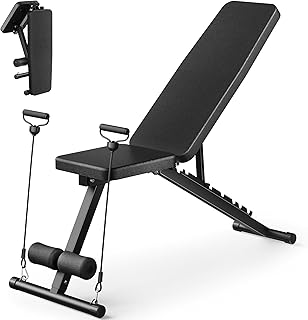
Adjustable Weight Bench for Home Gym
If you want something that just works, Adjustable Weight Bench for Home Gym is a safe bet (565 reviews, 4.5 stars).
7. Tracking Heart Rate Zones During An Incline Treadmill Workout

Incline walking can elevate your heart rate just as quickly as a sprint. Your goal should be to stay in the 60 to 80 percent range of your max heart rate. This is Zone 2 or Zone 3 cardio. Research shows even a moderate 2 to 7 percent incline can increase your heart rate by 10 percent compared to flat walking.
Tracking this manually is annoying, so I use an Apple Watch Series 9 that retails for $399. The fluoroelastomer band gets slick when I’m sweating, but the sensor is accurate. I monitor my wrist to make sure I’m not slacking. I was walking at a 4 percent incline last week, thinking I was working hard. I glanced down and saw my heart rate was barely 110 beats per minute. I had to bump the speed to 3.5 mph to get back into my zone.
You can’t guess your heart rate based on how much you’re sweating. Use a tracker. After these sessions, I usually drink one of the Kirkland Signature chocolate protein shakes I buy in a 12-pack at Costco for $24.99. They taste a little chalky, but the 30 grams of protein help my legs recover.
8. Lateral Walks For Better Hip Mobility

For a brutal glute workout, try lateral walks on your treadmill. Lower the incline to 0 or 2 percent and drop the speed to 1.0 or 1.5 mph. Turn sideways, grab the console lightly for balance, and walk sideways for 30 seconds. Turn and do the other side. This targets the gluteus medius, a muscle that gets ignored during forward walking.
There is a safety warning here. Do not cross your feet. Step your lead foot out, then bring your trailing foot to meet it. I tried crossing my feet once to get a deeper stretch and tangled my bulky running shoes. I tripped and face-planted onto the moving belt. The friction burned a layer of skin off my forearm before I could hit the emergency stop. No exaggeration.
It’s a dangerous move if you lose focus. Keep the speed at an absolute crawl until you master the footwork. You’ll feel a deep ache in your hips after just two minutes. It’s fantastic for bulletproofing your knees.
9. Leveraging Auto-Incline Features On Smart Machines

If you have the budget, smart treadmills change the dynamic. Machines like the Peloton Tread, starting around $2,995, offer interactive classes with auto-incline. The machine adjusts the speed and incline to match the instructor. This provides an immersive experience and removes the temptation to cheat.
I tested a Peloton Tread at a hotel gym in Denver last year. The deck has tactile jump buttons on the handrails that make a satisfying click. But the real magic is the auto-adjust. When you’re 20 minutes into a hill climb and your lungs are burning, the last thing you want to do is reach forward and punch a button. The machine just does it. The carbon steel frame lifts, and you’re forced to adapt instantly.
You can’t talk yourself out of the next hill. The immediate response of the deck lifting kept me honest. It’s a premium feature, but if you struggle with motivation or find yourself lowering the incline when it gets hard, the auto-adjust technology forces you to finish the routine.
An incline treadmill workout is one of the most efficient ways to build lower body strength and burn calories without the joint impact of running. Start with the 12-3-30 method, keep your hands off the console, and focus on driving through your heels. I’m heading to Trader Joe’s right now to grab a $3.99 bag of their dried Just Mango slices for some post-workout carbs. Pin this article to your fitness board so you have these speeds and angles ready next time you hit the gym.

FLYBIRD WB3 Weight Bench Fits up to 6’5”
Honestly, FLYBIRD WB3 Weight Bench Fits up to 6’5” surprised me — sturdier than it looks in the photos, and over 16 buyers gave it 4.5 stars.
Frequently Asked Questions
What is the 12-3-30 incline treadmill workout?
It is a popular routine where you set the treadmill to a 12 percent incline, a speed of 3 mph, and walk for 30 minutes. It builds lower body strength and heavily burns calories.
Should I hold the handrails when walking on an incline?
No. Holding the handrails reduces your calorie burn, ruins your posture, and takes the workload off your glutes and core. Keep your arms swinging naturally by your sides.
What incline percentage is best for glute activation?
Aim for a 10 to 12 percent incline. This steep angle forces your hips into deeper flexion, making your glutes work much harder to push your body forward and upward.
How long should I warm up before an incline treadmill workout?
Spend 5 to 10 minutes walking at a flat 0 percent incline at 2.5 to 3.0 mph. This prepares your Achilles tendons, calves, and hips for the steep angles ahead.
