
What’s Inside
- Master The Eccentric Phase On Your Lat Pulldowns
- Fix Your Overhead Press To Prevent Shoulder Impingement
- Use Cables For Constant Tension In Your Back And Shoulder Workout
- Stop Ignoring Your Rear Deltoids
- Invest In Adjustable Dumbbells For Home Training
- Fuel Your Back And Shoulder Workout With Proper Nutrition
- Use Straps For Heavy Compound Movements
- Roll Out Your Lats And Rest
Last Tuesday at my local gym, I literally peeled a dime-sized chunk of skin off my right palm during a heavy barbell row. Blood dripped onto the rubber mat before I even realized what happened. That was the moment I knew my weak grip was sabotaging my entire back and shoulder workout. I’d spent years ego-lifting, yanking heavy weights around with zero control, wondering why my lats were flat while my front delts throbbed. I wasted months on a standard six-day bro-split, failing to realize that more volume doesn’t mean more muscle. You don’t need a complicated routine with twenty variations of the same pull-up. You need a workout you can actually finish without tearing your hands open or wrecking your rotator cuffs. Most guys rush through their pulling motions and wonder why their posture still looks like a melted candle. I stripped my routine down to the basics. I stopped caring about the guy next to me. Here is how I structure my pulling days now, focusing on muscle tension, joint angles, and recovery that actually works.
1. Master The Eccentric Phase On Your Lat Pulldowns

Most people treat the lat pulldown like a race. They yank the bar down, let the stack slam back up, and repeat until their biceps quit. Instead of just pulling, you need to focus on the upward, eccentric phase. Control the weight as it goes back up. Take a full two to three seconds to return to the start. This slow release maximizes growth by stretching your lats under tension. Keep your knees anchored tight under the pad. If your hips lift off the seat, the weight is too heavy. Use a grip slightly wider than shoulder-width, with your wrists stacked over your elbows.
I did these wrong for years. I leaned back so far I was basically doing an inverted row, missing the vertical pull entirely. You should also try different grips. A neutral grip, palms facing each other, is way better if you have joint pain or old wrist injuries. If you can’t feel your lats, try the cobra lat pulldown as a primer. Lie flat on your stomach, extend your arms and legs, then pull your arms in while pressing your hands into the floor to lift your chest. Squeeze your shoulder blades hard. It builds a mind-muscle connection before you touch a machine. Took me years to figure that one out.
2. Fix Your Overhead Press To Prevent Shoulder Impingement

When you press overhead, stop arching your lower back. I see guys bending like gymnasts just to push a barbell up. That shifts the load off your delts and onto your lumbar spine. Engage your core and squeeze your glutes before you start. This locks your pelvis and keeps your spine neutral. Keep your elbows tucked at a 45-degree angle. Don’t flare them out to 90 degrees. Flaring forces your humerus to grind against the acromion, which is how you tear a rotator cuff.
I learned this the hard way in 2019. I flared my elbows on a heavy seated press and felt a sharp pinch in my shoulder. I couldn’t lift my arm for three weeks. Tucking your elbows forward changes the mechanics of the lift. It feels weaker at first because you aren’t using chest momentum, but it protects the joint. Also, avoid overtraining. Your shoulders are involved in almost every upper body move, so they burn out fast. Limit heavy direct work to once or twice a week. Give yourself 48 hours of rest between sessions for tissue recovery. More isn’t better. Trust me on this.
3. Use Cables For Constant Tension In Your Back And Shoulder Workout

Free weights are great, but they have a flaw: tension drops off at the bottom of the movement. Use cable machines for rows, lateral raises, and face pulls. Cables provide constant tension through the whole range of motion. This activates more muscle fibers, especially in the smaller stabilizers of the shoulder. When you do a dumbbell lateral raise, the first few inches offer zero resistance. With a cable set to ankle height, your side delt is fighting the weight from the very start. You might also like: 10 Gym Poses For Men You Need to See
If you train at home without a cable machine, resistance bands work. Last month, I bought All in Motion bands at Target for $12.99. I loop the red, medium-weight band around my squat rack to mimic a low pulley. It isn’t a smooth commercial stack, but the tension is similar. During cable rows, don’t just pull with your hands. Treat your hands like hooks. Pull your elbows back and squeeze a tennis ball between your shoulder blades. This stops your biceps from taking over. You might also like: 8 Before And After Fitness for Every Budget

NICEPEOPLE Adjustable Weight Bench for Home Gym
A dependable everyday pick — NICEPEOPLE Adjustable Weight Bench for Home Gym pulls in 33 ratings at 4.5 stars. Not flashy, just solid.
4. Stop Ignoring Your Rear Deltoids

Most commercial gym-goers overtrain their front delts and ignore the rear. Every bench press or overhead press hammers the front. If you don’t balance that, your shoulders will roll forward, giving you a hunched, caveman look. You need face pulls and bent-over flyes for balanced development. I do 2 to 4 sets of 10 to 15 reps for these. You don’t need heavy weight. You need high reps and a deep burn. You might also like: 9 Workout Plan Gym You Need to See
For face pulls, set the rope to upper-chest height. Pull it toward the bridge of your nose, pulling the ends apart as you get close. Your knuckles should face the ceiling. For bent-over flyes, hinge at the hips until your torso is nearly parallel to the floor. Use light weight. I use 15-pound dumbbells. Lead the motion with your pinkies pointing slightly up. I tried 35-pounders once, lost my form, and just did a sloppy row that missed the rear delt entirely. Keep the weight light, keep your arms straight with just a slight bend, and focus on the squeeze.
5. Invest In Adjustable Dumbbells For Home Training

For home gyms, adjustable dumbbells save a ton of space. I spent years tripping over loose hex dumbbells in my garage. The Rep Quickdraw Dumbbells are fast to adjust, though they cost about $399. For a budget option, the CAP Adjustable Dumbbells are solid at around $149 at Walmart. They have hexagonal plates, so they won’t roll away if your floor is uneven.
The CAP plates can stick on the handle if you aren’t careful, but it’s worth the space you save. Having heavy dumbbells at home lets you use progressive overload without a $50 monthly gym fee. You can do rows, presses, and lateral raises in a six-by-six foot space. During lateral raises, keep a slight bend in your arm. Lead with your elbows, not your hands. Don’t shrug your shoulders to your ears. Keep your traps down and force the side delt to move the weight.
6. Fuel Your Back And Shoulder Workout With Proper Nutrition

You can lift perfectly, but if your nutrition is trash, you won’t grow. Drink high-quality protein after your workout. I buy Optimum Nutrition Gold Standard 100% Whey. It has 24g of protein and mixes well. I grab the 5.5-pound bag at Costco for $41.99. The Double Rich Chocolate mixed with 8 ounces of almond milk doesn’t taste like chalk. If you want plant-based, the Form Vegan Performance Protein Powder is great for $29.99 at Sprouts. I once bought generic vegan protein at Whole Foods that tasted like wet cardboard. Stick to the good brands.
Supplement with creatine monohydrate for power. It’s the most researched supplement out there. Take 3 to 5 grams daily. If you want to saturate your muscles faster, do a loading phase of 20 to 25 grams split over four doses for a week. I mix 5 grams into my post-workout shake. For pre-workout carbs, I love the peanut butter pretzel nuggets from Trader Joe’s. They cost $3.49 and have the perfect mix of salt, fat, and fast carbs. Post-workout, I eat two Simple Truth organic rice cakes from Kroger, about $2.49 a sleeve, with a tablespoon of almond butter.
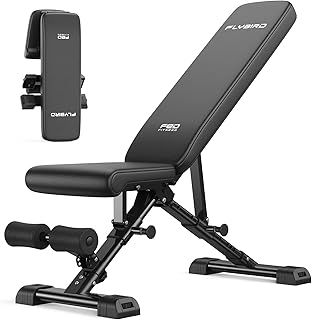
FLYBIRD WB5 Weight Bench
FLYBIRD WB5 Weight Bench punches above its price — 259 buyers rated it 4.5 stars. I would buy it again.
7. Use Straps For Heavy Compound Movements

Pendlay rows and heavy barbell rows are king for back mass. These movements hit everything. I do 3 to 4 sets of 5 to 8 reps. The Pendlay row is unique because the bar stops dead on the floor every rep. It kills your momentum and forces your lats to work from a static start. But your grip will usually fail before your back does.
Don’t let your grip limit your gains. Use straps if your forearms give out. I bought basic Harbinger straps at Dick’s Sporting Goods for $19.99 three years ago; they changed everything. Before straps, I’d drop the bar on the sixth rep because my fingers were prying open, even though my lats had plenty left. Wrap the strap under the bar and over, pulling it tight like a throttle. I used to wrap them backward and the bar would just roll out. No exaggeration.
8. Roll Out Your Lats And Rest

Recovery is where the growth happens. Foam roll to release tension in your shoulders and mid-back. A great trick is to put the roller in your armpit. Lie on your side, arm extended, and roll back and forth to hit the lats and teres major. This spot gets tight from pulldowns and rows. Aim for 60 seconds per side, hitting the painful spots.
I use a hollow-core TriggerPoint roller from Target for $34.99. I used a cheap, solid one, but it snapped in half after two months. The hollow PVC core lasts. If my shoulders feel battered after a heavy week, I take a hot bath with 365 Everyday Value Epsom Salts from Whole Foods. A big bag is $6.99. The magnesium helps relax the tissue. Remember, a great workout isn’t just the hour you spend in the gym. It’s the 23 hours outside of it. If you aren’t sleeping seven to eight hours and eating enough to recover, you’re just breaking yourself down for nothing.
Building a strong, functional upper body doesn’t require circus tricks or balancing on a ball. It requires strict form, controlling the eccentric phase, and leaving your ego at the door. Start with the cable and dumbbell variations I mentioned to protect your joints while you build strength. Save this article to your phone so you can reference the sets, reps, and cues next time you hit the gym.
Frequently Asked Questions
How often should I do a back and shoulder workout?
You should limit direct shoulder training to one or two times per week. Your shoulders act as stabilizers in most upper body movements, so they need at least 48 hours of rest between dedicated sessions to recover fully.
Why do I feel lat pulldowns in my biceps?
You’re likely gripping the bar too narrowly or pulling with your hands rather than your elbows. Widen your grip to slightly outside shoulder-width and focus on pulling your elbows down and back to properly engage the lats.
Should I use lifting straps for back exercises?
Yes, using lifting straps for heavy compound movements like barbell rows prevents your grip strength from limiting your back muscle development. They allow you to hold the weight securely even when your forearms fatigue.
What is the correct elbow angle for an overhead press?
Keep your elbows tucked at a 45-degree angle to your torso. Flaring your elbows out to 90 degrees puts unnecessary stress on the rotator cuff and can lead to severe shoulder impingement over time.
