What’s Inside
- Prioritize Outdoor Free Play Daily
- Embrace Balance Bikes Early for Cycling Success
- Make Screen Time Active with Engaging Video Games
- Build Backyard Obstacle Courses with Cheap Gear
- The Secret to Indoor Exercise for Kids: Mini Trampolines
- Animal Flow and Bodyweight Movement Patterns
- Turn Grocery Runs into Heavy Work Chores
- Pool Games for Low-Impact Conditioning
- Rock Climbing and Grip Strength Development
- Family Rucking with Weighted Backpacks
- Resistance Band Games for Exercise for Kids
- Basic Striking and Pad Work at Home
Last Tuesday afternoon, I walked into my living room to find my seven-year-old nephew glued to a sticky iPad screen, ignoring the perfect weather outside. The room smelled like stale Cheez-Its and recycled air conditioning. I told him to put his shoes on for a quick run around the block, thinking that was normal for kids. That request triggered a massive meltdown on the rug. I realized right then that my adult fitness logic completely fails on a second-grader. Finding the right exercise for kids means throwing out traditional workout plans and getting creative with movement. I’ve spent the past thirty days testing gear, reading pediatric guidelines, and making a fool of myself in the backyard to figure out what actually gets them moving without a fight. If you want sustainable routines that yield real results in a single month, you need specific tools. You can’t just tell a child to do push-ups and expect compliance. Here’s exactly what worked, what failed, and the gear that survived a month of chaotic use.
1. Prioritize Outdoor Free Play Daily

Children thrive on unstructured outdoor play. Nemours Health and Prevention Services recommends that toddlers get at least 60 minutes of unstructured outdoor physical activity daily. I read that study and immediately realized I was doing it wrong. I used to coach my nephew through structured drills like he was a miniature bootcamp client. Big mistake. He hated it, and I just got frustrated. Instead, I went to Target and bought a basic 8.5-inch Champion Sports playground ball for $4.99. I threw it in the grass and let him invent his own weird games. A surprising benefit of this unstructured time is that it encourages children to take risks. They learn how to fall, how to balance on uneven terrain, and how to gauge their own speed. The texture of wet grass and uneven dirt patches force their stabilizing muscles to work twice as hard as they do on a flat gym floor. You don’t need expensive equipment here. You just need to step back and let them figure out how their bodies move in an unpredictable environment. The results after thirty days of letting him run wild were obvious in his improved balance.
2. Embrace Balance Bikes Early for Cycling Success

Balance bikes are a huge trend right now for teaching cycling. They’re way more effective than traditional tricycles because they directly teach balance. This method often lets kids skip training wheels entirely. I bought my youngest nephew the Retrospec Cub balance bike for $69 at a local bike shop. It features a low minimum seat height of 11.5 inches, making it great for toddlers even before they turn two. The rubber grips have a thick, knobby texture that keeps sweaty little hands from slipping. We took it out to the paved trail behind my house. He dumped it sideways into a muddy ditch within five minutes. The steel frame got scratched up, and mud caked the wheels. But because the bike only weighs about nine pounds, he picked it right back up himself. If you have a slightly higher budget, consider high-quality models like the Hornit Airo. It retails for around £139 to £149 and features a magnesium alloy frame that weighs basically nothing. Skip the heavy tricycles. They teach bad pedaling habits and give a false sense of security that won’t translate to real cycling.
3. Make Screen Time Active with Engaging Video Games

Combat passive screen time by introducing active video games. This is a life-saver when the weather outside is freezing or pouring rain. I bought the Nintendo Switch Ring Fit Adventure bundle at Costco for $79.99 last winter. I figured it’d be a cheap gimmick. I was wrong. The game requires you to squeeze a rigid pilates ring and jog in place to move your character. The ring gives surprisingly heavy resistance. You actually feel the tension in your chest and shoulders. We played for forty-five minutes last Friday night. The sound of the plastic ring flexing and the digital coin-collection noises kept my nephew completely engaged. I ended up with sweat dripping down my forehead just trying to keep up. One negative is that the leg strap holding the controller slips if you wear slippery athletic shorts. You have to wear cotton sweatpants to keep it in place. But it turns a lazy afternoon into a legitimate cardio session without them even realizing they’re working out. You might also like: 20 Inspiring Outfit Home Workout Ideas That Changed Everything

YOTTOY Anti-Burst Exercise Ball for Working Out
A dependable everyday pick — YOTTOY Anti-Burst Exercise Ball for Working Out pulls in 24 ratings at 4.5 stars. Not flashy, just solid.
4. Build Backyard Obstacle Courses with Cheap Gear

You don’t need a playground to build agility. I went to Walmart last month and picked up a set of six plastic SKLZ agility cones for $12.88. I also grabbed a cheap jumping rope for $3.50. I set up a makeshift obstacle course in the backyard. The goal was simple. Sprint to the first cone, jump over the rope, bear crawl to the patio, and run back. I made a mistake the first time. I spaced the plastic cones too close together on a patch of uneven dirt. My nephew tripped over the second cone, heard the loud crunch of the plastic shattering, and scraped his knee on a rock. You have to ensure you set these courses up on flat, soft grass. Once we adjusted the spacing, his sprint times improved dramatically. The repetitive starting and stopping builds fast-twitch muscle fibers. It also tires them out faster than steady-state jogging. I keep the surviving cones in a mesh bag in my garage for quick access on Saturday mornings. You might also like: 15 Creative Inside She Sheds Home Gym Setup Ideas to Steal Right Now
5. The Secret to Indoor Exercise for Kids: Mini Trampolines

Finding effective indoor exercise that won’t destroy your furniture is a battle. I finally caved and bought a Little Tikes 3-foot trampoline at Target for $59.99. It features a large foam-covered handle for stability. The canvas jumping surface feels incredibly stiff right out of the box. It takes about a week of use to break it in properly. The sound of the squeaky metal springs can get annoying if you’re trying to watch television. However, the cardiovascular benefits are undeniable. Ten minutes of continuous bouncing elevates their heart rate significantly. I usually set a timer on my phone and challenge my nephew to jump until the alarm goes off. A pro tip is to place a heavy rubber mat underneath the trampoline legs. If you place it on hardwood floors, the metal legs will slowly slide backward and scratch the finish. I learned that the hard way in my dining room when I found three deep gouges in the oak floor. This gear provides a high-intensity outlet when it’s raining outside. You might also like: 10 Gym Poses For Men You Need to See
6. Animal Flow and Bodyweight Movement Patterns

You don’t need weights to build strength. Animal flow movements like bear crawls, crab walks, and frog jumps are fantastic for core stability and shoulder strength. I tried doing a bear crawl race across my living room rug last month. I ended up with a nasty carpet burn on my left elbow that stung for a week. That taught me to always use a proper surface. I pulled out my thick Lululemon workout mat, which cost $88, but you don’t need anything that expensive. I went to Five Below and bought a basic 5mm PVC yoga mat for $5.55. It smells heavily of cheap plastic when you first unroll it, so let it air out in the garage for a day. We set up two of these cheap mats end-to-end. I have my nephew do crab walks back and forth. Holding your own body weight up on your wrists and feet requires massive coordination. It forces them to engage their abdominal muscles naturally. We do this for ten minutes before dinner. It changes their posture and body awareness over a month.

Trideer Exercise Ball for Yoga, Pilates & Fitness
Honestly, Trideer Exercise Ball for Yoga surprised me — sturdier than it looks in the photos, and over 529 buyers gave it 4.5 stars.
7. Turn Grocery Runs into Heavy Work Chores

Occupational therapists often recommend heavy work to help children regulate their sensory systems and build muscle tone. You can easily incorporate this into your weekly errands. I take my nephew to Sprouts or Kroger on Sunday mornings. Instead of letting him push the cart, I hand him two reusable canvas bags. I load one bag with a 2-pound bag of carrots and the other with a 3-pound bag of apples. The rough texture of the canvas handles digs into his hands just enough to challenge his grip strength. He carries these bags from the produce section to the checkout counter. One time at Kroger, I accidentally overloaded a thin paper bag with canned beans. The bottom tore wide open, sending cans rolling loudly across the tile floor while everyone stared. Stick to sturdy canvas bags and keep the weight balanced evenly. Carrying loaded bags forces them to brace their core and stabilize their spine. It turns a boring errand into a functional strength training session.
8. Pool Games for Low-Impact Conditioning

Swimming provides the best full-body resistance training available. The water creates constant drag, forcing every muscle to work harder without any impact on the joints. Before we hit the neighborhood pool, I always apply Alba Botanica 30 SPF sunscreen. I buy the 4-ounce tube at Whole Foods for $9.99. It smells strongly of coconut and takes forever to rub in, leaving a white cast. But the 30 SPF means I don’t reapply at lunch, and it stays on in the water. Once we’re in the pool, I skip the standard lap swimming. Kids get bored with laps instantly. Instead, I throw three heavy rubber diving rings into the shallow end. The rings cost about $8 at any sporting goods store. I time how fast he can retrieve all three. The explosive breath-holding and underwater propulsion build lung capacity rapidly. A common mistake is letting them rely entirely on flotation noodles. Make them tread water for thirty-second intervals to build actual endurance. The smell of chlorine and the exhaustion usually guarantee they fall asleep by eight o’clock.
9. Rock Climbing and Grip Strength Development

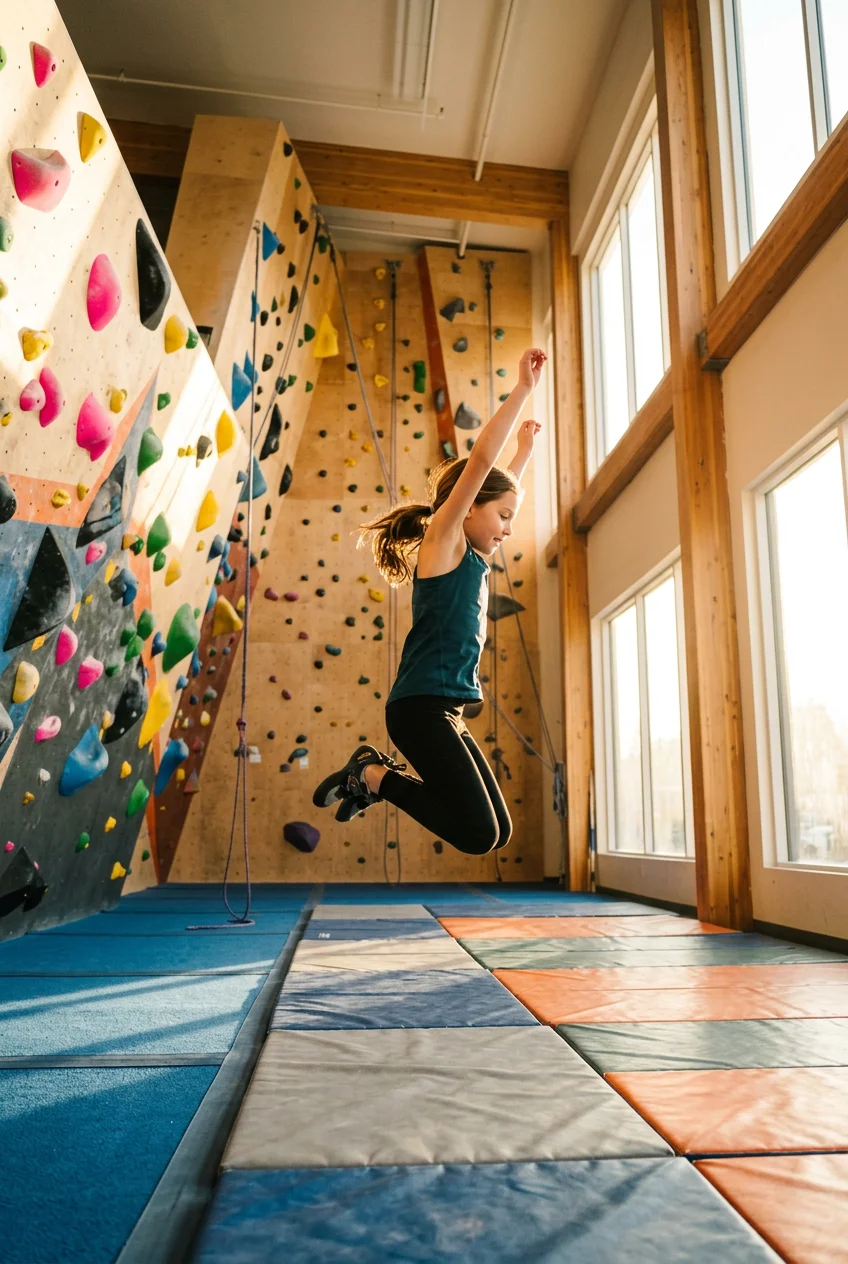
Grip strength directly correlates to upper body development. I wanted to build a small climbing wall in my garage. I ordered a 25-pack of Metolius plastic climbing holds from Amazon for $34.95. They have a rough, sandpaper-like texture that tears up your calluses. I bolted them to a thick sheet of plywood. I made a crucial error during installation. I used screws that were a half-inch too short, and one of the green footholds spun completely upside down when my nephew stepped on it. He slipped and landed hard on the crash pad. Always use the heavy-duty bolts provided in the kit and tighten them with a socket wrench. Once secured properly, climbing forces children to problem-solve their physical movements. They have to map out their route visually. It develops incredible forearm strength and back muscle definition. If you don’t want to drill holes in your walls, take them to a local bouldering gym. The tactical problem-solving aspect keeps them engaged far longer than traditional pull-ups.
Trideer Exercise Ball for Yoga, Pilates & Fitness
A dependable everyday pick — Trideer Exercise Ball for Yoga pulls in 529 ratings at 4.5 stars. Not flashy, just solid.
10. Family Rucking with Weighted Backpacks

Rucking is just walking with a weighted backpack. It’s an incredible way to build endurance. We do a two-mile hike on a local dirt trail every Saturday. I bought my nephew a basic JanSport backpack from Target for $35. To add weight, I don’t use metal plates. I use water bottles and snacks. I pack a 16-ounce bag of Trader Joe’s Peanut Butter Pretzels, which costs $5.49, along with two 16-ounce water bottles. This adds roughly three pounds of functional weight. The nylon straps of the backpack provide just enough pressure on his shoulders to keep his posture upright. A massive mistake I made early on was packing too much weight. I threw a heavy textbook in his bag, and within ten minutes, he was complaining about lower back pain. You should never exceed ten percent of their body weight. The added resistance turns a casual nature walk into a legitimate leg workout. Plus, the sound of the dirt crunching under our boots and the promise of those peanut butter pretzels at the halfway mark keeps him motivated.
11. Resistance Band Games for Exercise for Kids

Finding safe strength equipment for young ages is tricky. Dumbbells get dropped on toes, and barbells are out of the question. I switched to resistance bands. I bought a set of SPRI resistance bands with foam handles for $14.98 at a local sporting goods store. The foam grips soak up sweat quickly, so they need to be wiped down with antibacterial wipes after use. We do basic pulling games. I hold one handle, he holds the other, and we do gentle tug-of-war variations. You must teach them how to release the tension slowly. During our first session, he let go of the handle while the band was fully stretched. The thick rubber snapped back and stung my shin so hard it left a red welt for three days. Always maintain control of the anchor point. These bands are fantastic for strengthening the upper back and correcting the hunched-over posture caused by staring at tablets. They’re cheap, portable, and provide constant tension through the entire range of motion.
12. Basic Striking and Pad Work at Home

Boxing drills build hand-eye coordination and cardiovascular endurance faster than running. I went to Dick’s Sporting Goods and picked up a pair of Everlast punch mitts for $29.99. They have a strong smell of synthetic leather and velcro right out of the packaging. I have my nephew put on lightweight padded gloves, and I hold the mitts. We do basic one-two punch combinations. The loud, satisfying smack of the glove hitting the mitt gives him instant auditory feedback. It empowers him and burns off frustrated energy. I learned quickly that you can’t hold the pads too close to your own face. He threw a wild left hook, missed the pad entirely, and clipped my jaw. Keep the pads wide and slightly angled downward to protect your own joints. Three rounds of three minutes each leaves him completely breathless. It requires intense focus, footwork, and rotational core strength. It’s the most efficient way to burn maximum calories in a ten-minute window without leaving your garage.
Getting kids to move doesn’t require a rigid, military-style routine. It requires patience, a bit of creativity, and a willingness to let them get dirty. I’ve watched my nephew transform from a screen-addicted couch potato into a kid who actually asks to go outside and climb things. The 30-day mark is where you really see the habits solidify. Don’t overcomplicate it. Grab a cheap ball, hit the local trails, and focus on making the movement feel like a game rather than a chore. If you found these tips helpful, make sure to save or pin this article for your next weekend planning session.

APEXUP Yoga Ball Exercise Ball Anti Slip Heavy Duty for
A dependable everyday pick — APEXUP Yoga Ball Exercise Ball Anti Slip Heavy Duty for Fitness pulls in 46 ratings at 4.5 stars. Not flashy, just solid.
Frequently Asked Questions
How much exercise for kids is recommended daily?
Health organizations recommend at least 60 minutes of physical activity daily for children. This should include a mix of unstructured outdoor play, aerobic activity, and muscle-strengthening movements to ensure proper development.
What is the best indoor exercise for kids?
Active video games and mini indoor trampolines are excellent options. They elevate the heart rate significantly and burn off excess energy when weather conditions make outdoor play impossible.
Are balance bikes better than tricycles?
Yes. Balance bikes directly teach the core skill of balancing on two wheels, often allowing children to skip training wheels entirely. Tricycles teach pedaling but provide a false sense of stability.
How can I build my child’s grip strength?
Carrying heavy grocery bags, hanging from monkey bars, and using plastic rock climbing holds are highly effective. Grip strength is crucial for overall upper body development and fine motor skills.
