What’s Inside
- Set SMART Goals For Your 30 Day Workout Challenge
- Track Your Progress With Wearable Tech
- Dial In Your Exact Protein Intake
- Hydrate With Exact Measurements Daily
- Let AI Program Your Weekly Sessions
- Schedule Active Recovery And Embrace JOMO
- Fix Your Form Before Adding Heavy Weight
- Sneak In Micro-Workouts Throughout The Day
- Sync Your Workouts To Your Natural Biology
- Use Pre-Workout Supplements Properly
- Freeze Your Sore Muscles For Faster Recovery
- Build A Sustainable Routine Post-Challenge
I was standing in the checkout line at Whole Foods last Tuesday, holding a sad, lukewarm rotisserie chicken, when I realized my latest 30-day workout challenge was already a disaster. I’m talking about the kind of failure where you skip three days and pretend it never happened. Most internet routines are designed to make you quit. I followed vague PDF guides for months before realizing that relying on willpower alone is a terrible strategy. You need specific numbers, real gear, and a plan that fits your chaotic life. Let’s look at how to build a routine that works for any fitness level, using real data and exact measurements. I’ve made every mistake in the book so you don’t have to. Trust me.
1. Set SMART Goals For Your 30 Day Workout Challenge

Don’t just say you want to get fit. I did that for years, and it’s a waste of time. You need trackable numbers. Last year, I bought a basic Moleskine notebook for $14.99 at Target to log my targets. Instead of trying to casually lose weight, I wrote down that I wanted to complete three full-body strength workouts per week and increase my deadlift by 5 kg (about 11 lbs) by day 30. That clarity changed how I trained. I’m using a Rogue Ohio Bar that cost me $295, and feeling the rough knurling on my calluses while pulling a new personal best is the best feeling in the world. When you start your 30-day challenge, write down a specific goal. Say you want to do 10 strict pushups or run a 9-minute mile. Measure it. Put a hard date on it. If you aren’t tracking the math, you’re just guessing. I used to guess, and I stayed skinny-fat for a decade. Get specific.
2. Track Your Progress With Wearable Tech

Wearables are everywhere, and for good reason. I used to think they were glorified pedometers. I was wrong. I tried this the wrong way for months, pushing through fatigue because I thought rest days were for the weak. Now, I rely on data. I’m wearing the Garmin Venu 3, which runs about $399. If you want something cheaper, the Fitbit Charge 6 is usually around $157.90 and does a great job. These devices track your resting heart rate, sleep quality, and recovery. Last month, my Garmin told me my stress was through the roof and my sleep score was a miserable 42. I ignored it, went to the gym, and tweaked my shoulder doing overhead presses. The AI in these watches can predict when you’re overtraining. Listen to the data. It tells you when to push hard and when to take a nap. You can’t outwork poor recovery.
3. Dial In Your Exact Protein Intake

Skip the fat-free stuff. It tastes like wet cardboard. If you want to build muscle, you need real protein. Aim for 1.6 to 2.2 grams per kilogram of body weight. For a 155 lb (70 kg) person, that’s about 112 to 154 grams of protein every day. Most people get this wrong. They eat a small salad and think they’re doing great. You need 20 to 30 grams of protein per meal. Last Sunday, I was at Costco and picked up a bag of Optimum Nutrition Gold Standard 100% Whey. The 2 lb tub runs $30 to $60. I get the Double Rich Chocolate flavor. I mix two scoops (48g protein) with 8 oz of whole milk and 1/2 cup of frozen blueberries. The texture is thick, cold, and the creamy chocolate-berry flavor is satisfying after a heavy session. Women specifically need that 1.2 to 2.0 grams per kilogram target to repair tissue. If you aren’t eating enough protein, your muscles won’t recover, and you’ll just feel sore and weak.

FitinOne Adjustable Folding Weight Bench for Home Gym
If you want something that just works, FitinOne Adjustable Folding Weight Bench for Home Gym is a safe bet (744 reviews, 4.5 stars).
4. Hydrate With Exact Measurements Daily

I used to carry a flimsy plastic water bottle that crinkled every time I grabbed it. Now, I carry a 32 oz Hydro Flask that cost me $44.95 at Walmart. It keeps my water ice-cold for 24 hours. The metallic clink of ice cubes hitting the stainless steel is a reminder to drink up. You need 2 to 4 milliliters of fluids per pound of body weight between two and four hours before your workout. If you weigh 155 lbs, that’s roughly 140 to 280 ml (about 5 to 9 oz) right before you train. I swear by adding a pinch of pink Himalayan salt to my morning water for electrolytes. Proper hydration flushes out lactic acid and keeps your joints lubricated. I remember doing a heavy squat session while dehydrated. My knees sounded like bubble wrap, and I got a splitting headache. Don’t make that mistake. Buy a good bottle, fill it up three times a day, and drink until your urine is pale yellow. You might also like: 20 Gorgeous Easy Home Workout Ideas That Actually Work
5. Let AI Program Your Weekly Sessions

I’ll admit it. I used to write my own programming, and I neglected my hamstrings for two years. My legs looked like toothpicks. Now, I let AI do the heavy lifting. I’m using an app called Fitbod, which costs $19.99 a month. There’s also Load Muscle, which has a solid free tier. You plug in the equipment you have, and the algorithm spits out a personalized routine. It tracks your muscle recovery. If your chest is fried from Monday’s bench press, the app won’t let you do pushups on Tuesday. It forces you to balance your physique. I walked into my garage gym yesterday, opened Fitbod, and it told me to do 4 sets of 12 Bulgarian split squats with 30 lb dumbbells. My quads were burning so badly I had to sit on the concrete for five minutes. It’s effective. You won’t plateau because the AI constantly adjusts the volume based on your daily performance. You might also like: 15 Brilliant Dark Basements Home Gym Setup Ideas Worth Trying This Year
6. Schedule Active Recovery And Embrace JOMO

JOMO stands for the Joy of Missing Out. I used to have guilt if I missed a workout. I’d force myself to train seven days a week. That no pain, no gain mentality is a one-way ticket to a physical therapist’s office. Now, I look forward to my rest days. I’ll go to Sprouts, buy a 3 lb bag of Dr. Teal’s Epsom Salt for $6.99, and soak in a hot bath for 20 minutes. The sharp smell of eucalyptus clears my sinuses. On recovery days, I don’t just sit on the couch. I do active recovery. I’ll take a 30-minute brisk walk or spend 15 minutes rolling out my IT bands on a Lululemon Double Roller that costs $58. The dense foam digs deep into the muscle fascia, and it hurts in the best way possible. By the time my next heavy lifting day rolls around, my legs feel fresh. Rest is when the actual muscle growth happens. If you aren’t resting, you aren’t growing. You might also like: 20 Brilliant Commercial Home Gym Setup Ideas Worth Trying This Year
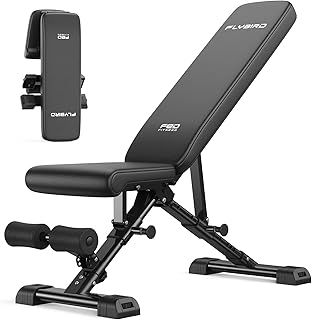
FLYBIRD WB5 Weight Bench
If you want something that just works, FLYBIRD WB5 Weight Bench is a safe bet (259 reviews, 4.5 stars).
7. Fix Your Form Before Adding Heavy Weight

Ego lifting is the fastest way to ruin your progress. I wrecked my lower back three years ago because I tried to deadlift 315 lbs with a rounded spine. The sickening popping sound my lumbar made still haunts me. I couldn’t tie my shoes without wincing for a month. Form is everything. Drop the weight and focus on the mind-muscle connection. I recommend downloading the Hevy app (the free version is great). It has a library of video demonstrations. Watch them between sets. Right now, I’m using a pair of Bowflex SelectTech 552 adjustable dumbbells, which run about $429. When I do bicep curls, I use a strict 3-second eccentric phase. I lower the weight slowly, feeling the muscle fibers stretch. I don’t swing my hips. I don’t use momentum. Ten strict reps with 20 lbs will build more muscle than 10 sloppy reps with 40 lbs. Film yourself. Compare your form to the app. If your technique is garbage, your results will be garbage.
8. Sneak In Micro-Workouts Throughout The Day

You don’t always need a full hour to get a good sweat in. I used to think if I didn’t have 60 minutes, the day was a wash. That’s a terrible excuse. Micro-workouts are effective. I’m talking about 5 to 15-minute bursts of high-intensity effort. I keep a TRX Go Suspension Trainer hanging from my office door. It costs $109.95. If I have a 10-minute gap between Zoom calls, I’ll knock out 3 sets of inverted rows and suspended pushups. My heart rate spikes, my lats get a pump, and I go back to work energized. Research shows that three 10-minute sessions spread throughout the day can give you the same benefits as one 30-minute jog. I was waiting in line at Trader Joe’s last Friday and started doing calf raises on the edge of my shopping cart. People looked at me like I was crazy, but it works. Sneak the volume in wherever you can.
9. Sync Your Workouts To Your Natural Biology

Bio-syncing sounds complicated, but it’s simple. It just means working out when your body is primed for it. I’m not a morning person. I tried waking up at 5:00 AM to lift weights for months. I felt weak, nauseous, and my joints felt like rusty hinges. I realized my peak energy hits around 4:00 PM. I shifted my heavy lifting to the late afternoon, and my lifts instantly went up. You also need mind-body practices to lower your cortisol. I use the Calm app, which is $69.99 a year. Every night, I do 10 minutes of guided breathwork on a Manduka PRO yoga mat ($138). The mat smells of natural rubber, and the dense grip keeps me grounded. Lowering your stress hormones is crucial for burning fat and building muscle. Pay attention to your circadian rhythm. If you feel strongest at noon, train at noon. Don’t force a schedule that fights your biology.

NICEPEOPLE Adjustable Weight Bench for Home Gym
NICEPEOPLE Adjustable Weight Bench for Home Gym punches above its price — 32 buyers rated it 4.5 stars. I would buy it again.
10. Use Pre-Workout Supplements Properly

Let’s talk about pre-workout. I’ve taken awful supplements that made my skin crawl and my heart race like a hummingbird. You don’t need the sketchy stuff. Look for clinical doses of ingredients that actually work. I use Transparent Labs Bulk Pre-Workout, which is $49.99 for 30 servings. It has 200mg of caffeine, 4g of beta-alanine, and no artificial dyes. I mix one scoop into 12 oz of cold water 30 minutes before I train. The sour apple flavor is tart and wakes me up. The beta-alanine gives you a tingling sensation, which is a physical cue that it’s time to work. If you want something cheaper, Optimum Nutrition Gold Standard Pre-Workout is around $21.90 at Kroger. Start with half a scoop to test your tolerance. I took a full scoop of a high-stimulant brand once, got the jitters, and bombed my squat session because I couldn’t focus. Use it strategically on your heavy leg days.
11. Freeze Your Sore Muscles For Faster Recovery

Cold exposure is miserable, but it works miracles for inflammation. I used to mock people who took ice baths. Then I ran a half marathon, could barely walk, and decided to try it. The biting, stinging cold of the water takes your breath away. But when you step out 10 minutes later, your legs feel brand new. The blood rushes back, flushing out metabolic waste. If you have the budget, the Ice Barrel is amazing but pricey at $1,199. You can just go to Walmart, buy a 100-gallon galvanized steel stock tank for about $129, and fill it with water and 4 bags of ice from the gas station. I do this every Sunday. The shock to your nervous system releases a wave of dopamine. It builds mental toughness. If you can sit in freezing water for 5 minutes, pushing through the last three reps of a heavy bench press feels manageable.
12. Build A Sustainable Routine Post-Challenge

The problem with a 30-day workout challenge is day 31. Most people finish the month, pat themselves on the back, and go right back to junk and the couch. You need to turn this into a permanent lifestyle. You’ve already built the habit. Now, maintain the momentum. I bought a fresh pair of Nike Metcon 9 training shoes for $150 to celebrate finishing my last challenge. The flat, wide heel gives me stability during heavy squats, and lacing up new shoes is a trigger to keep going. Don’t stop tracking your protein. Don’t delete your AI workout app. Just adjust the intensity. Maybe drop down to three days a week instead of five. The goal isn’t to be perfect for a month. The goal is to be consistently good for the next ten years. I’ve been doing this a long time, and consistency beats intensity every single time. It took me years to figure out.
If you’re ready to actually finish a routine this time, start by dialing in your protein and downloading a tracking app today. Save this guide, pin it for later, and check back when your motivation starts dipping around day 14. You’ve got this.
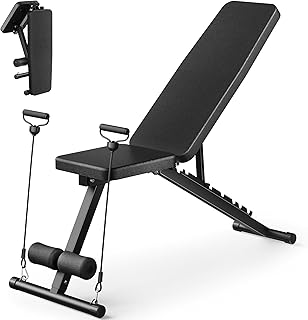
Adjustable Weight Bench for Home Gym
If you want something that just works, Adjustable Weight Bench for Home Gym is a safe bet (517 reviews, 4.5 stars).
Frequently Asked Questions
How much protein do I need during a 30 day workout challenge?
You need 1.6 to 2.2 grams of protein per kilogram of body weight daily. For a 155 lb person, that’s roughly 112 to 154 grams. Aim for 20 to 30 grams per meal using high-quality sources like whey protein or lean meats to repair muscle tissue.
Can I work out every single day?
I strongly advise against it. Overtraining leads to burnout and injury. Incorporate active recovery days where you take a 30-minute walk or use a foam roller. Rest is when your muscles actually rebuild and grow stronger.
What if I don’t have an hour to train?
Use micro-workouts. Three 10-minute sessions of high-intensity effort spread throughout your day provide similar cardiovascular benefits to a single 30-minute jog. Keep a suspension trainer or dumbbells handy to knock out quick sets between tasks.
Do I really need a smartwatch to track my progress?
You don’t strictly need one, but it’s incredibly helpful. Wearables track your resting heart rate and sleep quality, giving you hard data on your recovery. This prevents you from overtraining and helps you push harder on days when you’re fully rested.
