
What’s Inside
- Why Your Current Calisthenics Workout Program Is Failing
- Master the Basics with Perfect Form
- Implement Progressive Overload Beyond Just More Reps
- Incorporate Isometrics (Holds) for Breakthrough Strength
- Use Resistance Bands for Assistance and Resistance
- Optimize Grip with Liquid Chalk
- Fuel Your Body with Adequate Protein
- Consider Creatine for Strength and Power
- Prioritize Leg Training in Your Calisthenics Workout Program
- The “Greasing the Groove” Secret
- My Final Takeaway on Building Your Routine
Last Tuesday at Target, I caught a glimpse of myself in the security monitor trying to stretch out a pulled lat right in the middle of the cereal aisle. I looked pathetic. That injury happened because my first calisthenics workout program was a disaster. I thought I could just jump up to the rusted steel bar at the park and start doing explosive muscle-ups on day one. I spent three brutal months flailing like a dying fish, ripping calluses off my hands, and getting zero muscle growth. The reality is that bodyweight training requires structure. You can’t just do random, sloppy push-ups in your living room and expect a massive chest. I learned this the hard way after dealing with clicking shoulders and aching elbows for a year. I want to share the methods that work. No fluff. No impossible gymnastics moves. Just raw, honest advice from a guy who has made every mistake in the book. Let’s fix your routine.
Why Your Current Calisthenics Workout Program Is Failing

I see guys at the park doing the same routine for years. They do 50 sloppy, half-rep push-ups, then wonder why their chest looks the same as it did in 2019. I used to be that guy. I remember buying a generic $14.99 plastic push-up board from Walmart and thinking it would magically fix my physique. It didn’t. I just got good at doing terrible push-ups on a cheap board. The plastic handles dug into my palms, and it smelled like factory chemicals. I eventually threw it in the trash.
Your calisthenics workout program needs to force your body to adapt. If you do the same movements with the same rep count every week, your muscles get bored. They stop growing. You need a system that pushes you past your comfort zone. I spent years chasing high rep counts instead of focusing on mechanical tension. It’s a waste of time. I’d leave the park exhausted but never stronger. Stop treating bodyweight training like a sweaty cardio session. It’s strength training. Treat it with the respect you’d give a heavy barbell in a commercial gym.
1. Master the Basics with Perfect Form

I can’t stress this enough. Prioritize quality over quantity in every rep. Calisthenics athlete Ryan Sadilek says it perfectly. He tells people to avoid bad form to prevent bad habits. I ignored this for my first year. I was doing awful half-rep pull-ups where my chin never cleared the bar. My shoulders clicked every time I dropped down. It was embarrassing.
Focus on fundamental movements first. You need strict push-ups, clean pull-ups, and deep squats with a full range of motion before you think about front levers or planches. I recommend recording your workouts on your phone. Set it up against your water bottle and hit record. Watching yourself is a reality check. I thought my push-ups were straight until I saw my hips sagging like a wet noodle.
If you need a cue for push-up depth, grab a foam yoga block. I bought a Gaiam Yoga Block for $9.98 at Sprouts last month. Place it under your chest. If your chest doesn’t touch that block on every rep, it doesn’t count. It forces consistent, deep depth. Your chest will burn in a way you haven’t felt in years, and your shoulders will finally stay healthy.
2. Implement Progressive Overload Beyond Just More Reps

Most people get this wrong. They fall into the trap of rep chasing. You start doing 20 push-ups, then 30, then 50. Soon, you’re doing sets of 100 and wondering why your chest isn’t growing. I did this in my garage. I’d crank out reps until my elbows throbbed, but I wasn’t building muscle. I was just building useless endurance.
You have to implement progressive overload by making the exercise harder, not longer. Adjust your body angles. If standard push-ups are easy, elevate your feet. I use a heavy-duty step stool I found at Costco for $19.99. Putting my feet up on that plastic step shifts the weight onto my upper chest and front shoulders. The textured rubber grips my sneakers so I don’t slide.
Once you can perform 10 to 12 clean, slow reps, it’s time to advance. Move from regular push-ups to diamond push-ups. Move from regular pull-ups to archer pull-ups. Decrease your mechanical advantage. Make your muscles work harder for those 10 reps. If you stick to easy variations, your body has no reason to build new muscle. Stop wasting time with 50-rep sets. It’s inefficient and terrible for your joints.

NICEPEOPLE Adjustable Weight Bench for Home Gym
NICEPEOPLE Adjustable Weight Bench for Home Gym punches above its price — 33 buyers rated it 4.5 stars. I would buy it again.
3. Incorporate Isometrics (Holds) for Breakthrough Strength

I didn’t understand isometric holds until I hit a plateau with my pull-ups. I was stuck at eight reps for six months. I tried everything. Then, I added static holds to the hardest part of the movement. It broke my plateau in three weeks.
An isometric hold is when you freeze in the middle of an exercise and hold that position under tension. Hold the most challenging part for 5 to 15 seconds. For a pull-up, pull yourself up until your chin is over the bar and hang there. Squeeze your lats. Squeeze your core. Your body will shake by second five. It’s brutal, but it works.
This builds strength in specific ranges of motion. It’s crucial for unlocking advanced skills. I use a digital timer so I don’t cheat. I bought a Taylor digital kitchen timer for $6.49 at Kroger. I clip it to my shorts, set it for 10 seconds, and jump on the bar. Hearing that loud beep forces me to hold on when my brain is screaming at me to drop. Don’t skip static holds. They are the secret weapon for building dense muscle. You might also like: 15 Brilliant Dark Basements Home Gym Setup Ideas Worth Trying This Year
4. Use Resistance Bands for Assistance and Resistance

Resistance bands are a necessity. I used to think they were for physical therapy or light warm-ups. I was wrong. They offer versatile assistance for tough skills like pull-ups and dips. They also add heavy resistance to basic exercises like push-ups and squats. You might also like: 15 Beautiful Photoshoot Home Workout Ideas to Steal Right Now
If you’re struggling to get your first strict pull-up, a band is your best friend. I recommend the Undersun X-light band. It provides 5 to 15 lbs of resistance and costs $21.99. You loop it over the bar, step your foot into the rubber, and it gives you just enough upward pull to get your chin over the bar. The orange rubber feels thick and durable, not like those cheap physical therapy bands that snap and whip your face. You might also like: 20 Brilliant Commercial Home Gym Setup Ideas Worth Trying This Year
For heavier resistance, the Pullup & Dip premium resistance band sets are incredible. They offer ranges from 6.8 to 56.7 kg. I use the heavy black band for resisted push-ups. I wrap it around my upper back and loop the ends under my palms. The tension at the top of the push-up is insane. It feels like someone is sitting on my shoulders. It’s a fantastic way to overload your chest without a bench press.
5. Optimize Grip with Liquid Chalk

Let’s talk about your hands. Ripped calluses and sweaty palms will ruin a workout. I used to train in July with bare, sweaty hands. My palms would drip, I’d slip off the bar, and I’d tear skin off my fingers. It hurt like hell. I couldn’t train for a week.
You need liquid chalk. Traditional block chalk is messy, gets on your clothes, and most gyms ban it. Liquid chalk solves that. Products like GORNATION Premium Liquid Chalk or Pullup & Dip Liquid Chalk are essential. I use the Pullup & Dip Liquid Chalk. A 200ml bottle costs $14.90.
You squeeze a dime-sized drop onto your palm and rub your hands together. It smells of alcohol for three seconds, then dries into a white, chalky film. It provides an unbreakable, non-slip grip on steel bars, wooden rings, and parallettes. This is great for high-rep sets or static holds. When you’re trying to hold a front lever, the last thing you want to worry about is your fingers slipping. The liquid chalk locks your hands into place. You’ll feel stronger because your brain stops worrying about falling.

FLYBIRD WB2 Weight Bench
FLYBIRD WB2 Weight Bench has been one of the most consistently praised picks in this category. 215 reviewers averaged 4.5/5.
6. Fuel Your Body with Adequate Protein

You can do all the pull-ups in the world, but if your diet is garbage, you won’t build muscle. Proper nutrition is mandatory for repair. I spent my early twenties eating frozen pizzas and wondering why my chest was flat. You have to feed the machine.
Aim for 1.6 to 2.2 grams of protein per kilogram of body weight daily. For a 180-pound guy, that’s roughly 130 to 180 grams. Eating that much dry chicken breast gets exhausting. I hit a wall around 3 PM where I can’t stomach more meat. That’s when supplements are useful.
If whole foods are hard, you need a high-quality powder. I swear by Myprotein Impact Whey Protein. I buy the 2.2 lb bag in Chocolate Smooth for $39.99. It provides 21g of protein per serving. It mixes perfectly in a shaker without those gross, gritty clumps. If you want something cleaner, Onnit Grass Fed Whey Isolate Protein is excellent, though pricier. Skip the fat-free stuff at the store. It tastes like wet cardboard. Mix your protein powder with 8 oz of cold almond milk and a frozen banana. It tastes like a milkshake.
7. Consider Creatine for Strength and Power

Creatine is the most researched fitness supplement, yet people act like it’s a shady steroid. It’s not. Creatine monohydrate is safe and effective for raw strength, power, and muscle mass. When you’re doing explosive movements like clap push-ups, that extra power makes a difference.
I avoided creatine for years because I thought I’d look bloated. I was an idiot. When I started taking it, my pull-up max jumped by three reps in a month. A common dosage is 3 to 5 grams per day. Just take a 5-gram scoop every morning with your water.
Alternatively, do a loading phase of 20 grams per day, divided into four 5-gram doses, for 5 to 7 days. This saturates your muscle stores. After that week, drop to a 3 to 5 gram maintenance dose. I buy the Optimum Nutrition Micronized Creatine Powder. A 120-serving tub costs $34.99 at Whole Foods. It’s white powder with zero taste. I mix 5 grams into my morning coffee. It dissolves instantly and doesn’t change the flavor. It’s the cheapest, most effective supplement you can buy.
8. Prioritize Leg Training in Your Calisthenics Workout Program

Walk past any outdoor park, and you’ll see guys with massive lats, boulder shoulders, and legs that look like toothpicks. It’s a tragic epidemic. A mistake many enthusiasts make is neglecting lower body training. I’m guilty of this, too. I spent two years wearing baggy sweatpants in summer because I was embarrassed by my weak legs.
You have to incorporate leg exercises. I’m talking about deep pistol squats, lunges, and single-leg calf raises. Expert Matt Schifferle highlights this. He states that progressive bodyweight leg training is essential. You can’t ignore half your body and expect to be strong.
Pistol squats are the holy grail. They require balance, ankle mobility, and power. If you can’t do one yet, hold onto a doorway or furniture for balance. I practice my pistol squats holding onto a wooden dining chair I bought at Ikea for $65.00. The solid wood gives me a sturdy anchor point so I don’t fall onto my tailbone. I do 3 sets of 5 slow reps on each leg. My quads burn worse than they ever did on a leg press machine.
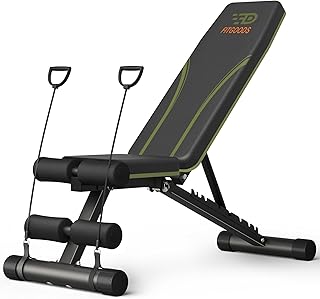
Fitgoods Adjustable Weight Bench for Home Gym
Honestly, Fitgoods Adjustable Weight Bench for Home Gym surprised me — sturdier than it looks in the photos, and over 86 buyers gave it 4.5 stars.
The “Greasing the Groove” Secret

If you want to master a bodyweight skill quickly, learn the “Greasing the Groove” method. It’s a training approach that focuses on frequently practicing a skill throughout the day, but never going near failure. The goal is to improve neurological efficiency and solidify movement patterns.
I used this to conquer the L-sit. I selected the L-sit as my target skill. Instead of doing one exhausting core workout, I spread the work out. I performed 3 to 5 short sets throughout the day. If my max hold was 10 seconds, I’d only hold it for 4 or 5. I made sure to leave an hour between each session so I was fresh.
I bought JFIT Wood Parallettes for $44.95 on Amazon and kept them in the middle of my living room. Every time I walked past them to the kitchen, I’d drop down and do a 5-second L-sit. I wasn’t sweating. I wasn’t tired. I was just practicing. The wood grain felt great. Within three weeks, my max hold time doubled. It’s a cheat code for strength.
My Final Takeaway on Building Your Routine
Building a calisthenics workout program that delivers results isn’t about finding a secret exercise. It’s about consistency, honest evaluation of your form, and gradual, painful progression. I wasted time early on by jumping from one flashy YouTube routine to another. I’d try a new program for four days, get bored, and switch. That is a recipe for failure.
Pick a solid routine and stick with it for eight weeks. Your body needs time to adapt to the stress. Track your workouts in a notebook. I use a black Moleskine notebook that costs $18.50 at Barnes & Noble. I write down every set and rep in messy ink. If I did 8 pull-ups last week, I fight like hell to get 9 this week. That incremental progress is where the magic happens.
Stop comparing yourself to the genetic freaks on Instagram doing one-finger handstand push-ups. Most have been training since they were toddlers. Focus on your own progress. Master the basics, eat enough protein, and push yourself a little harder each session. The results will come. I promise.
I recommend taking these 8 tips and building them into your weekly schedule. Don’t wait until Monday. Start today. Grab your liquid chalk, set up your resistance bands, and get to work.
If you found this helpful, pin this article to your fitness board. Save it, share it with a friend who needs a reality check on their sloppy push-up form, and let’s get stronger together.
Frequently Asked Questions
How often should I do a calisthenics workout program?
I recommend training three to four days a week. Your muscles need time to recover and rebuild. Training every single day usually leads to burnout or joint injuries.
Can I build muscle with just bodyweight exercises?
Absolutely. As long as you focus on progressive overload and eat enough protein, your chest and back will grow. Your muscles don’t know the difference between a dumbbell and your own body weight.
Do I need equipment for a calisthenics workout program?
You can start with zero gear, but I highly suggest getting a pull-up bar, some liquid chalk, and a set of resistance bands. Those three tools will make your workouts significantly more effective.
Why are my pull-ups not improving?
You’re likely ignoring isometric holds and just chasing reps with terrible form. Use a resistance band for assistance, hold your chin over the bar for five seconds, and focus on strict, clean repetitions.
