What’s Inside
- Measure Your Space Meticulously Before Buying Anything
- Invest in Adjustable Dumbbells for Maximum Versatility
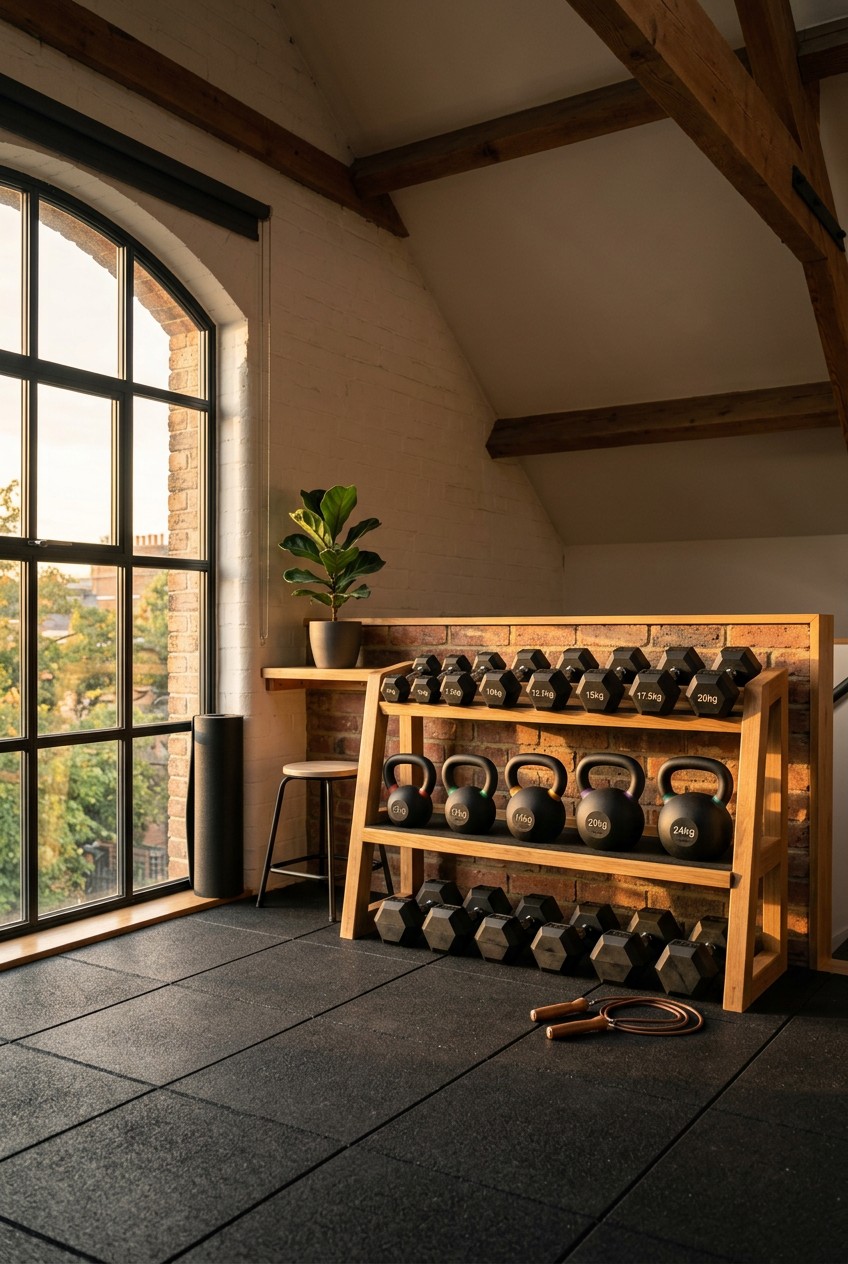
- Utilize Vertical Space with Wall-Mounted Storage
- Opt for a Foldable or Compact Treadmill
- Embrace Resistance Bands with a Multi-Position Door Anchor
- Choose a Foldable Weight Bench
- Consider a Wall-Mounted Folding Squat Rack
- Invest in Smart Home Gym Systems for an All-in-One Solution
- Prioritize Quality Rubber Flooring
- Install Full-Length Mirrors for Visual Expansion
- Integrate Multi-functional Furniture (Sneaky Small Gym Room Ideas)
- Create a Dedicated Recovery Zone with Portable Tools
I stood in my 10-by-10 spare bedroom last Tuesday, staring at a massive, rusted Smith machine I’d bought off Craigslist for $300, realizing I can’t even open the closet door anymore. The room smelled like old iron and regret. If you want small gym room ideas that actually work, learn from my stupidity. Building a functional workout space in a tiny room isn’t about cramming commercial gear into a closet. It’s about smart choices. I’ve tried this wrong for months before figuring it out. I’ve wasted money, permanently damaged my hardwood floors, and barely burned any calories because I couldn’t move safely. Let’s fix your setup right now. I’m going to walk you through exactly what gear to buy, how to store it, and what painful mistakes to avoid. Learned that the hard way.
1. Measure Your Space Meticulously Before Buying Anything

I’ve bought a basic $5.99 Stanley tape measure from Target and mapped out my floor plan. A common mistake is underestimating space needs, leading to severe overcrowding. I’ve bought a pull-up tower without measuring my ceiling height once. First strict pull-up, I slammed my head into the popcorn ceiling. Hard. White dust fell everywhere, and I had a headache for two days. It’s a miserable experience. Before you buy anything, measure the length, width, and crucially, the exact ceiling height of your dedicated gym space. You must account for the equipment’s physical footprint plus an additional 3 feet of clearance around large items for safe movement. If you’re doing overhead lifts or jumping, you absolutely need that extra space so you don’t punch a hole in your drywall. I’d recommend mapping out the exact dimensions with blue painter’s tape on your floor. It gives you a physical visual of the footprint before the heavy boxes arrive. Don’t impulse buy gear. Determine if your goal is strength, cardio, or mobility before spending a single dime. If you ignore this step, you won’t be able to walk without stubbing your toes on kettlebells every morning.
2. Invest in Adjustable Dumbbells for Maximum Versatility

Ditch the bulky dumbbell racks. I used to have a massive metal rack from Walmart taking up half my wall. It held five pairs of weights and collected a thick layer of grey dust. Adjustable dumbbells are the absolute truth for tight spaces. You can grab the NÜOBELL Adjustable Dumbbells for around $395. Yes, they cost more upfront, but they replace up to 15 pairs of traditional weights. If you’re on a tighter budget, the LifePro Adjustable Dumbbells run exactly $199.99 and feature a smooth sliding mechanism. I tested the LifePro set last month at a buddy’s apartment. The rubber grip feels solid, and the weight plates don’t rattle when you do renegade rows. I hate rattling weights. It’s cheap and distracting when you’re trying to focus. Quality matters heavily here. Cheap weights have locking mechanisms that stick. I once dropped a 10-pound steel plate directly onto my big toe because a cheap locking pin failed. Buy once, cry once. Trust me on this. Getting a reliable adjustable set means you have a weight range suitable for heavy goblet squats or light lateral raises, all sitting in a tiny 2-foot footprint.
3. Utilize Vertical Space with Wall-Mounted Storage

Keep your floor completely clear by going vertical. If you leave your jump ropes and resistance bands on the floor, you’re going to trip. I tripped over a heavy green resistance band last Thursday and nearly broke my nose on a bench. Install pegboards, floating shelves, or heavy-duty wall hooks. I grabbed a massive wooden pegboard from Costco for $45. I mounted it directly into the wooden studs, and sawdust went everywhere, but it was worth it. A pegboard allows for customizable arrangements. You can hang a 4 oz jump rope, a 2-pound foam roller, and your sweaty leather lifting belt all in one spot. It keeps gear accessible and keeps the room from looking like a teenager’s messy bedroom. Skip the cheap plastic hooks. They won’t hold up under the weight of heavy bands and snap instantly. I use 1/4-inch thick steel hooks. Storing things vertically actually makes you want to work out because the space feels organized. Plus, seeing all your gear displayed neatly is weirdly motivating. Just make sure you anchor everything into studs. Standard drywall anchors won’t hold the weight of your heavy accessories.

NICEPEOPLE Adjustable Weight Bench for Home Gym
Honestly, NICEPEOPLE Adjustable Weight Bench for Home Gym surprised me — sturdier than it looks in the photos, and over 33 buyers gave it 4.5 stars.
4. Opt for a Foldable or Compact Treadmill

For cardio in tight spaces, bulky commercial treadmills are a total nightmare. I bought a used commercial treadmill once. It took three guys to move it, and it permanently ruined my apartment carpet with black grease stains. Instead, consider treadmills specifically designed for small areas. The WalkingPad C2 Pro costs about $499 and features a crazy 180-degree folding design. You can literally fold it in half and shove it under a sofa or desk when not in use. I’m using one right now while answering emails. If you want to actually run, the Horizon T101 is usually considered the best folding treadmill under $1,000. It costs exactly $649 right now and folds up vertically. Another solid pick is the Echelon Stride series, which offers an auto-fold feature and built-in transport wheels. I tested the Echelon Stride at a fitness expo. The belt felt grippy, and the motor didn’t sound like a dying lawnmower. Don’t buy those ultra-cheap $150 walking pads online. The belts slip, and the motors won’t last after a month of heavy use. Spend the extra cash on a Horizon or WalkingPad. You might also like: 20 Gorgeous Easy Home Workout Ideas That Actually Work
5. Embrace Resistance Bands with a Multi-Position Door Anchor

Resistance bands are incredibly versatile and completely portable. You don’t need a massive cable machine taking up half the room to build your back and chest. A 14-piece resistance band set with a 5-position door anchor can provide up to 150 lbs of combined resistance. You can pick up a set from the Cicia Store for exactly $39.99 online. I’ve kept a set in my gym bag at all times. I tried doing lat pulldowns by just looping a band over a standard door hinge once. The band snapped back, leaving a massive, burning red welt on my shoulder. Don’t do that. Use the actual multi-position door anchor that comes with the kit. It wedges safely into the door frame. This setup allows for a brutal full-body workout. You can target your back, chest, arms, and legs using just a standard door frame. The rubber texture of the bands provides constant tension, which burns calories fast. Just check the bands for tiny tears before you stretch them. If you see a tear, throw it away immediately. Snapping a thick band against your skin hurts terribly. I won’t ever make that mistake again. You might also like: 20 Brilliant Adopt Me Houses Home Gym Setup Ideas That Are Totally Worth It
6. Choose a Foldable Weight Bench

A sturdy, foldable weight bench is essential for strength training. But you can’t leave it sitting in the middle of the room to trip over in the dark. Look for benches that fold completely flat or can be hung on a wall. The MightyRock foldable bench costs around $130 and collapses down to just a few inches thick. If you want commercial quality, the Ironmaster Super Bench Pro V2 runs $439. I’ve owned the Ironmaster for two years. It weighs 65 pounds, feels like an absolute tank, and the vinyl padding is incredibly dense. When buying a bench, ensure the padded section is at least 28 cm wide. If it’s narrower, your shoulders won’t have a stable base for heavy pressing. Also, make sure the bench height doesn’t exceed 45 cm for proper ergonomics, especially if you’re under 185 cm tall. I used a cheap, tall bench for a year. My feet dangled off the ground, causing terrible lower back pain during heavy dumbbell presses. Your feet must be planted flat on the floor. A good folding bench slides right under your bed when you’re done sweating. You might also like: 15 Creative Workout Motivation Tips You Haven’t Thought Of

kisnbld Small Exercise Ball, 9 Inch Mini Pilates Ball
kisnbld Small Exercise Ball punches above its price — 22 buyers rated it 4.5 stars. I would buy it again.
7. Consider a Wall-Mounted Folding Squat Rack

For serious strength training in a small footprint, a wall-mounted folding squat rack is the absolute best investment you can make. Brands like Valor Fitness, PRx Profile PRO, or Titan Fitness offer racks that extend only about 21.5 inches from the wall when in use. They fold completely flat when not needed, maximizing your floor space. I installed the PRx Profile PRO rack in my garage last summer. It cost $899. The gas shocks make folding it up take literally two seconds. It features 11-gauge steel construction and supports heavy-duty training up to 750 lbs. I was skeptical about trusting a folding rack with heavy weight, but this thing won’t budge. The steel is cold and heavy, and the powder coating provides a rough, secure grip. You must mount these to wooden studs using a heavy wrench. Do not try to mount a squat rack to drywall. I’ve seen a guy do that on video, and the whole rack ripped out of the wall, destroying his room and his barbell. Get a stud finder, mark your holes, and bolt it down properly.
8. Invest in Smart Home Gym Systems for an All-in-One Solution

If you have the budget, smart home gym systems offer a full gym experience in a ridiculously compact form. The Tonal 2 is a wall-mounted unit that uses digital weight to provide up to 250 lbs of resistance. It costs over $3,995, plus a monthly subscription. I used a Tonal at a hotel gym in Denver. The sleek glass screen is beautiful, and the smooth cable pull is intense. A 50-pound digital cable pull feels way harder than a 50-pound physical dumbbell because there’s no momentum to cheat with. It also provides guided workouts with AI-powered form feedback. If you don’t want to drop four grand, the Tempo Move offers a much more budget-friendly entry point. It costs $395 and uses your television and phone camera to track your form while you lift their physical weights. The Tempo cabinet is tiny, looking like a high-end speaker. It stores 35 pounds of weight plates inside. I love the convenience, but I hate subscription fees. Just know that most smart gyms require a monthly fee to access the classes. If you hate subscriptions, stick to iron. I won’t pay a monthly fee for my own spare room. No exaggeration.
9. Prioritize Quality Rubber Flooring

Don’t skip proper flooring. Working out on bare concrete, hardwood, or carpet is a terrible idea. It’s causing joint discomfort, damages your equipment, and creates a massive slip hazard. I dropped a 25-pound dumbbell on my apartment’s hardwood floor three years ago. It left a crater that cost me my $500 security deposit. Install 3/4-inch thick rubber mats. You can buy 4×6 foot horse stall mats for $55 each at most farm supply stores. If you want something lighter, I’d buy a pack of high-quality interlocking EVA foam tiles from Walmart for $24.99 to put under my stationary bike. They cushion the impact, reduce the loud clanking noise of weights, and protect your floors. Plus, a black rubber floor instantly makes a spare room feel like a professional environment. It smells a bit like a tire shop for the first week, so keep a window open. I usually burn a cheap vanilla candle I’ve grabbed at Kroger for $4.99 to mask the strong rubber smell until it eventually fades away. Don’t lift on carpet unless you want to twist an ankle.

Fitbit Charge 6 Fitness Tracker with Google apps
A dependable everyday pick — Fitbit Charge 6 Fitness Tracker with Google apps pulls in 20 ratings at 4.5 stars. Not flashy, just solid.
10. Install Full-Length Mirrors for Visual Expansion

A surprising tip for tiny rooms is to use mirrors strategically. Mounting full-length mirrors floor-to-ceiling on one wall creates the illusion of a much larger space. It’s bouncing natural light around, making a dark, depressing room feel bright and energetic. More importantly, mirrors allow you to check your form during exercises. I did deadlifts facing a blank wall for years. I ended up rounding my back and tweaking my lumbar spine because I couldn’t see my posture. I bought three basic over-the-door mirrors from Target for $7.99 each and mounted them side-by-side on my wall using heavy-duty adhesive strips. It cost under $30 and completely changed the room’s vibe. You can watch your knees during squats to ensure they aren’t caving inward. It prevents injuries and maximizes the effectiveness of your lifts. I usually wipe them down with a mix of water and white vinegar I buy at Sprouts for $3.49. Sweaty fingerprints on mirrors drive me completely crazy. Keep them streak-free so you can actually see your form clearly.
11. Integrate Multi-functional Furniture (Sneaky Small Gym Room Ideas)

Hidden gym furniture is a massive trend right now. If your gym space shares a room with your home office or guest bedroom, you don’t want it looking like a messy commercial gym. Look for ottomans that double as storage for resistance bands and yoga blocks. I found a faux-leather storage ottoman at Target for $65. I keep two 4-inch cork yoga blocks, my jump rope, and a 12-ounce tub of chalk inside it. When guests come over, they just think it’s a regular place to sit. You can also find coffee tables with built-in weight plate compartments. This allows your gym space to blend into other living areas when not in use. I bought a cheap wooden storage trunk from a thrift store and painted it matte black. It holds my foam roller and massage gun perfectly. Just don’t buy flimsy particleboard furniture. I bought a cheap storage bench once, sat on it while holding a 50-pound dumbbell, and the lid collapsed inward with a loud crack. I fell straight into the storage bin. Make sure the furniture has a high weight capacity.
12. Create a Dedicated Recovery Zone with Portable Tools

Fitness isn’t just about destroying your muscles; it’s about recovery. Designate a small 3-by-3 foot corner for a yoga mat, a high-density foam roller, and a massage gun. These items are incredibly compact and can be easily stored in a decorative woven basket. I’ve kept a Hypervolt Go 2 massage gun, which costs $129, in a small basket next to my desk. It’s quiet, has a great hum to it, and fits right in the palm of my hand. I also keep a thick Manduka PROlite yoga mat rolled up in the corner. It costs $99 but provides amazing joint support on hard floors. I usually grab a bottle of cold-pressed green juice from Whole Foods for $4.99 and sit on my squishy mat for ten minutes after a heavy leg day. Stretching on a quality mat while using a massage gun on your quads speeds up recovery drastically. Don’t skip this zone. I’ve skipped stretching entirely before and ended up with tight hamstrings that ruined my squat depth. A small recovery corner encourages mindful movement and keeps you injury-free.
Building a home gym in a tiny room doesn’t have to be a frustrating experience. You just need to be smart about your gear choices. Skip the massive cable machines and bulky dumbbell racks. Stick to adjustable weights, folding benches, and wall-mounted storage. I’d usually grab a protein bar from Trader Joe’s for $1.99, sit on my folding bench, and plan my workouts in peace. It’s my favorite room in the house now. If you found these tips helpful, pin this article to your fitness board so you don’t lose it. Now go measure your room, buy the right gear, and get to work.

Foam Roller Set – High Density Back Roller
Foam Roller Set – High Density Back Roller has been one of the most consistently praised picks in this category. 19 reviewers averaged 4.5/5.
Frequently Asked Questions
What is the best cardio equipment for a small gym room?
I’d highly recommend a folding treadmill like the WalkingPad C2 Pro or the Horizon T101. They fold up flat or vertically, allowing you to slide them under a bed or into a closet. It’s the easiest way to save floor space.
Can I put a squat rack in a small room?
Yes, you absolutely can. You’ll want a wall-mounted folding squat rack from brands like PRx or Titan Fitness. They bolt directly into your wall studs and fold out only when you’re lifting, saving massive amounts of space.
How do I protect my floors in a small home gym?
Skip the cheap yoga mats. I’d install 3/4-inch thick rubber horse stall mats or high-quality interlocking EVA foam tiles. They cushion heavy dumbbell drops, reduce noise, and protect your hardwood or carpet from permanent damage.
Are adjustable dumbbells worth the money?
They’re absolutely worth it. A set like the NÜOBELL or LifePro adjustable dumbbells replaces up to 15 pairs of traditional weights. You’ll save a ton of floor space and avoid buying a massive, dusty weight rack.
