What’s Inside
- Master the Mind-Muscle Connection in Your Legs and Glutes Workout
- Prioritize Progressive Overload Consistently
- Incorporate Unilateral Work for Better Balance
- Don’t Skip Compound Lifts for Isolation Exercises
- Optimize Protein and Supplements for Muscle Growth
- Utilize Resistance Bands for Activation and Burnouts
- Focus on the Lengthened Position in Your Legs and Glutes Workout
- Implement Strategic Rest and Active Recovery
I spent my first three years in the gym doing half-rep squats and wondering why my jeans still fit exactly the same. If you want a beginner legs and glutes workout that actually builds muscle, you can’t just go through the motions. Last Tuesday at Target, I caught my reflection in the fitting room mirror while trying on a pair of $39.99 Goodfellow slim-fit denim jeans. I realized how much my lower body has changed since I stopped training like an idiot. The harsh, buzzing fluorescent lights showed actual quad definition and glute development. It wasn’t always like this. I used to do endless, unweighted donkey kicks on a dirty yoga mat, smelling the stale sweat of the person who used it before me, getting absolutely zero results. My knees would ache, my lower back would scream, and my glutes remained completely flat. I’m going to break down how to fix your lower body training for good. You don’t need fancy machines or circus tricks. You just need proper technique, heavy weights, and the patience to execute the basics. The fitness industry loves to overcomplicate things to sell you programs. I’m here to tell you that building a strong lower body comes down to a few core principles. Let’s get into the exact strategies I use and teach my clients.
1. Master the Mind-Muscle Connection in Your Legs and Glutes Workout

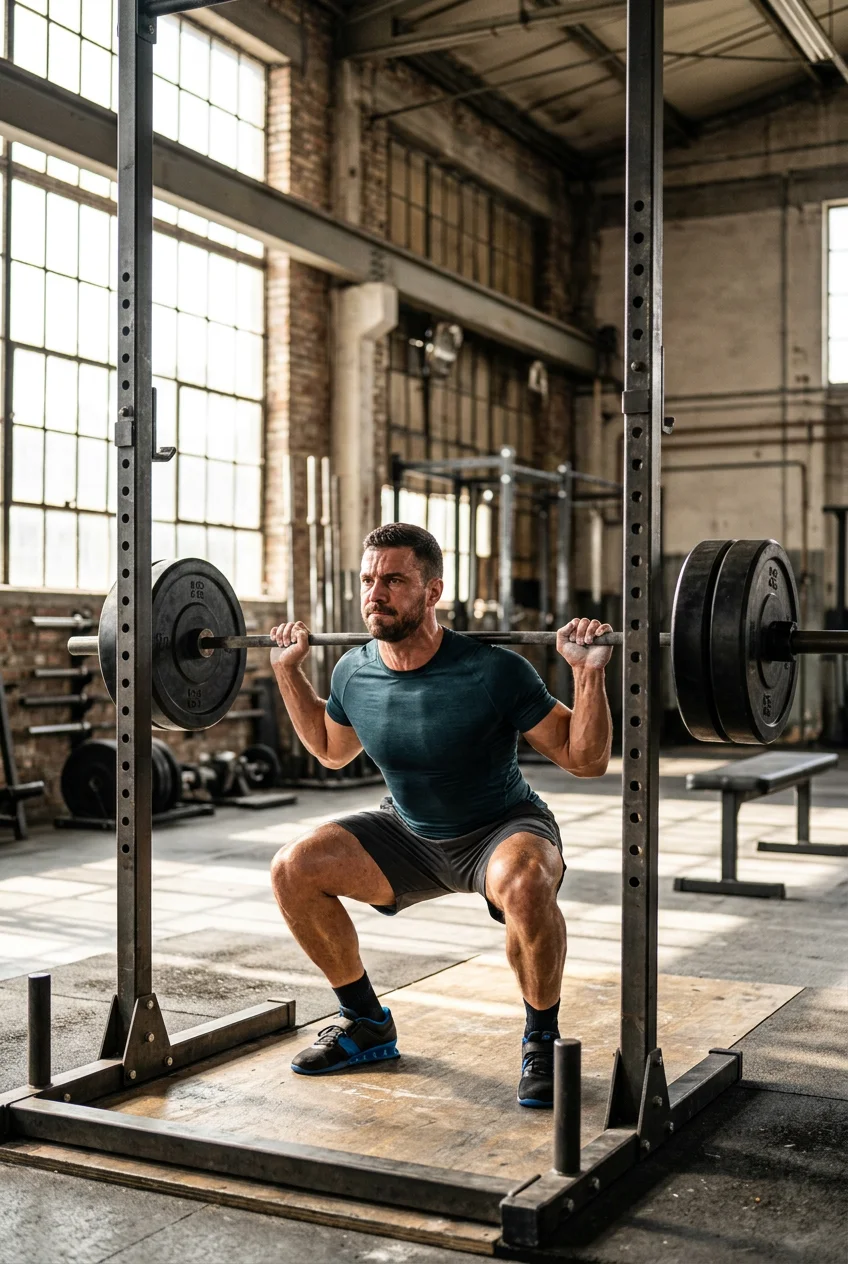
I’m convinced most beginners just drop into a squat and hope for the best. I know I did. Back in 2018, I tried this wrong for months before figuring it out. I’d load up the barbell, drop down way too fast, and bounce out of the bottom hole using purely my lower back and momentum. My knees sounded like crinkling plastic bubble wrap, and my lower back ached for days afterward. Consciously engaging your glutes during exercises amplifies muscle activation and recruitment, leading to much more effective workouts. To improve this connection, you need to lighten your load and slow down your reps. I suggest a strict 3-second count on the eccentric, lowering phase of a squat or Romanian deadlift. Use tactile cues. Literally poke the muscle you want to work. It sounds weird, but poking your glute before a heavy hip thrust forces your nervous system to focus on that area. This ensures your glutes are the primary movers, rather than secondary muscles compensating for your weakness. I bought a cheap pair of $14.99 generic gym shorts from Walmart last year because they were thin enough to let me feel my muscle contractions. The synthetic material felt like cheap tissue paper, and they ripped down the back seam two weeks later while I was at the bottom of a deep goblet squat. Huge mistake. Learned that the hard way. Buy quality gear, but keep your focus entirely on feeling the muscle stretch and squeeze. If you aren’t feeling your glutes working, they aren’t working. Your quads or lower back are taking over. Slow the movement down, drop your ego, and focus on the feeling of the muscle fibers contracting.
2. Prioritize Progressive Overload Consistently

Muscles grow when they’re challenged. Progressive overload means gradually increasing the demands on your muscles over time. You can’t just use the same 15-pound dumbbells for six months and expect your body to change. I see people at my local gym doing this every day. They grab the same pink neoprene weights, do their 15 fast reps, and leave. You have to force adaptation. This means lifting heavier, increasing your reps or sets, slowing down your tempo, or increasing your range of motion. Aim to increase one of these variables weekly to prevent plateaus. I track every workout in a $19.99 Moleskine classic hardcover notebook. The thick, creamy paper handles my sweaty fingerprints perfectly. I tried using a digital fitness app, but the glaring screen distracted me and I’d end up scrolling social media. Stick to a physical log. When I started writing down my lifts, I realized I was severely under-training. I wasn’t pushing to failure. Once proper form is established, you need to increase the load so the last few reps of a set are genuinely difficult. You should only have zero to two reps left in the tank. If your face isn’t contorting a bit on rep ten, the weight is too light. Don’t be afraid to struggle. That burning sensation and the physical fight to finish the final rep is exactly what triggers your body to build new muscle tissue.
3. Incorporate Unilateral Work for Better Balance

Many people neglect single-leg exercises. This is a massive error. Unilateral work is vital for fixing imbalances, improving core stability, and boosting that mind-muscle connection. Exercises like Bulgarian split squats, single-leg Romanian deadlifts, and heavy step-ups are mandatory. I swear by Bulgarian split squats, even though they feel like torture every time. Last month at my garage gym, I loaded up my $399.00 REP Fitness rubber hex dumbbells for a heavy set. I lost my balance on the third rep, dropped a 50-pound dumbbell onto my left toe, and fell sideways into a stack of empty cardboard boxes. The sharp, throbbing pain and the smell of dusty cardboard humbled me instantly. Trust me. Start light. Focus on balance and range of motion before adding heavy loads. When you work one leg at a time, you force your gluteus medius to stabilize your pelvis. This prevents your knees from caving inward during heavy squats. I usually buy a 3-pound bag of raw almonds from Costco for $12.99 to snack on after these brutal sessions. The salty, crunchy texture is what I crave when my legs are shaking so hard I can barely walk up the stairs. Single-leg work exposes your weaknesses immediately. If your left leg is significantly weaker than your right, you’ll know on the first rep. You might also like: 20 Gorgeous Easy Home Workout Ideas That Actually Work

FLYBIRD WB2 Weight Bench
A dependable everyday pick — FLYBIRD WB2 Weight Bench pulls in 215 ratings at 4.5 stars. Not flashy, just solid.
4. Don’t Skip Compound Lifts for Isolation Exercises

I’m going to be honest. You can do cable kickbacks until you’re blue in the face, but they won’t build significant mass. While isolation exercises and banded side walks can complement your routine, they can’t replace heavy compound lifts. Exercises such as barbell back squats, heavy hip thrusts, and conventional deadlifts offer high loading potential. They activate the glutes effectively because you can move serious weight. I used to spend 40 minutes doing tiny, pulsing movements on a mat. It was a waste of time. My glutes were flat and my hamstrings were non-existent. You need to get under a heavy barbell. The rough knurling of a $295.00 Rogue Ohio Bar digging into your upper back is a feeling you need to get used to. It hurts at first. Your skin will get red and angry. But that physical stress is how you build a resilient body. Compound lifts force your core to brace, your nervous system to fire, and your largest muscle groups to work together. I always follow up my heavy squat days with a trip to Trader Joe’s. I grab their $4.99 frozen Mandarin Orange Chicken. It smells of ginger and soy sauce when it hits the hot skillet, and the 21 grams of protein per serving helps repair the muscle fibers I just tore down. Stop wasting energy on tiny movements. Move big weights to build big muscles. You might also like: 20 Inspiring Journal Home Workout Ideas You Haven’t Thought Of
5. Optimize Protein and Supplements for Muscle Growth

You can’t out-train a terrible diet. Skip the fat-free stuff. It tastes like wet cardboard and leaves you feeling empty. For glute growth, aim for a daily protein intake of 1.6 to 2.2 grams per kilogram of body weight, distributed evenly across your meals. For a 60kg person, that’s 96 to 132 grams of protein daily. You need complete sources like chicken breast, wild-caught salmon, whole eggs, and high-quality whey protein. I buy the 5-pound tub of Optimum Nutrition Gold Standard Whey in Double Rich Chocolate for $85.99. It mixes perfectly with 8 ounces of cold whole milk, creating a thick, creamy shake without that chalky aftertaste. I also recommend creatine monohydrate. It’s the most researched supplement on the planet for increasing muscle strength and size. A daily maintenance dose of 3 to 5 grams is all you need. I grab the $29.99 Optimum Nutrition unflavored creatine powder from Whole Foods. The white powder is so fine it looks like sugar, and it dissolves instantly in my morning black coffee without changing the bitter flavor at all. I tried skipping creatine for a few months last year to save money. My squat strength plummeted and my muscles felt flat. Never again. Buy the basic supplements, eat real food, and watch your lower body respond. You might also like: 20 Creative Men Home Workout Ideas You’ll Want to Bookmark
6. Utilize Resistance Bands for Activation and Burnouts

Resistance bands are excellent for glute activation during warm-ups. They’re also great for adding resistance to bodyweight exercises or using as a burnout finisher at the end of your session. But you need to buy the right kind. I bought a $9.99 pack of thin rubber bands from a discount bin two years ago. I was doing lateral band walks, stretching the band as hard as I could. The rubber snapped, whipped me in the shin, and left a bright red welt that stung for three days. The smell of cheap rubber still makes me cringe. Do not buy those. Spend the money on a thick fabric band. The Mark Bell Sling Shot Hip Circle costs $22.50. It features a thick, woven fabric with a grippy rubber interior that won’t roll up your thighs or snap. It’s durable. I use it for high-rep clamshells and lateral walks to fire up my gluteus medius before I touch a barbell. A weak core and inactive glutes can lead to improper recruitment and strain on your lower back. I usually stop at Sprouts Farmers Market on my way to the gym to grab a cold $2.50 Celsius energy drink. The sparkling Fuji Apple flavor gives me the crisp caffeine kick I need to push through the burning sensation of a heavy band warmup.

NICEPEOPLE Adjustable Weight Bench for Home Gym
NICEPEOPLE Adjustable Weight Bench for Home Gym punches above its price — 33 buyers rated it 4.5 stars. I would buy it again.
7. Focus on the Lengthened Position in Your Legs and Glutes Workout

Most people get this concept wrong. They overemphasize the hard, localized squeeze at the top of a hip thrust or squat. While the squeeze feels good, significant muscle growth actually occurs in the stretched, lengthened position. For your glutes and hamstrings, focus on controlling the eccentric lowering phase of exercises like Romanian deadlifts. When you slowly lower the weight, you’re stretching the muscle fibers while they’re under tension. This causes the microscopic tears necessary for growth. I learned this the hard way. I used to drop the heavy barbell fast on my RDLs and just stand back up using momentum. I never got sore. Once I started taking a full four seconds to lower the bar, feeling the pulling stretch deep in my hamstrings, my legs changed shape. If you want to isolate the glutes further in a lengthened position, try using ankle weights for side-lying leg lifts or donkey kicks. The Sportneer Adjustable Ankle Weights run about $29.99 on Amazon. They let you vary the load from 1 to 5 pounds per ankle. The black canvas is durable, though the velcro straps can be scratchy against bare skin. I recommend wearing long leggings when you use them. I usually pick up a $5.99 pack of unscented epsom salts from Kroger to soak my legs in a hot bath after these sessions. The hot water soothes the deep, lingering muscle ache.
8. Implement Strategic Rest and Active Recovery

You aren’t building muscle while you’re sweating in the gym. You’re tearing it down. You build muscle while you’re sleeping and recovering on the couch. Allow at least 48 hours of rest before targeting your lower body again with intense training. Prioritize 7 to 9 hours of quality sleep every night. I use a $34.99 TriggerPoint GRID Foam Roller to alleviate tightness. The dense orange EVA foam has a grid pattern that mimics a massage therapist’s thumbs. It hurts like crazy when you roll over a tight IT band, but the relief is undeniable. The foam roller has a distinct, plastic smell when you unbox it, but that fades fast. Active recovery is also crucial. Light, low-intensity activities like a brisk 20-minute walk promote blood flow, aiding in waste removal and nutrient delivery to damaged tissues. Don’t fall into the trap of copy-paste programming. Randomly changing your workout every session prevents consistent progressive overload. Stick to a structured program for at least eight to twelve weeks. Focus on your primary compound lifts and supporting accessory movements. Give your body the time it needs to adapt, recover, and grow. If you rush the recovery process, you’ll end up injured and frustrated.
Building a strong, muscular lower body takes serious time, patience, and heavy lifting. I’ve made every mistake in the book so you don’t have to repeat them. Stick to these core principles, eat enough protein to support your training, and focus on the mind-muscle connection. Your jeans will fit differently in a few short months. No exaggeration. Skip the useless fad exercises and master the basics. Save this beginner legs and glutes workout guide and pin it to your fitness board so you can reference these tips before your next heavy gym session. You’ve got this.
Frequently Asked Questions
How many times a week should I do a legs and glutes workout?
For optimal growth, aim to train your lower body two to three times per week. You must allow at least 48 hours of rest between sessions so your muscles can fully recover and rebuild stronger.
Do I need to lift heavy to grow my glutes?
Yes. While bodyweight exercises and resistance bands are great for warm-ups, you need heavy compound lifts like squats and deadlifts to force progressive overload. If you aren’t challenging your muscles, they won’t grow.
Why aren’t I feeling my glutes during squats?
You likely have a poor mind-muscle connection or your quads are taking over. Lighten the weight, slow down your eccentric lowering phase to three seconds, and consciously focus on squeezing your glutes as you stand back up.
What is the best supplement for a legs and glutes workout?
Creatine monohydrate is the most researched and effective supplement for building strength and size. Taking 3 to 5 grams daily, alongside adequate protein intake, will significantly improve your lifting performance and muscle recovery.
