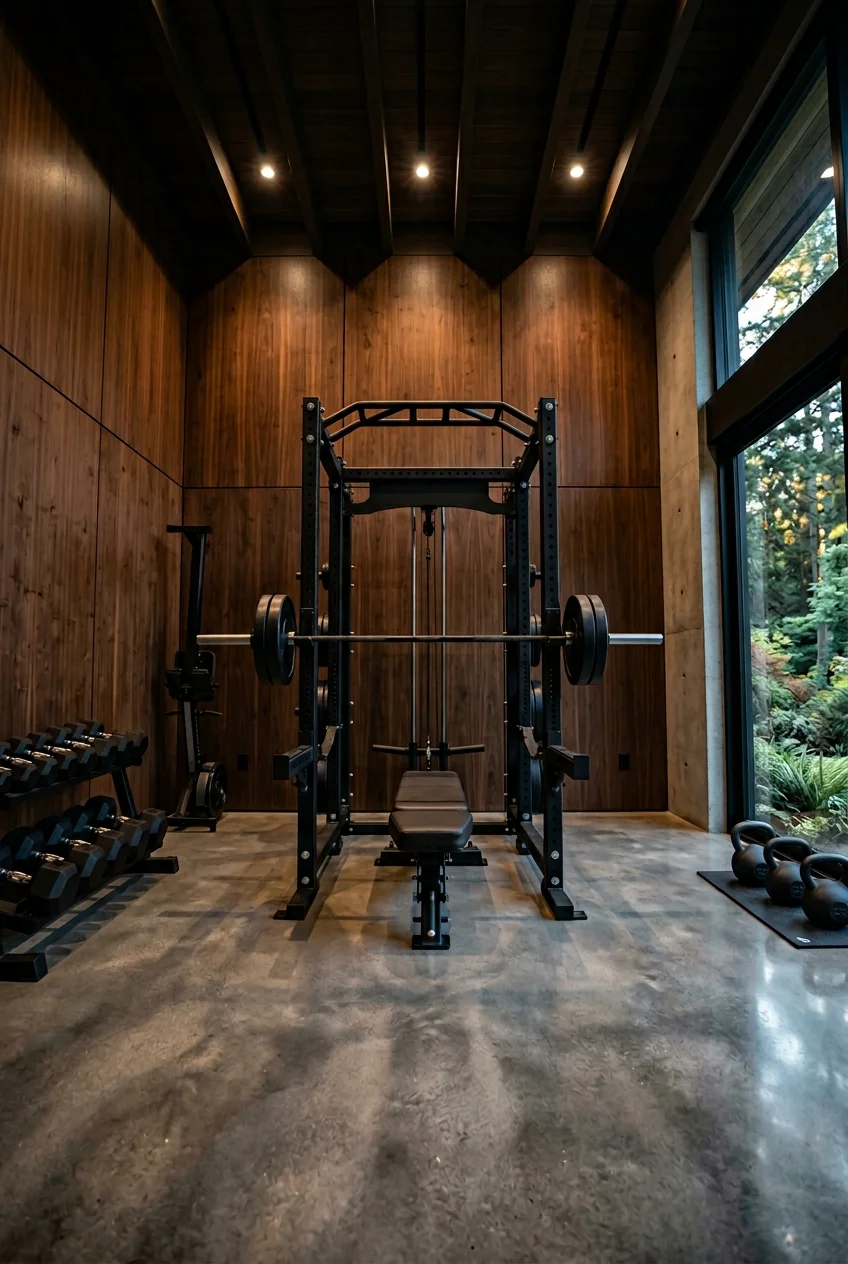
What’s Inside
- The Foundation Of Home Gym Design Is Proper Zoning
- Smart Strength Systems Beat Rusty Iron Every Time
- Connected Cardio That Actually Makes You Sweat
- Premium Flooring Is Non-Negotiable For Heavy Lifts
- Lighting Sets The Mood For Home Gym Design
- Climate Control Will Make Or Break Your Workouts
- Mirrors Are For Strict Form, Not Just Selfies
- The Recovery Zone Is Where The Magic Happens
I tripped over a rusted 45-pound iron plate in my freezing garage last Tuesday, spilling a $4.99 chocolate protein shake from Costco all over my favorite white training sneakers. If you want a setup that actually makes you want to train, you’ve got to understand home gym design. That sticky, artificial-smelling mess soaking into my socks was my wake-up call that my workout space was a depressing, dangerous dungeon. True home gym design isn’t just slapping a noisy treadmill in a dark basement corner and hoping for the best. It’s creating a highly functional space that looks incredible, feels premium, and burns calories fast because you actually want to spend two hours a day in there. I spent years working out in cramped, smelly rooms with peeling gray paint. I’d buy random cheap gear from Walmart, stack it in messy piles, and wonder why I had zero motivation to lift. Bad idea. I ended up avoiding my own house to go pay $150 a month at a crowded commercial spot. Let’s fix that right now. I’m Ryan. I test fitness gear and design workout spaces for a living. I’ve made every stupid, expensive mistake you can possibly make when building a workout room. I bought a cheap $199 squat rack from Target that wobbled so violently I thought I was going to die under 225 pounds. I laid down cheap foam mats that ripped to shreds in three days. I’m going to walk you through exactly how to build a space that looks like a high-end studio and gets you shredded. We’re talking specific gear, exact prices, and layouts that actually make sense for your body. Grab a notebook and let’s get into it.
1. The Foundation Of Home Gym Design Is Proper Zoning

Let’s talk about space. Most people get this entirely wrong. They shove a stationary bike right next to a heavy bench press and call it a day. Last month, I visited a client’s house after grabbing a $12 kale salad at Whole Foods. He shoved his $2,000 treadmill so tight against a drywall corner he couldn’t even swing his arms without scraping his knuckles. I told him to tear it all down immediately. For a real high-end feel, you need to allocate at least 300 to 500 square feet for an optimal gym layout. If your goal includes a massive, comprehensive setup, aim for 500 to 1,000 square feet. This gives you distinct, dedicated zones for strength, cardio, mindful movement, and recovery. You also need a minimum ceiling height of 9 to 10 feet. If you try to do jump training or install a pull-up bar in an 8-foot room, you’re going to smash your skull. I learned that the hard way trying to do ring muscle-ups in my old apartment. I hit my head so hard I saw stars. According to Iron House Design, “The goal isn’t more space. The goal is clean movement (enough clearance to train safely, enough breathing room to keep the space calm, and enough storage to prevent the slow creep into chaos).” I completely agree with that logic. You need physical space to breathe and move safely. Before you buy a single dumbbell, tape out your zones on the bare floor with a $3.99 roll of blue painter’s tape from Home Depot. Mark your cardio corner with a 6-foot box. Mark your lifting platform with an 8-foot square. Give yourself at least 3 feet of clear walking room between every single piece of gear. If you don’t, your room will feel like a cluttered storage closet instead of a premium fitness sanctuary.
2. Smart Strength Systems Beat Rusty Iron Every Time

I used to be a hardcore purist who only lifted heavy cast iron. I thought digital weights were a complete joke for weak people. I was incredibly wrong. If you want a clean, minimalist aesthetic that doesn’t take up your entire room, you need an AI-powered system like the Tonal Smart Home Gym. I installed one on my living room wall last summer. It looks like a sleek, glossy black mirror when it’s turned off. When you turn it on, it delivers up to 200 pounds of digital resistance. Trust me on this. Digital weight feels way heavier than regular iron. A 100-pound digital deadlift will humble you fast because there’s zero momentum to help you pull. The Tonal system starts at $3,995. You also need to buy the smart accessories for $495, which include the bluetooth smart handles, a smart bar, a tricep rope, and a heavy-duty bench. There’s a mandatory 12-month membership at $59.95 per month. Yes, it’s expensive. But it replaces an entire room of bulky metal racks and dangerous plates. The built-in AI tracks your form using sensors and automatically adjusts the weight if you start struggling on your last rep. I tried to outsmart the machine during a heavy bench press session last winter. I went too heavy. The machine immediately dropped the resistance by 15 pounds when my left arm gave out. It literally saved my shoulder from tearing. If your budget allows, skip the massive metal cages. Go digital. You’ll save 50 square feet of floor space and get a much better workout. Just make sure your wall studs sit exactly 16 inches apart before you order. I had to hire a local contractor for $300 to reinforce my drywall because I didn’t check first.
3. Connected Cardio That Actually Makes You Sweat

Cardio equipment is usually the ugliest thing in a house. Huge, clunky plastic treadmills that look like they belong in a dusty 1990s infomercial. We aren’t doing that here. You want a machine that looks like a high-end piece of modern furniture. I personally swear by the Hydrow Rower. I bought the Hydrow Origin for $2,195 last year. If your space runs slightly smaller, you can get the Hydrow Wave for $1,995. They both look incredible with their sleek aluminum and dark polymer frames. But it’s not just about looks. Rowing burns a massive amount of calories because it actively engages 86 percent of your body’s muscles on every single pull. I used to hate cardio. I’d drag myself out of bed at 5 AM, drink a $2.99 black cold brew from Sprouts, and force myself to jog on a squeaky, wobbly treadmill. It was miserable and hurt my knees. The Hydrow changed my entire morning routine. It boasts a massive 22-inch high-definition touchscreen that streams live workouts from real water locations like the Charles River in Boston or the Thames in London. The electromagnetic drag mechanism operates totally silent. You just hear the soft, rhythmic whoosh of the nylon strap. I row for 20 minutes every morning and I’m totally drenched in sweat. A quick warning for you. Don’t buy cheap rowing machines from Amazon for $200. I bought a magnetic rower once that offered absolutely zero resistance. It felt like pulling a loose string through the air. Spend the real money on a Hydrow. It looks gorgeous sitting in the corner of a room and it will absolutely torch your body fat. You might also like: 20 Inspiring Outfit Home Workout Ideas That Changed Everything

Jump Rope, High Speed Weighted Jump Rope
Honestly, Jump Rope surprised me — sturdier than it looks in the photos, and over 4 buyers gave it 4.5 stars.
4. Premium Flooring Is Non-Negotiable For Heavy Lifts

Never build a workout room on bare concrete or cheap residential carpet. I ruined the beige carpet in my spare bedroom by sweating gallons onto it and dropping a 35-pound cast iron kettlebell that punched a hole straight through the floorboards. My wife was furious. To fix it quickly, I bought cheap interlocking foam tiles from Walmart for $19.99 a pack. Huge mistake. They squished completely flat under the weight of my squat rack and smelled like toxic plastic chemicals for a solid month. If you’re serious about protecting your joints and your house, you need real rubber stall mats. Go to Tractor Supply Company and buy the 4-foot by 6-foot heavy-duty rubber stall mats. They measure exactly 3/4 inches thick and cost $54.99 each. These are the exact same thick mats they use for horses in barns. They’re totally indestructible. They’ll protect your concrete foundation from cracked plates and save your knees during heavy jump squats. Yes, they weigh a ton. A single mat comes in at nearly 100 pounds. I threw out my lower back trying to drag three of them out of my truck bed by myself last spring. Bring a strong friend to help you carry them. Once you lay them down, they look like a professional commercial facility. They provide the absolute perfect grip for heavy deadlifts. Your feet won’t slide an inch. If the solid black look feels too industrial for your taste, you can buy premium speckled rubber rolls from a brand like PLAE. Those run about $4.50 per square foot. They look amazing and come in subtle colors that can match your painted walls. Just don’t skip the flooring step. It’s the literal physical foundation of your entire room. You might also like: 20 Gorgeous Garage Home Gym Setup Ideas to Steal Right Now
5. Lighting Sets The Mood For Home Gym Design

You can buy the most expensive gear in the world, but if your lighting sucks, your room will feel like a creepy basement. True home gym design requires smart, layered lighting. Most houses feature a single, harsh overhead glass dome light that casts terrible dark shadows and gives you a headache after ten minutes. I spent two years lifting in a spare room with a single 60-watt yellow bulb. It felt depressing. I constantly felt tired and sluggish. You need bright, cool-toned LED lights to wake up your brain and simulate sunlight. I installed four Philips Hue White and Color Ambiance smart bulbs in my ceiling fixtures. They cost $134.99 for a four-pack at Best Buy. I sync them directly to an app on my phone. When I’m doing heavy lifting in the morning, I set the lights to a bright, crisp daylight white at 5000K. It immediately spikes my energy levels. When I’m doing yoga or deep stretching at night, I dim them down to a deep ocean blue or warm amber. It completely changes the vibe of the room from intense to relaxing. I also added a Philips Hue Lightstrip Plus for $99.99 behind my main wall mirror. It creates this awesome glowing halo effect that makes the space look like a $200-a-month boutique fitness studio in Los Angeles. Don’t rely on natural window light alone. Unless your room features massive floor-to-ceiling glass windows, natural light proves too inconsistent. It gets pitch dark at 4:30 PM in the winter. You need a lighting setup that makes you look good in the mirror. Good lighting highlights your muscle definition. It sounds a little vain, but seeing your hard-earned progress in good lighting serves as a massive psychological boost that keeps you coming back to train day after day. You might also like: 20 Beautiful Home Gym Setup Ideas That Changed Everything
6. Climate Control Will Make Or Break Your Workouts

I run extremely hot. I sweat entirely through a cotton t-shirt in about ten minutes of heavy kettlebell swings. If a room gets stuffy and stagnant, my heart rate spikes way too fast and my workout gets completely ruined. Last July, I tried to do a 45-minute high-intensity interval circuit in my garage with the heavy metal door closed. The temperature hit 95 degrees. I got super dizzy, threw up my expensive pre-workout supplement, and had to lay flat on the cold concrete floor for an hour just to recover. Don’t do that. You need aggressive climate control. A tiny plastic desk fan won’t cut it. I went to Target and bought a Lasko High Velocity Pro-Performance pivoting utility fan for $64.99. It sits on the floor and blasts a massive, powerful column of air straight at my face while I ride my stationary bike. It sounds like a loud jet engine, but I don’t care at all. It keeps my core temperature down. If you’re building a high-end room inside your actual house, you need a dedicated mini-split AC unit. A Pioneer 12,000 BTU mini-split runs about $898.00 online. You’ll need to pay a licensed HVAC guy another $500 to install it through your exterior wall. It’s worth every single penny. It keeps the room at exactly 65 degrees, which serves as the optimal temperature for heavy physical exertion. It also pulls all the nasty humidity out of the air. Stale sweat makes rooms smell terrible over time. If you don’t control the humidity, your expensive metal barbells will start to rust. I ruined a beautiful $350 Rogue Ohio Bar because I left it in a damp, unconditioned room for a year. Keep your space freezing cold and bone dry.

Ally Peaks Pull Up Bar for Doorway | Thickened Steel Max
A dependable everyday pick — Ally Peaks Pull Up Bar for Doorway | Thickened Steel Max Limit 440 lbs pulls in 127 ratings at 4.5 stars. Not flashy, just solid.
7. Mirrors Are For Strict Form, Not Just Selfies

Every good workout space needs mirrors. But you must do it the right way. I see guys buy those cheap $15 over-the-door plastic mirrors from a college dorm supply aisle and tape them to the wall. They warp your reflection so badly you look like you’re trapped in a carnival funhouse. You can’t check your squat depth if your legs look like squiggly noodles. After eating a $4.50 chocolate peanut butter protein bar from Kroger one afternoon, I decided to finally upgrade my terrible mirror situation. I called a local commercial glass company and ordered a custom 6-foot by 4-foot frameless glass mirror. It cost me exactly $350, including professional installation. They glued it directly to the drywall with heavy-duty mastic. The clarity looks absolutely perfect. A massive, flat, distortion-free mirror proves crucial for form correction. When you’re doing heavy overhead shoulder presses or barbell deadlifts, you need to see if your spine stays perfectly neutral. You can’t rely on feeling alone when you’re tired. I severely injured my lower back in 2019 because I thought my deadlift form felt perfect. I was actually rounding my lower back on every single rep. A good mirror would’ve shown me the mistake instantly. Place your mirror strategically. Don’t put it directly behind your squat rack where the heavy barbell plates will eventually smash into it. I leave exactly 24 inches of clear space between the edge of my lifting platform and the glass. Keep a bottle of Windex and a clean microfiber towel nearby. Sweat splatters everywhere when you drop heavy weights or do jump rope. A dirty, smudged mirror instantly ruins the clean, premium aesthetic we’re trying to build.
8. The Recovery Zone Is Where The Magic Happens

You can’t just train hard every single day and ignore your recovery. Your muscles need serious attention after you crush a heavy lifting session. A truly premium space needs a dedicated corner just for rolling out and chilling out. I used to just stretch on my dirty living room rug while eating a $3.99 bag of dried mango from Trader Joe’s. My dogs would jump all over me, licking my sweaty face, and I never actually relaxed. Now, I maintain a strict 50-square-foot zone dedicated entirely to physical recovery. I bought a 1.5-inch thick Manduka PRO yoga mat for $138. It’s incredibly dense and provides amazing cushioning for my bad knees when I’m doing deep pigeon poses. I also keep a Theragun PRO massage gun right next to it on a small wooden stand. The Theragun costs $599. It’s pretty loud and definitely expensive, but it punches deep into my tight calves and sore hamstrings better than anything else on the market. I use the standard round foam ball attachment for exactly 60 seconds on each leg after every single workout. I also highly recommend getting a high-quality foam roller. Skip the soft white foam ones that lose their shape and turn to mush in a week. Buy a TriggerPoint GRID foam roller for $36.99. It features a rigid plastic hollow core and an EVA foam exterior with different raised textures. It hurts like crazy the first few times you roll your tight IT bands on it, but it breaks up the sticky fascia perfectly. Keep your recovery tools organized in a nice woven basket. Don’t just leave them scattered all over the floor. A clean, organized recovery zone signals to your brain that the hard work is done and it’s time to heal.
Building a high-end workout space takes real time and serious money. You don’t need to buy every single thing I listed today. Start with the heavy rubber flooring and one solid piece of connected cardio gear. Upgrade your smart lighting next. Avoid the cheap plastic junk that clutters up your house and breaks in a month. I’ve wasted thousands of dollars on bad equipment so you don’t make the same expensive mistakes. A premium room makes you want to show up. When you actually want to show up, you train harder. When you train harder, you burn calories fast and build the body you actually want. It’s a very simple equation. If you found this detailed breakdown helpful, pin this article to your fitness vision boards or save the link for when you’re ready to start buying gear. Now go drink 16 ounces of cold water and get to work. I’m going to go row some virtual miles on my Hydrow.
Frequently Asked Questions
How much space do I need for a luxury home gym?
For a premium setup, you need at least 300 to 500 square feet. This gives you enough room to create distinct zones for strength, cardio, and recovery without feeling cramped or unsafe.
Are smart strength systems worth the high price?
Yes, systems like Tonal replace an entire room of bulky metal racks. They offer digital resistance that feels incredibly heavy and track your form to prevent injuries, saving massive floor space.
What is the best flooring for heavy lifting at home?
Skip cheap foam tiles. You need 3/4-inch thick heavy-duty rubber stall mats. They protect your concrete foundation, provide perfect grip, and won’t compress under heavy squat racks.
How should I light my home workout room?
Avoid harsh yellow overhead bulbs. Use smart LED lights set to a crisp, cool 5000K daylight white for heavy lifting, and dim them to warm amber or blue for evening recovery sessions.
