What’s Inside
- Pick The Right Starting Weight For Your Kettle Bell Workout For Women
- Invest In An Adjustable Kettlebell To Save Space And Money
- Nail The Hip Hinge (Stop Squatting Your Swings)
- Ditch The Cushioned Running Shoes Immediately
- Master The Turkish Get-Up For Total Body Stability
- Protect Your Wrists In The Front-Rack Position
- Support Hormonal Balance And Pelvic Floor Health
- Don’t Rush The Clean Or The Snatch
- Embrace Hybrid Workouts For Maximum Consistency
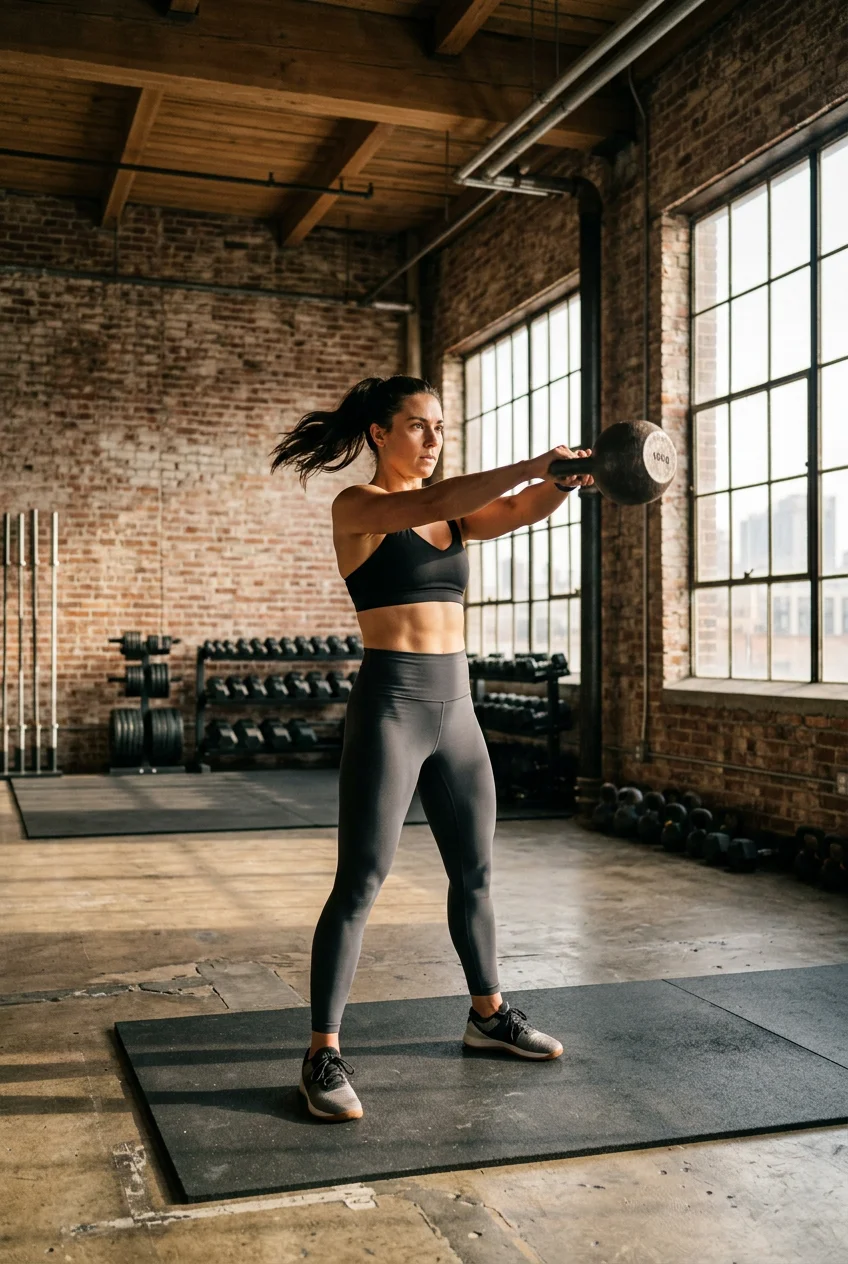
I’m standing in the middle of a crowded Target aisle last Tuesday, watching a woman nearly dislocate her shoulder trying to swing a plastic, sand-filled kettlebell that smelled strongly of cheap PVC glue and off-gassing chemicals. I wanted to intervene, but instead, it reminded me of why I’m writing this guide to a kettle bell workout for women. Most people get this entirely wrong from day one. I’ve been a personal trainer for ten years, and my biggest mistake was letting my early female clients start with weights that were way too light, treating the heavy iron bell exactly like a flimsy dumbbell. It’s a recipe for zero results, extreme frustration, and lower back agony. Today, I’m breaking down exactly how to build a routine that actually works, whether you’re working out in a cramped apartment or a massive commercial gym. We aren’t doing those weird, bouncy aerobic swings you see on heavily filtered Instagram reels. We’re doing real, foundational work that builds actual muscle and burns serious calories. I’m going to walk you through the exact gear I use, the exact mistakes I’ve made, and the exact cues that will fix your form in five minutes flat. Let’s get into the specifics.
1. Pick The Right Starting Weight For Your Kettle Bell Workout For Women

I can’t tell you how many times I’ve seen women at Sprouts carrying a massive 20-pound bag of dog food with ease, only to grab a tiny pink 5-pound kettlebell at the gym an hour later. If you want an effective kettle bell workout for women, you need to lift something that actually challenges your muscles. For absolute beginners, I always recommend starting with an 8 kg (18 lbs) cast iron bell. If you’re already active, 12 kg (26 lbs) is your sweet spot. I learned this the hard way with a client named Sarah two years ago. We wasted three full months using a 4 kg (9 lbs) bell. Her swings looked like she was gently rocking a baby to sleep. The moment I handed her a 12 kg Rogue Fitness ductile iron kettlebell ($65 for this specific weight), her form magically fixed itself. The heavier weight forced her posterior chain to engage properly. The Rogue bell has a slightly rough, matte powder coat that feels like fine sandpaper. It grips your hands perfectly when you start sweating, and it won’t slip out of your fingers. Don’t waste your money on those 5-pound vinyl-coated bells from Walmart. They cost about $12.99, but they have thick, slippery handles that fly out of your sweaty hands the second your palms get damp. You won’t activate your glutes if you’re terrified of dropping a slick piece of plastic on your toes. Buy real iron. It smells slightly metallic, it feels cold to the touch, and it commands respect. Trust me on this.
2. Invest In An Adjustable Kettlebell To Save Space And Money

Let’s talk about the reality of home gyms. Unless you have a massive two-car garage, buying a full rack of individual kettlebells is a terrible idea. They take up way too much floor space and just sit in the corner collecting dust. Last November, I stubbed my toe so hard on a 16 kg bell sitting in the middle of my living room that my toenail turned dark purple for a month. It throbbed every time I put on a shoe. That’s the day I finally bought an adjustable option. I’m currently obsessed with the Bowflex SelectTech 840 Kettlebell. It costs exactly $188 on Amazon, and it adjusts from 3.6 kg to 18 kg (8 to 40 lbs) with a simple turn of a mechanical dial on the top. The dial clicks into place with a satisfying, heavy mechanical thud that lets you know it’s locked securely. It literally replaces six different bells. The handle is wide enough for two-handed swings, though I’ll admit the plastic casing on the body feels slightly bulky when you’re doing close-grip goblet squats. It rubs against my inner forearms a bit uncomfortably. If you want something that feels closer to a traditional cast iron bell, the REP Fitness Adjustable Kettlebell is $149.99 for the 16 kg version. It uses an internal drop-in weight system. It takes about 30 seconds longer to change weights compared to the Bowflex, which is annoying when you’re doing a fast-paced circuit. But the matte powder-coated finish is identical to professional gym-quality bells. You’ll need about 2 tablespoons of liquid chalk on your hands for the best grip, but it’s totally worth it.
3. Nail The Hip Hinge (Stop Squatting Your Swings)

This is the single most common mistake I see on a daily basis. I’m completely guilty of teaching it wrong during my first year as a trainer. I used to tell clients to bend their knees deeply during a swing, trying to incorporate a squat motion. Wrong. A kettlebell swing is a hip hinge, not a squat. The explosive power comes from your glutes and hamstrings snapping forward, not your quads pushing up from the floor. Think about closing a heavy car door with your butt while holding two heavy paper bags of groceries from Whole Foods. That’s the exact movement pattern you need to replicate. If your front thighs are burning after a set of swings, you’re doing it wrong. I was doing a workout in a local park last summer, and I noticed a guy squatting his swings so deeply he was practically sitting on the wet morning grass. His lower back was rounding like an angry cat, and I cringed just watching him. To fix this, go buy a cheap PVC pipe (about $3.50 at Home Depot, 1-inch diameter) and hold it vertically against your back. It should touch the back of your head, your upper back between your shoulder blades, and your tailbone. Practice bowing forward while keeping all three points of contact. Your knees should only bend slightly. Once you master this, your swings will feel entirely different. You’ll feel a deep, intense stretch in your hamstrings. I highly recommend rubbing a dime-sized drop of Tiger Balm (around $6.49 at Kroger) on your hamstrings after your first proper hinge workout. You’re going to be sore in places you didn’t know existed. You might also like: 15 Brilliant Dark Basements Home Gym Setup Ideas Worth Trying This Year
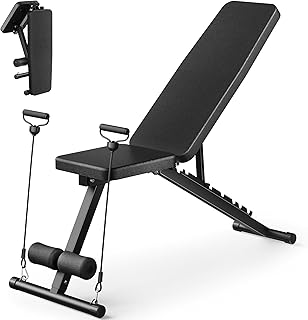
Adjustable Weight Bench for Home Gym
Adjustable Weight Bench for Home Gym has been one of the most consistently praised picks in this category. 551 reviewers averaged 4.5/5.
4. Ditch The Cushioned Running Shoes Immediately

I can’t stress this enough. If you’re wearing thick, squishy running shoes like Hoka Cliftons or Brooks Ghosts while doing kettlebell swings, you’re asking for a severe ankle injury. I love my Hokas for jogging on pavement, but they’re an absolute disaster for lifting weights. Three years ago, I tried doing heavy single-arm swings in a pair of heavily cushioned trainers. The thick foam compressed unevenly under the shifting weight, my right ankle rolled violently outward, and I heard a sickening pop. I spent two weeks icing my swollen ankle with a bag of frozen peas. Running shoes are designed to absorb forward impact, not provide lateral stability for lifting heavy iron. You need a flat, hard surface to drive your heels firmly into the ground. I highly recommend training completely barefoot if you’re working out in your living room. You can actually feel the floor, spread your toes wide, and grip the ground like a primate. If you’re at a commercial gym that strictly requires shoes, buy a pair of classic Converse Chuck Taylors. They cost about $65, they have absolutely zero heel drop, and the hard rubber sole gives you immediate physical feedback. Another great option is the NOBULL Outwork trainer, which runs about $129. They have a tough, canvas-like upper (they call it SuperFabric) that feels a bit stiff and plasticky at first, but the sole is perfectly flat and dense. When you swing a heavy 16 kg bell, you won’t sink into the floor. You’ll feel rock solid and grounded. You might also like: 20 Lovely Aesthetic Home Morning Workout Routine to Inspire Your Next Project
5. Master The Turkish Get-Up For Total Body Stability

The Turkish Get-Up (TGU) looks completely ridiculous to an outsider. The first time I tried it, I was lying on a sweaty, black rubber mat at a commercial gym, holding a 20-pound dumbbell awkwardly in the air, and I felt like a giant turtle stuck on its back. I failed miserably, lost my balance, and dropped the weight inches from my face. It slammed into the floor with a terrifying thud. But once you actually learn the precise mechanics, it’s the ultimate full-body exercise. It builds incredible shoulder stability, deep core strength, and total-body mobility. The movement involves transitioning from lying flat on your back to standing straight up, all while holding a weight locked out straight above your head. Don’t start with a heavy kettlebell. Start with a shoe. Seriously. Balance a standard running sneaker on your closed fist and try to stand up without the shoe falling off. Once you can do that five times per side without dropping it, grab a very light kettlebell. A Kettlebell Kings 4 kg powder-coated bell ($49.99) is perfect for learning the TGU. It’s light enough that you won’t crush your skull if you wobble, but heavy enough to give your shoulder socket some actual feedback. The handle on the Kettlebell Kings bell is incredibly smooth, so it rotates easily in your sweaty palm as you transition from the floor to your kneeling position. I usually drink 8 ounces of strong black coffee about twenty minutes before attempting heavy TGUs. You need intense mental focus for this movement. If your mind wanders for a single second, you’ll lose your balance and bail out. You might also like: 15 Clever Garage Home Workout Ideas That Are Totally Worth It
6. Protect Your Wrists In The Front-Rack Position

Kettlebell cleans and front squats are notorious for leaving nasty, dark purple bruises on your forearms. During my first few months of training, I used to walk around looking like I got into a brutal fight with a wooden baseball bat. The problem is almost always a poor front-rack position. When you hold the kettlebell up at your chest, your elbow must be tucked tightly against your ribs. Your fist should be positioned directly under your chin, and your wrist must be completely straight. If your wrist is bent backward under the weight, the heavy iron ball will dig painfully into your forearm bone with every single rep. You have to actively punch your hand slightly forward into the handle. The bell should rest comfortably in the fleshy V-shape created by your forearm and bicep. If you’re still struggling with deep bruising while learning this technique, buy a pair of kettlebell wrist guards. The Meister Neoprene Kettlebell Wrist Guards cost exactly $14.99 on Amazon. They feature a thin, hard plastic insert wrapped in soft black neoprene that completely absorbs the harsh impact. They smell a bit like a wet wetsuit straight out of the plastic packaging, so wash them first in cold water with 1/4 cup of mild laundry detergent. I relied heavily on these guards for two months until I finally figured out how to cushion the bell with my own arm mechanics. Don’t let forearm pain stop you from doing cleans and front squats. Just fix your form or buy the cheap guards.
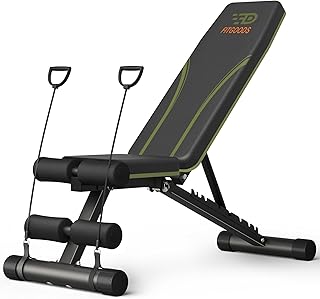
Fitgoods Adjustable Weight Bench for Home Gym
If you want something that just works, Fitgoods Adjustable Weight Bench for Home Gym is a safe bet (86 reviews, 4.5 stars).
7. Support Hormonal Balance And Pelvic Floor Health

This is something most male trainers completely ignore, but it’s absolutely crucial. Kettlebell training is incredible for women dealing with the physical changes of perimenopause or menopause. The explosive, heavy movements build lean muscle mass and increase bone density much faster than light, steady-state cardio. It also helps regulate cortisol levels if you don’t overdo the volume. But here’s the secret benefit nobody talks about. Kettlebell swings are a phenomenal pelvic floor exercise. You don’t just blindly squeeze your glutes at the top of a swing. You need to actively pull up and engage your pelvic floor as you forcefully exhale. I learned this specific technique from a specialized physical therapist after a female client complained of nagging lower back pain during her sets. You inhale deeply into your belly as the heavy bell swings back between your legs, relaxing your pelvic floor muscles. Then, as you violently snap your hips forward, you aggressively exhale (making a sharp ‘hiss’ sound through your teeth) and lift the pelvic floor. It takes a lot of practice to get the coordination right. I recommend drinking 16 ounces of room-temperature water mixed with a pinch of Celtic sea salt (about $9.99 at Whole Foods for a half-pound bag) before your workout to stay properly hydrated. This actually helps with muscle contraction and prevents deep cramping. If you hold your breath during heavy goblet squats, you’re putting massive, dangerous downward pressure on your pelvic floor. Breathe out aggressively on the hard part of the movement. Always.
8. Don’t Rush The Clean Or The Snatch

The kettlebell clean and the kettlebell snatch are beautiful, fluid movements when done correctly. When done wrong, they’re violent, jerky, and painful. My biggest mistake early on was treating the kettlebell clean exactly like a barbell power clean. I’d pull the bell high up to my chest using my traps, and then let it flip over and crash onto my unprotected wrist. Bang. Instant bone bruise. The kettlebell clean isn’t an aggressive upward pull. It’s actually just a tame, modified swing. You want to keep your elbow glued to your ribs and just do a tiny, subtle uppercut motion at the top of the swing. The bell should roll smoothly around your wrist, not flip aggressively over it. The exact same logic goes for the snatch. Don’t cast the bell out away from your body like you’re casting a long fishing rod into a lake. Keep it incredibly close to your torso. Think about zipping up a very tight winter jacket. I practice this specific path by facing a blank wall about 12 inches away. If I cast the bell out too far, it physically hits the wall. I use a Yes4All 12 kg cast iron kettlebell for these wall drills. It’s cheap (around $35 on Amazon), and the black paint finish is a bit rough and uneven, but I don’t care if I accidentally scuff it against the drywall in my garage. Focus on the mental cue ‘push, pop, pull, punch’. Push the floor away, pop the hips hard, pull the elbow high, and punch your fist through the handle at the top.
9. Embrace Hybrid Workouts For Maximum Consistency

You definitely don’t need to swing a heavy kettlebell for 45 minutes straight to get a good workout. In fact, doing that will probably shred the calluses on your hands and completely burn out your central nervous system for days. I’m a huge fan of hybrid workouts that mix heavy kettlebell movements with simple, effective bodyweight exercises. It gives your grip strength a much-needed break while keeping your heart rate highly elevated. Last Thursday, I did a 20-minute circuit that absolutely wrecked me in the best way possible. I did 15 heavy swings with a massive 24 kg bell, followed immediately by 10 strict push-ups and a 30-second plank on the floor. I repeated that sequence for five full rounds with minimal rest. It was brutally effective. You can easily do this in your living room or even in the back parking lot of Costco while waiting for your spouse to finish shopping. (Yes, I’ve actually done that exact thing. The asphalt was hot, my palms got dirty, and I got weird looks from shoppers, but I got my workout in). Consistency beats extreme intensity every single time. Aim for three focused 20-minute sessions a week instead of one hour-long death march that leaves you exhausted. After a tough hybrid session, I always soak in a hot bath with exactly 2 cups of Dr. Teal’s Lavender Epsom Salt ($5.89 at Target). The strong lavender scent instantly knocks me out, and the magnesium helps ease the tight hamstrings from all those explosive swings. Keep your workouts short, heavy, and incredibly consistent.
Finding the right fitness routine doesn’t have to be a frustrating process of trial and error. I’ve made all the stupid mistakes over the last decade so you don’t have to waste your time. I’ve bought the cheap plastic weights that slip out of your hands, I’ve worn the wrong squishy running shoes that wreck your ankles, and I’ve bruised my forearms black and blue trying to muscle through bad form. If you stick to heavy, cast-iron bells, master the hip hinge instead of squatting, and ditch the running shoes, you’re going to see massive changes in your overall strength and body composition. I personally swear by the adjustable Bowflex bell for home workouts. It’s worth every single penny of that $188 price tag because it saves so much space in my living room. Give these nine techniques a try for just four weeks of consistent training. I promise you won’t want to go back to those tiny pink dumbbells ever again. If this guide helped you figure out your form or gave you some new ideas for your kettle bell workout for women, make sure you pin it or save it for your next sweaty session.
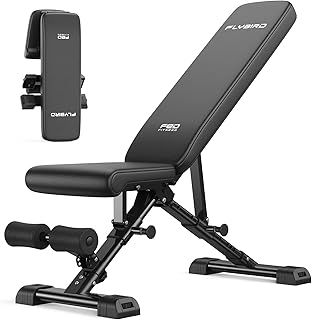
FLYBIRD WB5 Weight Bench
A dependable everyday pick — FLYBIRD WB5 Weight Bench pulls in 259 ratings at 4.5 stars. Not flashy, just solid.
Frequently Asked Questions
What is the best starting weight for a kettle bell workout for women?
For most women, an 8 kg (18 lbs) cast iron kettlebell is the perfect starting point. It’s heavy enough to force proper hip hinge mechanics but light enough to learn safely. Active women can often start with 12 kg (26 lbs).
Can I wear running shoes during a kettle bell workout for women?
No, you shouldn’t wear cushioned running shoes. The soft foam compresses unevenly, which can cause severe ankle instability during heavy swings. Stick to flat, hard-soled shoes like Converse, or train entirely barefoot for the best ground feedback.
Why do kettlebell cleans bruise my forearms so badly?
Bruising happens when your front-rack position is incorrect or you’re pulling the bell too aggressively. Keep your elbow glued to your ribs and punch your hand forward slightly. If you’re still struggling, neoprene wrist guards can absorb the impact.
How often should I do a kettle bell workout for women?
Consistency beats extreme intensity. Aim for three 20-minute sessions per week. You don’t need hour-long workouts. Mixing heavy kettlebell swings with bodyweight exercises like push-ups and planks provides a brutal, effective full-body workout without burning out your nervous system.
