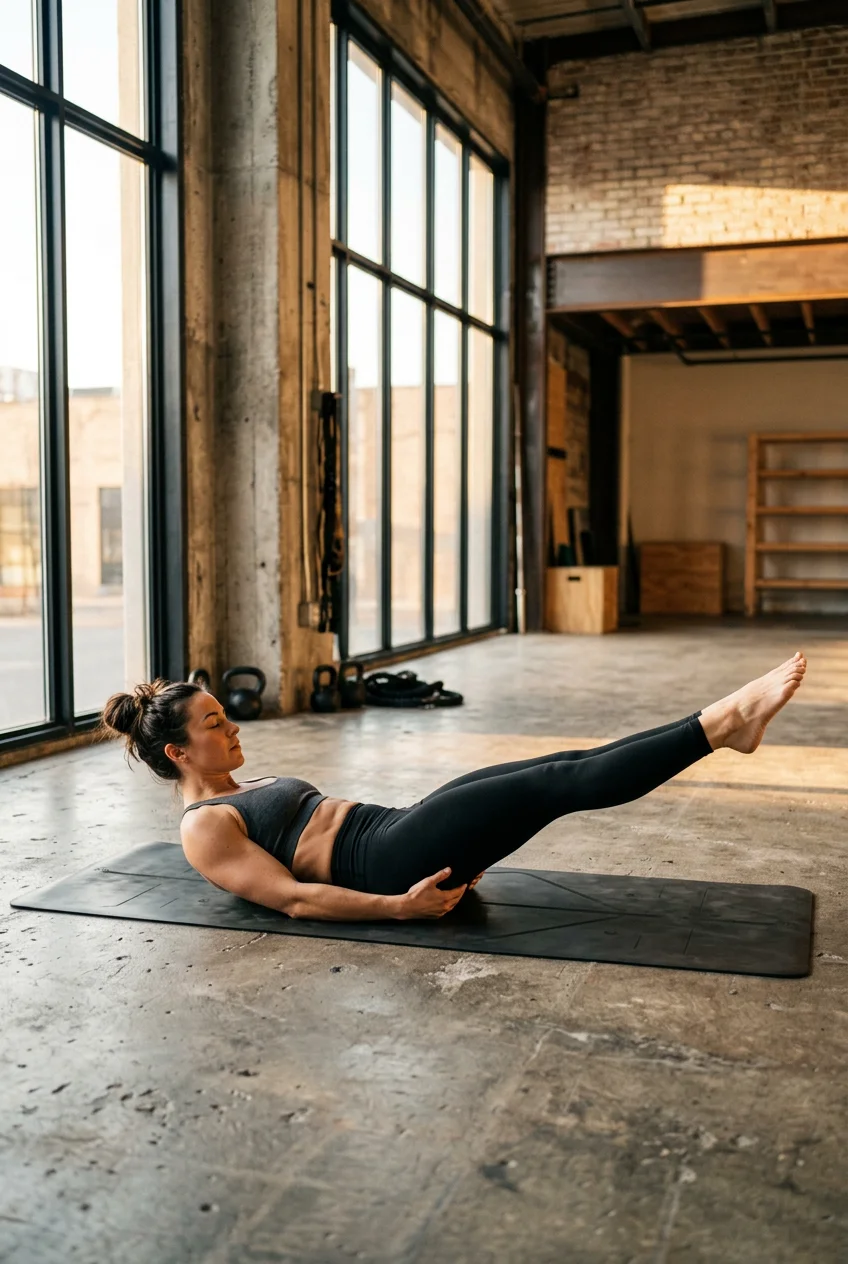
What’s Inside
- Master The Belly Vacuum For Your Lower Stomach Workout
- Fix Your Pelvic Tilt To Protect Your Spine
- Add Resistance Bands To Your Scissor Kicks
- Roll Out The Right Way With An Ab Wheel
- Hanging Leg Raises For An Intense Lower Stomach Workout
- Steal From Pilates For Deep Core Strength
- Try Seated Knee Tucks Anywhere
- Fix Your Breathing To Actually Engage Your Abs
- Use Micro-Workouts And A Decline Bench
Last Tuesday at Whole Foods, my back locked up while I reached for a 16 oz jar of almond butter on the bottom shelf. That embarrassing spasm happened because I’d been doing a lower stomach workout wrong for months. I thought cranking out hundreds of sloppy crunches would fix my core. I was dead wrong. The pain was sharp, like a hot knife twisting in my lumbar spine, smelling faintly of organic peanut butter and my own defeat. I had to awkwardly shuffle to my car while holding my breath. If you want a lower stomach workout that builds real core strength without wrecking your back, you’re in the right place. I’m going to walk you through what works. No fluff. Just the raw truth about what I’ve learned the hard way. I’ve spent thousands of dollars on useless gear and expensive physical therapy. I won’t let you do the same. Here are the mechanics of core training, from proper breathing to the exact equipment you need.
1. Master The Belly Vacuum For Your Lower Stomach Workout

Let’s talk about the Transverse Abdominis (TVA). It’s your body’s internal weight belt. I ignored this muscle for years. I’d just lie on the floor and throw my legs around. Big mistake. You need to master the belly vacuum before you try anything else. Lie flat on your back, bend your knees, and put your feet flat on the floor. Inhale deeply through your nose. As you exhale, pull your belly button down toward your spine like you’re trying to hollow out your stomach. Your ribs stick out, and your stomach looks like a deflated balloon. Hold that intense contraction for 5 to 10 seconds while breathing normally. This is basically hypopressive breathing. I practice this every morning on my $24.99 Gaiam yoga mat I picked up at Target last month. The mat smells like cheap rubber and factory plastic, but it works. Doing this vacuum activates the deep pelvic floor muscles. If you skip this, your lower belly will just bulge out. It’s the foundation of core control. I’ve noticed a massive difference in my waist circumference since I started doing 3 sets of 10 vacuums daily. Don’t skip this step. When I first tried this, I got lightheaded because I stopped breathing. Don’t do that. Keep taking shallow breaths while keeping the stomach pinned flat.
2. Fix Your Pelvic Tilt To Protect Your Spine

Most people get this wrong. I certainly did. I used to do leg lowers and my lower back would arch off the floor so high you could drive a toy truck under it. That’s a guaranteed ticket to injury. You need a posterior pelvic tilt to make this workout effective. Press your lower back violently into the floor. Imagine crushing a ripe grape under your lumbar spine. If your back arches, the exercise is useless and dangerous. You’re just straining your hip flexors and grinding your vertebrae. I realized this while testing out a $12.99 SPRI core ball from Walmart in my living room. I was trying to balance, my back arched, and my spine gave out. The blue foam felt slick with sweat, and the pain was instant. You have to focus on the mind-muscle connection. Certified functional strength coach Simone Tchouke always says to visualize your lower abs contracting to initiate the movement. Don’t just go through the motions. If you’re doing a leg lower and your back pops up, stop. Only lower your legs as far as you can while keeping that back pinned flat. Even if you only move your legs 4 inches down, that’s better than a full range of motion with broken form. I spent three weeks doing quarter-rep leg lowers just to retrain my brain. It was humbling, but it fixed my back pain.
3. Add Resistance Bands To Your Scissor Kicks

Bodyweight moves get boring fast. I get it. But you can make them brutal with a simple resistance band. I swear by the All In Motion Loop Band Kit. It costs $14.99 at Target. It comes in a pack of three, and I use the heavy blue one. Wrap that thick rubber band around your ankles for scissor kicks. Lie on your back, hands tucked under your glutes for support. Lift your legs exactly 4 inches off the floor. Now, alternate crossing one leg over the other in a tight, controlled scissor motion. The rubber band pulls at your skin, snapping against your ankle bones, and the burn hits your lower abs like battery acid within 15 seconds. Aim for 2 sets of 1 minute each. The resistance band forces your muscles to fight lateral tension while gravity pulls them down. It’s a nasty combination that works. I tried doing this on a cheap rug once and got awful red carpet burn on my elbows. Use a proper mat. Keep your back flat. If your hip flexors start burning more than your abs, your form is slipping. Reset your pelvic tilt and try again. The heavy band is tough, so start with the light green one if you’re new to this. Skip the ultra-cheap unbranded bands online. They snap. I had a cheap one break and whip me in the shin so hard it left a welt for a week. You might also like: 20 Gorgeous Easy Home Workout Ideas That Actually Work

FitinOne Adjustable Folding Weight Bench for Home Gym
Honestly, FitinOne Adjustable Folding Weight Bench for Home Gym surprised me — sturdier than it looks in the photos, and over 774 buyers gave it 4.5 stars.
4. Roll Out The Right Way With An Ab Wheel

The ab roller is a medieval torture device, and I love it. I bought the REP Fitness Ab Roller for $15.99 on Amazon after my old plastic one snapped in half. The REP one has a thick rubber wheel that grips the floor nicely and doesn’t squeak. The handles are coated in dense black foam that absorbs the sweat from my palms perfectly. Here is the trick. Most guys roll out and let their hips sag. That destroys your lower back. You need to keep your core engaged. Start on your knees. Roll forward slowly. Don’t let your stomach drop. Pull back using your lower abs, not your arms. I do this in my garage gym, usually after eating a pre-workout snack of 1/2 cup of dry oats mixed with 1 scoop of Optimum Nutrition whey protein. I buy the 5 lb tub at Costco for $64.99. If you eat a heavy meal before using an ab roller, you will feel it sloshing around. It’s gross. Keep your core tight. If you can’t roll all the way out, go halfway. The tension on the lower abdominal region is insane when done with a stiff torso. Don’t look up. Keep your chin tucked to your chest. Straining your neck upward is a fast way to get a tension headache. You might also like: 20 Lovely Aesthetic Home Morning Workout Routine to Inspire Your Next Project
5. Hanging Leg Raises For An Intense Lower Stomach Workout


This is the king of the lower stomach workout. But it’s the most butchered exercise in any gym. I used to jump on the pull-up bar and swing my legs like a crazed monkey. I thought I was doing great until fitness expert Charles Glass pointed out that momentum was doing 90 percent of the work. My hip flexors were dominating, and my abs were asleep. To fix this, you need strict, agonizing control. Grab the bar. I use a pair of Harbinger lifting grips I got at Dick’s Sporting Goods for $19.99 because the metal knurling on my home pull-up bar tears up my calluses. Hang completely still. Slowly lift your legs straight up toward the ceiling. Then, lower them at a snail’s pace. Stop just before your feet hang straight down to keep the tension alive. If straight legs are too hard, bend your knees. If your gym has a Captain’s Chair, use it. It supports your back and isolates the lower abs perfectly without grip fatigue. I used the Precor Captain’s Chair at my local gym for six months to build the baseline strength needed for the free-hanging version. My core was so weak initially I couldn’t even do three strict reps. Now I can do sets of 15. Control the descent. That eccentric phase is where the real muscle building happens. You might also like: 20 Charming Black Garage Home Gym Setup Ideas Worth Trying This Year
6. Steal From Pilates For Deep Core Strength

Pilates is trending hard for 2026, and for good reason. I used to mock it. I thought it was just light stretching. I was wrong. I took a class last month and got humbled by a 60-year-old instructor. Pilates focuses on the deep core muscles and pelvic floor. You need to incorporate the Dead Bug. Lie on your back, arms straight up, knees bent at 90 degrees. Slowly lower your right arm and left leg toward the floor. Exhale sharply. Don’t let your back arch. Pull them back up. Switch sides. Do this for 60 seconds per set. I do these on a thick 1-inch Manduka PRO mat that cost me a painful $138, but it saves my tailbone on my hardwood floors. Another great move is The Hundred. You lift your legs 45 degrees, curl your head and shoulders up, and pump your arms up and down 100 times while breathing in for 5 counts and out for 5 counts. It makes your lower stomach vibrate with fatigue. I drink 16 oz of ice-cold water from my blue Nalgene bottle right after because it dries out my mouth. I tried doing The Hundred too fast once and ended up straining my neck. Keep your gaze fixed on your belly button.
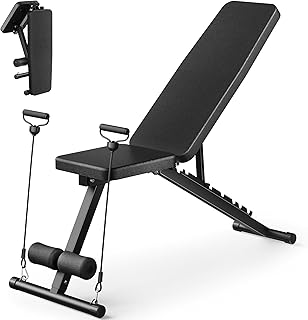
Adjustable Weight Bench for Home Gym
Adjustable Weight Bench for Home Gym punches above its price — 551 buyers rated it 4.5 stars. I would buy it again.
7. Try Seated Knee Tucks Anywhere

You don’t need a gym to torch your core. Seated knee tucks are my go-to option when I’m traveling or stuck in an office. I did these last Friday while waiting for an oil change in the lobby of a Jiffy Lube. I sat on the edge of their cheap, sticky vinyl chair. Grip the sides of the seat tightly for balance. Lean back slightly until you feel your abs catch. Extend your legs straight out, then pull your knees hard into your chest. Push them back out without letting your heels touch the floor. Keep constant tension. I do sets of 20 reps. It’s effective. You can make it harder by squeezing a small object between your feet. I sometimes use a 3 lb CAP Barbell dumbbell I bought at Kroger for $5.99. The cold, textured iron against my sneakers reminds me to keep my feet squeezed tight. If you let your lower back round too much, you’ll feel a pinch. Sit up tall on your sit bones. This move targets the lower abdominal fibers directly without requiring you to get down on a dirty floor. I once leaned too far back on a flimsy chair doing these and almost tipped over. Test the chair’s stability first.
8. Fix Your Breathing To Actually Engage Your Abs


Holding your breath is the fastest way to ruin your core workout. I see this every day in the gym. People turn purple doing flutter kicks because they forget to breathe. I used to do it too. I’d hold my breath to brace my core, but that creates outward pressure that pushes your stomach out. You want it to pull in tight. Exhale as you exert effort. If you’re lifting your legs, blow the air out forcefully through your mouth like you’re blowing out candles. Inhale deeply through your nose as you lower them. This ensures oxygen flow and contracts the TVA muscle harder. I learned this while wearing a $39.99 Polar H10 heart rate monitor strap I bought at Best Buy. I noticed my heart rate spiking dangerously high during core work because I wasn’t breathing. The black strap was digging into my ribs, slick with sweat, and I felt dizzy. Once I started syncing my breath with the movement, the exercises got harder on my muscles but easier on my heart. Try counting your reps out loud. It forces you to exhale on the exertion phase. I do this when I train alone in my garage, and it keeps my rhythm perfect. Breathe out the bad air, squeeze the lower abs, and stay focused.
9. Use Micro-Workouts And A Decline Bench

The days of grueling 45-minute ab sessions are dead. The 2026 trend is all about micro-workouts. Short, intense 5 to 15-minute circuits are where the magic happens. I do an 8-minute routine every morning before I brew my dark roast coffee. It’s fast, brutal, and effective. If you want to take these micro-workouts to the next level, you need a decline bench. I use the XMark Fitness Adjustable Decline Ab Workout Bench. It cost me $195 on Amazon, and it weighs a ton. The thick black vinyl pad gets freezing cold in my uninsulated garage during winter. Hook your feet securely under the heavy foam rollers. Lie back and do reverse crunches. The steep downward angle forces you to fight gravity on a harder curve. Pull your knees toward your chest, lifting your hips off the pad at the top. The burn is unreal. I usually pair this with 2 tablespoons of crunchy peanut butter from Sprouts (the $4.49 store brand) right after for a quick calorie hit. The decline bench allows for massive progressive overload. You can even hold a 10 lb rubber medicine ball between your knees to make it worse. I used to train abs for an hour on Sundays and ignore them the rest of the week. Daily micro-workouts gave me better results. Keep it short and savage.
That’s it. Building a strong core isn’t about vibrating machines or doing a thousand crunches until your neck snaps. It’s about strict control, proper breathing, and targeting the right muscles with intent. I’ve wasted years doing this wrong and paying the price in back pain. Don’t make my mistakes. Grab a thick mat, focus on your posterior pelvic tilt, and start small. I highly recommend picking up that All In Motion resistance band from Target to start. It’s cheap, durable, and changes the whole dynamic of your routine. Skip the fat-free stuff in the kitchen, too. It tastes like wet cardboard and won’t help your abs show. Eat real food and train smart. Your lower back will thank you, and your core will finally get strong. Pin this article or save it to your phone so you have it ready for your next session. Let’s get to work and build a core that actually functions in the real world.

Amazon Basics Adjustable Workout Weight Bench Press
If you want something that just works, Amazon Basics Adjustable Workout Weight Bench Press is a safe bet (193 reviews, 4.5 stars).
Frequently Asked Questions
How often should I do a lower stomach workout?
You can train your core 3 to 5 times a week. I prefer 5- to 15-minute daily micro-workouts instead of one massive session. Consistency is key, but always give your muscles time to recover if they feel excessively sore.
Why does my lower back hurt during leg raises?
Your lower back hurts because it’s arching off the floor, which shifts the load from your abs to your spine and hip flexors. You must maintain a posterior pelvic tilt by pressing your lower back firmly into the mat.
Do I need equipment for a lower stomach workout?
No, bodyweight exercises like the belly vacuum and dead bugs are highly effective. However, adding an ab roller, a pull-up bar, or a simple resistance band will drastically increase the intensity and help you progress faster.
What is the belly vacuum exercise?
The belly vacuum involves exhaling fully and pulling your belly button in toward your spine to hollow out your stomach. It targets the Transverse Abdominis, which acts like an internal weight belt to stabilize your core.
