What’s Inside
- The Transverse Abdominis Hold (Foundational Abb Workouts For Women)
- Hypopressive Breathing Vacuums
- Diaphragmatic Breathing Deadbugs
- Heavy Asymmetrical Suitcase Carries
- Swiss Ball Stir-The-Pot (Advanced Abb Workouts For Women)
- Pallof Presses With Resistance Bands
- Sliding Bodyweight Pike-Ups
- Weighted Hollow Body Holds
- Strict Hanging Leg Raises
I ripped my favorite gym shorts right down the middle last Tuesday. The loud tearing sound echoed across the empty weight room while I attempted a poorly planned core circuit. Finding effective abb workouts for women (and men) usually involves dodging terrible advice on social media. I’ve spent six years training clients and I’ve seen exactly what builds a strong midsection. It isn’t doing a thousand crunches until your neck cramps up. Most people get this entirely wrong. I tried the endless sit-up routine for months before figuring it out. My lower back throbbed constantly and my posture suffered. You need a strategic approach that targets the deep core muscles instead of just the superficial layers. Let’s break down nine specific movements that actually work, complete with the exact gear you need and the mistakes you should avoid.
1. The Transverse Abdominis Hold (Foundational Abb Workouts For Women)

You can’t build a strong house on a weak foundation. The transverse abdominis (TVA) is your deepest core muscle. It acts like a natural corset to stabilize your spine and support your pelvic floor. Many traditional exercises fail to properly engage it. I used to teach crunches exclusively until I noticed my clients were just pushing their stomachs outward under strain. To activate your TVA, lie on your back with your knees bent and your feet flat on the floor. Place two fingers about an inch inward and an inch down from your hip bones. As you exhale, gently draw your lower abs in and engage your pelvic floor muscles. You should feel a subtle, firm contraction under your fingers. Hold this engagement for at least 10 seconds while breathing normally. Practice this daily for improved foundational strength. I do this on my Target All in Motion 5mm Yoga Mat ($16.99). The foam is dense enough that my spine doesn’t grind against the hard floor. A common mistake here is sucking your stomach in by holding your breath. If your face turns red, you’re doing it wrong. The contraction should feel like you’re bracing for a light punch to the gut, not like you’re trying to fit into tight jeans. I’ve used this specific mat for two years now and the $16.99 price tag means I don’t care when my dog walks across it with muddy paws. Learned that the hard way.
2. Hypopressive Breathing Vacuums

Trending heavily in 2026, hypopressive exercises are a lesser-known technique that activates involuntary pelvic floor fibers and deep abdominal muscles. Developed by Marcel Caufriez, they offer a gentler alternative to traditional crunches that can sometimes strain the pelvic floor. I tried doing these after eating a massive hot bar lunch at Whole Foods last month. Huge mistake. The intense internal pressure made me feel incredibly nauseous. Do these on an empty stomach. A core hypopressive technique involves a full exhale, followed by an apnea (breath hold) and an expansion of the rib cage without inhaling. This creates an internal vacuum effect. Aim for 10-15 minutes, 3-4 times per week. They improve posture and reduce abdominal distension. I track my apnea holds using a Gymboss Classic Interval Timer ($19.99) I picked up at Walmart. The loud beep cuts through the ambient noise in my garage gym perfectly. When you expand your rib cage during the breath hold, you’ll feel a hollow sensation under your ribs. If you feel pressure pushing downward into your pelvis, stop immediately. You’re likely bearing down instead of drawing up. The Walmart timer is bulky and looks like a pager from 1998, but the clip is strong enough to stay attached to my waistband during the entire 15-minute routine.
3. Diaphragmatic Breathing Deadbugs

This surprising tip involves using your diaphragm, a key muscle for inner core function and stability. Diaphragmatic breathing can improve core stability and reduce lower back tension. The deadbug is the perfect vehicle for this. Lie on your back, arms reaching toward the ceiling, knees bent at 90 degrees. As you exhale, slowly lower your right arm and left leg toward the floor. Inhale as you return to the center. I used to rush through these, treating them like a speed drill. I tweaked my lower back doing that because my spine arched off the floor. The goal is to keep your lower back glued to the mat. I make my clients hold a pair of Gaiam 3lb Neoprene Dumbbells ($14.99) from Sprouts Farmers Market in their hands during the movement. The slight 3lb weight forces your lats to engage, which helps keep your rib cage pinned down. The Sprouts dumbbells have a slightly textured neoprene coating that doesn’t get slick when your palms sweat. If your lower back pops off the floor, you’ve lowered your leg too far. Stop right before your back arches. I’ve learned that moving at a painfully slow tempo yields twice the results of rushing through twenty sloppy reps. Trust me on this. You might also like: 20 Gorgeous Easy Home Workout Ideas That Actually Work

Amazon Basics Adjustable Workout Weight Bench Press
Amazon Basics Adjustable Workout Weight Bench Press punches above its price — 193 buyers rated it 4.5 stars. I would buy it again.
4. Heavy Asymmetrical Suitcase Carries

Anti-lateral flexion is a fancy way of saying your core has to work hard to keep you from leaning to one side. Suitcase carries are the ultimate test of this. Grab a heavy weight in one hand and walk. Your obliques have to fire intensely to keep your torso completely upright. I realized how effective this was while carrying a completely overloaded reusable canvas bag ($3.99) from Trader Joe’s. I had packed three glass jars of salsa, two cartons of almond milk, and a bag of apples into one tote. Walking four blocks to my apartment with that 35-pound unbalanced load set my obliques on fire. At the gym, I use a Kettlebell Kings 40lb Powder Coat Kettlebell ($99.99). The powder coat finish holds lifting chalk beautifully, so it won’t slip out of your hand. A major mistake I see is people leaning away from the weight to counterbalance it. You need to stay perfectly vertical. If your opposite shoulder drops, the weight is too heavy. I dropped a 40lb kettlebell on my toe three years ago because my grip gave out. Now I limit my carries to 45 seconds per side. The $99.99 price tag on the kettlebell hurts the wallet, but the handle width is perfectly designed for a solid grip. You might also like: 15 Creative Inside She Sheds Home Gym Setup Ideas to Steal Right Now
5. Swiss Ball Stir-The-Pot (Advanced Abb Workouts For Women)

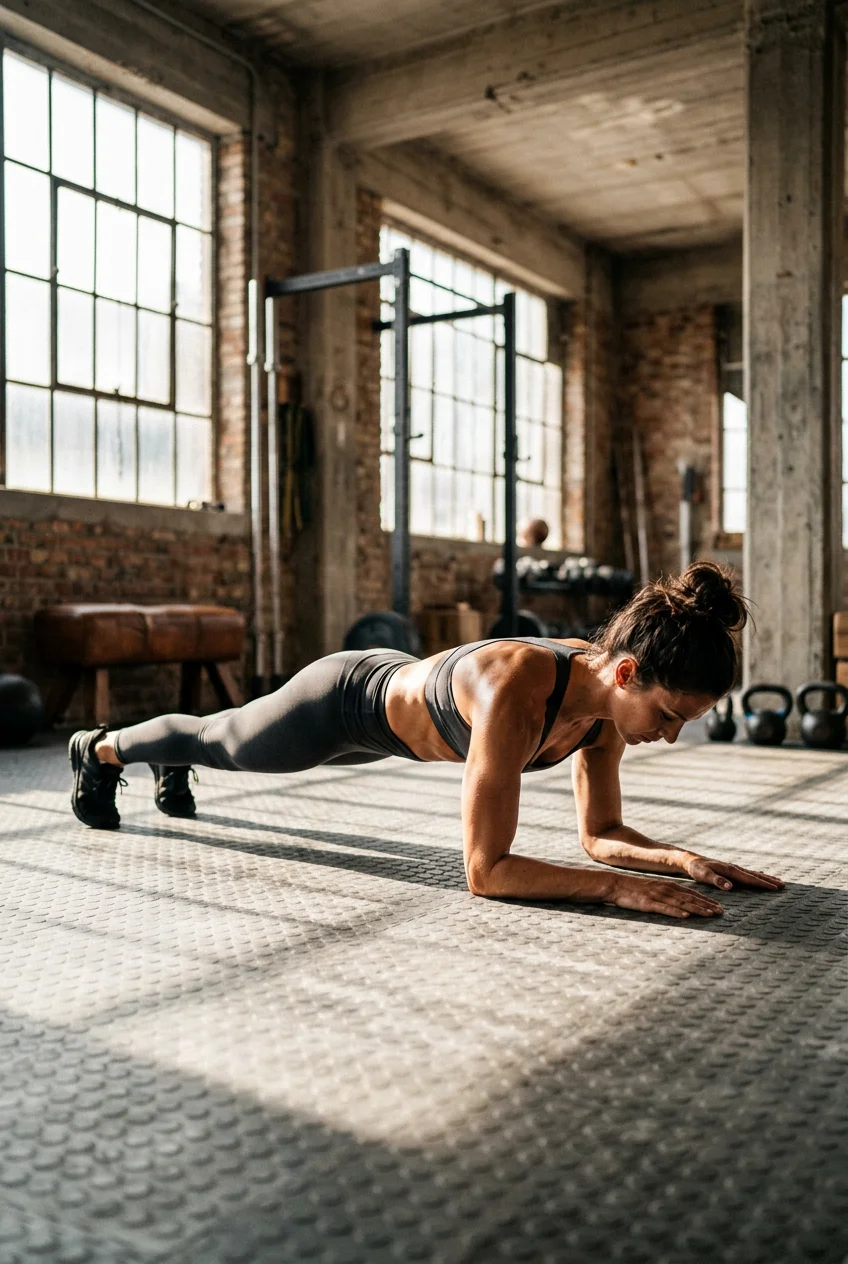
This exercise targets anti-extension, meaning it forces your core to stop your lower back from arching. Place your forearms on a stability ball and get into a plank position. Slowly roll your elbows in small circles, as if you’re stirring a giant pot of soup. I bought a GoFit 65cm Stability Ball ($24.99) at Kroger in their random fitness aisle. The cheap rubber smelled terrible for the first week, but the anti-burst material holds up well. I tried this movement in socks on a hardwood floor once. My feet slid backward, the ball shot forward, and I faceplanted directly onto the rubber. Always wear shoes with good traction. Do five circles clockwise, then five counter-clockwise. The wider your feet are, the easier the movement becomes. If you feel a sharp pinch in your lower back, your hips are sagging. Lift your hips an inch higher and squeeze your glutes. The Kroger stability ball comes with a flimsy plastic hand pump that takes about twenty minutes of exhausting pumping to inflate the ball, but once it’s full, it retains air perfectly. I’ve only had to top it off twice in six months. You might also like: 20 Beautiful Home Gym Setup Ideas That Changed Everything
6. Pallof Presses With Resistance Bands

Anti-rotation exercises are crucial for protecting your spine. The Pallof press is my absolute favorite for this. Attach a resistance band to a sturdy pole at chest height. Stand perpendicular to the pole, grab the band with both hands, and step away until there’s tension. Press the band straight out in front of your chest. The band will desperately want to snap you back toward the pole. Your core has to fight that rotation. I use a SPRI Superband ($19.99) from Target. It’s a 1/2-inch thick continuous loop band. I once used a frayed band I found in a hotel gym. It snapped mid-press and whipped me right across the forearm. It left a welt for a week. Always check your bands for micro-tears. Hold the press for two seconds at full extension before bringing your hands back to your chest. The Target SPRI band provides exactly 20 pounds of resistance when stretched three feet, which is the perfect tension for this movement. A common error is letting your hips twist toward the anchor point. Your belt buckle should point straight ahead the entire time. If you can’t keep your hips square, step closer to the anchor point to reduce the tension.

NICEPEOPLE Adjustable Weight Bench for Home Gym
NICEPEOPLE Adjustable Weight Bench for Home Gym has been one of the most consistently praised picks in this category. 33 reviewers averaged 4.5/5.
7. Sliding Bodyweight Pike-Ups

This movement combines spinal flexion with serious shoulder stability. Start in a push-up position with your feet on sliders. Keeping your legs completely straight, pull your toes toward your hands, lifting your hips high into the air. Slowly lower back to the starting plank. You don’t need expensive fitness sliders for this. I use Kirkland Signature Chinet Paper Plates ($21.99 for a pack of 165) from Costco. They slide perfectly on carpet or turf. I tried doing these on a hardwood floor wearing just socks. I slipped instantly, slammed my knee into the floor, and bruised it badly. Paper plates on carpet provide the exact right amount of friction. The slow eccentric lowering phase is where the magic happens. Don’t just let your hips drop back down. Fight gravity the whole way. It should take you three full seconds to return to the plank position. If your hamstrings are tight, you won’t be able to lift your hips very high without bending your knees. That’s fine. Go as high as your mobility allows while keeping your legs locked. The Costco plates hold up for about three workouts before they get too crushed and need to be tossed.
8. Weighted Hollow Body Holds

Gymnasts have incredible core strength, and the hollow body hold is their foundational movement. Lie on your back, press your lower back firmly into the floor, and lift your legs and shoulders a few inches off the ground. Your body should form a shallow bowl shape. To progress this, I hold a CAP Barbell 10lb Cast Iron Plate ($14.97) from Walmart straight over my chest. The cast iron has a rough, slightly rusty smell that reminds me of old-school powerlifting gyms. When I first started doing these, I would tuck my chin aggressively to my chest. That resulted in severe neck strain that lasted for three days. You want to keep your neck in a neutral position, looking diagonally up at the ceiling. If your lower back lifts off the floor even a millimeter, the set is over. You’ve lost the deep core engagement and shifted the load to your lumbar spine. Start with 15-second holds. The 10lb Walmart plate is small enough to grip comfortably with both hands without throwing off your balance. I’ve noticed that squeezing my quads hard helps lock my pelvis into the right position for this hold.
9. Strict Hanging Leg Raises

This is an advanced movement that heavily targets the lower abdominals and hip flexors. Hang from a pull-up bar with a dead grip. Keeping your legs straight, lift your toes to the bar. Then, lower them under strict control. I use an Iron Gym Pull-Up Bar ($29.99) that hooks into my doorway. I bought it at Target four years ago. The foam grips tore off after six months, so I just grip the bare metal now. My biggest mistake with these was turning them into a swinging monkey routine. I’d use momentum to kip my legs up, which completely bypassed my abs and ripped brutal calluses into my palms. You have to initiate the movement by tilting your pelvis backward, not by swinging your shoulders. If you can’t keep your legs straight, start with hanging knee raises instead. After a heavy session of these, my abs are so sore I have to soak in a hot bath. I use 365 Everyday Value Epsom Salt ($6.49 for a 3lb bag) from Whole Foods. The magnesium helps dull the localized muscle ache. The $29.99 Iron Gym bar creaks a little when I hang from it, but the heavy-duty steel frame hasn’t bent a fraction of an inch.
Building a resilient core doesn’t happen overnight and it definitely won’t happen if you’re just doing mindless crunches on a dirty gym floor. The nine movements we covered require focus, specific breathing patterns, and a willingness to check your ego at the door. I’ve learned the hard way that dropping the weight and perfecting the tension yields significantly better results than rushing through sloppy reps. No exaggeration. Start by mastering the transverse abdominis hold before you even think about hanging from a bar. If you found this breakdown helpful, pin this article to your fitness board so you can reference the exact form cues during your next gym session. I’m constantly testing new gear and refining these techniques, so save this page and check back when you’re ready to progress your routine.

YOLEO Adjustable Weight Bench for Home Gym
YOLEO Adjustable Weight Bench for Home Gym punches above its price — 46 buyers rated it 4.5 stars. I would buy it again.
Frequently Asked Questions
How often should I do these abb workouts for women?
Aim for 3 to 4 times per week. Your core muscles need recovery time just like any other muscle group. I’ve found that resting a day between intense sessions prevents lower back fatigue.
Do I need expensive gear for a good core workout?
No. You can use paper plates for sliders and inexpensive dumbbells. I use a $16.99 yoga mat from Target and $3.49 paper plates from Costco for most of my home routines.
Why does my lower back hurt during leg raises?
Your transverse abdominis isn’t strong enough yet, causing your pelvis to tilt and your lower back to arch. Stop the movement before your back lifts off the floor, or regress to a bent-knee variation.
What are hypopressive exercises?
Hypopressives involve a specific breathing technique and breath hold that creates an internal vacuum. They activate deep pelvic floor fibers and the transverse abdominis without putting outward pressure on the abdominal wall.
