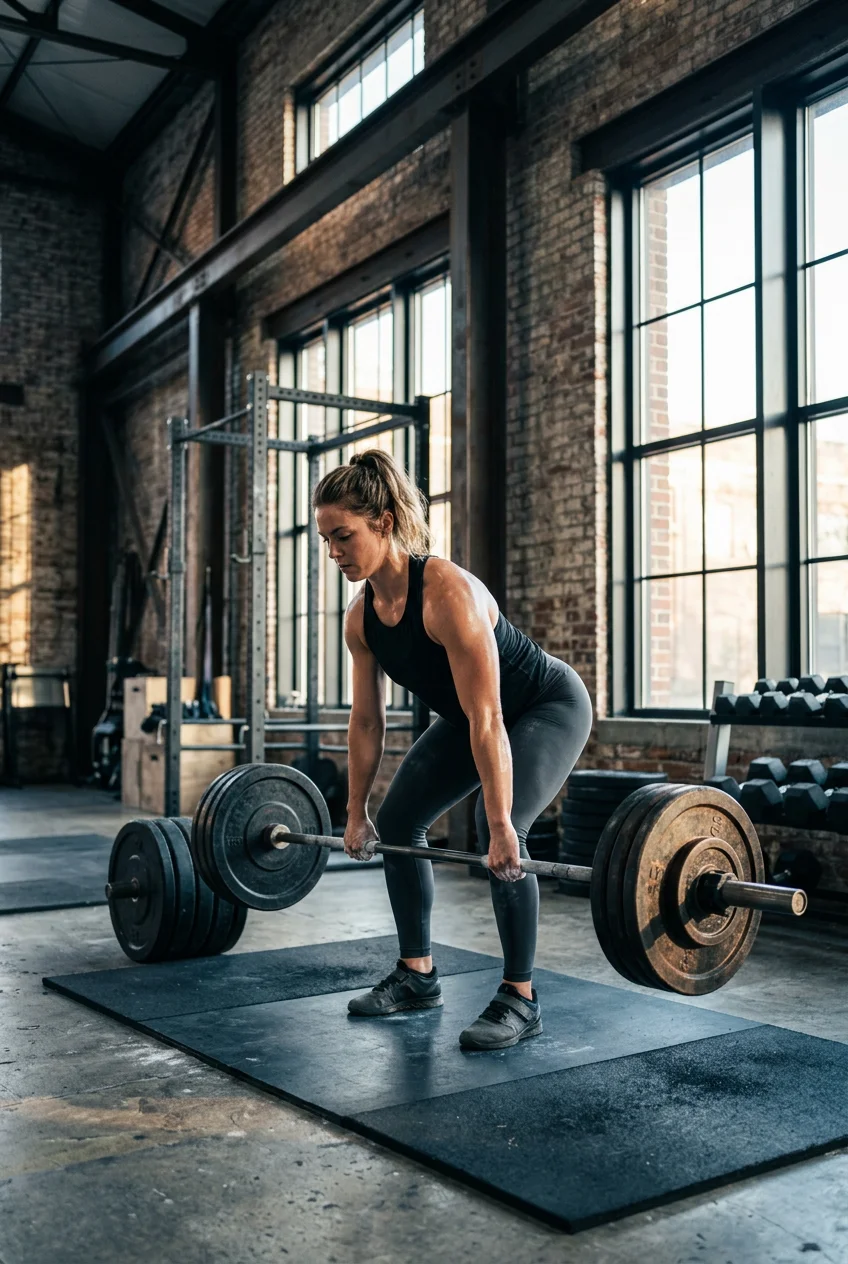
What’s Inside
- Start Your Barbell Workout For Women With A 15kg Bar
- Drill Your Form With PVC Pipes Before Adding Weight
- Buy Proper Weightlifting Shoes For Stability
- Lift Heavy To Make Your Barbell Workout For Women Effective
- Force Progress With Systematic Overload
- Break Plateaus With Microloading Plates
- Fix Your Hip Hinge To Save Your Lower Back
- Hit Full Depth On Every Single Squat
- Upgrade Your Collars And Get A Deadlift Jack
Last Tuesday at my local gym, I saw a new client try to unrack a standard 45-pound men’s bar for a back squat. I was standing by the rack, finishing a 99-cent dark chocolate peanut butter cup I’d grabbed from Trader Joe’s. The sandpaper-like knurling on that cheap bar shredded her hands. The 28-millimeter shaft was too thick for her grip, and her wrists buckled. She nearly dumped the barbell onto the floor. It’s a classic mistake. If you want a barbell workout for women that actually works, stop using equipment and programming built for a 200-pound guy.
I wasted months forcing men’s gear on my female clients before realizing hand size and grip fatigue were the real problems, not leg strength. Learned that the hard way. When your grip fails before your glutes do, you aren’t training your lower body right. We fixed her setup, and within three weeks, her squat numbers doubled. Building a routine takes specific tools, precise form, and a total disregard for those pink three-pound dumbbells in the aerobic studio. I’m going to show you how to set up your lifts, the gear that prevents injury, and the adjustments that keep you moving forward.
1. Start Your Barbell Workout For Women With A 15kg Bar

Most commercial gyms only stock standard 20kg (45lb) Olympic barbells. These usually have a 28mm or 29mm shaft. For most women, gripping a 29mm shaft feels like holding a soda can. Your fingers don’t overlap enough to get a secure lock, so your forearms burn out way before your legs. I’ve watched plenty of women drop deadlifts just because their hands couldn’t hold the thick metal anymore.
Get a 15kg (33lb) women’s Olympic barbell instead. These have a 25mm shaft, which changes everything. The narrower bar lets your fingers wrap fully, creating a mechanical advantage that adds weight to your lifts. Reputable brands make these for female lifters. The Rogue Fitness Bella Bar 2.0 is exactly $225 and has dual knurl marks with a zinc finish that won’t tear your palms. If you want softer knurling, the REP Fitness Colorado Bar costs about $300 and has a bushing system that spins smoothly for cleans.
I bought a Bella Bar for my garage gym after my wife complained about her grip slipping on our standard bar. The change was immediate. She added 15 pounds to her Romanian deadlift that afternoon because she could finally hold the weight. If your gym doesn’t have a 15kg bar, ask the front desk to order one. If you’re building a home gym, skip the cheap Amazon bundles and spend the $225 on a bar that actually fits your hands.
2. Drill Your Form With PVC Pipes Before Adding Weight

Trainer Mathew Forzaglia always says mastering technique is everything before you touch an iron plate. I used to rush clients to the 33lb bar on day one. I’d watch their knees cave and their lower backs round like angry cats. It’s embarrassing to say, but I caused a lot of soreness by skipping the basics. You can’t muscle through poor biomechanics.
Start by practicing squats, deadlifts, and overhead presses with a PVC pipe. I bought a 60-inch, 3/4-inch schedule 40 pipe at Home Depot for $4.98. The hollow, weightless feel forces you to focus on your body’s position. Without 33 pounds compressing your spine, you can feel if your weight is balanced over your mid-foot or shifting to your toes. You can practice pulling your shoulder blades together and keeping your chest up without fighting gravity.
Spend two full weeks drilling your hip hinge and squat depth with that pipe. Record yourself. If your back rounds with a plastic tube, it’ll round with a loaded barbell. Once your form looks solid for ten reps, you graduate to the 15kg bar. It might feel silly standing in a crowded gym holding plumbing equipment, but this step prevents the lower back injuries that usually end a beginner’s progress in month two.
3. Buy Proper Weightlifting Shoes For Stability

Squatting in squishy running shoes is like building a house on a mattress. When you load weight, the foam compresses unevenly. Your ankles roll, your knees wobble, and you lose power. I squatted in running shoes for two years. My heels lifted, and my knees ached for days. Trust me.
Proper lifting shoes improve your stability. Look for a firm, non-compressible elevated heel. The Nike Romaleos 4 cost $200 and feature a hard TPU midsole with a 20mm heel height. The Reebok Legacy Lifter III is about $220 with a 20.5mm heel. That lift helps your ankle mobility. It lets your knees track forward while your torso stays upright. An upright torso means less strain on your back and more work for your quads. You might also like: 9 Aesthetic Fitness Gym for Every Budget
The first time you step onto a gym floor in Romaleos, you’ll hear a solid thud. You feel bolted to the ground. The flat base prevents foot rolling. If $200 is too much, look for older models on clearance, but don’t skip this. I bought lifters after nearly failing a 225lb squat because my running shoe compressed sideways. The hard heel provides a stable platform that makes heavy weights feel lighter. You might also like: 8 Leg Workout Gym for Every Budget
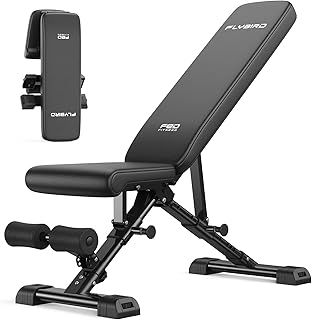
FLYBIRD WB5 Weight Bench
FLYBIRD WB5 Weight Bench punches above its price — 259 buyers rated it 4.5 stars. I would buy it again.
4. Lift Heavy To Make Your Barbell Workout For Women Effective

A myth won’t die: that heavy barbell training makes women bulky. I hear it every week. Women stick to 10-pound fixed bars, doing sets of 30, hoping to get “toned.” Science shows women have much lower testosterone than men. You don’t have the hormonal profile to accidentally build massive, bulging biceps overnight. No exaggeration. You might also like: 20 Lovely Aesthetic Home Morning Workout Routine to Inspire Your Next Project
Lifting heavy is how you get that firm, dense muscle tone. Heavy compound movements boost your metabolism, improve bone density, and support hormone health. You need to challenge your muscles with weights that feel intimidating. If you can easily finish 15 reps without sweating, the weight is too light to trigger change.
You also have to feed that growth. I grabbed three pounds of chicken at Sprouts last Sunday for $14.97 to meal prep. You need protein to recover from heavy iron. Aim for 0.8 to 1.0 grams of protein per pound of body weight daily. Without it, lifting just breaks you down without rebuilding. Stop fearing the plates. The women in the gym with the most athletic physiques are the ones deadlifting their body weight, not doing endless tricep kickbacks with pink dumbbells.
5. Force Progress With Systematic Overload

You can’t do the same workout with the same weight for six months and expect change. Your body gets efficient at stress. Once a 65-pound squat is easy, your muscles stop growing. To build strength, you need progressive overload. This just means consistently increasing the demands on your body.
A good rule for beginners is to add 5 pounds to lower-body lifts and 2.5 pounds to upper-body lifts once you nail your sets and reps. Finish your last set feeling like you only had one or two reps left in the tank. If you hit 3 sets of 8 with 65 pounds this week, you load 70 pounds next week.
I learned this the hard way. I spent a year bench pressing 135 pounds because I never tracked my numbers. I just loaded what felt comfortable. You need a logbook. I bought a $2.99 spiral notebook at Target to track my clients. Write down the date, exercise, weight, and reps. The sound of a new 2.5lb plate sliding onto the barbell is the sound of progress. Don’t rely on memory. When you see what you lifted last week in ink, you know exactly what you have to beat today.
6. Break Plateaus With Microloading Plates

Eventually, adding 5 pounds becomes impossible, especially for upper body lifts. The overhead press is notorious for this. Jumping from 45 to 50 pounds is an 11% increase. Your shoulders will refuse to press it, your form will break, and you’ll arch your back dangerously to cheat the weight up.
When you fail, use microloading plates. These are tiny, rubber-coated plates weighing 0.25lb, 0.5lb, or 1.25lb. They let you add a single pound instead of five. The Rogue Fractional Plate set is $65 and fits any standard sleeve.
I had a client stuck at 65 pounds on the overhead press for three months. She could hit 5 reps, but 70 wouldn’t move past her chin. I brought in my 1.25lb plates. We loaded 67.5 pounds. She pressed it easily. The next week, we hit 70. Those tiny plates trick your nervous system. They allow for steady progress without killing your form. Keep a pair in your gym bag for when your lifts stall.
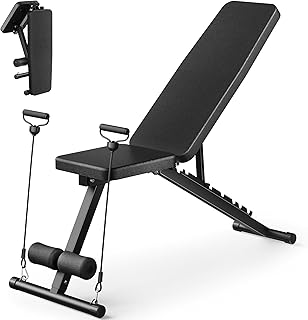
Adjustable Weight Bench for Home Gym
Adjustable Weight Bench for Home Gym has been one of the most consistently praised picks in this category. 551 reviewers averaged 4.5/5.
7. Fix Your Hip Hinge To Save Your Lower Back

The deadlift is the most butchered exercise. A common mistake is letting the bar drift away from your body. Even two inches of space creates a lever arm that puts massive force on your spine. I strained my lower back years ago letting a 315-pound deadlift drift over my toes. I spent the next night on my floor with a $6 bag of frozen peas from Kroger pressed against my back.
Master the hip hinge. Keep the barbell in physical contact with your legs the whole time. It should drag up your shins and graze your thighs. Yes, it might leave bruises. Wear tall socks. Focus on pushing your hips back like you’re closing a car door with your glutes, rather than bending forward.
When you set up, the bar should cut your foot in half, sitting over your laces. Grab the bar, drop your hips until your shins touch the metal, and pull your chest up to take the slack out of the bar. Don’t yank it off the floor. Push the floor away with your legs while keeping your back flat. If you feel it in your lower back instead of your hamstrings, your hinge is wrong and the bar is too far forward.
8. Hit Full Depth On Every Single Squat

Watching someone load 135 pounds, only to bend their knees two inches, is frustrating. Limiting your depth puts stress on your patellar tendons and removes your glutes from the movement. A quarter-squat is an ego lift. You aren’t training the muscles you’re targeting.
Ensure a full range of motion. Descend until the crease of your hip drops below the top of your knee. At this depth, the load shifts off your knees and into your posterior chain. You’ll feel a deep stretch in your hamstrings. To do this safely, brace your core. Imagine someone is about to punch you in the stomach. Tighten your abs against your belt.
As you descend, push your knees out so they track over your middle toes. If your knees cave, your hips lock up. I struggled with depth for years because my stance was too narrow. I widened my feet two inches, pointed my toes out 30 degrees, and suddenly I could drop into a perfect squat. Leave your ego at the door, strip the 45-pound plates, and practice depth with the empty 15kg bar first.
9. Upgrade Your Collars And Get A Deadlift Jack

Using the worn-out spring clips at the gym is a hazard. I was doing power cleans once when a flimsy clip slid off. A 25-pound plate crashed, the bar whipped, and I nearly dislocated my shoulder. Loose plates are dangerous. Upgrade your hardware.
Buy clamp-style collars for your bag. The Lock-Jaw Sport collars are $30 on Amazon and use a simple latch. You can snap them with one hand. For something indestructible, the Rogue USA Aluminum Collars are $75. They lock with a satisfying click and won’t budge.
While you’re at it, get a deadlift jack. Loading heavy plates while the bar is on the floor is exhausting. You end up wrestling 45-pound plates and pinching your fingers. The Rogue Mini Deadlift Jack is $70. You hook it under the sleeve, pull back, and it lifts the bar. I used to buy 40-packs of water at Costco for $4.99, and hauling that case is exactly how annoying it feels to strip a 135-pound deadlift without a jack. It saves your back and your energy.
Building a successful routine isn’t about talent; it’s about using the right gear, respecting your body, and refusing to settle for terrible gym equipment. I recommend the 15kg bar and good lifting shoes as your first investments. Pin this guide, save it to your phone, and pull it up next time you hit the weight room. You’ve got the blueprint, now go load the bar.
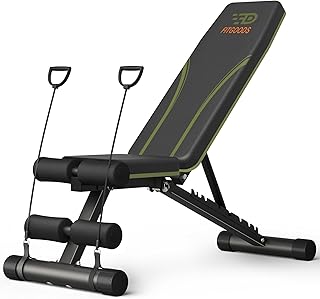
Fitgoods Adjustable Weight Bench for Home Gym
Honestly, Fitgoods Adjustable Weight Bench for Home Gym surprised me — sturdier than it looks in the photos, and over 86 buyers gave it 4.5 stars.
Frequently Asked Questions
Will a barbell workout for women make me bulky?
No. Women lack the high testosterone levels required to build massive, bulky muscle easily. Heavy barbell training increases bone density, boosts your resting metabolism, and creates a lean, firm physique.
Why should I use a 15kg barbell instead of a 20kg bar?
A 15kg women’s barbell features a narrower 25mm shaft diameter. This allows smaller hands to wrap fully around the bar, preventing grip fatigue and allowing you to lift heavier weights safely.
What shoes are best for barbell squats?
Avoid soft running shoes. Invest in dedicated weightlifting shoes with a hard, elevated heel, like the Nike Romaleos 4. The firm base improves ankle mobility and keeps your torso upright during squats.
How often should I increase the weight on the barbell?
Use progressive overload. Add 5 pounds to lower-body lifts and 2.5 pounds to upper-body lifts once you can complete all your reps with good form. Use microloading plates to prevent plateaus.
