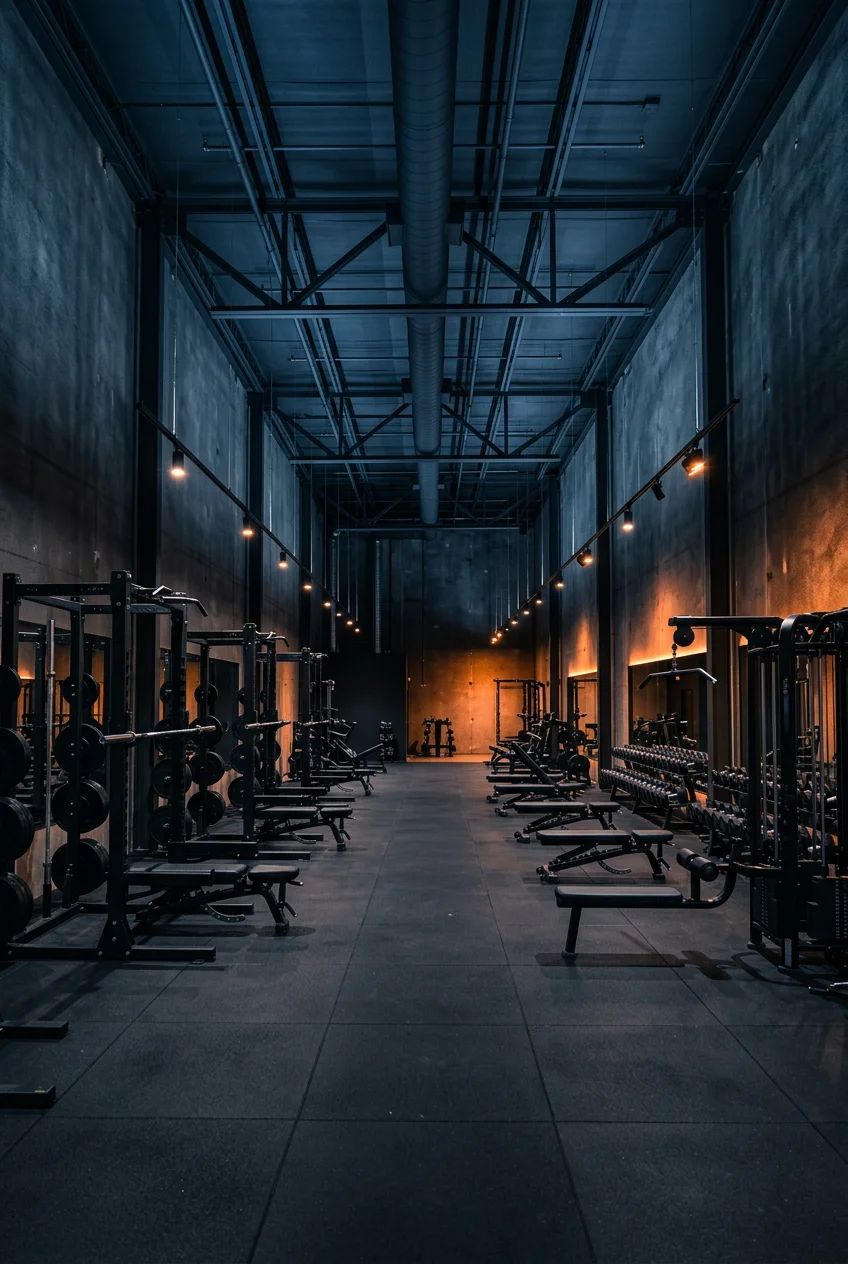
What’s Inside
- Why Dark Gym Wallpaper Actually Boosts Your Focus
- Prioritize Commercial-Grade Vinyl for Maximum Durability
- Opt for Peel-and-Stick Vinyl for DIY-Friendly Updates
- Embrace Textured Wallpaper to Conceal Wall Imperfections
- Integrate Dark Motivational Murals for High-Impact Inspiration
- Strategically Employ Dark Gym Wallpaper on Accent Walls
- Crucially Pair Dark Walls with Ample, Layered LED Lighting
- Accurately Calculate Quantities and Always Order Extra
- Prepare Walls Meticulously to Ensure a Flawless Finish
- Opt for Acoustic Dark Wallpaper to Enhance Sound Quality
Last November, I tried painting my garage gym black to make it look like a high-end training facility. I ended up with a space that felt like a damp, suffocating cave, and the cheap matte paint I used scuffed every time a barbell plate brushed against it. I spent three weeks staring at white chalk smudges on a charcoal wall before I finally admitted defeat. That’s when I discovered dark gym wallpaper. It completely fixed the aesthetic without the constant maintenance of flat paint. I’m writing this because I see too many home gym owners making the same expensive mistakes I did. You don’t need to rebuild your walls or hire an interior designer to get a premium look. You just need the right materials and a weekend of focused work.
I’ve tested dozens of wallcoverings in my own garage and in clients’ training spaces. Most people buy whatever looks cool online, slap it up, and watch it peel off a month later when the room gets humid. I’m going to walk you through exactly what works, what fails, and how to install it so it survives heavy deadlift sessions and sweaty summer workouts. Let’s get into the specifics of doing this right.
1. Why Dark Gym Wallpaper Actually Boosts Your Focus

Color psychology isn’t just a marketing trick. Dark colors, particularly deep blacks and charcoals, signal power and discipline. When I walk into a bright white room, I feel like I’m at the dentist. When I walk into a dark training space, the visual noise disappears. The dark background makes your steel equipment appear more solid and anchors your focus entirely on the workout. Last Tuesday at Whole Foods, I bumped into a client who asked why my garage gym photos look so professional lately. I told him it’s entirely the background contrast. Took me years to figure that out.
I originally tried a Sherwin-Williams Tricorn Black paint, but it lacked texture. I switched to the Wallart “Old gym” wallpaper mural, which starts at £19.95 per square meter. The visual difference was immediate. The printed texture absorbs light differently than flat paint, giving the room a prestigious, gritty feel without looking cheap. If you’re easily distracted during your rest periods, a dark wall minimizes visual interruptions. You won’t find yourself staring at scuff marks or drywall seams because the deep tones hide them. I’ve noticed my own training sessions are about fifteen minutes shorter now simply because I’m not looking around the room between sets. The dark environment forces you to look inward.
2. Prioritize Commercial-Grade Vinyl for Maximum Durability

Skip the cheap paper stuff. It tears like wet cardboard. I bought a standard paper-backed wallpaper on clearance at Target once, thinking I was saving money. Learned that the hard way. Two weeks later, I leaned a sweaty back against it after a set of heavy squats, and the moisture dissolved the adhesive backing. The paper bubbled and ripped when I stood up. A complete waste of time.
You need PVC or heavyweight vinyl wallpaper for a gym. It provides superior water resistance, scratch resistance, and impact resilience. When shopping, look specifically for the ASTM F793 certification. The American Institute of Architects recommends this standard for active settings because it guarantees the material is scrubbable. I currently use a York Wallcoverings commercial vinyl that runs $52.99 per double roll. It’s thick enough that if I accidentally bump it with a 45-pound bumper plate, it doesn’t immediately gouge down to the drywall. I also installed Roppe commercial rubber baseboards from Lowe’s for $14.98 per 4-inch strip along the bottom edge to protect the lower seams from my vacuum cleaner. If you’re building a space where heavy metal objects are moving around constantly, standard residential paper won’t survive the month.
3. Opt for Peel-and-Stick Vinyl for DIY-Friendly Updates

If you’re renting your house or you just hate dealing with messy wallpaper paste, peel-and-stick vinyl is the only way to go. Back in 2019, I rented an apartment and tried to remove traditional pasted wallpaper from the living room. I spent three days scraping glue off the drywall with a putty knife. I swore I’d never use traditional paste again unless I owned the building.
Peel-and-stick offers easy application and removal without destroying the drywall behind it. I highly recommend the MuralsAll Peel & Stick Vinyl. It has an incredibly strong adhesion but still allows you to reposition it if you lay it down crooked. It costs exactly $35.00 per single roll, which measures 20.5-inches by 18-feet. That breaks down to about $1.14 per square foot. The wider 20.5-inch rolls are crucial because they mean fewer seams on your wall. Fewer seams mean fewer places for moisture to penetrate and cause peeling. When I installed this in my current gym, I bought a basic $4.88 plastic smoother tool from Walmart. You just peel the top six inches of the backing, stick it to the ceiling line, and slowly pull the backing down while smoothing out the air bubbles. It’s tedious, but anyone can do it. You might also like: 20 Charming Black Garage Home Gym Setup Ideas Worth Trying This Year

OPTP PRO-Roller Soft Density Foam Roller
OPTP PRO-Roller Soft Density Foam Roller – Low Density Soft Foam Rolle has been one of the most consistently praised picks in this category. 64 reviewers averaged 4.5/5.
4. Embrace Textured Wallpaper to Conceal Wall Imperfections

Most garage walls aren’t perfectly smooth. When I built out my first home gym, I didn’t sand my drywall mudding properly. I applied a completely smooth, glossy black wallpaper over it. The glossy finish acted like a spotlight, highlighting every single bump, ridge, and poorly taped seam on that wall. It looked terrible, and I ended up tearing it all down. You might also like: 15 Beautiful Photoshoot Home Workout Ideas to Steal Right Now
A subtle textured finish on dark wallpaper adds visual depth and effectively masks minor wall imperfections. I switched to the Oron 3D Embossed Black Textured Wallpaper, which costs $28.99 for a 20.8-inch by 32.8-foot roll. The physical ridges in the vinyl break up the light reflection, so you can’t see the uneven drywall underneath. You still need to do basic prep work, though. I spent an afternoon filling the deepest gouges with DAP Spackle from Home Depot, which cost me $8.98 for a small tub. Once that dried, I sanded it flat and applied the textured wallpaper. The 3D embossing completely hid the remaining wavy sections of my garage wall. If you’re working with older construction or a basement with concrete block walls that have been framed over hastily, textured vinyl is your best defense against a sloppy-looking finish. You might also like: 10 Gym Motivation Wallpapers for Every Budget
5. Integrate Dark Motivational Murals for High-Impact Inspiration

Sometimes a solid black wall feels a little too empty. Using large-scale dark murals featuring athletic imagery or bold motivational quotes creates a dynamic atmosphere. I used to think quote walls were cheesy until I walked into a private commercial gym in Austin last year. They had a massive, floor-to-ceiling dark mural of a chain-link fence and a concrete texture. It completely changed the vibe of the room from a sterile clinic to a serious training facility.
I recently helped a friend install the MuralsAll “Dark Fitness Gym Wall Mural – Black Brick Workout Motivation Design.” It blends a raw industrial brick texture with subtle, faded typography. It cost him $129.00 for a 100×144-inch mural. The installation comes in numbered vertical panels, so you just line up panel one with panel two. The dark brick graphic is incredibly forgiving if your seams aren’t perfectly tight. The key with murals is to place them on the wall you face most often. My friend put his directly behind his main lifting platform. Now, when he’s setting up for a heavy squat, he’s staring at this massive, gritty industrial wall instead of his water heater. It sets the exact right mental tone for a heavy workout.
6. Strategically Employ Dark Gym Wallpaper on Accent Walls

You don’t have to wrap your entire room in black vinyl. In fact, if your gym is small, wrapping all four walls in dark gym wallpaper will make it feel like a closet. Instead, use it on a single accent wall to create a focal point and define specific workout zones. This adds visual depth without overwhelming the space.
My garage is a standard 16×20-foot room. I only applied NuWallpaper Black Brick, which costs $31.48 per roll, to the wall directly behind my squat rack. I left the other three walls a bright, neutral gray. This created a dedicated “heavy lifting zone” visually separated from my cardio equipment and dumbbell rack. It’s a psychological trick. When I step onto the rubber mats in front of the dark wall, my brain knows it’s time to lift. The contrast between the dark accent wall and the lighter surrounding walls actually makes the room feel longer than it is. If you’re working with a tight budget, this is also the smartest financial move. You only need to buy enough rolls to cover one wall, cutting your material costs by seventy-five percent while still getting the premium aesthetic impact.

Yes4All Kettlebell, 5-100 LB Vinyl Coated Cast Iron
If you want something that just works, Yes4All Kettlebell is a safe bet (25 reviews, 4.5 stars).
7. Crucially Pair Dark Walls with Ample, Layered LED Lighting

Dark walls absorb light. I learned this the hard way. After I finished installing my black vinyl, I tried to work out using the single bare lightbulb that came with my garage. I couldn’t see the knurling on my barbell, and I ended up tripping over a 45-pound plate I’d left on the floor. Good lighting is essential to prevent the space from feeling heavy or dangerous.
You need a layered lighting scheme. I installed an 8-grid Hexagon Gym Lights system, which cost $249.99. These lights sit flush against the ceiling and provide even, shadow-free illumination across the entire 200-400 square foot space. I specifically chose a color temperature of 6500K. The crisp, daylight-white light bounces off the dark walls without washing them out, maintaining the moody aesthetic while keeping the floor totally visible. I also bought a simple Feit Electric LED utility light from Costco for $19.99 to hang directly over my workbench as task lighting. Don’t rely on warm, yellow bulbs (3000K or lower) with dark walls. The yellow light mixes with the black background and turns the room a muddy, depressing brown color. Stick to bright, cool LED overheads.
8. Accurately Calculate Quantities and Always Order Extra

There is nothing worse than being three-quarters of the way through a wall and realizing you’re out of paper. I did this in my first house. I ordered exactly what my measurements dictated. I didn’t account for the pattern repeat, and I ran out with two feet of bare wall left. When I ordered another roll two weeks later, it came from a different dye lot. The black was slightly more gray than my original rolls, and the seam stuck out horribly.
Always order an additional 10 to 15 percent, or at least one full extra roll. Grab a reliable Stanley 25-foot tape measure, which you can get for $12.97 anywhere, and measure the width and height of each wall precisely. A typical 16×20-foot room with 8-foot ceilings requires roughly 16 to 20 rolls of basic wallpaper, depending on the width of the rolls and the size of the pattern repeat. When you’re matching a brick or geometric pattern, you lose a few inches of paper on every single vertical drop just trying to line up the graphics. That waste adds up fast. Having an extra roll in your closet also means you have exact-match replacement material if you ever accidentally tear a section with a dumbbell.
9. Prepare Walls Meticulously to Ensure a Flawless Finish

Poor wall preparation ruins more wallpaper jobs than bad adhesive. If you stick vinyl to dusty, unprimed drywall, it won’t hold. I used to skip the primer stage because I’m impatient. The edges of my paper started curling within a month because the dry, porous wall sucked all the moisture out of the adhesive.
First, wash the walls. I mix 1/2 cup of TSP cleaner into a gallon of warm water and wipe down everything to remove dust and grease. Once it’s dry, apply a dedicated wallcovering primer. I use Zinsser ShieldZ Universal Wallcovering Primer, which is $32.98 a gallon at Sherwin-Williams. It creates a hard, slightly tacky surface that grips the vinyl perfectly. Here is my biggest pro tip for dark materials: before you hang the paper, paint a 2-inch vertical stripe of dark gray or black paint on the wall exactly where your seams will fall. Vinyl wallpaper can shrink slightly as the temperature changes. If it shrinks by a fraction of a millimeter, the bright white primer underneath will show through the seam like a neon line. Painting the seam lines dark beforehand completely camouflages any tiny gaps.

Fit Simplify Resistance Loop Exercise Bands with
Fit Simplify Resistance Loop Exercise Bands with Instruction Guide and has been one of the most consistently praised picks in this category. 1,352 reviewers averaged 4.5/5.
10. Opt for Acoustic Dark Wallpaper to Enhance Sound Quality

Most home gyms are echo chambers. When I first moved my equipment into my garage, dropping a heavy deadlift sounded like a bomb going off. The sound waves bounced aggressively off the hard drywall, concrete floor, and steel plates. It gave me a headache after thirty minutes. A lesser-known trick is to use acoustic wallpaper to absorb that harsh noise.
I recently upgraded my back wall with Rebel Walls “Acoustic Panel, Black” wallpaper. It features a 3D diamond pattern and costs roughly $6.50 per square foot. The material is noticeably thicker and softer than standard vinyl, designed specifically to dampen sound reflections. Another excellent option is QuietWall’s “Uplift Acoustical Wallcoverings- In The Dark,” which runs about $45 per yard and is made from 100% recycled PET bottles. The texture feels almost like a dense felt. It won’t soundproof your room completely—your neighbors will still hear the deadlifts—but it dramatically reduces the sharp, ringing echo inside the room. You can actually listen to music at a reasonable volume without it sounding like a distorted mess bouncing off the walls. If you have the budget, acoustic vinyl is a massive quality-of-life upgrade.
Getting your gym aesthetics right isn’t just about vanity. A space that looks and feels intentional makes you want to train harder. I’ve spent thousands of dollars on barbells and racks, but changing the walls to a dark, textured finish had the biggest immediate impact on my daily motivation. No exaggeration. With proper installation, a good commercial vinyl will easily last 15 to 25 years. Just remember to maintain it properly. I wipe mine down once a month using a damp microfiber cloth and a few sprays of Trader Joe’s multi-purpose cleaner, which costs $3.99. Don’t use abrasive scrub sponges, or you’ll dull the finish. If you’re tired of staring at scuffed, boring white walls during your workouts, take a weekend and put up some dark vinyl. You won’t regret it. Pin this guide so you have the exact brand names and measurements when you’re ready to order your supplies.
Frequently Asked Questions
How do I clean dark gym wallpaper?
Use a damp microfiber cloth with a mild soap or all-purpose spray. Gently wipe the surface to remove sweat and chalk dust. Never use abrasive sponges or heavy chemical solvents, as they will permanently scratch and dull the vinyl finish.
Is peel-and-stick wallpaper durable enough for a home gym?
Yes, provided you purchase commercial-grade vinyl. Heavyweight PVC peel-and-stick resists moisture, sweat, and minor impacts far better than standard residential paper options. Look for products with an ASTM F793 certification for maximum durability.
Will dark wallpaper make my gym look too small?
It can make a room feel closed in if you lack proper lighting. You must pair dark walls with bright, layered LED lighting. Use 5000K to 6500K overhead lights to keep the space functional and prevent a cave-like atmosphere.
Can I install dark gym wallpaper over textured walls?
No. You must smooth the walls first. Apply spackle to deep grooves, sand the surface flat, and apply a wallcovering primer. If you skip this, the wall’s texture will show through the vinyl and compromise the adhesive backing.
