What’s Inside
- Prioritize a Dynamic Warm-up (10-15 minutes) for a Full Leg Workout
- Master the Squat: Focus on Depth and Form
- Correct Deadlift Form to Protect Your Back
- Integrate Unilateral Training for Balanced Strength
- Activate Your Glutes with Resistance Bands
- Embrace BFR Training for a Full Leg Workout
- Don’t Neglect the Eccentric Phase
- Fuel Your Workout with a Quality Pre-Workout
- Optimize Post-Workout Recovery with Protein
- Incorporate Hip Thrusts for Peak Glute Development
Last Tuesday at Whole Foods, I couldn’t even step onto the curb with my grocery bags. My legs just quit, sending a $6.99 carton of organic blueberries rolling under a parked Subaru. I heard them popping under the tires as the car backed out. That disaster was the result of a brutal leg workout I put myself through the day before. I’m Ryan Brooks, and I’ve spent the last decade trying to build a leg routine that adds mass without destroying my lower back. Let’s build some tree trunks. I used to walk into the gym, load up the leg press, and push until I felt sick. That was incredibly stupid. I tore a meniscus, strained my back, and spent weeks walking like a newborn deer. Learned that the hard way. Now, I follow a strict protocol. I’m sharing the exact blueprint I use for my clients and myself. Grab your gym bag. We’re getting to work.
1. Prioritize a Dynamic Warm-up (10-15 minutes) for a Full Leg Workout

I see guys walk into the gym, drop their bags, and immediately load 225 pounds onto the squat rack. That’s a one-way ticket to a blown joint. You can’t just jump into heavy lifting. You need 10 to 15 minutes to prep your joints and nervous system. Start with five minutes of light cardio. I usually hop on the stationary bike or grab a cheap $9.99 jump rope I picked up at Target last month. The goal is to break a light sweat. After that, move into dynamic stretches that mimic your workout. I do 10 to 12 reps of forward and backward leg swings. Then I switch to side-to-side leg swings. Next, I do walking lunges across the turf. Finally, I drop into active deep squats to pry open my hips and improve ankle mobility. I used to skip this. I thought stretching was a waste. Then I spent six months dealing with chronic hip flexor pain that felt like a hot knife in my groin every time I sat down. Don’t make my mistake. Take the warm-up seriously. The smell of the dusty gym floor while you’re doing those deep squats isn’t glamorous, but it keeps you out of the physical therapist’s office. Your joints need synovial fluid to move, and those 15 minutes are how you pump that fluid where it needs to go.
2. Master the Squat: Focus on Depth and Form

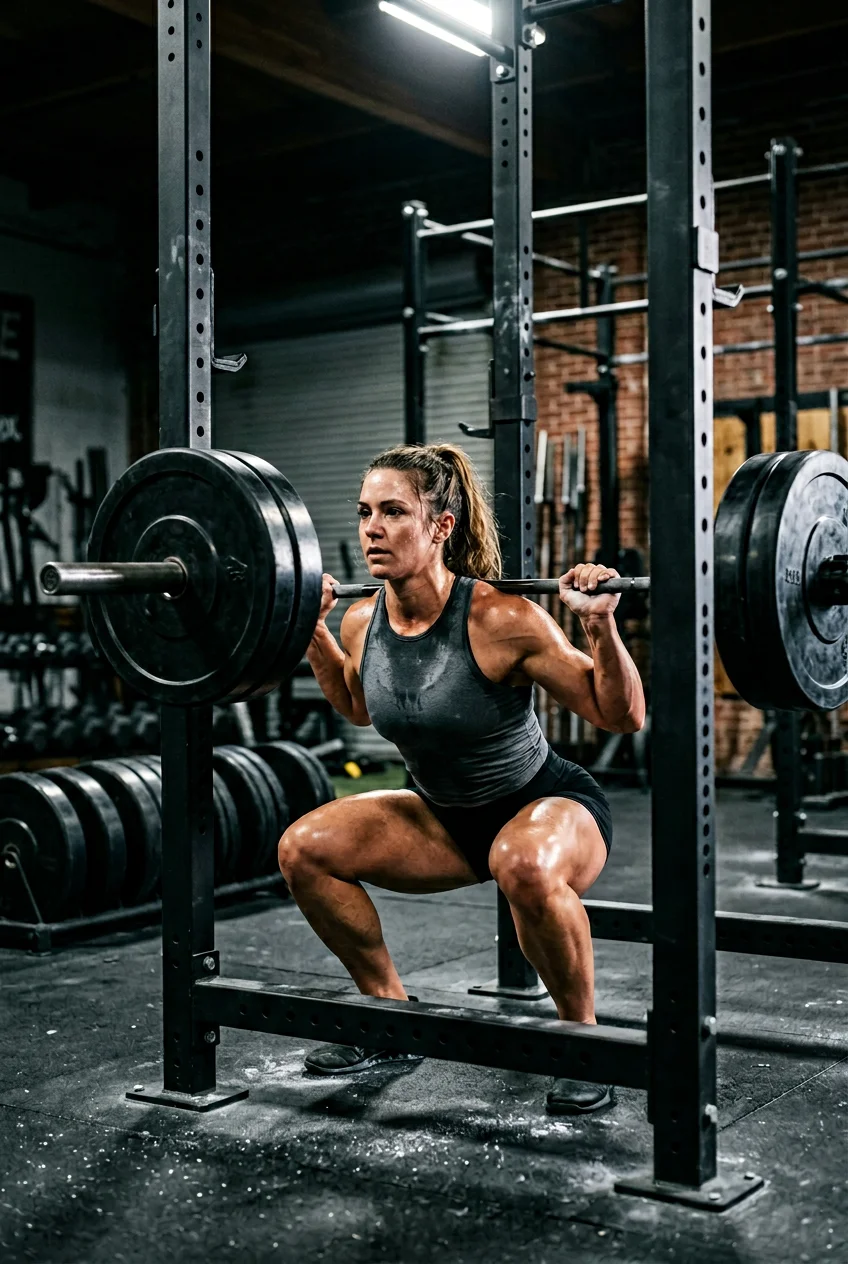
If you aren’t squatting deep, you aren’t really squatting. Half-reps are an ego trip. Insufficient depth kills muscle engagement. You have to lower your hips until your thighs are at least parallel to the ground. This is the only way to fully hit your glutes and quads. A massive mistake I see is letting the knees cave inward. This is called valgus collapse, and it destroys your knee ligaments. You must actively push your knees out, tracking them over your middle toes. If you struggle with this, your shoes might be the problem. I used to squat in squishy running shoes, and my feet wobbled like jelly. Now, I strictly wear weightlifting shoes. I swear by the Reebok Legacy Lifter III. They run around $220, but the hard, flat sole and raised heel are worth every penny. The heel is about 22mm high, which artificially improves your ankle mobility and lets you hit rock bottom on your squat without your chest falling forward. If you prefer Nike, the Nike Romaleos 4 are another solid option for around $200. The stiff feel of these shoes on the rubber gym floor makes you feel planted. You’re bolted to the ground. It changes everything. The clunky sound they make when you walk to the rack just sounds like serious business.
3. Correct Deadlift Form to Protect Your Back

The deadlift is the king of mass builders, but people do it horribly wrong. I’ve watched people round their lower backs so badly they look like scared cats. I actually did this in college. I pulled 315 pounds with a rounded back and heard a loud pop. I spent the next three days lying flat on my living room floor, unable to tie my shoes. You have to maintain a flat, firm back. Instead of thinking about pulling the weight up, change your mental cue. Think about pushing the ground away with your feet. It shifts the tension from your lower back to your glutes and hamstrings. Keep the bar close to your body. It should almost be scraping your shins. Yes, you might bleed a little. I bought a cheap $4.50 block of gymnast chalk at Walmart specifically to keep my grip secure so the bar doesn’t drift. If the bar drifts even an inch, the force on your lumbar spine multiplies. Grip the bar tight, brace your core like you’re about to take a punch, and push the floor down. The rough knurling of the barbell should dig into your calluses. That’s how you know you’re locked in. Wiping white chalk dust off your sweatpants is just a badge of honor. You might also like: 15 Brilliant Dark Basements Home Gym Setup Ideas Worth Trying This Year

FLYBIRD WB2 Weight Bench
FLYBIRD WB2 Weight Bench punches above its price — 215 buyers rated it 4.5 stars. I would buy it again.
4. Integrate Unilateral Training for Balanced Strength

Bilateral lifts are great, but unilateral training is where you fix your weaknesses. Single-leg exercises are crucial for muscle imbalances. Most people have one leg stronger than the other. My right leg used to dominate my left. I realized this when I was carrying a 40-pound bag of dog food and almost tipped over. You need to incorporate movements like Bulgarian split squats, single-leg Romanian deadlifts, and pistol squats. I aim for three sets of 8 to 12 reps per leg. Bulgarian split squats are torture. You prop your back foot on a bench, hold heavy dumbbells, and drop your back knee to the floor. The burning sensation is intense. Honestly, this changed how I view leg day. It’s not just about moving weight. It’s about stability. Some trainers say that training one side stimulates the opposite side through your nervous system. I usually stumble out of the gym after these. Last week, I had to stop at Trader Joe’s to buy a $4.99 bag of lavender Epsom salts for a hot bath because my glute medius was twitching uncontrollably. Don’t skip these just because they’re uncomfortable. They’re mandatory for building symmetrical, injury-resistant legs. You might also like: 20 Charming Black Garage Home Gym Setup Ideas Worth Trying This Year
5. Activate Your Glutes with Resistance Bands

You can’t just expect your glutes to turn on when you load up a barbell. Most of us sit at desks all day, which makes our glutes go to sleep. This is called glute amnesia. Before I touch heavy weights, I use mini resistance bands for activation. Bret Contreras, who is known as the Glute Guy, recommends exercises like banded seated hip abductions. I don’t use those cheap rubber bands that roll up and rip out your leg hair. I use a fabric band. Specifically, I use the Renoj 3-Set Fabric Loops. You can get a set for about $25, and they offer 20 to 70 pounds of resistance. I place the heavy band just above my knees and do three sets of 20 to 30 reps of seated abductions. The fabric has a thick, woven texture that stays put. You’ll feel a deep, localized burn in the side of your hips. This ensures your glutes are firing during your compound movements. I tried skipping this for months. My lower back would ache after squats because my glutes weren’t doing their share. Now, my glutes are fully pumped before the real workout begins. It takes three extra minutes and saves your back. You might also like: 15 Cozy Aesthetic Morning Workout Routine That Are Totally Worth It
6. Embrace BFR Training for a Full Leg Workout

Blood Flow Restriction training sounds like medieval torture, but it’s an incredible tool for hypertrophy. BFR lets you achieve growth using light loads. We’re talking 20 to 40 percent of your one-rep max. I first tried this when I was recovering from a knee tweak. I strapped specialized BStrong BFR cuffs to my upper thighs. Good cuffs usually run around $150. You wrap them tight enough to restrict venous blood flow, but not so tight that you cut off arterial flow. I do this on the leg extension machine. I’ll do three to four sets of 15 to 30 reps with 30 to 60 seconds of rest. The loud velcro tearing sound when you take them off is the best sound in the gym. The pump is violently intense. Your quads swell up, feeling tight and heavy. It’s uncomfortable, but the results are undeniable. It forces blood and metabolites into the muscle belly without stressing your joints. Before I learned this, I used to buy massive $12.99 bottles of Kirkland Signature Ibuprofen at Costco just to survive the joint pain. Now, I use BFR to get the same stimulus while giving my knees a break.
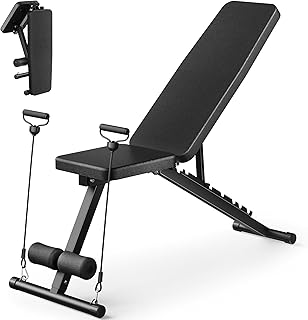
Adjustable Weight Bench for Home Gym
A dependable everyday pick — Adjustable Weight Bench for Home Gym pulls in 551 ratings at 4.5 stars. Not flashy, just solid.
7. Don’t Neglect the Eccentric Phase

Most people rush the lowering portion of an exercise. They dive-bomb their squats, bouncing out of the bottom like a pogo stick. That’s a mistake. The lowering portion is the eccentric phase, and it’s where the majority of muscle damage and growth occurs. You need to control the descent for two to three seconds during squats, lunges, and RDLs. I count it in my head. One thousand one, one thousand two, one thousand three. Then I explode up. This increases your time under tension. It makes a 135-pound squat feel like 315 pounds. I used to let gravity do all the work. I thought I was strong because I could move big weight, but my muscles weren’t growing. Once I slowed down the eccentric phase, my legs exploded in size. The downside is the extreme soreness. The delayed onset muscle soreness is brutal. I recently had to hobble into Sprouts to buy a $6.49 bottle of R.W. Knudsen Tart Cherry Juice just to reduce the inflammation. The sour, sharp taste is worth it. Your muscles will shake as you fight gravity. Embrace that shaking. That’s where the growth happens.
8. Fuel Your Workout with a Quality Pre-Workout

Leg day requires massive energy. I can’t walk in cold and expect to perform. I need a boost, so I take a pre-workout about 20 to 30 minutes before my session. I don’t mess with cheap, gas-station energy drinks. I use Transparent Labs Bulk Pre-Workout. It costs around $50 for 30 servings. It has a slightly sour, tangy green apple taste that jolts you awake. More importantly, it has clinical doses of L-citrulline for muscle pumps and beta-alanine for endurance. The beta-alanine gives you that tingly feeling in your face and hands. I actually like that feeling. It tells me it’s time to work. If you’re on a budget, the Optimum Nutrition Gold Standard Pre-Workout is a solid alternative for about $30. I’ve made the mistake of dry-scooping cheap pre-workouts in the past. It tasted like wet cardboard, and I crashed hard halfway through my squats. Skip the garbage brands. Mix your powder with 12 ounces of cold water, shake it up, and drink it on your drive to the gym. The clacking sound of the metal blender ball in your shaker cup is the universal signal that it’s time to lift heavy.
9. Optimize Post-Workout Recovery with Protein

You can destroy your legs in the gym, but if you aren’t feeding them afterward, you’re wasting your time. You need 20 to 30 grams of protein within an hour post-workout. This supports rapid repair. I use Transparent Labs 100 Percent Grass-Fed Whey Protein Isolate. It’s about $60 for a 30-serving tub, and it delivers 28 grams of pristine protein per scoop. It mixes perfectly smooth, with no chalky clumps. If I’m trying to save cash, I’ll grab the Optimum Nutrition Gold Standard Whey Protein. That one runs about $40 and gives you 24 grams of protein. I used to be terrible at this. I’d finish my workout and not eat for three hours. I wondered why I was constantly sore and never getting stronger. Now, I never skip my post-workout shake. I usually swing by Kroger on my way home to grab a $3.49 gallon of whole milk to mix with my powder. The creamy texture of chocolate whey mixed with ice-cold milk is the best reward after a brutal leg session. Your muscles are screaming for amino acids. Give them what they need to rebuild.

FitinOne Adjustable Folding Weight Bench for Home Gym
FitinOne Adjustable Folding Weight Bench for Home Gym punches above its price — 774 buyers rated it 4.5 stars. I would buy it again.
10. Incorporate Hip Thrusts for Peak Glute Development

If you want maximum glute growth, you can’t rely on squats alone. As Bret Contreras says, the barbell hip thrust is arguably the best exercise for glute growth because it produces high EMG readings. I start with three sets of 10 to 12 reps, and I increase the weight each week. You sit on the floor, roll a loaded barbell over your hips, put your upper back on a bench, and thrust the weight toward the ceiling. Here’s a warning. Don’t do this with a bare barbell. I tried doing raw hip thrusts with 225 pounds once. The sharp knurling dug so deeply into my pelvic bones that I had dark purple bruises for two weeks. It was excruciating. You must use a thick squat pad. I bought a dedicated hip thrust pad from BC Strength for about $80. It’s thick, dense foam that protects your hip bones. You squeeze your glutes as hard as you can at the top. Hold that contraction for a full second. You want to feel a cramping sensation in your glutes. That’s the mind-muscle connection. Drive through your heels, keep your chin tucked, and thrust.
If you want to take your recovery further, start tracking your sleep and strain. I wear a Whoop band that costs around $30 a month, and it changed how I view rest days. When my recovery score is in the red, I know I can’t push a heavy squat session. If you prefer a watch, a Garmin smartwatch running $200 to $800 is another killer option for tracking heart rate variability. Building strong legs isn’t just about moving heavy iron. It’s about smart programming, precise form, and giving your body the fuel it needs to recover. I’ve torn muscles, bruised my bones, and wasted years doing the wrong exercises. You don’t have to make those same mistakes. Try incorporating these ten strategies into your next session, and I promise you’ll feel a massive difference in your strength and stability. If you found this breakdown helpful, pin this article to your workout board and save it for your next leg day. Your future quads will thank you.
Frequently Asked Questions
How often should I do a full leg workout?
You should aim to hit your legs twice a week for optimal growth. I’ve found that waiting a full seven days leaves too much growth on the table. Make sure you’re resting at least 48 hours between sessions.
Do I really need weightlifting shoes for squats?
Honestly, yes. Weightlifting shoes with a solid, raised heel artificially improve your ankle mobility. This lets you hit proper depth without your chest falling forward. It’s the fastest way to fix a sloppy squat.
What’s the best way to activate glutes before lifting?
Skip the endless bodyweight bridges. Grab a heavy fabric resistance band, place it right above your knees, and do three sets of 20 to 30 seated hip abductions. Your glutes will be burning and fully primed.
Why do my knees hurt after lunges?
You’re likely letting your front knee cave inward, which places massive stress on your ligaments. Actively push your knee out so it tracks directly over your middle toes. If it still hurts, try slowing down the eccentric phase.
