What’s Inside
- Prioritize Dynamic Warm-up For Your Leg Day Workout
- Foam Rolling Before Heavy Lifts
- Squat With Full Range Of Motion
- Unilateral Training For Balance
- Posterior Chain Focus For Your Leg Day Workout
- Master the Leg Press Form
- Vary Rep Ranges And Ditch Slow Cardio
- Pre-Workout And Beta-Alanine Strategy
- Protein And Creatine For Recovery
I collapsed next to my shopping cart in the Costco parking lot last Tuesday. A rogue 24-pack of Kirkland sparkling water rolled away from me across the hot asphalt because my quads completely gave out. Which is exactly why structuring a proper leg day workout matters. If you’re doing a leg day workout right, you should feel it the next day. But you shouldn’t be physically incapable of loading groceries into your trunk. I’ve spent years doing this wrong. I used to skip the warm-ups, ego-lift on the squat rack, and completely ignore my hamstrings. It resulted in bad knees, a stiff lower back, and legs that looked like toothpicks. I’m writing this guide to save you from those same mistakes. We’re going to cover everything from specific gear you need to exact rep ranges. Let’s get into the details so you aren’t crawling out of the gym.
1. Prioritize Dynamic Warm-up For Your Leg Day Workout

Before hitting the heavy lifts, dedicate 10 to 15 minutes to dynamic movements. I’m telling you this because I used to walk straight from my car into the squat rack. I tried this wrong for months before figuring it out. I’d load up 135 pounds cold, drop down, and my knees would pop loudly while my hips felt like rusty hinges. It’s a terrible way to train. Now, I start with walking lunges, forward leg swings, and lateral leg swings. I also do three sets of 15 glute bridges. To make the glute bridges actually work, I use fabric resistance bands. The Mark Bell Sling Shot Hip Circle costs exactly $22.00, and it’s worth every penny. If you buy the cheap rubber ones, they roll up your thighs and rip out your leg hair. I bought a 3-pack of rubber bands at Walmart for $4.98 once, and one snapped mid-lunge, leaving a red welt on my thigh for a week. The fabric bands are usually 13 inches long and 3 inches wide, providing a thick, comfortable grip against your gym shorts. A brief walk or jog for 10 minutes on the treadmill can also get your blood pumping and warm up your tissues. This prepares your muscles and joints, enhancing your mobility and reducing your injury risk. You want to feel a light sweat on your forehead before you even look at a barbell. If you skip this, you’re just begging for a pulled groin. Take the time to activate your glutes. Your heavy lifts will feel significantly lighter when your stabilizing muscles are actually awake and firing properly.
2. Foam Rolling Before Heavy Lifts

Foam rolling is another step I ignored for years because I thought it was just a waste of time. I’ve learned the hard way—took me years to figure out—that skipping it leaves your muscles tight and prone to tearing. You need to use a foam roller pre-workout or post-workout to address muscle tightness. For your quads, lie face down on the gym floor with the roller under your thighs. Roll slowly from your hips to just above your knees for exactly 30 seconds. When you hit a tender spot, hold it there. It’s going to hurt. You’ll feel a deep, burning crunch in your muscle fibers. For your hamstrings, sit with the roller under your thighs and roll from your glutes to right behind your knees. The Surrey Physio clinic actually recommends a 4-inch (10cm) diameter foam roller specifically for your glutes and piriformis muscles, rolling for ten repetitions per side. I picked up a high-density black foam roller at Target last month for $14.99. It feels as hard as a brick, which is exactly what you want. Skip the soft, squishy rollers with the weird plastic spikes. They just bruise your skin without actually releasing the muscle fascia. The smell of the rubber gym mats while I’m face down rolling out my quads isn’t glamorous, but the relief in my lower back afterward is undeniable. Most people get this wrong by rolling way too fast. You aren’t trying to start a fire with friction. Move at a pace of about one inch per second. If you’re grimacing, you’re doing it right. It’s supposed to be uncomfortable.
3. Squat With Full Range Of Motion

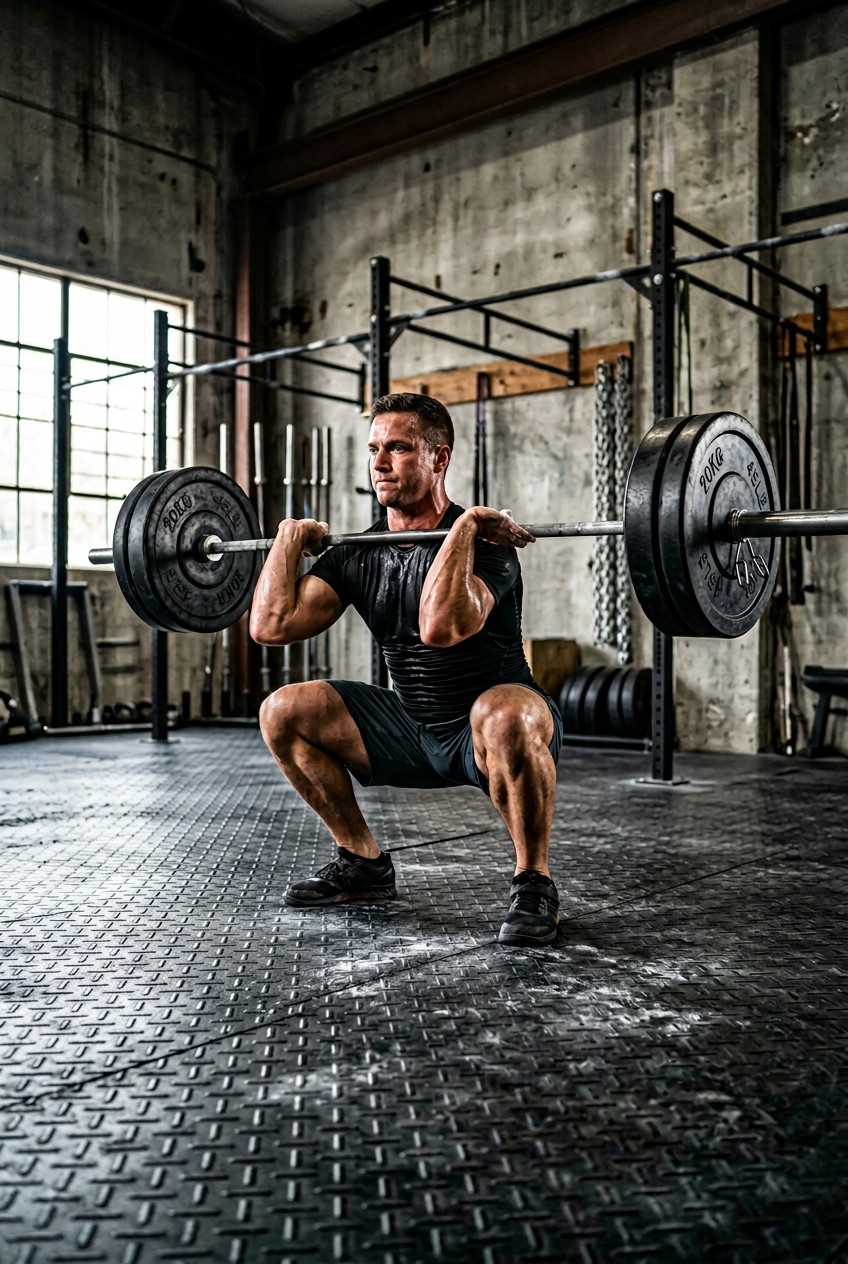
While some online fitness influencers claim squats aren’t essential, most serious strength coaches agree there’s no substitute for barbell back squats if you’re healthy. A massive mistake I see every single day is doing shallow squats. You need to prioritize a full range of motion. Your goal is to drop down until your hip crease is slightly below your knee. This depth guarantees greater muscle fiber recruitment in your glutes and quads. I spent two years ego-lifting, loading 315 pounds on the bar and barely bending my knees. I thought I was strong, but my legs weren’t growing at all. I finally dropped my ego, stripped the bar down to 135 pounds, and squatted until my hamstrings touched my calves. The deep stretch at the bottom felt like my muscles were ripping, in a good way. To help with the joint pressure at the bottom of the hole, I bought a pair of Harbinger neoprene knee sleeves at Sprouts for $19.99. They smell heavily of synthetic rubber, but they keep my knee joints hot and lubricated. When you unrack the heavy barbell, the cold steel knurling digs into your upper back. Take a massive breath, brace your core like someone’s going to punch you in the stomach, and control the weight on the way down. Don’t bounce out of the bottom. Pause for a split second, then drive up forcefully. If you can’t hit proper depth, take the weight off the bar until you can. You might also like: 20 Creative Men Home Workout Ideas You’ll Want to Bookmark

FLYBIRD WB2 Weight Bench
FLYBIRD WB2 Weight Bench has been one of the most consistently praised picks in this category. 215 reviewers averaged 4.5/5.
4. Unilateral Training For Balance

Unilateral, or single-leg, training is popular for 2026, and for good reason. Exercises like Bulgarian split squats and walking lunges are crucial for correcting muscle imbalances. They improve your balance and force your core to stabilize your entire body. They also place significantly less stress on your spine compared to heavy bilateral lifts like back squats. I personally swear by Bulgarian split squats, even though I absolutely dread doing them. The lactic acid buildup makes my quads feel like they’re filled with battery acid. I use a pair of 20-pound hex dumbbells that I bought at Kroger for $29.98. I rest my back foot lightly on an 18-inch high flat bench, grip the cold cast iron handles of the dumbbells, and drop my back knee until it hovers exactly one inch above the floor. My left leg used to be noticeably weaker than my right leg. I’d notice my hips twisting during heavy barbell squats. Forcing my left leg to work independently fixed that imbalance completely. The wobbling in your ankle during the first few reps is normal. Your stabilizing muscles are just waking up. Don’t rush the tempo. Take three full seconds to lower yourself down, pause, and push hard through your front heel to stand back up. Make sure you keep your chest up and avoid hunching over your front knee. If your grip gives out before your legs do, buy some cheap lifting straps. If you’re doing these right, you’ll be dripping sweat and gasping for air by the eighth rep. You might also like: 20 Beautiful Home Gym Setup Ideas That Changed Everything
5. Posterior Chain Focus For Your Leg Day Workout

A common mistake beginners make is completely neglecting their posterior chain. You have to ensure your routine includes ample volume for your hamstrings and glutes. Romanian Deadlifts (RDLs) and barbell hip thrusts are mandatory. For RDLs, you must always maintain a perfectly flat back and avoid locking your knees. Think about pushing your hips backward like you’re trying to close a car door with your butt. The stretch in your hamstrings should feel intense. Hip thrusts are currently a major 2026 gym staple, but guys absolutely need to do them too. Despite being championed by fitness influencers, glute bridges and hip thrusts aren’t exclusively a feminine exercise. They’re excellent for developing powerful glutes, which are key for overall leg strength and moving heavy weights. Last Tuesday at Whole Foods, I bent over to grab a 10-pound bag of russet potatoes from the bottom shelf, and my lower back seized up completely. It was a glaring sign that my glutes were weak and my lower back was overcompensating—learned that the hard way. Now, I load a barbell with 225 pounds for hip thrusts. I use a thick Iron Bull foam barbell pad that cost me $16.95 online. Without the pad, the heavy steel bar crushes your pelvic bones and leaves nasty purple bruises. Squeeze your glutes hard at the top of the movement and hold it for a full second. Max Bridger, co-founder of LDNM, emphasizes that even standard deadlifts are fantastic for working the hamstrings and glutes, making them a powerful leg movement rather than just a back exercise. You might also like: 20 Inspiring Outfit Home Workout Ideas That Changed Everything
6. Master the Leg Press Form

The leg press is a fantastic machine for building quad mass, but you have to master the form to avoid wrecking your spine. The biggest mistake you can make is lowering the heavy sled too far. If you bring your knees so close to your chest that your hips physically lift off the padded seat, you’re destroying your lower back. This spinal flexion under a heavy load is a fast track to a herniated disc. I know this because I did it. I loaded up eight 45-pound plates, brought the sled down until my tailbone curled off the seat, and felt a sharp pop in my lower spine. I couldn’t tie my shoes without pain for three weeks. Control the negative portion of the rep. Take three seconds to lower the weight, and stop the moment your hips try to tuck under. Consider placing your feet higher and wider on the metal footplate. This specific stance engages your glutes and hamstrings significantly more. The vinyl seat of the leg press machine at my gym is always sticky and smells like stale sweat, so I wipe it down thoroughly first. I wear flat-soled Chuck Taylor shoes that I bought for $55.00. The flat rubber sole gives me a solid, stable base to push against the cold metal plate. Don’t lock your knees out forcefully at the top of the rep. Keep a tiny bend in the joint to keep the tension strictly on your quad muscles.

Yoleo Adjustable Weight Bench
A dependable everyday pick — Yoleo Adjustable Weight Bench pulls in 974 ratings at 4.5 stars. Not flashy, just solid.
7. Vary Rep Ranges And Ditch Slow Cardio

You have to vary your rep ranges for comprehensive muscle growth. Don’t exclusively lift heavy weights with low reps, and don’t just lift light weights with high reps. Max Bridger of LDNM advises combining rep ranges in the same session. You should focus on both hypertrophy work (7 to 12 reps) for muscle size, and heavy strength work (1 to 6 reps) for central nervous system adaptation. Doing heavy sets of three reps on squats, followed by sets of twelve reps on the leg press, creates a massive pump. Another crucial tip is to avoid excessive long, slow cardio on the days you train legs. If your goal is strength and muscle gain, spending an hour jogging slowly on a treadmill will hinder your body’s adaptations to the strength training. Instead, incorporate high-intensity interval training (HIIT). I used to jog for five miles after squatting, and my legs constantly felt flat and weak. Now, I use a heavy jump rope I found at Trader Joe’s for $12.99 during a random seasonal sale. The thick woven rope slaps the concrete loudly, and the plastic handles get slippery with sweat. I do 30 seconds of all-out jumping, followed by 30 seconds of rest, for ten rounds. It leaves my lungs burning and my calves screaming. This provides excellent cardiovascular benefits while preserving the muscle mass and strength you just worked so hard to build in the weight room. You won’t sacrifice your gains this way. Plus, it takes a fraction of the time compared to walking on an inclined treadmill while staring at a blank wall.
8. Pre-Workout And Beta-Alanine Strategy

Strategically using pre-workout supplements can completely change the intensity of your session. Products like Transparent Labs BULK Pre-Workout, which is rated 4.8 out of 5 by Garage Gym Reviews, provide incredible energy, mental focus, and muscular endurance. Look for formulas containing specific ingredients like beta-alanine, creatine, and citrulline malate. Prices typically range from $0.80 to $2.00 per serving. I buy the sour green apple flavor of Transparent Labs for $49.99 for a 30-serving tub, which comes out to about $1.66 per serving. Beta-alanine is a non-essential amino acid that increases your muscle carnosine levels. This buffers the painful lactic acid buildup and delays fatigue during intense exercise. Supplementing with 2.4 to 5 grams pre-workout improves your endurance drastically. For optimal carnosine stores, a chronic daily dose of 3.2 to 6.4 grams for 4 to 12 weeks is highly effective. The first time I took a full scoop, the beta-alanine made my face and ears tingle intensely. It feels like tiny static electricity needles pricking your skin—no exaggeration. I mix exactly one 15-gram scoop with 8 ounces of ice-cold water in my plastic shaker bottle. The neon green liquid tastes a bit like melted hard candy, and it leaves a slightly chalky residue at the bottom of the cup. Drinking this 20 minutes before I start my warm-up gives me the aggressive focus I need to push through that final, miserable set of walking lunges when my legs want to quit.
9. Protein And Creatine For Recovery

You can lift as heavy as you want, but if you don’t ensure adequate protein intake for muscle repair, you won’t grow. For active individuals, the International Society of Sports Nutrition recommends consuming 1.6 to 2.2 grams of protein per kilogram of body weight daily. For a 150-pound person, this translates to approximately 109 to 150 grams per day. You should distribute this protein intake evenly throughout the day, aiming for 20 to 40 grams per meal. I buy massive 3-pound packages of raw chicken breasts at Costco for around $14.99. I grill 8-ounce portions to hit my daily macros. I also consider creatine monohydrate mandatory for strength and recovery. It’s a heavily researched supplement that enhances workout performance. The ISSN recommends a daily maintenance dose of 3 to 5 grams. For faster saturation, you can do a loading phase of 20 to 25 grams per day for 5 to 7 days, divided into 5-gram servings. A 500-gram tub of high-quality Nutricost creatine monohydrate typically costs between $20 and $40 online. It’s a completely flavorless, chalky white powder. I mix exactly 5 grams into my morning bowl of oatmeal. I tried skipping creatine for a few months, and my strength on squats noticeably plummeted. My muscles felt flat and deflated. Proper recovery is where the actual tissue growth happens. If you tear your legs down in the gym and then starve them of protein and creatine, you’re just suffering for absolutely no reason.
I hope this detailed breakdown helps you structure a routine that actually builds muscle without destroying your joints. The next time you step into the gym, remember to warm up properly, control the weight, and prioritize your recovery. Don’t repeat my mistakes and end up stranded in a parking lot unable to walk. I highly recommend saving this guide or pinning it to your fitness boards so you can reference these exact rep ranges and form tips before your next session.
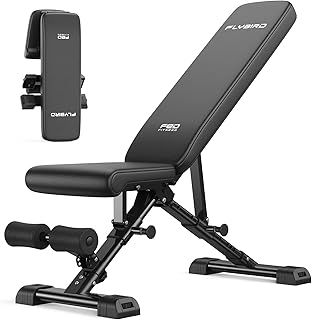
FLYBIRD WB5 Weight Bench
FLYBIRD WB5 Weight Bench punches above its price — 259 buyers rated it 4.5 stars. I would buy it again.
Frequently Asked Questions
How long should a leg day workout take?
A solid leg day workout should take between 45 and 60 minutes. If you rest properly between heavy sets of squats and deadlifts, you need that time to recover. Anything longer usually means you’re resting too much or doing unnecessary junk volume.
Should I do cardio on leg day?
I’d avoid long, slow cardio sessions on leg day as they can hinder your strength adaptations. If you want to do cardio, stick to a quick 10-minute high-intensity interval training (HIIT) session, like jump rope or sprints, to preserve your muscle mass.
Why do I feel nauseous during my leg day workout?
Nausea is common because heavy compound lifts like squats force a massive amount of blood into your lower body, pulling it away from your stomach. Make sure you aren’t eating a heavy meal within two hours of your session.
How many times a week should I do a leg day workout?
For most beginners, hitting a dedicated leg day workout one to two times per week is plenty. Your muscles need at least 48 to 72 hours to fully recover and rebuild tissue after an intense lower body session.
