What’s Inside
- The World’s Greatest Stretch (The Ultimate Warm Up Exercise)
- The 5-Minute Gradual Heart Rate Ramp
- Diaphragmatic Breathing for Mental Readiness
- Bodyweight Squats with Multi-Directional Reaches
- Dynamic Glute Bridges (A Core Warm Up Exercise)
- Neuro-Centric Reaction Drills
- The Reverse Lunge with Overhead Reach
- Specific Activation Sets (Empty Movement Patterning)
I’ve learned the hard way that skipping a solid warm-up is a guaranteed ticket to snap-city. My wake-up call happened last Tuesday at Trader Joe’s. I bent down to grab a 16 oz jar of creamy almond butter from the bottom shelf, and my lower back completely seized up. It felt like a rusty guitar string snapping. I’d skipped my morning routine because I was rushing, and my cold muscles made me pay the price right there in aisle four. I looked like an idiot limping to the checkout with my groceries. No exaggeration.
Most guys think warming up means touching their toes for ten seconds and doing a few arm circles. I tried this wrong for months before figuring it out. Static stretching before a heavy lift actually decreases your power output. Your muscles are like cold rubber bands. If you rip them into a stretch without blood flow, they micro-tear. You need dynamic, purposeful movements. The best part is you don’t need a gym bag full of gear to get primed. While I love my recovery tools at home, this routine is strictly bodyweight. Let’s break down the exact movements I use to get my joints lubricated and my nervous system firing. No bands, no rollers, just you and the floor.
1. The World’s Greatest Stretch (The Ultimate Warm Up Exercise)

If I had to pick just one warm-up exercise to do for the rest of my life, it’s this one. The World’s Greatest Stretch is a staple in my routine because it targets your ankles, hips, and thoracic spine all at once. I used to rely on my $123 TriggerPoint Grid 1.0 foam roller to crack my back, but this bodyweight movement does the exact same job when I’m traveling without gear.
Try this setup. Step forward into a deep lunge with your left leg. Drop your right knee close to the ground, but don’t let it rest on the floor. Place your right hand flat on the floor next to your left foot. Now, take your left elbow and try to touch it to the inside of your left ankle. You’ll feel a massive pull in your groin and hamstrings. Hold that bottom position for exactly 2 seconds. Then, rotate your left arm up toward the ceiling, twisting your torso and looking at your hand.
I messed this up for a long time by rushing the rotation. I’d just flap my arm around like a bird. You have to actually push the floor away with your planted hand to get the spinal rotation. I do 5 reps per side. It opens up the hips beautifully. Last month, I was stiff after walking around Target for two hours looking for a specific 12-pack of paper towels. I dropped and did a few reps of this stretch in the parking lot. My hips instantly felt looser. Skip the static toe touches. This dynamic movement actually gets the synovial fluid moving in your joints. Trust me on this.
2. The 5-Minute Gradual Heart Rate Ramp

You don’t need a treadmill to get your blood pumping. A massive mistake I see in the gym is guys walking in off the street and immediately loading 135 lbs on a barbell. Your heart rate needs a gradual runway. A proper warm-up should increase your core body temperature until you have a light sweat on your forehead. I aim for exactly 5 to 10 minutes of continuous, low-impact movement.
Since we aren’t using equipment, you can do high knees, butt kicks, or just a brisk walk around your living room. I personally swear by a combination of shadow boxing and light jogging in place. I throw soft, controlled punches for 60 seconds, then transition to jogging for 60 seconds. Repeat that three times. You want to breathe a little heavier, but you shouldn’t be gasping for air. If you’re out of breath, you’re going too hard and pre-fatiguing your muscles.
I learned this lesson the hard way during a garage workout last winter. It was freezing, and I tried to warm up with aggressive burpees. I spiked my heart rate to 160 BPM in two minutes. By the time I started my actual workout, my legs felt like lead. I was totally gassed. Keep it gradual. I sip 8 oz of cold water mixed with 1 scoop of cherry pre-workout from Costco ($29.99) during this phase. The cold liquid hitting my stomach while my skin warms up is a great sensory contrast that wakes me up.
3. Diaphragmatic Breathing for Mental Readiness

Most people completely ignore their lungs before a workout. I think that’s crazy. Breathing is the foundation of core stability. If you don’t prime your diaphragm, your lower back takes all the stress during heavy lifts. I spend exactly 3 minutes on my back doing diaphragmatic breathing before I even stand up. You might also like: 20 Charming Black Garage Home Gym Setup Ideas Worth Trying This Year
Lie flat on the cold gym floor. I place a 200-page paperback book on my stomach. Inhale deeply through your nose for 4 seconds. You want to push the book up toward the ceiling using your stomach, not your chest. If your chest rises, you’re doing it wrong. Exhale slowly through pursed lips for a count of 8 seconds. The book should slowly lower. You might also like: 20 Brilliant Adopt Me Houses Home Gym Setup Ideas That Are Totally Worth It
This deep breathing infuses your blood with extra oxygen and activates your parasympathetic nervous system. It calms your performance anxiety. I used to get super jittery before heavy squats. My mind would race. Now, I use this time to visualize my form. I focus on the smell of the rubber mats and the sound of the gym radio in the background. It grounds me. Last week, I was stressed after a massive grocery haul at Whole Foods. I laid on my living room rug, closed my eyes, and did this breathing drill. It completely reset my nervous system. Don’t skip the mental prep. It dictates how your physical body responds to stress. You might also like: 20 Gorgeous Easy Home Workout Ideas That Actually Work

Fitvids Exercise Ball for Fitness, Yoga
Honestly, Fitvids Exercise Ball for Fitness surprised me — sturdier than it looks in the photos, and over 321 buyers gave it 4.5 stars.
4. Bodyweight Squats with Multi-Directional Reaches

You have to move in more than one plane of motion. Most guys only warm up moving forward and backward. That’s a huge mistake. Your hips and knees are designed to rotate and move laterally. If you only train linearly, you’re asking for a groin pull the second you step sideways.
I do 15 reps of deep, slow bodyweight squats. But here’s the twist. As I stand up from the squat, I reach my right arm across my body and pivot my right foot, twisting my torso to the left. Then I squat down again. On the next rep, I reach my left arm across my body and pivot my left foot. You get this amazing stretch through your lats, obliques, and ankles.
I used to try forcing my depth on squats before my ankles were ready. My heels would pop off the floor, and my knees would ache. It felt terrible. Now, I let my body dictate the depth. The first 5 reps are shallow. By rep 15, my hamstrings are warm and I’m sitting deep in the hole. This mimics the exact motor pattern of loaded squats without the joint stress. While DMoose Fabric Resistance Bands ($14.99) are great for tight hips, these twisting squats fire up my glute medius just as well without gear. I actually prefer the raw bodyweight feel. It forces me to control my own balance and stability from the ground up.
5. Dynamic Glute Bridges (A Core Warm Up Exercise)

If you sit at a desk all day, your glutes are essentially asleep. They literally forget how to fire. This specific warm-up exercise is non-negotiable for me. It wakes up your posterior chain and stabilizes your pelvis.
Lie on your back with your knees bent and feet flat on the floor, about hip-width apart. Drive through your heels and squeeze your glutes hard to lift your hips toward the ceiling. Pause at the top for 2 full seconds. The pause is critical. If you just bounce up and down, you’re using momentum, not muscle. Lower your hips back down slowly. I do 2 sets of 15 reps.
I used to use the Iron Bull Strength mini-loop bands (a set of six runs about $29.95) wrapped around my knees for this. The bands are great, but I found I relied on them too much. When I took the band away, my knees would cave in. Doing this with just bodyweight forces you to actively push your knees out and engage your outer glutes using your own brain-muscle connection. Last Friday outside Sprouts, I dropped my keys holding a 24 oz bag of organic spinach. When I hinged to grab them, my glutes engaged perfectly to protect my back. That’s the real-world benefit of doing glute bridges daily. Your body learns to use the big muscles to protect the small joints automatically.
6. Neuro-Centric Reaction Drills

This is a massive trend right now, and I completely buy into it. Your muscles don’t move unless your nervous system tells them to. Waking up your brain is just as important as warming up your muscles. Neuro-centric drills sharpen your coordination and reaction time.
You don’t need fancy light pods to do this. I use a simple balance drill. Stand on your right leg. Close your eyes. Now, try to touch your nose with your left index finger, then your right index finger. Do this for 30 seconds. Taking away your vision forces your proprioceptive system into overdrive.
I admit, I thought this was a gimmick at first. I tried it in my living room and immediately fell over into my coffee table. It was humbling. But after practicing it for a few weeks, my balance on heavy single-leg lunges improved drastically. It fires up the tiny stabilizing muscles in your feet and ankles. Sometimes I’ll stand on one leg and toss a pair of rolled-up socks against the wall, trying to catch them with one hand. It wakes my brain up instantly. Vibration therapy tools like the Lifepro Sonic Handheld Percussion Massage Gun ($51) are solid, but they are passive. Reaction drills force you to actively participate. You have to be mentally present, which transitions perfectly into a heavy lifting session.

Amazon Basics Anti-Burst Exercise Ball with Pump
Honestly, Amazon Basics Anti-Burst Exercise Ball with Pump surprised me — sturdier than it looks in the photos, and over 455 buyers gave it 4.5 stars.
7. The Reverse Lunge with Overhead Reach

Your hip flexors are probably incredibly tight. Mine always are. This movement stretches the front of your hips while activating your quads and core. It’s a fantastic two-for-one deal.
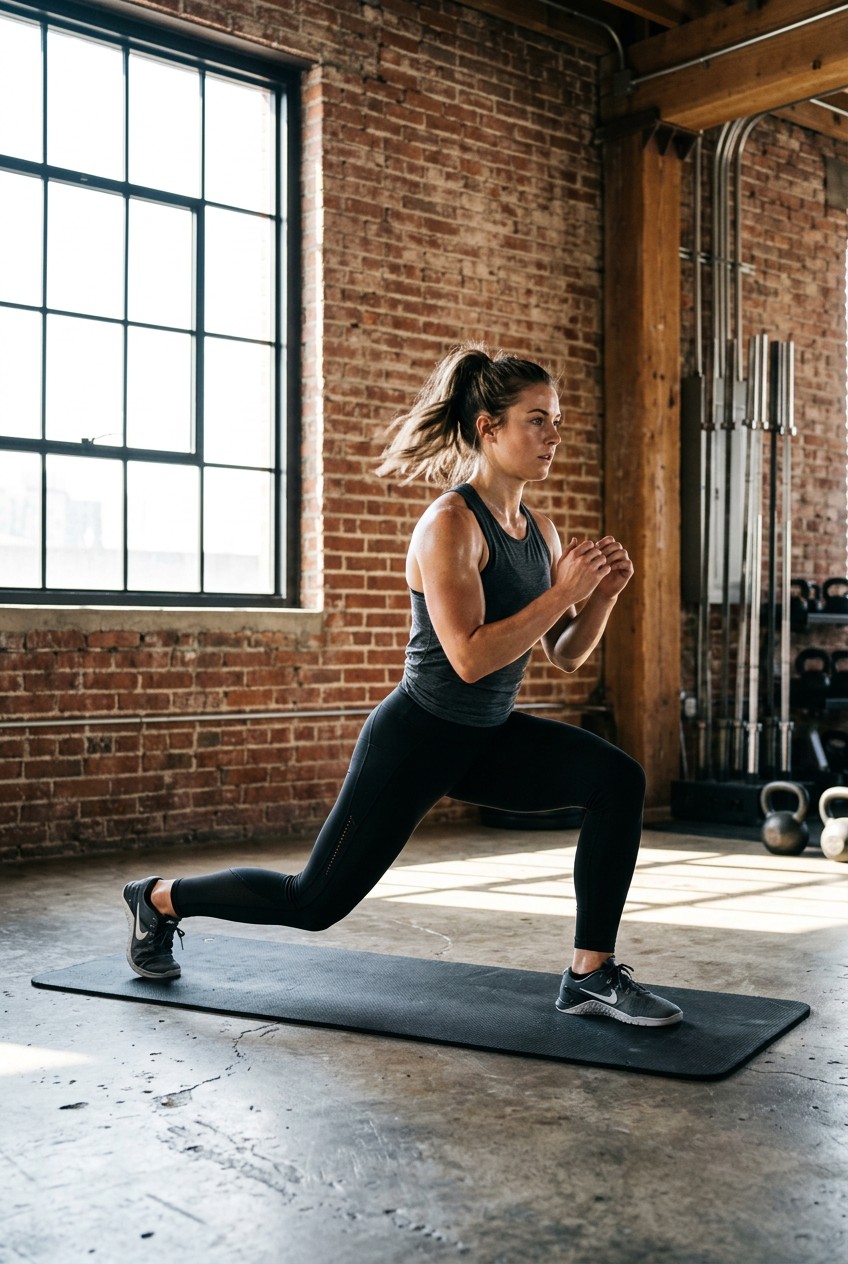
Stand tall. Step backward with your right foot and slowly lower your right knee until it’s about one inch hovering above the floor. As you drop into the lunge, simultaneously reach both of your arms straight up toward the ceiling. Push your hands back slightly to open up your chest and shoulders. You should feel a deep stretch running from your right knee all the way up through your stomach and chest. Push off your back foot to return to the starting position. I alternate legs for 20 total reps.
I used to do walking forward lunges to warm up, but I found they put too much shearing force on my kneecaps when my legs were cold. The reverse lunge keeps your shin vertical and takes the pressure off the knee joint. It’s much safer. I learned this after a knee flare-up last summer carrying a 5 lb bag of frozen chicken breasts from Kroger up three flights of stairs. I swapped to reverse lunges in my warm-ups, and the pain vanished within a week. The overhead reach is the secret sauce here. It corrects the hunched-over posture we all get from staring at our phones. Just make sure you aren’t arching your lower back aggressively when you reach up. Keep your ribs pulled down tight.
8. Specific Activation Sets (Empty Movement Patterning)

The final step before you start your actual workout is the specific activation set. You need to mimic the exact movement you’re about to perform, but with zero added resistance. This reinforces the motor pattern and ramps up tendon loading progressively.
If my first exercise is push-ups, I do 10 slow reps from my knees, focusing entirely on squeezing my chest. If I’m doing pull-ups, I’ll hang from the bar and just do 10 scapular retractions (pulling my shoulder blades down and back without bending my elbows). You’re greasing the groove of the movement.
I see guys skip this all the time. They think because they did some arm circles, they’re ready to bench press. That’s a huge mistake. Your tendons need specific directional loading. I used to use the SmartVoro ImpactPro X12 massage gun (it retails for about $149 to $199) to hammer my pecs before pressing. The deep 16mm amplitude felt great, but it didn’t actually prepare my joints to bear weight. Active movement does. I always tell my clients to treat their empty bodyweight sets with the exact same focus as their heaviest sets. Squeeze the muscles hard. I eat a quick pre-workout snack about 45 minutes before this phase. I mix exactly 1/2 cup of dry oatmeal with 1 scoop of vanilla whey (which I grab at Walmart for $22.98) and 2 tablespoons of chunky peanut butter. By the time I hit these activation sets, that fuel is hitting my bloodstream, and I’m locked in.
Warming up isn’t sexy, but being sidelined with a torn hamstring is a lot worse. I’ve been there, and I promise you, taking 10 minutes to prime your body is the smartest investment you can make in your fitness. You don’t need expensive gear, fancy massage guns, or heavy resistance bands. Your body weight and a little bit of focus are all it takes to get your joints lubricated and your nervous system firing.
I highly recommend running through this sequence before your next workout. Start with the breathing, move into the gradual heart rate ramp, and finish with the dynamic stretches. You’ll notice an immediate difference in how your joints feel and how much power you can generate. If you found this breakdown helpful, make sure to pin this article to your fitness board or save it to your phone so you can reference these exact movements next time you hit the gym. Let’s get to work.
Frequently Asked Questions
How long should a bodyweight warm up exercise routine take?
You should spend exactly 5 to 15 minutes warming up before a workout. Keep it brief but purposeful. Going longer than 20 minutes can pre-fatigue your muscles and negatively impact your main lifting session.
Is static stretching a good warm up exercise?
No, static stretching before a workout is a terrible idea. Holding stretches on cold muscles decreases power output and increases injury risk. Stick to dynamic movements that take your joints through their full range of motion.
Can I do this warm up exercise routine every day?
Yes, you can run through this exact bodyweight routine daily. It’s low impact and focuses on joint mobility and nervous system activation. It’s perfect for off-days to keep your hips and shoulders loose.
Do I need resistance bands for a proper warm-up?
You don’t need any equipment. While fabric resistance bands are great for glute activation, bodyweight movements like dynamic glute bridges and lateral lunges are more than enough to prime your posterior chain for heavy lifting.
