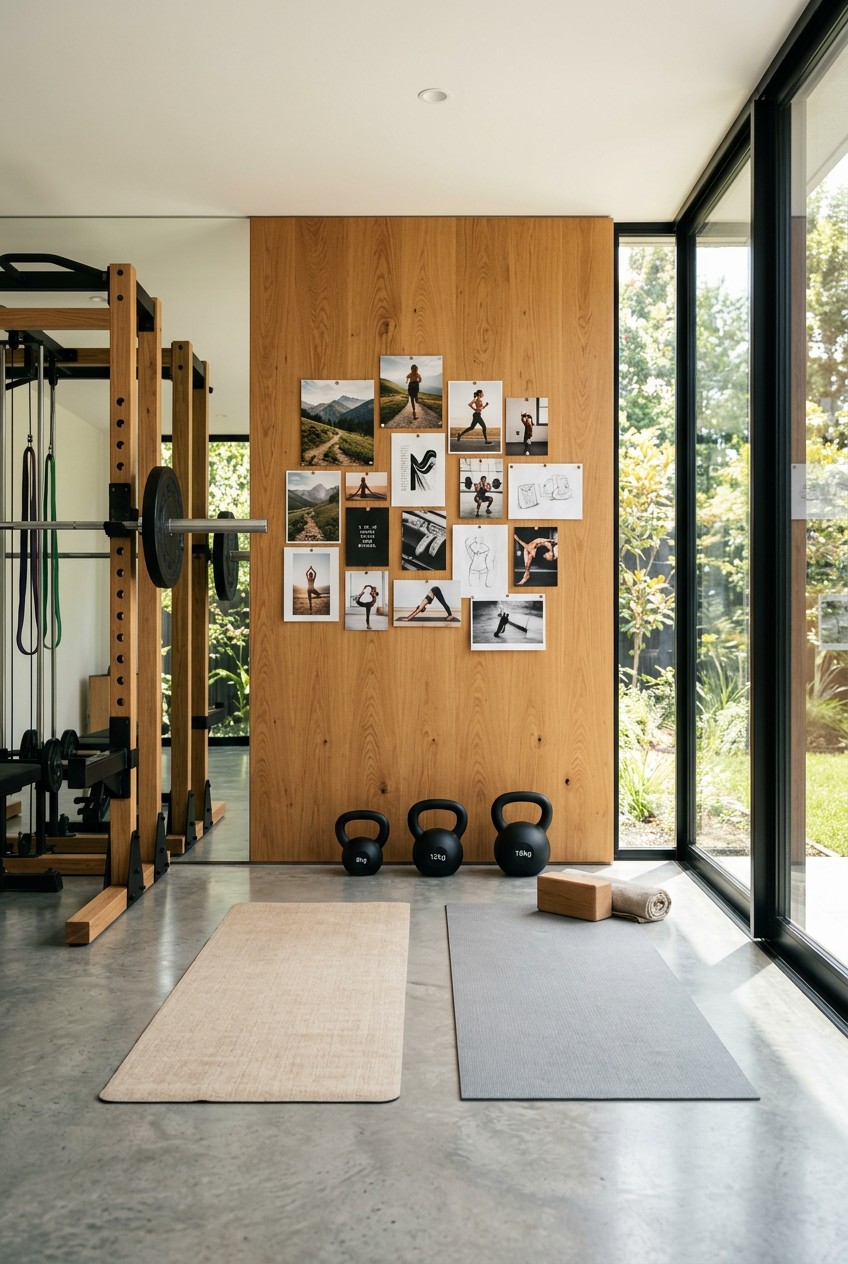
What’s Inside
- Make Your Vision Board Fitness Active
- Track Recovery With Smart Wearables
- Map Out Digital Twins And Body Metrics
- Log “How You Feel” In A Physical Journal
- Visualize Micro-Workouts For Busy Days
- Pin Specific Motivational Gear
- Use Apps For Digital Vision Board Fitness
- Add Neuro-Fitness And Mind-Body Practices
- Create A No-Screen Zone To Avoid Burnout
Last Tuesday at Whole Foods, I caught a reflection of myself holding a $7.99 tub of organic plant protein and realized I looked completely miserable. The harsh fluorescent lights highlighted the dark bags under my eyes. My grip on the plastic tub felt weak and my shoulders were slumped. That’s when I finally understood why my approach to vision board fitness was failing completely. I used to think creating a vision board meant cutting out magazine pictures of shredded fitness models and gluing them to a poster board like a middle school art project. I tried this wrong for months before figuring it out. The cheap glue stick I used smelled like sour milk. The board sat in my dark closet gathering dust. I didn’t lose a single pound. I actually gained weight from stress eating 1/2 cup of dry oats out of pure frustration. If you’re tired of setting goals that evaporate by February, you’re in the right place. We aren’t doing arts and crafts today. We’re talking about a biological, psychological approach to hitting your physical goals without buying expensive cable machines. Grab your black coffee. Let’s fix your broken routine.
1. Make Your Vision Board Fitness Active

Don’t just stare at a piece of cardboard on your wall. Integrate visualization into the actual sweat session. I call this the active vision board workout. Instead of just looking at your board before you train, you need to mentally rehearse achieving your goals while you’re actually performing exercises. During a 45-minute bodyweight circuit in your living room, picture yourself crossing a finish line. Visualize lifting a specific target weight. This somatic movement approach helps solidify your intentions way better than passive wishing. You also need to quantify your goals with SMART metrics. Move beyond the vague idea of trying to get fit. You need specific, measurable, achievable, relevant, and time-bound targets. For instance, instead of saying you want to lose weight, write down that you’ll run a 5k in under 30 minutes by October 2026. Or maybe your goal is to reduce your body fat percentage to 18 percent by July 1st. I highly recommend using AI-powered training apps to help with this tracking. I’m currently using Fitbod. It costs $12.99 per month. It generates adaptive workout plans based on your goals and your available equipment. It adjusts your sets and reps in real-time. I used to write my workouts on a cheap $14.99 whiteboard I bought at Target. I’d stare at it, get confused, and end up doing the same three pushup variations until my shoulders ached. The dry erase marker smelled terrible and gave me a headache. Fitbod applies progressive overload automatically, so you don’t have to guess. Keep images of these specific metrics on your board.
2. Track Recovery With Smart Wearables

Trending right now is the massive shift toward intense recovery tracking. You can’t just crush your muscles every single day and expect to grow without proper rest. Include images of smart rings on your board as a daily reminder to prioritize your sleep. I’m talking about devices like the Oura Ring Gen4, which costs $349.00, or the Samsung Galaxy Ring 2 for $399.00. These rings offer extremely discreet, high-fidelity sleep and recovery tracking. The Oura Ring Gen4 has a battery life of approximately 7 to 8 days. Put a picture of a Readiness Score above 85 percent on your board. Make that your daily target. I learned that the hard way. Last year, I ignored my recovery completely. I was drinking 16 oz of black coffee just to function through the brain fog. I went to Costco and bought a massive, rock-hard foam roller for $19.99. I rolled out my IT bands on my cold garage floor until I had dark purple bruises. The foam felt like concrete against my legs. I thought more pain meant more progress. I was completely wrong. My nervous system was totally fried. Now, I let the data guide my rest days. If my ring says my readiness is at 60 percent, I skip the intense circuit and do light stretching. You won’t make progress if your cortisol is constantly spiked. Put a picture of your ideal sleep graph right next to your workout goals. It keeps you honest.
3. Map Out Digital Twins And Body Metrics

We’re stepping into the future with digital twins. Digital twins are virtual replicas of your body created from wearable metrics and lab results. While creating a full medical digital twin is complex, you can simulate this concept at home. Use apps and devices that track detailed body composition. I’m a big fan of the Hume Body Pod. It costs $299.00 and tracks over 45 different metrics like vascular age and visceral fat. You can visualize your ideal physique and health markers on a digital board, updating it with real data from the pod. I remember using a cheap, flimsy scale I picked up at Walmart for $15.50. The plastic base was cold and creaky. I’d step on it, get a number, step off, step back on, and the number would be three pounds heavier. It drove me absolutely crazy. I was tracking the wrong things. I was starving myself, eating exactly 4 oz of plain chicken breast and 1/2 cup of steamed broccoli for dinner every night. It tasted like wet cardboard. Skip the extreme diets and focus on accurate, holistic data. Put a screenshot of your target Hume metrics on your board. It shifts your focus from just losing weight to actually building a healthier internal system. It’s a much more sustainable way to approach your long-term fitness. You might also like: 20 Creative Men Home Workout Ideas You’ll Want to Bookmark

Jump Rope, Tangle-Free Rapid Speed Jumping Rope Cable with
Honestly, Jump Rope surprised me — sturdier than it looks in the photos, and over 24 buyers gave it 4.5 stars.
4. Log “How You Feel” In A Physical Journal

While metrics and digital twins are great, you can’t ignore the psychological side of training. Expert opinion suggests it’s often more effective to focus on how you want to feel rather than solely on weight loss numbers. Include images and affirmations that evoke feelings of being strong, energetic, and confident on your board. Complement your visual setup with a detailed physical fitness journal. Record not just your exercises, reps, and weights, but also your energy levels and daily stress. I personally swear by the Clear Habit Journal. It costs $24.95 and has specific prompts like asking what your goal is going into the workout. I used to track my workouts on neon yellow sticky notes. I’d lose them constantly. One afternoon, I was sitting outside a Sprouts grocery store, drinking a $3.99 ginger kombucha. The condensation from the glass bottle dripped all over my sticky note, completely erasing my workout plan. The blue ink bled everywhere and the paper turned to mush. It’s incredibly frustrating when you lose your progress logs. Having a dedicated, high-quality journal changes everything. The thick paper feels great to write on. You start noticing patterns. You realize that eating 2 tablespoons of peanut butter before a workout gives you sustained energy, while a sugary protein bar makes you crash hard. Tie your journal entries back to your vision board. If your board shows a picture of a guy hiking a mountain looking energized, write down the daily habits that actually make you feel that way. You might also like: 15 Beautiful Photoshoot Home Workout Ideas to Steal Right Now
5. Visualize Micro-Workouts For Busy Days

Most people get this wrong. They think if they can’t dedicate a full hour to sweating, they shouldn’t bother working out at all. For busy schedules, you need to visualize incorporating 5 to 15 minute high-intensity micro-workouts throughout your day. This is based on the exercise snacks principle. It can achieve similar effects to longer, traditional sessions. Pin images of quick bodyweight circuits to your board. You should also add a picture of a Mini Stepper Machine. Searches for these have gone up 82 percent year over year. You can buy a solid one online for about $45.99. I used to try forcing massive two-hour workouts into my schedule. I’d end up doing burpees in my tiny kitchen at 10 PM. The floor was sticky, and the room smelled like yesterday’s roasted garlic. I was exhausted, my form was terrible, and I ended up tweaking my lower back. I couldn’t bend over to tie my shoes for a week. Now, I keep my Mini Stepper right next to my desk. I’ll do three minutes of intense stepping while listening to a business podcast. The hydraulic cylinders hiss quietly while I move. It gets my heart rate up instantly without ruining my joints. Put pictures of these small, manageable equipment pieces on your board. It reminds you that consistency always beats intensity. You don’t need a massive gym to get results. You just need to move frequently. You might also like: 15 Brilliant Man Shed Home Gym Setup Ideas to Transform Your Space
6. Pin Specific Motivational Gear

Your vision board needs to feature specific physical items that inspire you to move. Don’t just pin generic pictures of heavy dumbbells. Personalize it with motivational gear that you actually want to use. This could be a BlenderBottle with an empowering message printed on the side. They usually cost around $11.99. You could pin a picture of an Affirmats yoga mat for $66.00, which comes with a positive mantra woven right into the fabric. I also highly recommend pinning high-quality footwear, like the Asics Superblast 3 running shoes. They cost $200.00 and are known for their incredibly responsive ride and energy conservation. The thick foam sole feels like walking on a bouncy trampoline. I learned the importance of good gear the hard way. I once bought a pair of cheap canvas sneakers at Kroger for $25.00 because I forgot my gym shoes on a weekend road trip. The canvas felt like rough sandpaper against my ankles. I tried to do a 20-minute jump rope circuit in a hot hotel parking lot. Within five minutes, I had massive, painful blisters on both heels. My feet throbbed for days. You don’t have to buy everything on your board immediately. The point is to give yourself tangible rewards to work toward. When you hit a specific milestone, like logging 20 workouts in a month, you buy the shoes. It makes the visualization process real and highly actionable.

Redify Weighted Jump Rope for Workout Fitness(1LB)
If you want something that just works, Redify Weighted Jump Rope for Workout Fitness(1LB) is a safe bet (34 reviews, 4.5 stars).
7. Use Apps For Digital Vision Board Fitness

Make your goals omnipresent. A physical poster board in your bedroom is great, but you aren’t in your bedroom all day. You need to use digital vision board apps for maximum accessibility. Use apps like Perfectly Happy, which is free to download but costs $59.99 a year for premium features. Another great option is Sparkello, which is completely free on both iOS and Android. You can create a digital board and set it as your phone or computer wallpaper. This ensures you get daily, consistent exposure to your goals. You’re going to look at your phone a hundred times a day anyway. You might as well see your fitness targets instead of social media. I used to rely solely on a physical board. I spent three hours cutting out magazines and gluing them to a piece of cardboard. I left it on my living room floor to dry. My golden retriever walked over and chewed on the corner. Then he drooled all over my pictures of healthy meal prep. It was a disgusting mess of soggy paper and stringy dog saliva. I had to throw the whole thing in the trash. Digital boards are indestructible. They are also incredibly easy to update. When you achieve a goal, you just swap the image out in seconds. The Perfectly Happy app even lets you add your own background music and positive affirmations. It turns looking at your phone into a quick motivational reset.
8. Add Neuro-Fitness And Mind-Body Practices

Neuro-fitness is a massive trend right now. It combines physical exercise with actual brain training. You need to include visuals on your board that represent improved cognitive function, focus, and coordination. Don’t just focus on your biceps and chest. Put a brain-training app icon next to your workout pictures. You should also incorporate mind-body movement. Practices like Tai Chi walking have over 301,000 monthly searches right now. Puppy yoga is also huge, with 40,500 searches. These activities emphasize integrating your body, breath, and mindfulness. Add images of these activities to your board to promote a holistic approach to fitness. It drastically reduces burnout and improves your longevity. I used to think all this mind-body stuff was a complete joke. I was a heavy lifter who only cared about moving plates. One morning, I was at Trader Joe’s buying a $4.99 box of green tea. I bent over to pick up a dropped lemon and completely pulled a muscle in my lower back. I groaned out loud in the produce aisle. I was so stiff and inflexible from only doing heavy, rigid movements. The sharp pain shot down my leg. I realized I was strong, but I wasn’t healthy. I started incorporating 15 minutes of slow, focused Tai Chi walking into my routine. The deep breathing and slow shifting of weight completely changed my mobility. My joints stopped popping. Put pictures of mobility and mindfulness on your board. Your future joints will thank you.
9. Create A No-Screen Zone To Avoid Burnout

While digital tools and apps are incredibly powerful, you must dedicate specific times and places to completely disconnect. Include an image of a Golden Door Cell Phone Sleep Bag on your board. It costs $24.00 and acts as a physical reminder to create a mental recharge zone. This builds presence and reduces digital distractions. You also need to avoid the set it and forget it mistake. A common pitfall is creating a beautiful vision board and then completely neglecting it. Make a daily commitment to engage with your board. Spend three minutes visualizing your success and reflecting on your progress. Update it regularly as you achieve milestones. I used to bring my phone onto my yoga mat. I’d sit down to stretch, open Instagram, and end up scrolling for 40 minutes. The harsh blue screen light hurt my eyes in the dark room. My neck would get stiff from looking down. I’d stand up feeling more stressed than when I sat down. I wasn’t doing vision board fitness. I was just procrastinating. Now, I put my phone in the sleep bag, zip it up, and leave it in another room. The silence is jarring at first, but it forces you to actually focus on your breathing and your muscle contractions. Include visual cues on your board that remind you to unplug. It’s the only way to ensure your nervous system actually recovers from the stress of daily life.
I’ve spent years testing different workout methodologies, and honestly, this mental shift is what finally made things stick for me. Your brain dictates what your body will do. Start small. Pick two or three of these concepts, grab a physical journal, and download one of the digital apps I mentioned. If you found this breakdown helpful, save this page or pin it to your own digital vision board for later. You’ve got the tools. Now you just have to put in the work.

Fitbit Inspire 3 Health &-Fitness-Tracker with Stress
Fitbit Inspire 3 Health &-Fitness-Tracker with Stress Management has been one of the most consistently praised picks in this category. 237 reviewers averaged 4.5/5.
Frequently Asked Questions
What is active vision board fitness?
Active vision board fitness involves mentally rehearsing your specific health goals while you are physically exercising, rather than just passively looking at images on a wall.
Do I need equipment for vision board fitness?
No. You can achieve incredible results using just bodyweight exercises, micro-workouts, and digital tracking apps to monitor your progress and maintain high daily motivation.
Which apps help with digital vision boards?
Apps like Perfectly Happy and Sparkello are excellent for creating digital vision boards. You can set them as your phone wallpaper for constant, daily exposure to your fitness goals.
How often should I update my fitness vision board?
You should engage with your board daily and update the images or metrics every few weeks as you hit milestones. This prevents the common set-it-and-forget-it trap.
