What’s Inside
- Prioritize Form Over Weight in Your Cable Machine Workout
- Master the 3-Second Eccentric Phase
- Adjust Cable Height Precisely for Chest and Triceps
- Engage Your Core to Stop the Wiggle
- Micro-Load Your Weight Stack for Real Progress
- Swap Generic Handles for Specialty Grips
- Fix Muscle Imbalances with Single-Arm Work
- Teach Yourself to Hinge with Cable Pull-Throughs
- Use Cables for Assisted Reverse Lunges
- Build a Home Setup if the Gym is Too Crowded
Last Tuesday at the gym, I watched a guy load the entire 200-pound weight stack for a tricep pushdown. He leaned over until his forehead nearly touched the cold, sweaty rubber floor and basically threw his entire body weight at the ground while the metal plates violently slammed back up. That used to be me before I figured out how to actually program a cable machine workout. I spent years treating the dual pulleys like a lightweight warm-up station before I realized I was leaving serious muscle growth on the table. A proper cable machine workout requires specific tension control, not just yanking handles until you sweat. I learned this the hard way after pulling a lat muscle because I grabbed a frayed rope attachment and my sweaty hand slipped right off the rubber stopper. I was drinking a 16 oz bottle of $2.49 store-brand electrolyte water from Kroger when the sharp pain hit me in the middle of my back. It’s not about moving the metal pin to the heaviest slot. It’s about angles, grip attachments, and slowing down your repetitions. Let’s look at how to actually set up a routine you’ll stick to without wrecking your joints.
1. Prioritize Form Over Weight in Your Cable Machine Workout

A major trend for 2026 programming, according to the tracking app JEFIT, is that ego lifting is fading in favor of sustainable progress. Fitness coach Badreddine Boutaybi specifically emphasizes precision and clarity in form to maximize results and avoid injury on pulleys. I ignored this for a long time. I’d pin 150 pounds on the seated row, jerk my lower back backward, and pretend my lats were doing the work. You aren’t building back width that way. You’re just testing your spinal discs. I actually tweaked my lower back doing exactly this, which led to me buying a Harbinger 4-inch nylon lifting belt for $19.99 at Target just to feel secure enough to walk around the gym. The fix is dropping the weight by at least thirty percent. Select a weight that allows you to maintain control and focus on the muscle contraction throughout every single repetition. If your shoulders roll forward during a row, the weight’s too heavy. If you have to use momentum to start a tricep pushdown, the weight’s too heavy. The cables provide constant tension, but only if your joints stay locked in the correct position. I keep my Harbinger belt in my gym bag now, but I rarely use it for cables because my form’s finally dialed in. I eat 1/2 cup of oatmeal an hour before training, and I use that steady energy to focus purely on the mind-muscle connection instead of throwing heavy iron around. Keep your feet planted firmly, take a deep breath into your stomach, and pull with intention.
2. Master the 3-Second Eccentric Phase

The biggest advantage of a pulley system over standard iron plates is the continuous resistance. Free weights have dead spots where gravity isn’t fighting the target muscle. Cables pull back against you the entire time. To actually use this feature, you need to control the eccentric phase. That’s the lowering or returning part of the movement. I used to just let the weight stack crash down after a bicep curl. Now, I count a strict three seconds on the way back down. This slow negative phase causes more micro-tears in the muscle fiber, which is exactly what forces growth. I aim for 6 to 12 repetitions per set, keeping the target muscle under tension the entire time. Last month, I was doing slow eccentric cable crossovers while wearing a pair of Gymshark Arrival shorts I bought for $26. I was concentrating so hard on the three-second return phase that I dipped my hips too low and literally heard the seam pop on the shorts. It was embarrassing, but my chest was on fire from the time under tension. You won’t get that deep muscle burn if you just drop the weight back to the starting position. Fight the machine on the way down. The eccentric portion is where the actual muscle breakdown happens. When you control the weight stack on the return, you force the stabilizing muscles around your joints to fire, which builds a more resilient shoulder and elbow capsule over time.
3. Adjust Cable Height Precisely for Chest and Triceps

Incorrect cable height changes the entire mechanics of an exercise. It reduces the effectiveness and puts unnecessary strain on your joints. I spent a full year doing chest flyes with the pulleys set all the way at the top because I was too lazy to adjust the metal pin. I ended up with sore front deltoids and zero chest pump. For standard mid-chest flyes, set the pulleys exactly at shoulder height. If you want to target the upper chest, set them lower so you sweep upward. For the lower chest, set them higher and sweep downward. The same logic applies to your arms. Setting the carriage too high for triceps pushdowns forces your shoulders to internally rotate and bends your wrists backward. I bought a 3-pound tub of Optimum Nutrition Gold Standard whey protein for $64.99 at Costco, thinking my lack of arm growth was a diet issue. It wasn’t the protein. It was my pulley height. Once I lowered the starting point to chest level, my triceps finally started doing the work. The angle dictates the muscle activation. Take the extra ten seconds to slide the carriage to the correct notch before you start pulling. It’s a tiny mechanical change that dictates whether your chest or your shoulders take the load. Keep your wrists perfectly straight and let the cable line up directly with your forearm to avoid elbow tendonitis. Trust me on this.
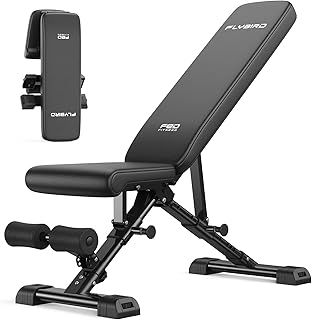
FLYBIRD WB5 Weight Bench
Honestly, FLYBIRD WB5 Weight Bench surprised me — sturdier than it looks in the photos, and over 259 buyers gave it 4.5 stars.
4. Engage Your Core to Stop the Wiggle

You can’t fire a cannon from a canoe. If your torso is twisting and swaying while you do single-arm pulldowns, you’re bleeding force. Active core engagement is mandatory. Whether you’re standing or seated, you need to brace your stomach like someone’s about to punch you. This supports your spine and gives your limbs a solid base to pull from. Functional strength training is a massive focus right now, prioritizing movements that mimic real-life activities. The cable Pallof press is the perfect example of this. You stand sideways to the machine, hold a D-handle at your chest, and press it straight out in front of you. The machine tries to twist your torso toward the stack, and your obliques have to fight to keep you facing forward. I started doing these with a basic Yes4All single D-handle I grabbed on Amazon for $11.95. The first time I tried it, I used way too much weight, lost my footing in my worn-out running shoes, and practically spun in a circle. My core was incredibly weak in rotation. Bracing your abs on every single cable movement, from bicep curls to lat pulldowns, builds this functional stability naturally. I keep a 24 oz Lululemon Back to Life sport bottle next to me and take a sip between sets, reminding myself to reset my breathing, widen my stance, and brace my core before grabbing the handle again.
5. Micro-Load Your Weight Stack for Real Progress

Most commercial gym cable stacks have terrible weight increments. You’ll be cruising along on lateral raises with 10 pounds, but the next plate down is 20 pounds. That’s a 100 percent increase in load. You simply can’t double the weight on a small isolation exercise and maintain your technique. Smarter programming requires micro-loading. If your gym doesn’t have the small 2.5-pound add-on weights that sit on top of the pin, you have to improvise. I take a small CAP Barbell 2.5-pound iron dumbbell that I actually bought for $6.99 at Walmart years ago and keep it in my gym bag. I wedge it directly on top of the weight stack pin. The rubber coating on the dumbbell keeps it from sliding off when the stack moves. Sometimes I use a 5-pound dumbbell from the gym’s rack if I need a slightly bigger jump. This allows for consistent progressive overload without destroying your joints. I tried jumping from 40 to 50 pounds on a straight-arm pulldown once and immediately felt a sharp pain in my left rotator cuff. The jump was just too aggressive. Micro-loading lets you sneak up on heavier weights safely. You’re giving your tendons time to adapt to the new stress. Adding exactly 2.5 pounds a week is how you build long-term strength without hitting a plateau. Took me years to figure out. You might also like: 15 Brilliant Man Shed Home Gym Setup Ideas to Transform Your Space
6. Swap Generic Handles for Specialty Grips

Stop using the same crusty, sweat-stained metal handles the gym provides. The attachment you use completely changes how the muscle fires. I highly recommend finding a gym that stocks MAG Grips. The MAG Medium Supinate grip completely takes your forearms out of a pulldown and forces your lats to do the pulling. If you’re training triceps, the Belt Fed Accessory Strap is incredibly comfortable and won’t shred your hands like a frayed rope. It costs about $45 online and the build quality is fantastic. Another weird but effective trick is adding Globe Gripz to a standard straight bar. They’re these spherical rubber attachments that cost $39.95. You snap them onto the bar, and they turn a flat handle into an ergonomic, neutral-grip tool. I brought a pair to my gym last month and it completely changed my tricep extensions. Because you’re gripping a textured rubber sphere, it challenges your grip strength and alters the angle of your wrist. I used to get terrible elbow tendonitis from straight bar pushdowns. Changing the grip angle with specialty attachments completely eliminated that pain for me. The $40 investment saved me hundreds in physical therapy bills. Your hands are the only contact point with the machine, so upgrading your grip changes the entire stimulus. You might also like: 12 Abs And Cardio Workout Worth Trying

FitinOne Adjustable Folding Weight Bench for Home Gym
FitinOne Adjustable Folding Weight Bench for Home Gym has been one of the most consistently praised picks in this category. 774 reviewers averaged 4.5/5.
7. Fix Muscle Imbalances with Single-Arm Work

Nobody has perfectly symmetrical strength. My right arm is significantly stronger than my left. When I use a straight bar for rows, my right side takes over and does sixty percent of the work. You won’t notice this until you take your shirt off and realize one lat is visibly thicker than the other. Cable machines are the absolute best tools for isolating specific muscles and correcting these imbalances through unilateral training. I dedicate at least one day a week to single-arm cable rows and single-arm chest flyes. I was drinking a 16 oz can of C4 pre-workout I picked up for $3.49 at Sprouts when I first noticed my left side failing five reps earlier than my right on a single-arm row. It was a massive wake-up call. When you work one side at a time, the weaker side is forced to pull its own weight. Start your sets with your weaker arm. Let that side dictate how many reps you do. If your left arm fails at eight reps, only do eight reps with your right arm. Over a few months, the strength gap will close. You have to check your ego at the door and let the weak link dictate the pace. Keep your torso completely square to the machine and avoid twisting your spine to generate artificial momentum. You might also like: 20 Gorgeous Easy Home Workout Ideas That Actually Work
8. Teach Yourself to Hinge with Cable Pull-Throughs

A proper hip hinge is the foundation of deadlifts, squats, and kettlebell swings. Most people just bend at the lower back instead of pushing their hips backward. If you struggle with this mechanic, the cable pull-through is an incredible teaching tool. You attach a rope handle to the lowest pulley setting, face away from the machine, and straddle the cable. Hold the rope between your legs, keep your knees slightly bent, and let the weight of the machine pull your hips backward toward the stack. You’ll feel a massive stretch in your hamstrings. Then, you squeeze your glutes hard and stand up straight. I bought a 12-ounce bag of 365 Everyday Value organic almonds for $6.99 at Whole Foods after a leg day where I did these, and my hamstrings were so sore I could barely bend over to pick up the grocery bag. The constant backward pull of the cable forces your body into the correct hinge pattern. If you try to squat the weight up instead of hinging, you’ll immediately lose your balance. It’s a foolproof way to learn the movement safely. I highly recommend using a longer tricep rope, like the 36-inch Yes4All version that runs about $18.99, so the hard plastic stoppers don’t dig painfully into your inner thighs during the lockout phase.
9. Use Cables for Assisted Reverse Lunges

Single-leg exercises are notoriously difficult. Bulgarian split squats and reverse lunges require a ton of balance and ankle mobility. If you struggle with stability, you can use the cable column for assistance. Set the pulley to the lowest position and attach a D-handle. Hold the handle in your right hand while stepping backward into a lunge with your right leg. The tension from the cable acts as a counterbalance, providing support and making the movement significantly easier to master. I used to fall over constantly doing walking lunges. I bought a pair of Up and Up brand knee sleeves for $14.99 at Target because I kept banging my kneecaps on the hard floor when I lost my balance. Using the cable assistance allowed me to slow down, keep my torso upright, and actually feel my glutes working instead of just fighting gravity. Once you get comfortable with the assisted version, you can gradually decrease the weight on the stack until you no longer need the counterbalance. It builds your confidence and grooves the correct movement pattern without the risk of falling over. I tell all my new training clients to start with 20 pounds of assistance on the stack and focus purely on driving through their front heel.

FLYBIRD WB2 Weight Bench
FLYBIRD WB2 Weight Bench has been one of the most consistently praised picks in this category. 215 reviewers averaged 4.5/5.
10. Build a Home Setup if the Gym is Too Crowded

Commercial gyms at 5:00 PM are a nightmare. Waiting twenty minutes for a functional trainer completely ruins your pacing. A major trend in programming is prioritizing strict recovery times as a training variable. For hypertrophy, you need 1 to 2 minutes of rest. For strength, you want over 2 minutes. For endurance, stick to 30 to 60 seconds. You can’t track your rest periods if you’re waiting for three teenagers to finish doing bicep curls in the cable crossover station. If you have the garage space, investing in a home setup is worth it. The REP Fitness Ares 2.0 attaches directly to their PR-4000 racks and features incredibly smooth aluminum pulleys. If you want a standalone unit, the Titan Fitness Functional Trainer is a popular choice. These setups range from $1,100 to over $2,320 depending on the weight stack options. Last month, I was sipping a 12 oz bottle of $3.99 Trader Joe’s cold brew coffee in my garage while doing high-pulley face pulls on my home rig. Not having to share the equipment meant I hit my exact 90-second rest intervals perfectly. The pump was unreal. If you have the budget, bringing the cables home solves the biggest problem with pulley workouts. You dictate the pace, the attachments, and the music.
I’ve completely overhauled my training splits to include more pulley work, and my joints have never felt better. The constant tension and ability to micro-load make it a superior tool for isolation movements. Stop treating the functional trainer like an afterthought or a quick warm-up station. Dial in your form, slow down your eccentric phases, and watch your muscle growth take off. If you found this breakdown helpful, pin this article to your fitness board so you can reference these grip and angle tips during your next gym session.
Frequently Asked Questions
How heavy should I lift on a cable machine?
Select a weight that allows you to complete 6 to 12 repetitions with perfect form. If you have to use momentum or twist your torso to move the weight, it is too heavy. Focus on a 3-second eccentric return phase instead of increasing the load.
What is the correct height for chest flyes on cables?
For mid-chest activation, set the pulleys exactly at shoulder height. To target the upper chest, set the pulleys low and sweep upward. For the lower chest, set the pulleys high and sweep downward toward your waist.
How do I micro-load a cable machine?
If your gym’s cable machine jumps in 10 or 20-pound increments, wedge a small 2.5-pound or 5-pound dumbbell on top of the weight stack pin. This allows you to safely increase the resistance without compromising your form or joints.
Can I do leg exercises on a cable machine?
Yes. Cable pull-throughs are excellent for teaching hip hinge mechanics for deadlifts and targeting the hamstrings. You can also use a low cable with a D-handle to assist with balance during reverse lunges and single-leg squats.
