What’s Inside
- Understand The Reality Of Spot Reduction First
- Force Growth With Adjustable Dumbbells
- Build A Base With Heavy Compound Movements
- Target All Three Tricep Heads Properly
- Rotate Your Bicep Curl Variations
- Add Shoulder Work For Complete Definition
- Use Resistance Bands For Constant Tension
- Fuel Your Recovery With Real Food
I spent the summer of 2018 doing random arm workouts in my sweltering garage gym, convinced I’d finally carve out my triceps. I ended up with severe elbow tendonitis and the same soft arms I started with. The smell of hot, rusty iron plates and stale sweat still reminds me of that wasted summer. I thought doing hundreds of light tricep kickbacks would melt the fat right off. I was completely wrong.
Toning your arms takes a mix of heavy lifting, fat loss, smart eating, and actual recovery. Forget the myth of spot reduction. True definition comes from building dense muscle and losing enough body fat to show it off. I spent years spinning my wheels with pink three-pound dumbbells before I learned how biology works. Now, I train smarter. It took me years to figure that out.
If you’re tired of waving goodbye and feeling your arm keep moving after you stop, you need a different plan. You need heavy weights, compound movements, and a reality check about your diet. Let’s break down the exact steps, gear, and techniques to build real strength and strip away that extra layer.
1. Understand The Reality Of Spot Reduction First

If you take away nothing else, remember this biological fact: you can’t spot-reduce fat. I tried this the wrong way for months before figuring it out. Doing endless bicep curls won’t burn the fat covering your biceps. To reveal definition, you have to prioritize a caloric deficit through diet and heavy lifting to drop your overall body fat percentage.
Plastic surgeons like Dr. Bernard Beldholm confirm this. While procedures like brachioplasty remove excess skin and fat, they don’t build muscle. Muscle visibility only improves because the extra tissue is gone. Similarly, Dr. David Stoker notes that building muscle and losing weight through diet and exercise is the best non-invasive way to tone up. You have to do the work in the kitchen and the weight room.
I was reminded of this last Tuesday at Whole Foods. I watched a guy load his cart with expensive fat-burning supplements and chemical-laden, fat-free snacks. Skip the fat-free stuff. It tastes like wet cardboard and leaves you starving an hour later. Instead, I bought a 16 oz tub of full-fat Fage Greek yogurt for $4.99. Eating nutrient-dense, filling foods keeps me in a deficit without feeling miserable. You have to strip away the fat layer to see the muscle underneath. Building muscle pushes against the fat, and if you don’t lose that fat, your arms will just look bigger. Trust me on this.
2. Force Growth With Adjustable Dumbbells

You can’t build meaningful strength lifting soup cans for a year. You have to challenge your muscles by increasing the weight over time. This is called progressive overload. For growth, aim for about 10 sets per muscle group weekly. For pure strength, lift heavier—around 80 percent of your one-rep max—for 2 to 3 sets per exercise.
To do this at home, you need a solid set of adjustable dumbbells. I bought cheap individual hex bells at Target for $15.99 each a few years ago. They cluttered my floor fast. I eventually upgraded to the Bowflex SelectTech 552s, which usually run $429.00 for a pair. They offer a range of 5 to 52.5 lbs per dumbbell. The metallic click of the dial locking is satisfying. Just be careful; internal gears can stick if you drop them on a hard floor.
If you aren’t into Bowflex, the Core Home Fitness Adjustable Dumbbells cover 5 to 50 lbs and cost around $350.00. NordicTrack Select-A-Weight Dumbbells provide 11 to 55 lbs per dumbbell for $399.00. Pro tip: Always pick a weight that makes the last two reps of your set a brutal struggle. If you can finish 15 reps while chatting, it’s too light. Your muscles won’t adapt if they aren’t forced to.
3. Build A Base With Heavy Compound Movements

Most people get this wrong. They walk into the gym and start doing isolation curls. Don’t rely solely on isolation for arm training. You must integrate compound movements that work multiple large muscle groups at once. Exercises like push-ups, assisted pull-ups, bench dips, and heavy dumbbell rows build the foundation your arms need. You might also like: 15 Brilliant Man Shed Home Gym Setup Ideas to Transform Your Space
Neglecting these leads to imbalances and slow progress. Your triceps help with all pushing; your biceps help with all pulling. When I finally started doing heavy bent-over rows, my biceps grew faster in two months than they did in two years of isolation curls. The rough, cold knurling on a heavy barbell tearing at my calluses is a feeling I’ve grown to appreciate. You might also like: 10 Gym Bag Essentials You Need to See
You don’t need fancy gear. I bought a standard heavy-duty doorframe pull-up bar at Walmart for $24.88. The foam grips tore off after three months, but the metal frame is rock solid. Common mistake: Using your arms to start a pull-up or row instead of your lats. Pull with your back and let your arms follow. This builds massive pulling strength and naturally thickens your biceps and forearms. You might also like: 8 Before And After Fitness for Every Budget

Adjustable Weight Bench
If you want something that just works, Adjustable Weight Bench – 1000LBS Capacity Heavy Duty Foldable Workout is a safe bet (182 reviews, 4.5 stars).
4. Target All Three Tricep Heads Properly

The triceps make up about two-thirds of your upper arm mass. If you want defined arms, focus on exercises that hit all three heads—long, lateral, and medial. A proper arm workout demands heavy tricep isolation once your compound work is done.
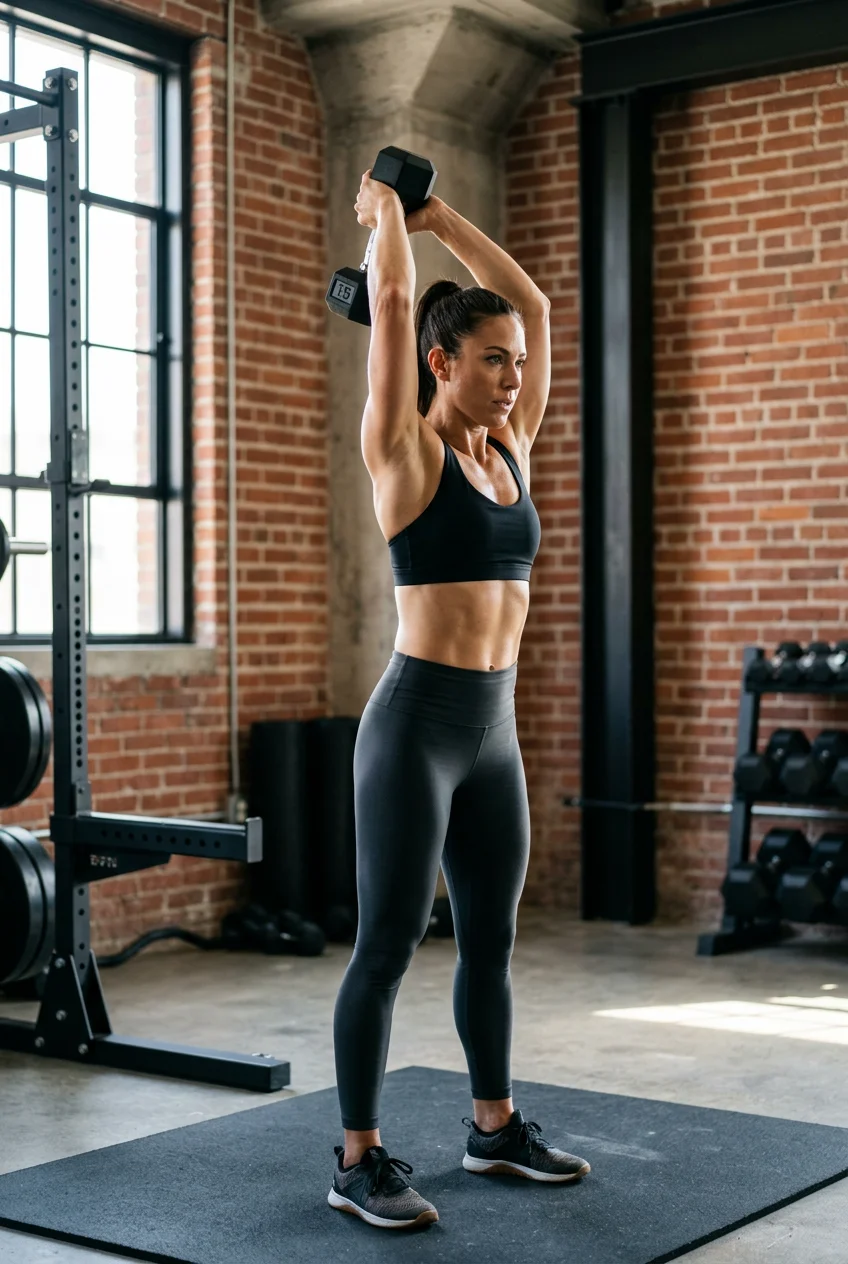
My go-to moves are Overhead Tricep Extensions, Tricep Kickbacks, and Dips. For overhead extensions, I use one heavy dumbbell, lower it slowly behind my head, and press up. The key is keeping elbows stable and pointed forward. If they flare out, you’re just using your shoulders. For kickbacks, hinge at the hips, keep your upper arm parallel to the floor, and forcefully extend your forearm back.
I tried doing dips on a cheap folding chair in my kitchen a few years ago. The chair slipped, and I bruised my tailbone. Learned that the hard way. Buy a proper flat bench. I picked up the Rep Fitness FB-3000 for $149.99, and the sticky vinyl keeps me locked in. Aim for 3 sets of 10 to 15 reps per exercise. Ensure the weight allows for strict form while providing a deep burn by the final rep.
5. Rotate Your Bicep Curl Variations

Your biceps are smaller than your triceps, but they create the front-facing shape of your arm. Use different curl variations to hit both the short and long heads. Doing the same standing curl every week leads to a plateau fast.
I structure my routine with Standard Curls, Hammer Curls, and Incline Dumbbell Curls. The incline curl is brutal. Lying back at a 45-degree angle stretches the bicep tendon, creating massive tension. The first time I tried these, my arms were so sore I couldn’t straighten my elbows to wash my hair.
Here is a form tip most guys ignore. For standard curls, add a supination twist at the top. Rotate your pinky finger toward your shoulder as you squeeze the weight. This maximizes engagement. I usually grab a 2 oz pack of raw almonds from Trader Joe’s for $1.99 an hour before this workout to make sure I have the fuel to push through 3 sets of 10 to 12 heavy reps.
6. Add Shoulder Work For Complete Definition

You can’t have sculpted arms if your shoulders are flat. Shoulder work creates visual separation between your bicep, tricep, and deltoid, giving you a balanced look. The lateral deltoid acts like a cap; when it grows, it makes the rest of your arm look leaner.
I stick to the basics: Lateral Raises and Front Raises. For lateral raises, stand tall and raise dumbbells to the sides until your arms are parallel to the floor. Pour the dumbbells out slightly at the top, like emptying a pitcher. Aim for 3 sets of 12 to 15 reps, focusing on a slow, controlled negative descent rather than swinging with momentum.
I learned about momentum the hard way. I used to grab 25 lb dumbbells, heaving them up with my back. I threw my back out and couldn’t train for two weeks. Drop your ego. I use 15 lb dumbbells now, and my shoulders look better because the muscle is actually doing the work. When soreness hits, I soak in a hot bath with Dr. Teal’s Epsom salts. I grab the 3 lb bag at Kroger for $4.49 to calm the burn in my deltoids.

FLYBIRD WB3 Weight Bench Fits up to 6’5”
FLYBIRD WB3 Weight Bench Fits up to 6’5” punches above its price — 16 buyers rated it 4.5 stars. I would buy it again.
7. Use Resistance Bands For Constant Tension

Dumbbells are great, but gravity only pulls straight down. Bands provide constant, increasing tension through the whole range of motion. Use them for warm-ups, burnout finishers, or while traveling.
Don’t buy cheap rubber. I bought a generic 5-pack on Amazon for ten bucks once. I was doing a tricep pushdown and the red band snapped, whipping my shoulder blade. It left a welt for a week. Now, I only use Rogue Monster Bands. They start around $17.50 for the lighter 35 lb green band, up to $50 or more for the heavy ones. FitCord bands are also great, offering sleeved resistance from 3 lbs to 55 lbs, which prevents snapping if the rubber fails.
The smell of a new Rogue band means it’s time to work. I loop a green band over my pull-up bar and do 100 tricep pushdowns at the end of my workout. The tension gets harder as you push down, forcing your triceps to fire at the bottom. Your arms will feel like lead, but the pump is incredible.
8. Fuel Your Recovery With Real Food

You can do every workout perfectly, but if your nutrition is garbage, your arms won’t change. Muscle tissue is broken down in the gym, but it’s built back in the kitchen and your bed. You need protein to repair the fibers you just tore up.
I aim for about 1 gram of protein per pound of body weight. To afford this, I buy bulk chicken breasts at Costco. They sell a 6 lb pack for around $2.99 per pound. I grill a huge batch on Sunday. The smell of charred chicken and garlic powder fills my patio, and it makes prep bearable. I pair it with fresh asparagus I pick up at Sprouts for $3.99 a pound.
Common mistake: Starving yourself after a workout. If you don’t feed your body, it won’t repair the muscle. You’ll just end up skinny-fat with weak arms. Eat 30 to 40 grams of protein within a few hours of training. I’ve used this heavy lifting and high-protein approach for three years, and it’s the only thing that finally gave my arms the shape I wanted. Stop looking for shortcuts, buy some heavy dumbbells, and get to work.
If you found this guide helpful, pin it for your next upper body day. Let’s get to lifting, and track your weights so you can force that progressive overload next week.
Frequently Asked Questions
Can I lose arm fat by only doing tricep extensions?
No. You can’t spot-reduce fat from specific areas. Tricep extensions build the muscle underneath, but you must maintain a caloric deficit to lose the overall body fat covering that muscle.
How heavy should my dumbbells be for this arm fat workout?
Choose a weight that makes the last two repetitions of your set very difficult to complete with good form. If you can easily do 15 reps, the weight is too light to force muscle growth.
Why do I need to do compound movements for my arms?
Compound movements like pull-ups and push-ups allow you to lift significantly heavier weight than isolation curls. This builds a thicker foundation of strength and muscle mass across your entire upper body.
How many times a week should I train my arms?
Aim for about 10 working sets per muscle group each week. You can split this into two upper-body days, performing 5 heavy sets for biceps and triceps per session to allow for adequate recovery.
