What’s Inside
- Prioritize Direct Volume In Your Forearm Workout For Men
- Master Strict Reverse Curls For Extensor Mass
- Integrate Heavy Hammer Curls For Thickness
- Use A Wrist Roller For Continuous Tension
- Attach Fat Gripz To Your Pulling Movements
- Build Pinch Grip With Iron Plate Pinches
- Walk With Heavy Farmer’s Carries
- Stop Overusing Your Lifting Straps
- Keep Captains Of Crush Grippers In Your Car
- Fuel Recovery And Train Small Rotators
I dropped a 405-pound deadlift on my toes back in 2018 because my hands just gave up. Building a reliable forearm workout for men isn’t about looking good in a rolled-up flannel shirt. It’s about making sure your hands can actually hold what your back and legs can lift. I spent years assuming my forearms would grow from doing heavy rows and pull-ups. I was completely wrong. My grip was always the first thing to fail during heavy pulls. I tried ignoring it for months before figuring it out. You need direct, specific stimulus to build thick, functional lower arms. I’m Ryan Brooks, and I test fitness gear and training methods for a living. I’ve spent the last three years testing exactly what builds lower arm mass without needing a specialized commercial gym. You can do almost all of this anywhere. Let’s break down the exact movements, tools, and mistakes you need to know.
1. Prioritize Direct Volume In Your Forearm Workout For Men

I spent my first four years lifting weights ignoring my lower arms. I assumed heavy deadlifts and barbell rows were enough. I was wrong. Last Tuesday at Whole Foods, I was carrying four heavy paper grocery bags, and my grip started failing before I even reached my truck. The thin paper handles were digging into my fingers, and my forearms were burning like I’d just done a set of fifty pull-ups. That’s a humbling feeling. You can’t rely on compound movements alone if you want actual size and functional grip strength. Dr. Mike Israetel, a sports scientist whose training protocols I follow, recommends 3 to 6 sets of forearm-specific exercises multiple times per week to maximize size. I started doing exactly this last November. I dedicate Tuesdays and Fridays strictly to lower arm isolation at the end of my sessions. The pump is painful at first. Your fingers will feel like thick sausages, and you might struggle to turn your steering wheel on the drive home. But the adaptation happens quickly. If you’re serious about building a reliable forearm workout for men, you have to treat these muscles like your chest or biceps. They need direct, focused volume. I usually aim for a total weekly volume of 10 to 15 sets, distributed across two or three sessions. This frequency hits the smaller muscle fibers repeatedly, forcing them to adapt and grow thicker. Don’t skip this. Put the time in.
2. Master Strict Reverse Curls For Extensor Mass

Most guys ignore the top of their forearms. The brachioradialis and the forearm extensors are almost always underdeveloped compared to the flexors on the underside of your arm. To fix this, you need reverse curls with a pronated grip. That means your knuckles face the ceiling and your palms face down. I tried this wrong for months before figuring it out. I grabbed a 60-pound EZ-curl bar off the rack, swung my hips, and essentially did a sloppy power clean. My wrists hurt for a week, and I felt nothing in my actual forearms. You have to drop your ego here. I use a fixed 30-pound straight barbell for these now. You’re isolating a small muscle group, so you want strict form. Keep your elbows glued to your ribs. Curl the weight up slowly, squeeze hard at the top, and take three full seconds to lower it back down to your thighs. That eccentric control is where the actual growth happens. I usually aim for 3 sets of 12 to 15 reps. If you’re working out at home, you can easily do these with a heavy rubber resistance band stepped under your feet. Just grab the band with your knuckles facing up and curl. The continuous tension from the thick rubber feels better on my elbow joints than free weights sometimes.
3. Integrate Heavy Hammer Curls For Thickness

Hammer curls are mandatory if you want thick arms that look powerful in a short-sleeve shirt. Holding dumbbells with a neutral grip, where your palms face each other, heavily engages the brachialis. This muscle sits right between your bicep and tricep, underneath the main bicep peak. When it grows, it pushes everything outward, making your entire arm look significantly wider from the front. It also heavily taxes the brachioradialis. Back in 2020, when all the commercial gyms closed, I bought a single pair of 35-pound hex dumbbells from Target for $45. I did hundreds of hammer curls in my living room on a cheap yoga mat. I noticed a massive difference in my pulling strength when I finally got back to a real barbell. When you do these, grip the dumbbell handle as hard as you physically can. Don’t just hold it loosely. Crush the metal. This concept is called irradiation. Squeezing the handle tightly recruits more muscle fibers up the chain into your forearms and biceps. I prefer doing these seated on a bench with firm back support so I can’t cheat by swinging my torso. Aim for 3 sets of 8 to 10 reps. If the weight feels light, pause for a full second at the halfway point on the way down. That dead stop will light your forearms on fire and force you to control the momentum. You might also like: 10 Gym Motivation Wallpapers for Every Budget
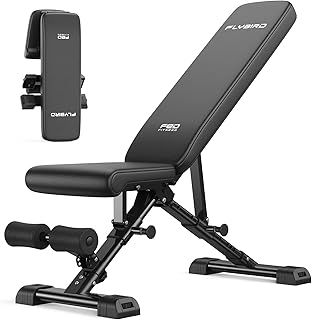
FLYBIRD WB5 Weight Bench
If you want something that just works, FLYBIRD WB5 Weight Bench is a safe bet (259 reviews, 4.5 stars).
4. Use A Wrist Roller For Continuous Tension

The wrist roller is an old-school torture device that works better than almost any modern cable machine. It provides continuous time under tension, targeting both your wrist flexors and extensors. You can buy a fancy metal one online, but I built mine using a two-foot piece of PVC pipe from Home Depot, some nylon paracord, and a cheap metal carabiner. I tie it to a 10-pound cast iron kettlebell. You hold the pipe straight out in front of your chest with your arms parallel to the floor, and you twist your wrists to roll the cord up the pipe. Then, you slowly unroll it. Don’t just let it drop and spin freely. The slow, deliberate lowering of the weight is crucial for eccentric muscle damage. I do 2 to 4 sets of this, with 45 to 60 seconds of rest between sets. The lactic acid buildup is intense. I usually have to drop my arms and shake my hands out violently after just one set. I keep my DIY roller in my garage gym right next to my squat rack so I don’t forget to use it. If you want a brutal finisher, try rolling up a 15-pound plate. It sounds light, but by the time the plate reaches the top, your forearms will be completely engorged with blood and screaming for mercy. You might also like: 15 Clever Garage Home Workout Ideas That Are Totally Worth It
5. Attach Fat Gripz To Your Pulling Movements

If you want to passively increase your lower arm mass while doing your normal back workout, you need thicker bars. Most commercial gym barbells are roughly one inch thick, which is easy to hook your fingers around. Fat Gripz are thick rubber sleeves that snap directly over any barbell, dumbbell, or pull-up bar. The ‘Original’ blue model increases the grip diameter to 2.25 inches. A pair costs $39.95, and they are made from a dense, military-grade rubber. I bought mine three years ago and they haven’t degraded or cracked at all despite heavy use. The wider diameter puts your hands in a mechanically disadvantageous position. Your forearms have to work twice as hard just to hold the weight. I slap these on for my warm-up sets of deadlifts and barbell rows. There’s one major negative. The smooth rubber gets incredibly slippery if your hands are sweaty. I forgot my chalk during a workout at a local commercial gym last month, and the 135-pound barbell slipped out of my hands during a bent-over row, crashing onto the safety pins. Always use chalk with these. I also use them for strict pull-ups. Hanging your entire body weight from a 2.25-inch rubber cylinder will expose exactly how weak your fingers really are. Start light with these attachments. You’ll be surprised how much weight you have to strip off the bar just to hold on. You might also like: 20 Inspiring Journal Home Workout Ideas You Haven’t Thought Of
6. Build Pinch Grip With Iron Plate Pinches

Pinch grip is a specific type of strength that most people lack. It involves holding objects between your fingers and thumbs without wrapping your hand around them. Think about trying to pick up a thick, heavy dictionary with one hand from the top. To train this, I use iron plate pinches. You take two smooth weight plates, place them together with the smooth sides facing out, and pinch them hard. I usually use two 10-pound plates. You just stand there and hold them for time. I aim for static holds of 20 to 30 seconds across 4 sets. This builds immense strength in your thumb pad and your individual finger tendons. I buy old, smooth iron plates from Play It Again Sports specifically for this exercise. Modern plates with the rubber coating and cut-out handles won’t work because your fingers just hook into the holes, defeating the purpose. You need a flat, smooth surface to force the friction between your skin and the iron. I dropped a pair of iron plates on my concrete garage floor once because I held on five seconds too long, and it chipped a massive chunk out of the concrete. Now I do these standing directly over a thick rubber stall mat. If you want to make it harder, try pinching three 10-pound plates together.
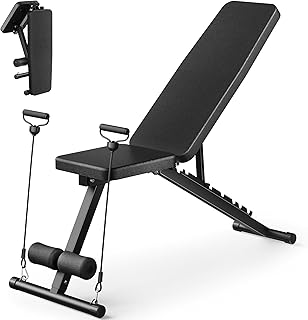
Adjustable Weight Bench for Home Gym
Honestly, Adjustable Weight Bench for Home Gym surprised me — sturdier than it looks in the photos, and over 551 buyers gave it 4.5 stars.
7. Walk With Heavy Farmer’s Carries

Farmer’s carries are the most functional exercise you can do for your upper body. You simply pick up a heavy weight in each hand and walk. This movement, borrowed from strongman training, builds immense grip endurance, thick traps, and deep core stability. It’s becoming a massive trend for any forearm workout for men in 2026 because it translates to real life. Whether you’re carrying a heavy cooler across the sand at the beach or hauling a 40-pack of bottled water from Costco into your kitchen, this specific strength matters. I use 70-pound cast iron kettlebells for these. I pick them up, brace my core, pull my shoulders back, and walk for 50 feet down my driveway and back. The trick is to walk with a fast, choppy step. Don’t take long, lunging strides, or the weights will swing forward and pull you off balance. I aim for 4 sets of 60 seconds of walking. The negative here is that heavy dumbbells will tear up your calluses if the knurling is sharp. I file my calluses down once a week with a pumice stone in the shower to prevent them from ripping off during heavy carries.
8. Stop Overusing Your Lifting Straps

Lifting straps are a fantastic tool for heavy deadlifts when your grip gives out before your hamstrings do. But over-reliance on wrist straps will destroy your lower arm development. I see guys at the gym wrapping thick figure-eight straps around the bar for 135-pound lat pulldowns. That’s a massive mistake. If you use straps for every single pulling movement, your hands never receive the stimulus required to grow stronger. Your grip becomes the weakest link in your kinetic chain. I made this exact mistake in my early twenties. I strapped up for every single row, shrug, and pull-up. When I finally tried to deadlift 315 pounds without them, the bar rolled right out of my hands before it even passed my knees. Now, I have a strict rule. I won’t touch my lifting straps until I reach my absolute heaviest working set. All my warm-ups, all my lighter back-off sets, and all my accessory work are done barehanded or with a little bit of chalk. If you’re addicted to your straps, wean yourself off slowly. Start doing your first two sets of rows without them. Your numbers might drop temporarily, but your barehanded strength will catch up within a month. Let your hands feel the rough steel. It builds character and dense muscle.
9. Keep Captains Of Crush Grippers In Your Car

Hand grippers are the most convenient strength tool ever invented. You can use them anywhere, at any time. I highly recommend the Captains of Crush brand. They are the gold standard in the grip strength community, made from aircraft-grade aluminum and specialized steel springs. They aren’t those cheap plastic things you find at big box sporting goods stores that break after a month. I keep the ‘Trainer’ model, which requires 100 pounds of pressure to close, in the center console of my truck. Whenever I’m stuck in bad traffic or waiting in the parking lot at Sprouts for my wife to grab groceries, I do a few sets. I squeeze them for 10 to 20 repetitions, or I squeeze them completely shut and hold for a 10-second static hold. The knurling on the aluminum handles is incredibly sharp. It will dig deep into your skin. I actually like the rough texture, but it takes some getting used to. Start with a much lighter model than you think you need. Most guys can’t close the 140-pound ‘Number 1’ model on their first try. Using these grippers three times a week has dramatically increased my crushing grip strength. When I shake someone’s hand now, I have to consciously remember not to squeeze too hard. They are a phenomenal investment for under thirty dollars.

FitinOne Adjustable Folding Weight Bench for Home Gym
FitinOne Adjustable Folding Weight Bench for Home Gym has been one of the most consistently praised picks in this category. 774 reviewers averaged 4.5/5.
10. Fuel Recovery And Train Small Rotators

You can’t just beat your hands up every day and expect them to grow. Forearms require adequate recovery and specific nutrition just like your chest, back, or legs. I allow 24 to 48 hours for mild soreness to clear up, and sometimes up to 3 to 5 days of complete rest after a highly intense grip session. To fuel that recovery, you need heavy protein. I aim for 1.5 to 2 grams of protein per kilogram of body weight. I buy large packs of chicken breast, wild-caught salmon, and plain Greek yogurt from Kroger every Sunday to meal prep for the week. Skip the fat-free stuff. It tastes like wet cardboard. The amino acids are essential for repairing the damaged muscle tissue. Beyond diet, you need to focus on forearm health and injury prevention. Tendonitis and carpal tunnel syndrome are real risks if you only train heavy flexion. You have to train the small stabilizing muscles too. I do a drill incorporating wrist supination and pronation. I hold a tiny 3-pound dumbbell by one end, resting my forearm flat on a bench. I rotate my wrist so my palm faces up, hold for five counts, then rotate it so my palm faces down, and hold for five counts. I repeat this for 10 reps. It looks ridiculous, but it bulletproofs your elbows and wrists against heavy lifting strains.
Building impressive lower arms takes time, but it’s entirely possible if you stop treating them as an afterthought. You don’t need fancy machines. You just need consistent volume, a few basic tools, and a high tolerance for the burning sensation of lactic acid. I highly recommend picking just two of these exercises to start. Add them to the end of your next pull day. Once your grip stops failing on your heavy lifts, you’ll realize exactly why this matters. If you found this breakdown helpful, save this page or pin it to your fitness board so you can reference these specific rep ranges during your next session.
Frequently Asked Questions
How often should I do a forearm workout for men?
You should train your forearms two to three times a week. Treat them like any other muscle group. Allow 24 to 48 hours of rest between sessions so the smaller muscle fibers can properly recover and grow thicker.
Do I need heavy weights for a forearm workout for men?
No. Because the muscles in your lower arms are small, you can get an intense stimulus using light weights. A 15-pound dumbbell for reverse curls or a 10-pound kettlebell on a wrist roller is plenty of resistance for most guys.
Why is my grip failing before my back on deadlifts?
Your grip fails because your forearm flexors aren’t strong enough to support the weight your larger back muscles can pull. Adding direct grip work, like farmer’s carries and plate pinches, will strengthen your hands to match your pulling strength.
Are wrist straps bad for forearm development?
Wrist straps aren’t inherently bad, but overusing them will stunt your grip strength. Save your straps for your absolute heaviest working sets. Do all your warm-ups and lighter back-off sets barehanded to ensure your hands get enough direct stimulus.
