What’s Inside
- Prioritize Static Post Workout Stretches for Muscle Lengthening
- Incorporate Foam Rolling for Targeted Myofascial Release
- Utilize a Massage Gun for Pinpoint Recovery
- Enhance Reach with a Stretching Strap
- Try PNF for Accelerated Flexibility Gains
- Integrate Post-Workout Mobility Drills
- Stop Bouncing During Your Stretches
- Target the Major Muscles You Actually Used
- Strive for Symmetrical Flexibility
- Optimize Recovery with Immediate Hydration
Last Tuesday at my local gym, I ripped my favorite pair of $45 gym shorts straight down the middle trying to force a cold split. It sounded like a gunshot echoing across the weight room floor. I realized right then that treating post-workout stretches as an optional cool-down is a fast track to injury and public embarrassment. Most guys skip the mat entirely. They hit the showers. I used to be that guy. But if you want to build strength, you’ve got to have a routine. You wake up the next morning feeling like you’ve been hit by a truck. Your hamstrings are tight. Your lower back aches. You can’t even bend over to tie your shoes without groaning.
I lived like that for years. I thought being chronically sore just meant I’d had a productive workout. That’s wrong. Being stiff limits your range of motion. If your ankles and hips are locked up, your squat depth suffers. If your squat depth suffers, you aren’t building maximum muscle. It’s a simple chain reaction. Implementing a proper routine changed my lifting numbers. I stopped waking up with a stiff neck. I stopped pulling muscles during heavy deadlifts. Post-workout stretches force the blood back into the muscle tissue and tell your nervous system to finally relax. Here’s the exact routine I use to keep my joints functional and my muscles growing.
1. Prioritize Static Post Workout Stretches for Muscle Lengthening

I tried this wrong for months before figuring it out. I’d stretch cold before lifting heavy weights. That’s a terrible idea. My joints felt like rusty hinges and I actually felt weaker during my sets. You’ve got to do static stretches when your muscles are already warm and pliable. According to Dr. Gilot, an expert in sports medicine, doing longer static stretches after a workout helps lengthen your muscles and loosen joints. This promotes healthier joints that aren’t prone to snapping under pressure.
I used to do fast, sloppy toe touches for ten seconds. Useless. Now I hold static stretches for exactly 45 seconds using the digital timer on my $299 Apple Watch SE. You need to aim for 30 to 60 seconds per stretch. Repeat this 2 to 3 times per muscle group. When I do a seated hamstring stretch, I extend one leg, tuck the other foot against my inner thigh, and reach forward. I feel a deep, burning tension right behind my knee. The sweat drips onto the rubber mat. It smells like old chalk and rubber, but holding that tension forces the muscle fibers to elongate. If you only hold it for ten seconds, the muscle doesn’t have time to actually release.
2. Incorporate Foam Rolling for Targeted Myofascial Release

Foam rolling helps alleviate muscle soreness and improve blood flow by releasing tension in the fascia. Fascia is the thick connective tissue surrounding your muscles. I bought the TriggerPoint GRID Foam Roller for $39.99 at Target last month. I picked the bright orange one. It has these little textured foam squares that dig right into my IT band. The pressure feels like a deep tissue massage from someone with very strong thumbs. It took me years to figure out that technique, so trust me on this.
Last Friday, I rolled out my quads on the living room rug. My golden retriever thought it was a toy and bit the foam. Now it has permanent teeth marks on one side. But spending 60 seconds per muscle group actually pushes the blood back into the tissue. For deeper tissue work, I sometimes use the RumbleRoller Original. It costs $45 and looks like a medieval torture device covered in black spikes. You need to spend 30 to 90 seconds on each muscle group, applying moderate pressure. You support your body weight on your elbows and slowly army crawl forward over the roller. When you hit a tender spot that makes you wince, you stop. You hold the roller right on that knot and breathe through your nose until the pain dulls.
3. Utilize a Massage Gun for Pinpoint Recovery

Massage guns deliver rapid percussive therapy. This effectively reduces muscle soreness, increases blood flow, and facilitates the release of lactic acid. This is particularly beneficial for delayed onset muscle soreness. I grabbed the Hyperice Hypervolt Go 2 in a bundle at Costco for $149.99. The grey matte finish looks sleek, and it sounds like a quiet power drill buzzing in my hand. Physical therapist Renato Sanchez notes that massage guns can increase mobility and decrease pain.
The first time I used it, I blasted my bare calf on the highest setting for five straight minutes. Huge mistake. I bruised the muscle belly so badly I had to skip running for a week. Learned that the hard way. You’ve got to start on level one. Limit your usage to 2 to 3 minutes per muscle group. I use the Therabody Theragun Mini 3rd Gen when I travel. It costs about $199. I press the foam attachment against my chest muscles after a heavy bench press day. The rapid thumping physically shakes the tight muscle fibers loose. You just glide it slowly across the skin. Don’t press the hard plastic tip directly into your collarbone or knee cap. It hurts, and it doesn’t help the muscle recover.

NICEPEOPLE Adjustable Weight Bench for Home Gym
If you want something that just works, NICEPEOPLE Adjustable Weight Bench for Home Gym is a safe bet (33 reviews, 4.5 stars).
4. Enhance Reach with a Stretching Strap

Stretching straps are excellent tools for achieving deeper, more controlled stretches without the need for a training partner. This leads to greater increases in your range of motion. I picked up the green OPTP Stretch Out Strap for $16.95 at Walmart in the fitness aisle. For most users, an 8-foot strap is the exact ideal length. It has ten individual numbered loops sewn into the nylon.
Before buying this strap, I used a dirty old beach towel to stretch my hamstrings. It slipped out of my sweaty hands and snapped me right in the face. The OPTP strap lets me lock my foot securely in the end loop. I lie flat on my back on the floor. I pull my leg up straight while keeping my other leg pinned to the ground. I grip loop number four with both hands. Because my grip isn’t failing, I can actually focus on the stretch in the back of my thigh. The nylon material is rough on the hands, but it never slips. It gives you total mechanical advantage over your own tight muscles. You might also like: 20 Inspiring Journal Home Workout Ideas You Haven’t Thought Of
5. Try PNF for Accelerated Flexibility Gains

Proprioceptive Neuromuscular Facilitation (PNF) is an advanced stretching technique. It involves alternating static stretches with isometric muscle contractions. It sounds like a medical textbook term, but it just means pushing against resistance. Research shows it significantly improves both range of motion and muscular strength simultaneously. I do this against the bare drywall in my garage gym. You might also like: 10 Gym Motivation Wallpapers for Every Budget
To perform a self-PNF hamstring stretch, I lie down and use my green OPTP strap. I hold a static stretch for ten seconds. Then, I actively contract my hamstring by pushing my heel down against the resistance of the strap for 6 to 10 seconds. I relax completely, take a deep breath, and then pull the leg into a deeper stretch. Don’t push at 100 percent effort during the contraction phase. I strained a calf muscle doing that back in 2022. Push at about 30 percent effort. The release afterward feels like a tight, thick rubber band finally snapping loose inside your leg. It tricks your nervous system into allowing the muscle to stretch further than it normally would. You might also like: 9 Shoulder Workouts For Men Worth Trying
6. Integrate Post-Workout Mobility Drills

Stretching isn’t just sitting still on a mat. Beyond traditional static stretches, mobility drills that combine movement with stretching help maintain joint health. They reduce stiffness and prevent injuries. This approach emphasizes movement as medicine to restore muscles to their pre-activity length and calm your central nervous system. I rely heavily on the World’s Greatest Stretch.
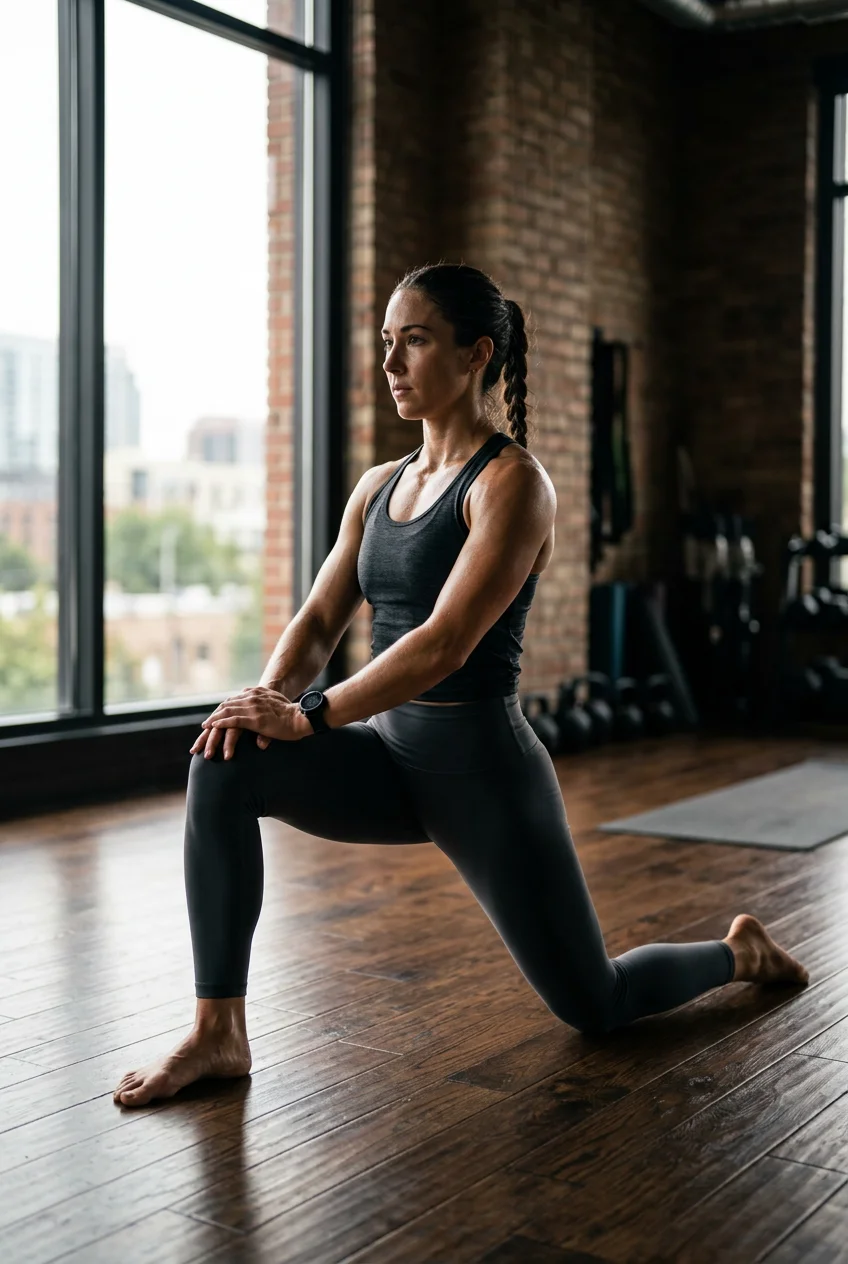
I perform 6 to 8 repetitions of this drill per side. You step forward into a deep lunge. You drop your inside elbow all the way down to the floor by your instep. Then, you twist your torso and reach that same arm straight up to the ceiling. I was doing these in the middle of an aisle at Kroger last week while waiting for my wife to pick out coffee beans. I probably looked crazy to the other shoppers. But my hips were completely locked up from heavy barbell squats that morning. I also do 8 repetitions of Cat-Cows on my hands and knees. You arch your back up toward the ceiling like an angry cat, then drop your stomach toward the floor. It forces fluid back into your spinal discs.
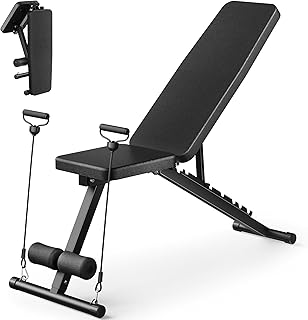
Adjustable Weight Bench for Home Gym
If you want something that just works, Adjustable Weight Bench for Home Gym is a safe bet (551 reviews, 4.5 stars).
7. Stop Bouncing During Your Stretches

A common mistake is bouncing or using ballistic movements during stretching. This can severely strain muscles and increase your risk of micro-tears. I see guys at the gym bouncing aggressively in a split stretch like they’re jumping on a trampoline. I did this during high school track practice. I ended up with a sharp micro-tear in my groin that hurt every time I ran for six straight months. No exaggeration.
When you bounce, you trigger the stretch reflex. Your muscle spindles sense sudden danger and forcefully contract the muscle to protect it from tearing. If you keep forcing the bounce while the muscle is contracting, you rip the tissue. You feel a sharp, hot tearing sensation. Just ease gently into each position. Find the point of mild discomfort. Hold that exact tension. Breathe slowly through your nose. As you exhale, the muscle will naturally relax, and you can sink half an inch deeper without forcing it. It requires patience, which is hard when you just want to grab your gym bag and leave.
8. Target the Major Muscles You Actually Used

A comprehensive routine should target the primary muscle groups you just worked. This includes calves, hamstrings, quadriceps, hips, lower back, neck, and shoulders. Don’t just do a random, lazy chest stretch after a heavy leg day. Focus your time on the primary movers. After a leg-focused workout, I prioritize my hamstrings, quads, and calves. I hold each position for exactly 30 seconds.
I bought a $12.99 basic yoga mat at Whole Foods just to keep in the trunk of my car for this exact purpose. Yes, they sell fitness gear in the lifestyle aisle next to the vitamins. The mat smells slightly like off-gassing rubber and lavender, but it saves my bare knees from the rough concrete parking lot when I stretch after a trail run. I do a kneeling hip flexor stretch. I put one knee on the mat, step the other foot forward, and squeeze my glutes. You feel a massive pull down the front of your thigh. If you just ran three miles, your hip flexors are shortened and tight. You’ve got to open them back up before you sit in your car for the drive home.
9. Strive for Symmetrical Flexibility

You need to aim to achieve equal flexibility on both sides of your body. This is crucial for maintaining overall balance and preventing injuries. This matters even more if your workout involves unilateral movements like lunges, or if you have a history of muscular imbalances. My right hip is significantly tighter than my left hip.
I noticed this asymmetry while carrying a 40-pound bag of dog food out of Sprouts Farmers Market last month. I was unconsciously limping sideways because my right hip flexor wouldn’t fully extend. If your left side is tighter, you need to spend an extra 30 seconds stretching there. I use my $16.95 OPTP strap to measure my progress. When I stretch my right hamstring, my hand only reaches loop number four on the strap. When I stretch my left hamstring, my hand easily reaches loop number six. The numbers don’t lie. I have to actively work on the right side to close that gap. Ignoring one tight side eventually leads to lower back pain because your pelvis gets pulled out of alignment.
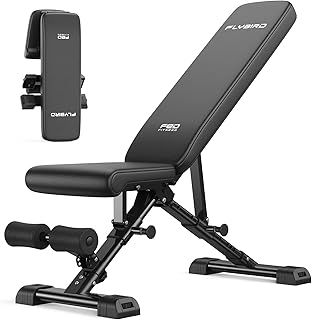
FLYBIRD WB5 Weight Bench
A dependable everyday pick — FLYBIRD WB5 Weight Bench pulls in 259 ratings at 4.5 stars. Not flashy, just solid.
10. Optimize Recovery with Immediate Hydration

While drinking water isn’t a stretch itself, proper hydration is fundamental for muscle function and recovery. Dry muscles are stiff muscles. Water helps transport essential nutrients into the muscle cells and flushes out metabolic waste. Fascia gets sticky and binds to the muscle tissue when you’re dehydrated. This physically limits your flexibility.
I drink 24 ounces of cold water mixed with a $1.99 packet of Liquid I.V. from Trader Joe’s immediately after lifting. I buy the lemon-lime flavor. It tastes slightly salty but gets the job done. Skip the brightly colored, sugary sports drinks. They taste like battery acid, leave a thick sticky film on your teeth, and spike your blood sugar unnecessarily. Plain water and basic sodium electrolytes actually lubricate the fascia. When your tissues are hydrated, they glide smoothly over each other. This makes every single stretch you perform infinitely more effective. I chug the water while I’m doing my 45-second static holds.
If you implement these ten steps, you’ll stop waking up feeling crippled after a heavy leg day. Your joints will move better, your squat depth will improve, and you won’t rip your gym shorts trying to stretch. Save this routine, pin it to your fitness board, and actually use it next time you hit the gym.
Frequently Asked Questions
How long should I hold post workout stretches?
You should hold static stretches for 30 to 60 seconds per muscle group. Repeat each stretch 2 to 3 times. This duration gives the muscle fibers enough time to safely elongate and release built-up tension.
Should I stretch cold or warm muscles?
Always stretch warm muscles. Stretching cold muscles increases your risk of tearing tissue. The best time to do static stretches is immediately after your workout when your body temperature is elevated and your muscles are pliable.
Are massage guns effective for post workout recovery?
Yes, massage guns deliver percussive therapy that increases blood flow and reduces delayed onset muscle soreness. Use them for 2 to 3 minutes per muscle group on a low setting to avoid bruising the tissue.
Why shouldn’t I bounce during a stretch?
Bouncing triggers your stretch reflex. Your muscle spindles sense danger and forcefully contract the muscle to protect it. Bouncing while the muscle contracts causes micro-tears and sharp pain. Always hold steady tension instead.
