What’s Inside
- Prioritize Heavy Hip Thrusts in Your Bubble Buttocks Workout
- Master the Mind-Muscle Connection Before Lifting
- Implement Progressive Overload Consistently
- Incorporate Unilateral Exercises for Balance
- Utilize Resistance Bands for Added Tension
- Don’t Neglect Compound Lifts in Your Bubble Buttocks Workout
- Optimize Your Protein Intake for Recovery
- Consider Creatine Monohydrate Supplementation
- Avoid “Booty Band” Overuse on Heavy Lifts
- Incorporate Multi-Planar Movement and Frog Pumps
- Try Belt Squats and Focus on High-Calorie Recovery
Last Tuesday at the gym, I watched a guy load up 315 pounds for squats, drop down about four inches, and rack it with a grunt that shook the mirrors. I used to do exactly that before I learned what a real bubble buttocks workout actually requires. I spent three years doing quarter-squats and wondering why my legs looked like toothpicks and my jeans were flat in the back. If you want to build actual muscle, you’ve got to stop ego lifting and start training the tissue directly. The fitness industry pushes a lot of useless routines involving tiny ankle weights and high-rep kickbacks. Those might make you sweat, but they won’t force your muscles to grow. No exaggeration.
To build serious lower body strength, you need a mix of heavy compound lifts, targeted isolation, and enough food to fuel the recovery process. I tried doing this wrong for months before figuring it out. I bought cheap gear, skipped my protein shakes, and rushed through my repetitions. It left me with a sore lower back and zero progress. Today, I’m breaking down the exact mechanics, equipment, and nutritional habits you need to follow. Skip the gimmicks. Let’s get into the actual science of building lower body strength.
1. Prioritize Heavy Hip Thrusts in Your Bubble Buttocks Workout

You can’t build a strong lower body without heavy barbell hip thrusts. I avoided these for a long time because setting them up with a standard bench and a rolling barbell is annoying. I used to wrap a cheap $12.99 foam pad I bought from Target around the bar, but it smelled like chemical plastic and still left massive bruises on my hip bones. Once I started loading over 225 pounds, that foam pad felt like paper. Trust me on this.
Aim for 3-4 sets of 6-10 repetitions with a challenging weight. This exercise is highly effective for glute activation and hypertrophy, matching back squats in overall muscle recruitment. If you train at home, consider buying a dedicated hip thrust machine for safety. I bought the WARMOUNTS Hip Thrust Bench for $149.99 last year because it folds up and stops the bench from sliding backward on my garage floor. Commercial gym models like the GluteZone Hip Thrust Machine run anywhere from $1,999.00 to $2,549.00, which is why a dedicated home bench makes sense. Focus on driving through your heels and locking out completely at the top of the movement. If your lower back hurts, you’re hyperextending your spine instead of tilting your pelvis.
2. Master the Mind-Muscle Connection Before Lifting

Throwing weight around won’t help if your lower back and hamstrings take over the movement. You have to consciously focus on squeezing the target muscle during every single repetition. Research shows that an internal focus on the specific muscle significantly boosts activation and leads to greater hypertrophy. Before I touch a barbell, I spend ten minutes doing activation drills. I usually drink a $2.99 Celsius energy drink I grab from Sprouts, put on my headphones, and do three sets of banded glute bridges and clamshells.
Most people get this wrong. They rush through their warm-up just to get to the heavy weights. If you don’t “wake up” the muscles first, your dominant leg muscles will take over. When you do a glute bridge, you should feel a hard contraction, almost like you’re trying to crack a walnut between your cheeks. If you feel it in your lower back, your core isn’t braced. If you feel it in your hamstrings, your feet are too far away from your body. Bring your heels closer to your glutes, push your knees out slightly, and hold the top position for two full seconds before lowering back down.
3. Implement Progressive Overload Consistently

To stimulate continuous growth, you have to gradually increase the demands on your body. Doing the exact same routine with the exact same weight for six months won’t change your physique. Progressive overload isn’t just about adding more physical weight to the bar. I track all my workouts in a basic $1.50 spiral notebook from Walmart because fitness apps distract me. When I can’t add another five pounds to the bar, I change a different variable.
You can increase repetitions, moving from 8 reps to 10 reps with the same weight. You can add another working set, bumping from 3 sets to 4 sets. You can improve your range of motion by squatting an inch deeper. You can slow down the tempo, adding a strict 3-second eccentric (lowering) phase to your deadlifts. You can also decrease your rest periods from 90 seconds down to 60 seconds. I usually stick to one weight until I can hit 10 clean reps across all four sets, then I add five pounds and drop back down to 6 reps. This methodical approach forces the muscle fibers to adapt and grow over time. You might also like: 20 Gorgeous Easy Home Workout Ideas That Actually Work

OLIXIS Adjustable Weight Bench for Full Body Strength
A dependable everyday pick — OLIXIS Adjustable Weight Bench for Full Body Strength Training pulls in 39 ratings at 4.5 stars. Not flashy, just solid.
4. Incorporate Unilateral Exercises for Balance

Bilateral exercises like squats are great, but they allow your dominant leg to compensate for your weaker leg. You need unilateral (single-leg) movements to fix muscular imbalances. I include Bulgarian split squats (3 sets of 8-12 reps per leg) and single-leg Romanian deadlifts in every lower body session. These exercises target the gluteus medius and minimus, which provide stability and shape. You might also like: 11 Slim Leg Workout That Actually Work
Bulgarian split squats are miserable. There’s no getting around the burn. You elevate your rear foot on a bench, keep your chest up, and drop your back knee toward the floor. I did these wrong for a year by keeping my front foot too close to the bench, which put all the tension on my quads and caused knee pain. You need to hop your front foot forward so your shin stays relatively vertical when you drop down. The soreness from these is intense. I regularly buy a 3-pound bag of Dr. Teal’s Epsom Salt for $6.98 at Kroger just to soak my legs after unilateral training days. Don’t skip these just because they hurt. You might also like: 20 Inspiring Journal Home Workout Ideas You Haven’t Thought Of
5. Utilize Resistance Bands for Added Tension

Adding a resistance band to your warm-up and working sets increases lateral tension. I place a fabric resistance band just above my knees during hip thrusts to prevent my knees from caving inward. A 2019 sports science study showed that adding a resistance band to barbell hip thrusts increased glute EMG activation by 21 percent. That’s a massive difference for a very small adjustment.
Don’t buy cheap rubber bands. I bought a thin rubber set years ago and it snapped mid-squat, leaving a red welt on my thigh. If they don’t snap, they roll up into a tight tube that pinches your skin and pulls your leg hair. I currently use the BC Strength Glute Loop, which is thick fabric with grippy strips on the inside. It costs about $20. If you need a budget option, the Fit Simplify Resistance Loop set gives you 5 bands for around $14, but you’ll have to replace them every few months as the elastic wears out. Use the band to force your knees outward against the resistance, which fires up the upper glutes immediately.
6. Don’t Neglect Compound Lifts in Your Bubble Buttocks Workout

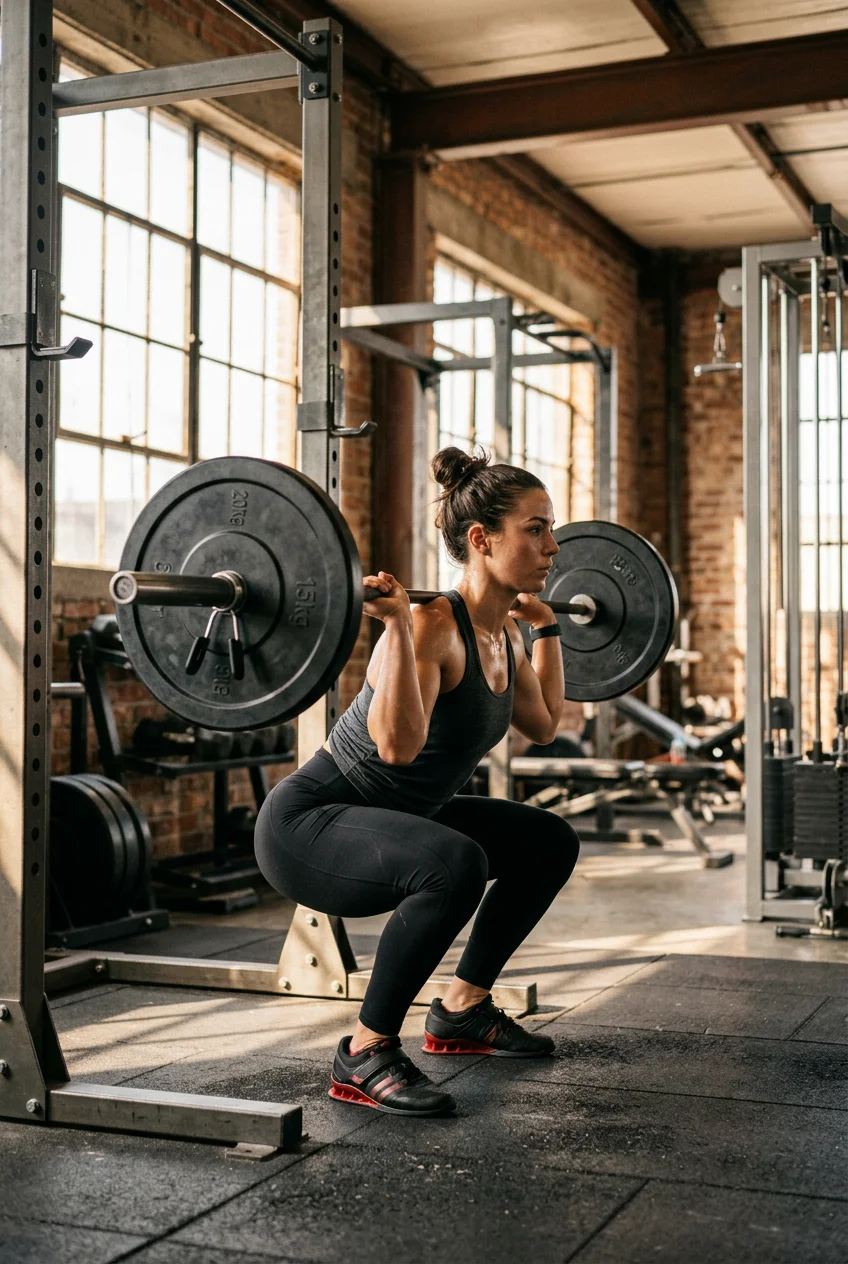
Isolation work is important, but foundational compound movements are mandatory for overall lower body mass. You need barbell back squats and conventional deadlifts in your routine. I program these for 3-4 sets of 5-8 repetitions. They allow you to load the most weight and activate all three glute muscles simultaneously along with your core, hamstrings, and quads.
I tried to skip heavy deadlifts for a few months because my grip kept failing. My lower back started feeling weak, and my lower body progress completely stalled. I realized I wasn’t eating enough carbs to fuel the heavy lifts, so I went to Costco, bought a massive 20-pound bag of Jasmine rice for $18.99, and started eating a cup of rice before every heavy leg day. I also bought lifting straps to take my grip out of the equation. When you squat, break at the hips and knees at the same time. Keep your chest proud and drive your upper back into the bar. If your heels lift off the floor, you lack ankle mobility and need to elevate your heels on small weight plates.

FLYBIRD WB2 Weight Bench
FLYBIRD WB2 Weight Bench punches above its price — 215 buyers rated it 4.5 stars. I would buy it again.
7. Optimize Your Protein Intake for Recovery

You can’t build muscle out of thin air. You have to fuel muscle growth by consuming adequate protein every single day. Aim for approximately 1.6 to 2.2 grams of protein per kilogram of body weight. For a 60kg (132 lb) person, that means eating 96 to 132 grams of protein daily. I track my food closely because if I don’t, I naturally undereat protein.
I rely heavily on whey protein to hit my numbers. Brands like Optimum Nutrition Gold Standard 100% Whey or Myprotein Impact Whey Protein are reliable choices, typically costing $30 to $60 for a 2-pound tub. I mix two scoops with cold water after my workout. I used to buy the cheapest generic protein I could find, but it clumped up like wet cement in my shaker bottle and tasted awful. Now I stick to quality brands. For whole foods, I buy boneless skinless chicken breast at Whole Foods for about $7.99 a pound. Skip the fat-free cheese and low-calorie substitutes. They taste like wet cardboard and don’t provide the fats your body needs for hormone regulation.
8. Consider Creatine Monohydrate Supplementation

Creatine monohydrate is the most scientifically supported sports supplement on the market. It enhances strength, power output, and muscle recovery. It indirectly supports lower body growth by allowing you to train harder and push out one or two extra reps on your heavy sets. You only need a standard dosage of 5 grams daily. There’s no need to do a “loading phase” where you take 20 grams a day, that just causes stomach cramps.
I tried a cheap, unbranded creatine first and the texture was like drinking sand. It settled at the bottom of the glass no matter how much I stirred it. I switched to BUBS Naturals Creatine Monohydrate in January because it actually dissolves completely in cold water. I also keep SHIFTED’s Naturally Flavored Strawberry Creatine in my gym bag, which costs about $30 for a month’s supply. I usually pick up a case of bottled water at Walmart for $5.36 to keep in my car so I never have an excuse to skip my daily dose. Expect to gain a pound or two of water weight when you start taking it. That means it’s working.
9. Avoid “Booty Band” Overuse on Heavy Lifts

While resistance bands are great for activation, you shouldn’t use them for every single exercise. Expert strength coach Mark Carroll advises against using bands around the knees during heavy compound lifts like deadlifts or heavy hip thrusts. I used to keep the band on for my entire workout, thinking more tension meant more growth. I learned that the hard way.
It actually makes the heavy movements less efficient. When you have 200 pounds on your hips, your primary focus should be moving that weight vertically against gravity. Adding a band forces your brain to focus on lateral resistance (pushing your knees out) while simultaneously trying to push the heavy barbell up. This splits your focus and usually reduces the total amount of weight you can lift. It also shifts the tension away from the gluteus maximus (the largest muscle) and onto the smaller stabilizing muscles. Take the band off for your heaviest working sets. Use it for warm-ups, lateral walks, and high-rep burnout sets at the end of your workout. Keep your heavy lifts focused purely on vertical power.
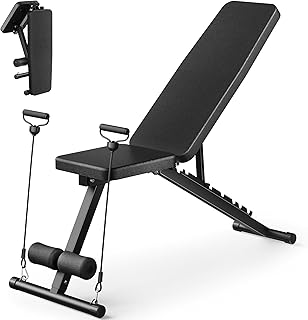
Adjustable Weight Bench for Home Gym
A dependable everyday pick — Adjustable Weight Bench for Home Gym pulls in 565 ratings at 4.5 stars. Not flashy, just solid.
10. Incorporate Multi-Planar Movement and Frog Pumps

Most people only train in the sagittal plane, meaning they only move forward and backward. To build a well-rounded shape, you need to move your hips in different planes. I program curtsy lunges, lateral step-overs, and banded lateral walks into my routine. I do 3 sets of 15 lateral steps in each direction. You have to keep your toes pointed straight ahead during lateral walks. If you turn your leading toe outward, your hip flexor takes over and you lose the tension on your gluteus medius.
I also highly recommend frog pumps. This is a lesser-known exercise that looks incredibly awkward but works perfectly if you struggle to feel your glutes firing. Lie on your back, bring the soles of your feet together so your knees fall wide open, and pump your hips upward. You will feel ridiculous making eye contact with anyone at the gym while doing these, but they work. I do 3 sets of 20-25 rapid repetitions at the end of my workout. The foot position completely takes your hamstrings out of the movement, forcing the glutes to do 100 percent of the lifting.
11. Try Belt Squats and Focus on High-Calorie Recovery

A major trend for 2026 is the rise of the belt squat machine. This machine loads the weight onto your hips via a heavy belt rather than resting a barbell on your upper back. This provides spinal decompression while still allowing you to maximize lower body volume. I started using the belt squat at my local gym because heavy back squats were leaving my lower back too fatigued to deadlift later in the week. It takes the spine completely out of the equation.
None of this training matters if you restrict your calories too much. You need a caloric surplus to build new muscle tissue. Muscles grow during rest, not during the workout. Aim for 7 to 9 hours of quality sleep per night. When I’m too exhausted from a heavy leg day to cook a massive meal, I go to Trader Joe’s and buy their frozen Mandarin Orange Chicken for $4.99 and a bag of frozen broccoli. It gives me the calories, carbs, and protein I need to recover without spending an hour in the kitchen. Don’t starve yourself while trying to build muscle. Eat real food, lift heavy, and be patient.
If you’re tired of spinning your wheels with lightweight band routines, implement these 11 steps during your next lower body session. It takes time to build real strength, but the results are worth the effort. Pin this article to your gym board so you have the exact sets and reps ready for your next workout.
Frequently Asked Questions
How often should I do a bubble buttocks workout?
For optimal muscle growth, train your lower body two to three times per week. This provides enough stimulus for hypertrophy while allowing 48 to 72 hours of recovery between heavy sessions. Ensure you eat adequate protein on rest days.
Are resistance bands enough to build glute muscle?
No. Resistance bands are excellent for warm-ups, activation drills, and lateral movements, but they cannot provide the heavy progressive overload required for significant muscle growth. You need free weights like barbells or dumbbells to build real mass.
Why do I only feel squats in my thighs?
If you only feel squats in your quads, you likely have poor mind-muscle connection or improper form. Try doing banded glute bridges before squatting to activate the glutes, and ensure you are sitting back into your hips rather than just pushing your knees forward.
Do I need to take creatine to see results?
Creatine isn’t mandatory, but it is highly recommended. It is a safe, heavily researched supplement that increases strength and power output. Taking 5 grams daily will help you lift slightly heavier weights, which indirectly leads to more muscle growth over time.
